Introduction: Your Sales Floor Isn't Running Itself (Or Is It?)
Here's a scenario that probably sounds familiar: you walk onto your sales floor, coffee in hand, ready to take on the day — and immediately notice that a customer is wandering around looking lost, two team members are chatting by the register, and nobody has acknowledged the person who just walked through the door. You smile politely, internally scream, and wonder how this keeps happening despite every meeting, memo, and motivational speech you've delivered.
The problem isn't that your team is bad at their jobs. The problem is ownership — or more accurately, the lack of it. When employees don't feel personally accountable for the customer experience, they default to their comfort zone: doing the minimum, waiting for explicit instructions, and treating the floor like someone else's responsibility. According to Gallup, businesses with highly engaged employees see 20% higher sales and 10% higher customer satisfaction scores. That gap between your current reality and those numbers? That's the ownership gap.
The good news is that a culture of ownership isn't some mythical management unicorn. It's buildable, sustainable, and — with the right systems and tools in place — it practically runs itself. Let's break down how to make it happen.
Building the Foundation: What Ownership Actually Means on a Sales Floor
Ownership Is a Mindset, Not a Job Title
The first thing to understand is that ownership has nothing to do with who's on the org chart. A part-time floor associate who greets every customer with genuine enthusiasm and proactively solves problems has more ownership than a senior sales manager who spends half their shift in the back office. Ownership is the mindset that says, "This is my floor, these are my customers, and their experience is my responsibility."
To cultivate that mindset, you need to make it explicitly clear — through training, culture, and reinforcement — that every team member is an ambassador, not just an employee. That starts with how you onboard people. Don't just walk new hires through the POS system and call it a day. Walk them through the why: why the customer experience matters, how their role connects to the business's success, and what it looks like to actually own their piece of the floor.
Define What "Taking Ownership" Looks Like in Practice
Vague expectations produce vague results. If you want your team to "take ownership," you need to define exactly what that means in observable, measurable terms. Otherwise, everyone thinks they're doing a great job — and you're still the one chasing down the wandering customer.
Get specific. For example:
- Every customer who enters the store is greeted within 30 seconds.
- Team members proactively ask if customers need help after two minutes of browsing.
- When a customer asks a question you can't answer, you find the answer — you don't just say "I don't know."
- You own the problem until it's solved, even if it means involving someone else.
Written expectations, posted in your back office or shared in a team handbook, do more work than any pep talk. When ownership is defined, it becomes a standard — and standards can be held to.
Create Psychological Safety for Decision-Making
One of the biggest killers of ownership culture is fear. When employees are afraid of making the wrong call — offering a discount, handling a complaint, or making a judgment call on the floor — they stop making decisions altogether and wait for a manager. This is how you end up being paged for problems a capable team member could have solved in 60 seconds.
Build a culture where good-faith decisions are celebrated, even when they're imperfect. Debrief mistakes without blame. Give team members a clear decision-making framework (e.g., "If it costs less than $X and keeps the customer happy, do it") so they feel empowered rather than paralyzed. Ownership grows in environments where people trust that they won't be punished for trying.
How Smart Tools Can Free Your Team to Focus on What Matters
Stop Letting Routine Tasks Drain Your Team's Energy
Here's a dirty secret about sales floor culture: it's nearly impossible for your team to act like engaged brand ambassadors when they're buried in repetitive, low-value tasks. Answering the same five questions about store hours, fielding phone calls mid-transaction, and babysitting the front entrance all chip away at the bandwidth your team needs to actually sell and connect with customers.
This is where Stella becomes a genuine game-changer. Stella is a friendly, human-sized AI robot kiosk and phone receptionist designed to handle the frontline tasks that distract your team from high-value work. In-store, she greets customers proactively, answers product and service questions, promotes current deals, and even upsells — all without requiring a single second of your staff's attention. On the phone side, she answers calls 24/7, collects customer information through conversational intake forms, routes calls to the right person when needed, and sends AI-generated voicemail summaries with push notifications so nothing slips through the cracks.
When Stella handles the noise, your team can focus on the signal: building relationships, closing sales, and delivering the kind of experience that turns first-time visitors into loyal regulars. That's a much better use of human talent — and it reinforces the ownership mindset by giving your team meaningful work to own.
Sustaining Ownership: Recognition, Accountability, and Feedback Loops
Recognize Ownership Publicly and Often
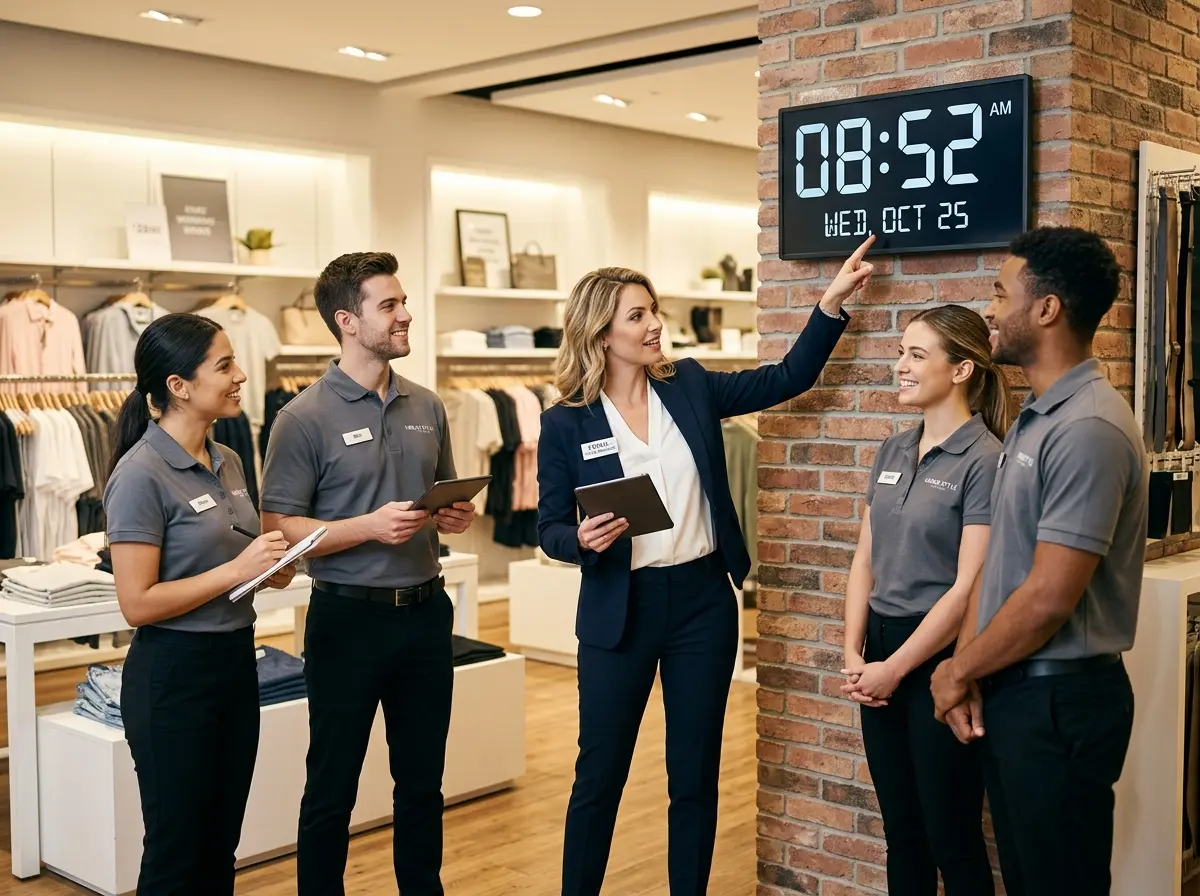
People repeat behaviors that get noticed. If you want ownership to stick, you have to make it visible. Catch your team members in the act of doing things right — going out of their way for a customer, solving a problem independently, bringing energy to a slow afternoon — and recognize it specifically and publicly.
This doesn't require a fancy rewards program (though those help). A genuine, specific shoutout in a team meeting goes a long way: "Sarah, I saw you spend fifteen minutes helping that customer find the right product even though it wasn't in your section. That's exactly the kind of ownership that makes this place special." Specificity matters. "Good job today" is forgettable. Recognizing a specific behavior reinforces exactly what you want to see more of.
Research from O.C. Tanner found that 79% of employees who quit cite lack of appreciation as a key reason. Recognition isn't just feel-good fluff — it's a retention and performance strategy.
Build Accountability Without Micromanagement
Accountability and micromanagement are not the same thing, even though a lot of managers accidentally blur the line. Micromanagement says, "I don't trust you to do this right, so I'll watch every move." Accountability says, "I trust you to own this — and we'll check in to make sure it's on track."
The tools of accountability are simple: clear expectations (see Section 1), regular one-on-ones, honest performance conversations, and data. Review your sales metrics, customer feedback, and interaction data together with your team — not as a gotcha, but as a shared learning exercise. When your team understands how their behavior connects to outcomes, ownership becomes rational rather than arbitrary. Nobody wants to be responsible for a bad month they could see coming in the numbers.
Close the Loop with Regular Feedback
A culture of ownership requires a culture of feedback — in both directions. Yes, you need to give your team regular, honest feedback about what's working and what isn't. But equally important is creating space for them to give you feedback about barriers, frustrations, and ideas. Often the people closest to the customer have the best insights about what's breaking down — and if they don't feel heard, they'll stop caring. Ownership is a two-way street. Lead with the expectation that your team is smart, capable, and full of good ideas, and most of them will live up to it.
Quick Reminder About Stella
Stella is an AI robot employee and phone receptionist that works in-store as a human-sized kiosk and answers calls around the clock for any type of business — retail, restaurants, gyms, medical offices, law firms, and more. She handles customer greetings, FAQs, upselling, intake forms, CRM management, and voicemail summaries so your human team can focus on higher-value work. At just $99/month with no upfront hardware costs, she's one of the easiest ways to add a reliable, professional presence to your operation.
Conclusion: Ownership Is Built, Not Born
A culture of ownership on your sales floor doesn't happen because you hired the right people and got lucky — though great hiring certainly helps. It happens because you built an environment where ownership is defined, expected, recognized, and supported. That means setting clear behavioral standards, creating psychological safety for decision-making, recognizing the right behaviors consistently, and building accountability systems that inform rather than intimidate.
It also means being honest about where your systems are creating friction. If your team is too buried in routine tasks to act like brand ambassadors, fix the systems. If feedback only flows one direction, fix the culture. If "ownership" is a buzzword you use without defining it, define it — today, in writing, with your team.
Here are your actionable next steps to get started:
- Write down three to five specific behaviors that define "ownership" on your floor and share them with your team this week.
- Identify one or two routine tasks that are consuming your team's time and explore how to automate or delegate them.
- Schedule a team meeting dedicated to recognition — catch people doing things right and say so out loud.
- Start a feedback loop by asking your team one simple question: "What's one thing that makes it harder for you to deliver a great customer experience?"
- Evaluate your tools — if your front-of-house systems aren't pulling their weight, it might be time to let Stella take some of the load.
Your sales floor reflects the culture you've created — for better or worse. The good news? Culture is always a work in progress, which means it's always improvable. Start building that ownership culture today, and your future self will thank you — probably while drinking that coffee before it gets cold for once.