The Fitting Room: Your Store’s Final Boss or Greatest Ally?
Let’s be honest. The fitting room is where retail dreams go to die. It’s a tiny, awkwardly lit box where a customer’s initial excitement about that perfect dress can curdle into a full-blown crisis of confidence. It’s the place where the hopeful question, “Does this look good on me?” is often met with the deafening silence of a retail associate who is currently juggling three other customers, a stock query, and a near-existential crisis over the new floor plan.
For decades, this crucial point in the customer journey has been a frustratingly analog experience. The desperate, muffled yell for a different size. The awkward peek around the curtain, hoping to make eye contact with literally anyone. The pile of discarded “maybes” left in a heap of retail despair. This is the moment you either make the sale or lose it forever. According to research, shoppers who use a fitting room are up to 70% more likely to buy than those who just browse the floor. Yet, a poor experience in that final step can tank the sale completely. So, what if you could turn your biggest point of friction into your most powerful conversion tool? Enter the smart fitting room. No, it’s not science fiction. It’s your new secret weapon.
What Exactly *Is* a Smart Fitting Room? (And Why You Should Care)
Before you picture a robotic arm dressing your customers like something out of The Jetsons, let’s clarify. A “smart” or “interactive” fitting room is essentially a traditional changing room supercharged with technology designed to make the try-on experience seamless, personal, and, dare we say, enjoyable. It’s about removing every possible obstacle between “I love this” and “I’ll take it.”
Beyond the Curtain: Core Features of a Smart Mirror
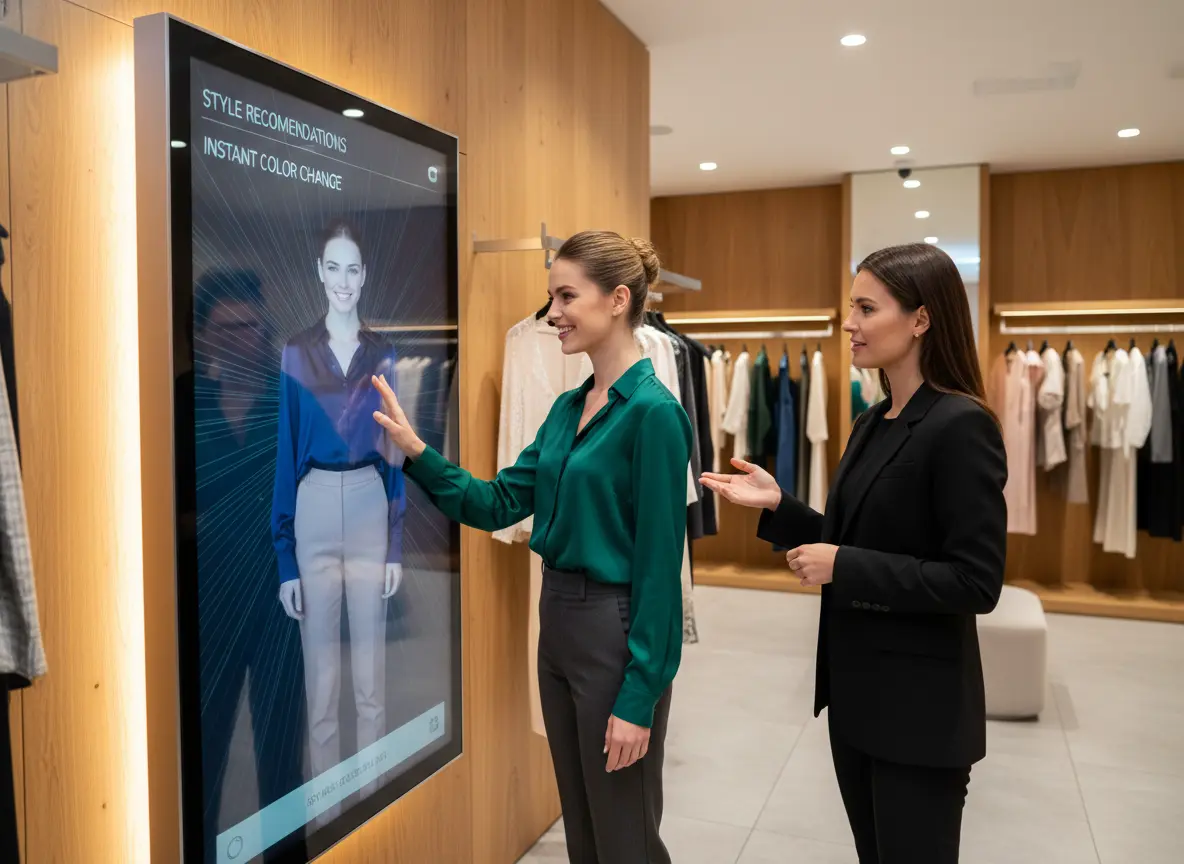
The centerpiece of the smart fitting room is typically an interactive mirror, which is really a sophisticated touchscreen display that looks like, well, a mirror. When a customer brings an item in (usually equipped with an RFID tag), the magic begins. The mirror instantly recognizes the product and displays it on the screen. From there, the customer can:
- Request different sizes or colors: With a simple tap, a request is sent directly to a store associate’s handheld device or a central monitor. No more awkward yelling or leaving the fitting room half-dressed.
- See product recommendations: The mirror can act as a personal stylist, suggesting matching shoes, a complementary handbag, or other items to “complete the look.” This is upselling on autopilot.
- Adjust the lighting: Wondering how that dress will look at a candlelit dinner or on a sunny afternoon? The mirror can simulate different lighting environments, giving the customer the confidence to buy.
- Save items for later: If they’re not ready to commit, customers can send a list of their favorite items directly to their email or phone, creating a digital breadcrumb trail that leads them back to your store or website.
The ROI of Interactive Tech: More Than Just a Pretty Reflection
Okay, a mirror that suggests shoes is cool, but what does it do for your bottom line? A lot, actually. Retailers who have adopted this tech have seen some staggering results. Brands like Rebecca Minkoff reported that shoppers who used their smart fitting rooms were three times more likely to purchase an item. It’s not just about conversion, either. The average transaction value (ATV) often gets a healthy boost from those effortless cross-sell and upsell recommendations.
Beyond the immediate sale, the data you collect is a goldmine. You’ll know exactly which items are tried on most frequently versus which ones are purchased. You’ll see what sizes are most requested and what products are most often abandoned in the fitting room. This isn't just data; it's a crystal-clear roadmap for your buying, merchandising, and inventory strategy. It’s the difference between guessing what your customers want and knowing.
"But My Boutique is Small!" - Scaling Smart Tech for Any Budget
We hear you. The phrase “RFID-enabled interactive mirror” sounds expensive. And it can be. But you don’t have to remodel your entire store to get in on the action. The beauty of this technology is its scalability. You can start with a single smart fitting room to test the concept and wow your customers. Or, you can opt for a more budget-friendly approach. Simple solutions like placing a tablet in each room, connected to your store’s app or a dedicated messaging system, can replicate much of the core functionality. Even a well-placed QR code that links to a product page with styling tips and size requests can elevate the experience far beyond a simple curtain and a hook on the wall.
Creating a Seamless Journey *to* the Fitting Room
A high-tech fitting room is a fantastic destination, but the journey there matters just as much. You can have the most advanced mirror in the world, but if customers feel ignored when they walk in or can't find what they're looking for, they may never even make it to the back of the store. The experience needs to be cohesive from the moment they step through the door.
The First Impression: Guiding Shoppers with a Digital Touch
Your team is amazing, but they can’t be everywhere at once. While they’re providing stellar one-on-one service to a customer, another shopper might walk in unnoticed. This is where you can bridge the gap between high-tech and high-touch. An automated assistant can ensure that the journey to your new smart fitting room is just as smart as the room itself. For instance, an in-store robot like Stella can greet every single person who walks in, making them feel instantly welcome. She can highlight new arrivals that are "must-try" items or announce a special promotion like, "Try on any pair of our new denim today and get a special 15% discount!" This kind of proactive engagement not only boosts traffic to your fitting rooms but also makes the entire shopping experience feel more modern and guided, perfectly setting the stage for the tech-savvy experience that awaits them.
The Practical Playbook: Implementing Your Smart Fitting Room Strategy
Feeling inspired? Good. Now let's get practical. Implementing new technology can feel daunting, but with a clear plan, you can transform your fitting rooms from a pain point into a profit center without pulling your hair out. Here’s a simple playbook to get you started.
Choosing Your Tech Partner (Without Losing Your Mind)
The market for retail tech is crowded and full of buzzwords. To find the right partner, you need to be the informed, slightly skeptical customer you want walking into your own store. Before you sign on the dotted line, ask the tough questions. Does their system integrate with your current Point of Sale (POS) and inventory management software? Is the interface intuitive for both your staff and your least tech-savvy customer? What does their support structure look like when something inevitably goes wrong? Always ask for a live demo, and if possible, speak with another boutique owner who uses their service. Kick the virtual tires until you're confident it's the right fit for your unique business.
Training Your Team: Turning Skeptics into Champions
Remember, this technology is a tool to empower your staff, not replace them. They are the ones who will be fulfilling those in-room requests and explaining the benefits to curious customers. If they see it as just another complicated task, adoption will fail. Get them involved early. Explain the “why” behind the investment—how it will reduce menial tasks (like running back and forth for sizes) and free them up to be true stylists. Hold training sessions, create simple cheat sheets, and maybe even gamify the process. Your team’s enthusiasm will be infectious and is the single most important factor in the success of your new smart fitting room.
Marketing Your Shiny New Toy
You didn’t invest in the future of retail just to keep it a secret. You need to shout about it from the rooftops! This is a major differentiator for your boutique.
- Tease the launch: Build anticipation on social media with behind-the-scenes peeks of the installation.
- Announce it everywhere: Send a dedicated email to your customer list, update your website, and create beautiful, clear signage in-store explaining the new experience.
- Frame it as a benefit: Don't just say "We have smart mirrors." Say "Enjoy a personalized styling session in our new interactive fitting rooms!"
- Encourage sharing: Create a unique hashtag and encourage customers to post selfies from the "magic mirror." User-generated content is your most authentic form of marketing.
Treat it like the grand opening of a whole new part of your store, because in a way, it is.
A Quick Reminder About Stella
While you’re busy revolutionizing the back of your store, don't let the front door become an afterthought. An AI retail assistant like Stella ensures every customer is greeted, informed about your amazing new features, and guided toward the products you want them to see, creating a seamless, modern experience from start to finish.
From Changing Room to Conversion Engine
The traditional fitting room is a passive space. It's a logistical necessity. The smart fitting room is an active participant in the sale. It’s a stylist, a concierge, and a data analyst all rolled into one sleek, reflective surface. For boutique owners, it’s an opportunity to provide a level of personalized service that was previously impossible to scale, while simultaneously gathering insights that can shape the future of your business.
This isn't about chasing trends; it's about solving a timeless retail problem with modern tools. So, are you ready to stop hearing frustrated sighs from behind the curtain and start seeing a direct impact on your sales? Your next step isn't to remortgage your store. It's to start a conversation. Schedule one demo with a smart mirror provider this month. Research one tablet-based solution. The future of your fitting room is here—it's time to let it in.