The Secret Weapon You're Probably Underfunding
Let's be honest — restaurant turnover is brutal. The industry average hovers somewhere around 75% annually, and some estimates put it even higher. You spend weeks hiring, training, and getting someone up to speed on your menu, your culture, and your particular way of doing things — and then they leave for the place down the street that offered them an extra dollar an hour and free shift drinks. It's exhausting, expensive, and frankly a little demoralizing.
So what if one of your most powerful retention tools was already sitting right there in your kitchen, largely overlooked and underutilized? We're talking about your staff meal program — and before you roll your eyes and say "we already feed our people," hear us out. There's a massive difference between tossing your line cooks a bowl of whatever's about to expire and running a deliberate, well-designed staff meal program that actually makes employees feel valued. One of those approaches builds loyalty. The other builds resentment.
This post is going to walk you through why staff meals matter more than you think, how to build a program worth bragging about, and how to keep the rest of your operation running smoothly while you're busy investing in your team.
Why Staff Meals Are More Than Just Food
The Psychology of Being Fed at Work
There's something deeply human about sharing a meal. Long before performance reviews and employee handbooks existed, breaking bread together was how communities built trust and signaled belonging. When you feed your employees well — really well — you're tapping into something primal. You're saying, "We take care of our own." And that message lands whether you intend it to or not.
Studies consistently show that employees who feel genuinely valued are significantly more engaged and less likely to job-hop. A 2023 report from Gallup found that employees who feel their basic needs are met at work show up to 23% higher profitability for their employers. Food is a basic need. Meeting it thoughtfully — with care and quality — communicates respect without requiring a single speech or poster about "company culture."
The Real Cost of Turnover vs. the Cost of a Good Meal
Replacing a single restaurant employee costs, on average, between $1,500 and $5,000 when you factor in recruiting, onboarding, training, and the lost productivity during the ramp-up period. Now consider that a well-structured staff meal might cost you $3–$7 per person per shift. The math isn't complicated — it's just easy to ignore when you're in the weeds of daily operations.
A strong staff meal program won't single-handedly solve your retention challenges, but it's a highly visible, daily reminder that you value the people keeping your restaurant alive. And visibility matters. Employees don't always remember the HR meeting where you talked about benefits — but they remember every shift whether they ate well or went hungry.
Staff Meals as a Cultural Cornerstone
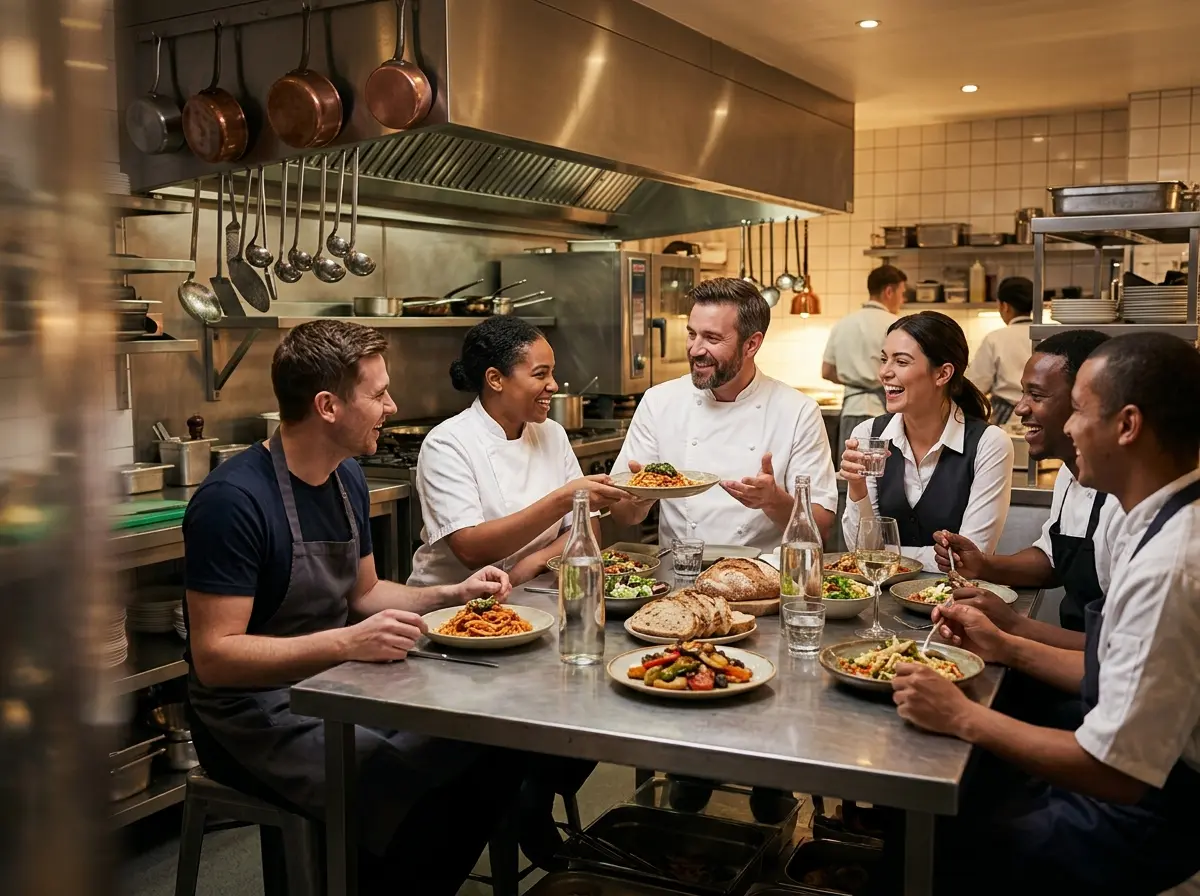
Some of the best-run restaurants in the country treat staff meal as a sacred ritual. It's a moment where the front-of-house and back-of-house actually sit down together, eat together, and talk — before the chaos of service begins. This daily touchpoint builds team cohesion in a way that mandatory team-building activities simply cannot. You can't force chemistry, but you can create the conditions for it. A shared table is one of those conditions.
Consider making staff meal a structured 20–30 minute pre-shift gathering where managers share nightly specials, shoutouts, or operational updates. You've just turned a basic perk into a communication and culture-building tool. Not bad for the cost of some pasta and a little intentionality.
Freeing Up Your Team to Actually Enjoy That Meal
Less Interruption, More Breathing Room
Here's the irony: you want to invest in your staff's wellbeing, but your team is so stretched thin that they barely have time to eat standing up, let alone sit down for a proper meal before service. Phone calls come in. Walk-in customers have questions. Someone needs to know if you're open on holidays. It never stops.
This is exactly where Stella comes in. Stella is an AI robot employee and phone receptionist designed for businesses like yours. In your restaurant, she can stand at the entrance or host stand, greet customers, answer questions about your menu and hours, and handle the constant stream of inquiries that eat into your team's time. On the phone, she answers calls 24/7, handles common questions, and can even forward calls to human staff when something truly needs a person. The result? Your people get fewer interruptions, which means your pre-shift staff meal can actually happen — and actually be enjoyed. That's a quality-of-life improvement that costs less than you'd think.
Building a Staff Meal Program Worth Talking About
Start with Structure and a Real Budget
The first step is treating your staff meal program like the operational line item it deserves to be, not an afterthought made from food scraps. Set a real per-head budget — even $4–$6 per person per shift is workable if you're strategic about it. Rotate responsibility for planning staff meal among your kitchen team; it builds ownership, creativity, and a surprising amount of pride. Your line cooks will absolutely try harder when they know their peers are the ones eating their work.
Document the program clearly. What's included? When does it happen? What are the guidelines? Consistency is what turns a nice gesture into a reliable perk — and reliable perks are what employees factor into their decision to stay.
Quality Matters (Yes, Even for Staff Meal)
If your staff meal regularly consists of the saddest, oldest ingredients in the walk-in, your team notices. It signals that they're an afterthought. Conversely, when staff meal is actually good — when it's seasoned properly, presented with some care, and occasionally features something a little special — people talk about it. They tell their friends. Future job candidates hear, "Oh, they actually feed you well there," and it becomes part of your employer brand without a single job posting mentioning it.
You don't have to serve filet mignon at staff meal. But you do have to serve it with dignity. Think about cuisines your team loves, dietary restrictions or preferences, and ways to use prep that's happening anyway. A well-executed rice bowl or a proper pasta can be just as meaningful as something elaborate — it just has to be made with the same care you'd give a paying guest.
Make It a Perk, Then Market It That Way
Here's where a lot of restaurant owners leave money — or rather, talent — on the table (pun enthusiastically intended). Once you've built a staff meal program worth being proud of, put it in your job postings. List it during interviews. Mention it in your onboarding materials. Candidates are comparing you against every other restaurant in town, and "daily family meal, made fresh before every shift" is a differentiator that costs almost nothing to communicate but signals volumes about your culture.
You can even collect informal feedback from your team about what they'd love to see on the staff meal rotation. This does two things: it improves the program, and it makes employees feel heard. Both outcomes are wins. A quick survey, a suggestion box, or even just asking at the end of family meal — any of these will do. The point is to treat your team like customers worth delighting, because in a competitive labor market, that's essentially what they are.
Quick Reminder About Stella
Stella is an AI robot employee and phone receptionist available for just $99/month — no upfront hardware costs, no complicated setup. She greets customers in your restaurant, answers the phone around the clock, promotes your specials, and handles the repetitive questions that pull your human team away from the work (and meals) that actually matter. If you're investing in your team's experience, it helps to have a reliable, always-on presence covering the front lines so your staff can breathe.
Start Small, Stay Consistent, and Watch What Happens
You don't need to overhaul your entire operation overnight to build a meaningful staff meal program. Start with three concrete steps:
- Set a formal per-head budget and get it approved as a real line item in your P&L — not a loose estimate that disappears when food costs spike.
- Schedule a dedicated family meal time before each shift and protect it like you'd protect a VIP reservation. Fifteen to thirty minutes of structured, shared eating time pays dividends in morale and communication.
- Ask your team what they want — literally. A five-minute conversation or a simple written survey will generate more goodwill than you expect, and the answers will surprise you.
Retention is a long game, and there's no single silver bullet. But the restaurants that consistently hold onto their best people tend to share a common trait: they've figured out how to make employees feel like they genuinely belong there. Good food, shared regularly, with some intention behind it — that's a surprisingly powerful place to start.
Your staff already shows up and makes your restaurant run every day. The least you can do is make sure they leave well-fed. And maybe, just maybe, they'll keep showing up because of it.