So Your Patients Ghosted You. Now What?
It happens to every dental practice. A patient comes in for a cleaning, maybe even a filling or two, and then... nothing. Silence. They don't schedule their next appointment. They don't respond to your reminder postcards. They've essentially broken up with you, and they didn't even have the courtesy to say why.
Here's the uncomfortable truth: studies show that the average dental practice loses between 10% and 30% of its active patient base every year. That's not a small leak — that's a slow flood. And while attracting new patients is important, reactivating lapsed ones is significantly cheaper, faster, and frankly, a lot less exhausting than starting from scratch with someone who's never trusted you with a drill near their face.
The solution? A smart, structured reactivation CRM sequence — a series of thoughtful, automated touchpoints designed to bring those lost patients back through your doors before they end up at the practice down the street. In this post, we'll walk you through exactly how to build one that actually works.
Understanding Why Patients Go Quiet
Before you start firing off "We miss you!" emails into the void, it's worth understanding why patients lapse in the first place. Because your reactivation messaging should speak directly to their real reason for leaving — not just your assumption about it.
The Most Common Reasons Patients Stop Coming
Patients don't usually disappear because they suddenly decided oral hygiene was optional. More often, life just gets in the way. They moved, they got busy, they had a bad experience they never mentioned, their insurance changed, or — and this one stings a little — they felt like the practice didn't really know them or care whether they came back. Cost concerns, anxiety about dental procedures, and sheer scheduling friction are also major culprits.
The good news is that most of these reasons are addressable. A patient who lapsed because of a scheduling hassle can be won back with a frictionless rebooking experience. A patient who felt overlooked can be won back with personalized outreach that shows you actually remember them. A patient who was nervous about costs might respond to a clear explanation of payment options or a reactivation special.
Segmenting Your Lapsed Patients Before You Reach Out
Not all lapsed patients are created equal, and treating them like they are is a fast track to mediocre results. Before you build your sequence, segment your patient list based on a few key factors:
- Time since last visit: A patient who hasn't been in for 13 months is very different from one who's been gone for three years. The former might just need a gentle nudge; the latter may need a more compelling reason to return.
- Treatment history: Patients who only ever came in for cleanings require different messaging than those who've had major restorative work and likely have ongoing dental needs.
- Demographics and communication preferences: Younger patients may prefer texts and emails; older patients might respond better to a phone call.
- Last interaction notes: Did they cancel and never reschedule? Did they mention a concern at their last visit? Context is everything.
Take the time to tag and categorize these patients in your CRM before you launch a single message. It'll make your outreach feel personal rather than like a mass mailing blast from a practice that couldn't pick them out of a lineup.
Building Your Reactivation Sequence Step by Step
Now for the meat of it. A reactivation sequence isn't a single email — it's a planned series of touchpoints across multiple channels over several weeks. Think of it less like a text message and more like a thoughtful reconnection campaign.
Step 1 — The Friendly First Touch (Email or Text, Week 1)
Your first message should be warm, low-pressure, and genuinely personal. This is not the moment to lead with a promotional discount or a lecture about the importance of six-month checkups (even if they're very, very overdue). Instead, acknowledge the gap, express that you care, and make it effortless for them to take the next step.
Something like: "Hi [First Name], it's been a while since we've seen you at [Practice Name], and we just wanted to check in. We know life gets busy. If you're ready to get back on track with your dental health, we'd love to see you — and scheduling takes less than two minutes."
Include a direct booking link. Do not make them call, navigate your website, and fill out a form just to request an appointment. Every extra step is a dropout opportunity.
Step 2 — The Value-Add Follow-Up (Week 2–3)
If they didn't respond to the first message, that's okay. Don't panic. Don't send the same email again with "SECOND NOTICE" slapped at the top. Instead, lead with something useful — a tip about dental health, information about a new service you offer, or details about your flexible payment options if cost might be a barrier. You're building trust and staying top-of-mind, not badgering them into submission.
Step 3 — The Incentive Touchpoint (Week 4–5)
Now is the appropriate time to introduce an incentive for patients who still haven't responded. A complimentary whitening treatment with their next cleaning, a discounted exam for returning patients, or a small gift card to a local business can be surprisingly effective. Keep it simple and make the offer feel exclusive — because it is. This isn't your standard promotions email; it's a personal invitation back.
Step 4 — The Direct Phone Call (Week 6)
For higher-value lapsed patients or those who've been gone particularly long, a real phone call from a team member (or your AI receptionist — more on that shortly) makes a meaningful difference. People respond to being personally reached out to in a way that email simply can't replicate. Keep the call brief, friendly, and focused on their wellbeing — not on filling your schedule.
Step 5 — The Final "Last Chance" Message (Week 8)
This is your last touchpoint in the sequence. Let them know the reactivation offer is expiring, wish them well, and leave the door open. Something like: "We know life is busy, and we completely understand if the timing isn't right. Our door is always open when you're ready — we'd love to see you back." Patients who feel respected and not pressured are far more likely to return on their own timeline.
How Technology (Including a Little Help from AI) Can Automate This Without Making It Feel Robotic
Here's where a lot of dental practices stumble: they know they should be doing reactivation outreach, but the manual effort required to execute it consistently is overwhelming. Coordinating emails, texts, phone calls, and follow-ups across hundreds of lapsed patients is a lot to ask of an already busy front desk team.
Using Your CRM to Run the Sequence on Autopilot
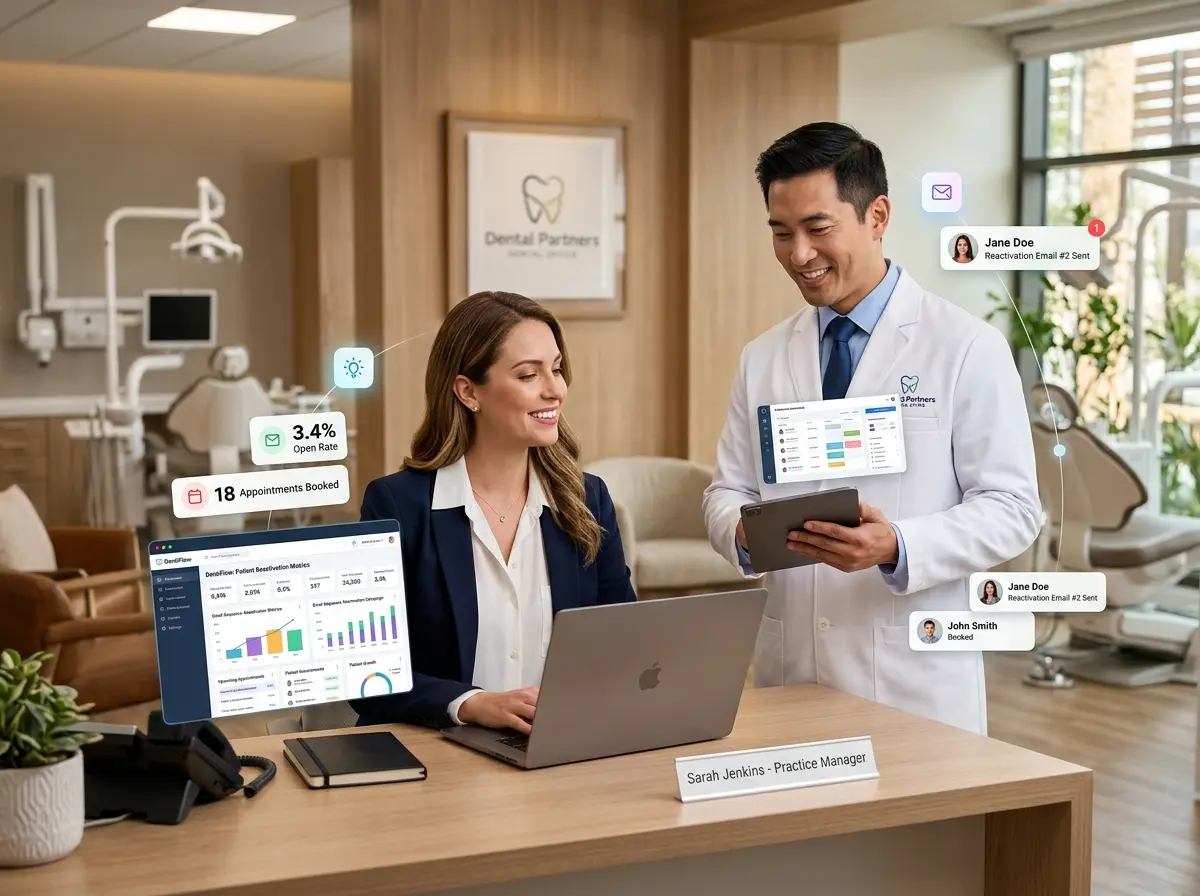
A good CRM — one that allows custom tags, contact notes, and automated workflows — makes this entire process manageable. You set the sequence once, tag your lapsed patient segments appropriately, and let the system do the heavy lifting. Track open rates, response rates, and appointments booked so you can refine your messaging over time. If your current practice management software doesn't support this level of automation, it's worth investing in a CRM that does.
Where Stella Fits In
Stella, the AI robot employee and phone receptionist, can play a meaningful role in your reactivation workflow — particularly at the phone call stage. Rather than asking your front desk staff to spend hours making outreach calls, Stella can handle outbound and inbound reactivation calls with a friendly, natural conversational style, collect patient information through built-in intake forms, and log everything directly into her CRM. When a lapsed patient calls back after receiving your email, Stella is ready to answer 24/7, schedule them, and capture their updated contact details — no hold times, no missed opportunities.
Keeping Reactivated Patients From Lapsing Again
Winning a patient back is only half the battle. The other half is making sure they don't quietly slip away again six months from now. This requires building better retention habits into your day-to-day operations — not just your reactivation campaigns.
Create a Seamless Re-Onboarding Experience
When a lapsed patient comes back in, treat it like a meaningful occasion. Acknowledge that they've been away, make them feel genuinely welcomed rather than scolded, update their records, and take note of any concerns they raise. A patient who feels seen and valued after their return visit is dramatically more likely to stay active. Train your team to handle returning patients with extra attentiveness during that first appointment back.
Build Retention Into Your Scheduling and Follow-Up Processes
The single most effective retention tool in dentistry is simple: pre-scheduling the next appointment before the patient leaves the office. It sounds almost too obvious, but a significant number of practices still don't do this consistently. Pair pre-scheduling with automated reminders via text and email, and you've dramatically reduced your future reactivation burden before it even begins. Review your lapsed patient list quarterly so no one slips through the cracks unnoticed for more than a year.
Use Data to Spot At-Risk Patients Early
Your CRM is more than a contact list — it's a crystal ball, if you use it right. Look for patterns: patients who've cancelled twice without rescheduling, patients who expressed concerns at their last visit, patients whose insurance recently changed. These are early warning signs. A brief, proactive outreach at the 7-month mark is far easier than a full reactivation campaign at the 18-month mark.
A Quick Reminder About Stella
Stella is an AI robot employee and phone receptionist built for businesses just like yours. She answers calls around the clock, manages patient contacts through a built-in CRM, collects information through conversational intake forms, and keeps your front desk from drowning in administrative tasks — all for just $99/month with no upfront hardware costs. Whether you need her greeting patients at the front of your practice or handling your reactivation callbacks at 9pm on a Tuesday, she's always ready.
Time to Stop Letting Revenue Walk Out the Door
Lapsed patients aren't lost causes — they're opportunities waiting for the right nudge. A well-built reactivation CRM sequence gives you a systematic, professional, and genuinely human-feeling way to reconnect with patients who already know and trust your practice. That's a massive head start compared to cold patient acquisition.
Here's your actionable plan to get started this week:
- Pull your lapsed patient list — anyone who hasn't had an appointment in 12+ months is a candidate for reactivation outreach.
- Segment that list by recency, treatment history, and communication preference.
- Draft your five-touchpoint sequence — warm intro, value-add, incentive offer, phone call, and final farewell.
- Set it up in your CRM with automation where possible so it runs consistently without manual effort.
- Review your retention processes to ensure reactivated patients stay active this time around.
Your past patients chose you once. With the right outreach, many of them will choose you again. And this time, with better systems in place, they won't have a reason to leave.