So, Your Members Are Leaving Money on the Table — And So Are You
Let's set the scene. A member walks up to your front desk, sweaty from a great workout, endorphins flowing, feeling like an absolute champion. This is, statistically speaking, one of the best possible moments to have a conversation about upgrading their membership. And what happens? Your front desk staff smiles, hands them a towel, and says, "Have a great day!"
Opportunity: missed.
Gym owners spend enormous energy acquiring new members — Facebook ads, referral programs, free trial weeks — and comparatively little energy maximizing the revenue potential of members they already have. Premium membership upgrades represent one of the highest-margin, lowest-acquisition-cost revenue opportunities in the fitness industry, and yet most gyms treat the upsell conversation like an awkward first date they'd rather avoid.
The good news? Mastering the upgrade conversation is less about being "salesy" and more about being genuinely helpful, well-timed, and confident. This guide will walk your front desk team through exactly how to do it.
Understanding the Psychology Behind the Upgrade
Before your team can have a great upgrade conversation, they need to understand why members say yes — and why they hesitate. Spoiler: it's rarely about the money.
Members Buy Outcomes, Not Memberships
Nobody wakes up thinking, "I'd love to spend more money on a gym membership today." But plenty of people wake up thinking they want to lose 20 pounds before summer, finally get serious about strength training, or actually recover properly after workouts instead of limping around the office all week. Your premium membership — with its personal training sessions, nutrition coaching, recovery amenities, or priority class booking — is a direct path to those outcomes.
The mistake most front desk teams make is leading with features. "Our premium plan includes two guest passes and unlimited tanning." Cool. Irrelevant. Instead, train your team to connect premium perks directly to what a specific member has already told them they want. If a member mentioned they're struggling with consistency, the personal training accountability in the premium tier is the solution — not a feature.
Timing Is Almost Everything
The post-workout window is golden, but it's not the only opportunity. Other high-conversion moments include:
- When a member asks a question that a premium feature directly answers (e.g., "Is there a way to reserve a spot in spin class in advance?")
- During membership renewal conversations
- After a member completes a fitness assessment or milestone
- When a member expresses frustration about something the premium tier solves
Training your staff to recognize these moments — and act on them confidently rather than shyly — is the real skill. It doesn't require a high-pressure script. It requires attentiveness and the genuine belief that the upgrade is actually good for the member.
The Hesitation Is Predictable — So Prepare for It
Members who don't immediately say yes usually land in one of a few camps: they want to think about it, they're not sure it's worth the extra cost, or they don't fully understand what they'd be getting. All of these objections are handleable — but only if your team is prepared for them rather than folding the moment there's any friction.
Equip your staff with simple, honest responses. For the "I'll think about it" crowd, offer a quick summary they can take with them. For the value skeptics, break down the math — if a premium membership adds $40/month and includes two personal training sessions, that's $20 per session versus the $70+ they'd pay à la carte. Numbers like that have a way of making decisions easier.
How the Right Tools Make Your Team's Job Easier
Even the most well-trained front desk team can't be everywhere at once — and they certainly can't be available 24/7. That's where having the right support in place changes everything.
Let Technology Handle the Groundwork
Stella, the AI robot employee and phone receptionist, is purpose-built for exactly this kind of support. Positioned at your gym's entrance or front desk area, Stella greets every member and visitor who walks by, engages them in natural conversation, and can proactively mention current promotions — including premium membership upgrades. She never forgets to mention the deal, never gets distracted by a busy rush, and never has an off day.
On the phone side, Stella answers calls around the clock, answers questions about membership tiers, highlights upgrade benefits, and can collect member information through conversational intake — all before a human staff member needs to get involved. Her built-in CRM stores member details, tags contacts, and generates AI summaries so your team always has context when they do step in. For gyms that want to be smarter about who they're talking to and what those people need, that kind of organized, always-on presence is genuinely valuable.
The Upgrade Conversation Framework Your Front Desk Team Can Actually Use
Training doesn't mean handing your staff a laminated script and hoping for the best. It means giving them a flexible framework they can adapt naturally to any member interaction. Here's one that works.
Step 1: Listen First, Pitch Second
The upgrade conversation should never feel like an ambush. It should feel like a logical next step in a real conversation. Teach your staff to ask questions and actually listen to the answers — "How's your training going lately?" or "Are you hitting your goals?" These aren't just pleasantries. They're intelligence gathering. The member's answer will tell your team everything they need to know about which premium benefits to highlight and how to frame them.
A member who says they've been struggling to stay consistent needs accountability — pitch the personal training component. A member who's frustrated with always-full group classes needs priority booking — that's your angle. The goal is to make the upgrade feel like it was the member's idea, not yours.
Step 2: Make the Bridge, Not the Pitch
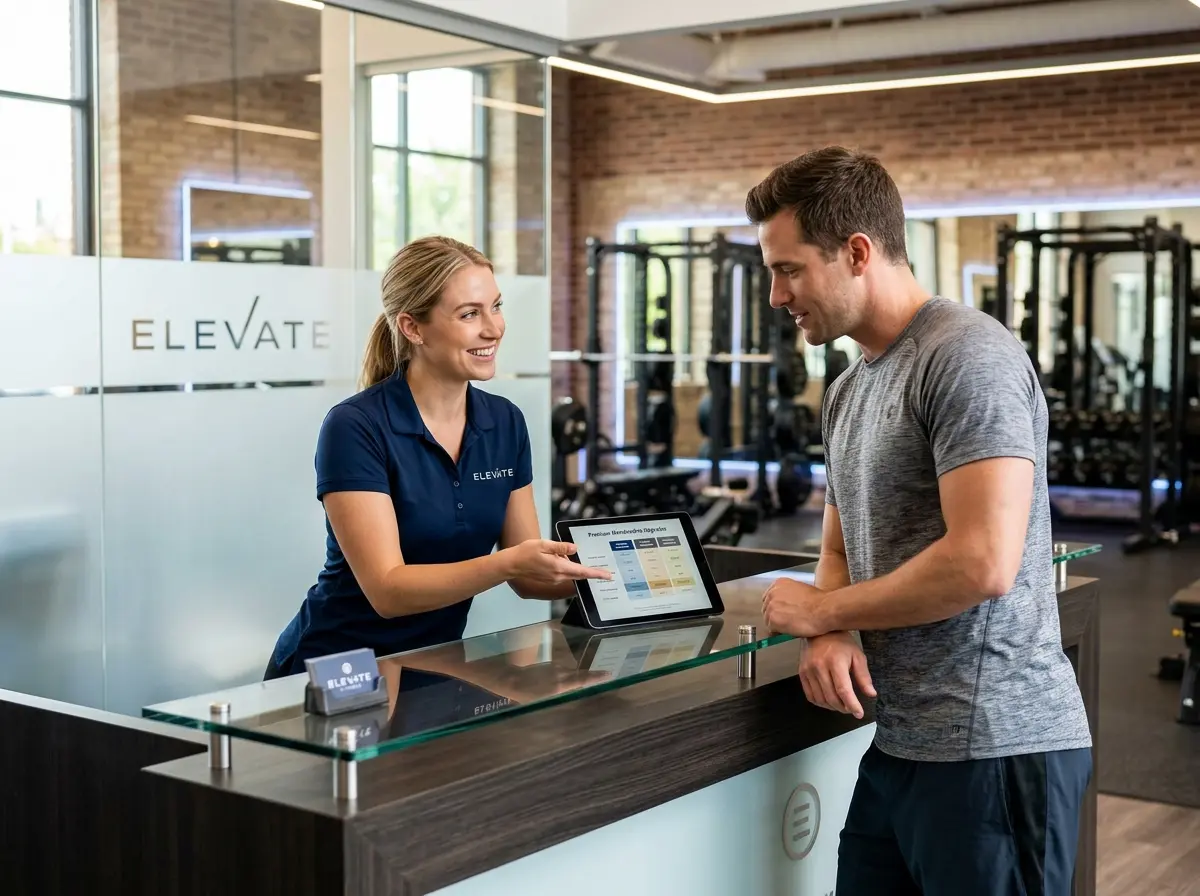
Once your staff knows what the member wants, they make a simple, direct bridge: "That's actually exactly what our Premium membership is designed for — want me to walk you through what's included?" This is not a pressure tactic. It's an invitation. Most members, when they realize someone is trying to help them solve a real problem, will say yes.
From there, the conversation is about benefits tied to outcomes, not a laundry list of perks. Keep it short, keep it relevant, and keep it conversational. Two or three well-chosen benefits land better than ten generic ones.
Step 3: Ask for the Decision — Kindly, Clearly, Once
This is where a lot of front desk teams lose the plot. They do a great job explaining the premium tier and then… trail off, hoping the member will volunteer to sign up. They won't. Your staff needs to close the loop with a clear, low-pressure ask: "Would you like to go ahead and make the switch today?" or "I can get that set up for you right now if you'd like."
If the member says no or not yet, that's fine. Thank them for their time, note their interest in your system, and follow up later. A no today is often a yes next month — especially if the experience was positive. What you're building is trust, and trust converts over time.
Quick Reminder About Stella
Stella is an AI robot employee and phone receptionist designed to support businesses like yours around the clock. Whether she's standing at your gym's front entrance engaging walk-ins or answering member calls at midnight, she brings consistent, professional energy to every interaction — and she never calls in sick. At $99/month with no upfront hardware costs, she's a practical addition to any gym's front-of-house operation.
Putting It All Together: Your Next Steps
The premium membership upgrade conversation isn't a sales skill — it's a service skill. When your front desk team approaches it with genuine curiosity, good timing, and a simple framework, members don't feel sold to. They feel understood. And that's what actually converts.
Here's what to do this week to start moving the needle:
- Audit your current approach. Listen to or observe a few member interactions and honestly assess whether upgrade opportunities are being recognized and acted on — or politely ignored.
- Run a short training session. Walk your front desk team through the listen-bridge-ask framework. Role-play it. Make it feel natural before they use it on real members.
- Identify your top three "upgrade trigger" moments. Decide together which member signals or situations should always prompt an upgrade conversation, and make sure everyone knows what they are.
- Track your results. Set a simple baseline for upgrade conversations initiated and conversions made. What gets measured gets improved — and your team will appreciate knowing their efforts are being noticed.
Your premium membership is a genuinely good product that helps members get better results. The only thing standing between them and it is a conversation your team now knows how to have. Go have it.