The Silent Epidemic Keeping Your Patients (and Your Revenue) Up at Night
Here's a fun fact: approximately 22 million Americans suffer from sleep apnea, and an estimated 80% of moderate to severe cases go completely undiagnosed. That's a staggering number of people snoring their way through life, exhausted, unaware, and — here's the part that should really keep you up at night — not sitting in your dental chair.
Sleep apnea and snoring treatment is one of the most underutilized revenue streams in modern dentistry. While patients are busy Googling "why do I sound like a freight train at 2am," their dentist — potentially you — could be offering them a life-changing oral appliance therapy solution. But without a structured, intentional program in place, most dental practices either dabble in sleep dentistry awkwardly or avoid it entirely. Neither approach is doing your patients or your practice any favors.
This post is for the dental practice owner who's tired of leaving money on the table (and tired of tired patients). Let's talk about how to build a structured snoring and sleep apnea treatment program that actually works.
Understanding the Opportunity in Sleep Dentistry
The Clinical Case for Getting Involved
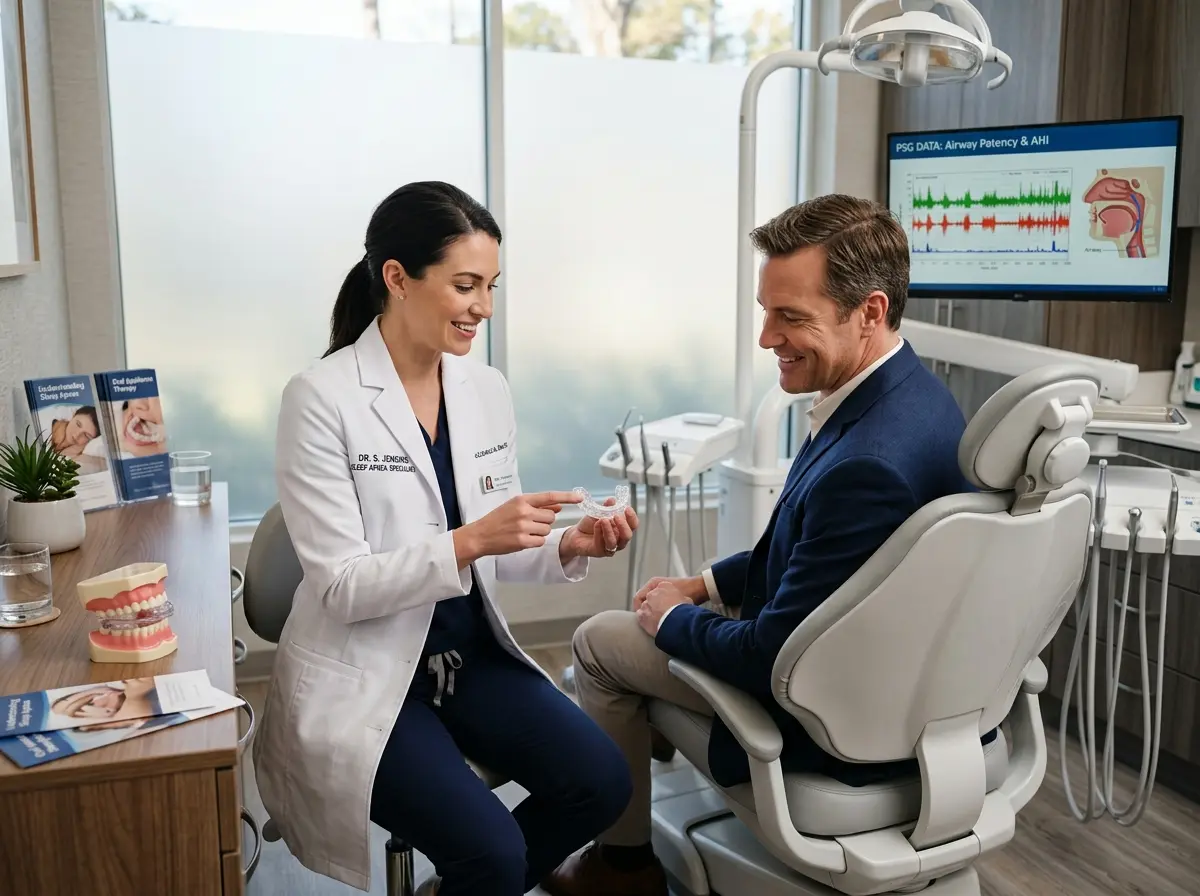
Dentists are uniquely positioned to identify sleep-disordered breathing. You're already examining the oral cavity — the airway, the tongue, the jaw, the bite. Signs like a scalloped tongue, a high-arched palate, worn teeth from nighttime grinding, or a recessed chin are all potential red flags for obstructive sleep apnea. The question isn't whether dentists can play a meaningful role in sleep health — it's why more of them aren't actively doing so.
Oral appliance therapy (OAT) is a recognized, evidence-based treatment for mild to moderate obstructive sleep apnea and primary snoring. The American Academy of Sleep Medicine and the American Academy of Dental Sleep Medicine both support the use of oral appliances as a frontline treatment, particularly for patients who can't tolerate CPAP machines. And trust us — there are a lot of patients who cannot tolerate CPAP machines.
The Business Case Is Just as Compelling
A single oral appliance case can generate anywhere from $1,800 to $3,500 or more in revenue, depending on your market, the appliance selected, and insurance reimbursement. Unlike many dental services, sleep appliance therapy also tends to involve high patient satisfaction and strong word-of-mouth referrals, because you're not just fixing a tooth — you're meaningfully improving someone's quality of life and potentially reducing their risk of serious cardiovascular events.
A structured program, rather than a one-off approach, creates predictable case volume, streamlines insurance billing, and positions your practice as a go-to resource in your community for sleep health. That kind of reputation compounds over time.
Building a Program That Runs Like a Well-Oiled (Quiet) Machine
Standardizing Your Screening and Intake Process
The foundation of any successful sleep apnea program is a consistent, repeatable screening process. Every patient — not just the ones who mention snoring — should be screened for sleep-disordered breathing as part of their regular health history review. Tools like the STOP-BANG questionnaire or the Epworth Sleepiness Scale are easy to administer and can be built directly into your new patient intake forms.
Train your entire clinical team to recognize risk factors and to ask the right questions naturally during appointments. When a hygienist notices worn enamel and mentions it conversationally — "We sometimes see this pattern in patients who experience nighttime grinding, which can be connected to sleep issues. Has anyone ever told you that you snore?" — that's not upselling. That's genuinely good care.
Standardizing this process means no patient slips through the cracks, and your team isn't relying on memory or personal comfort level to bring it up.
Coordinating with Physicians and Sleep Labs
Dentists cannot diagnose sleep apnea — that's the physician's territory. But building strong referral relationships with sleep physicians, pulmonologists, and local sleep labs is what transforms your practice from a solo operation into a collaborative care hub. Patients need a proper sleep study (either in-lab or via a home sleep test) before you can fabricate a medical-grade oral appliance covered by insurance.
Develop a clear co-management protocol: who refers to whom, how records are shared, how follow-up is handled. When you make it easy for physicians to refer to you — and easy for patients to navigate the process — you become the dental sleep provider of choice in your area. That reputation doesn't happen by accident. It happens by design.
Streamlining the Patient Experience (And Your Front Office)
How Technology Can Carry the Load
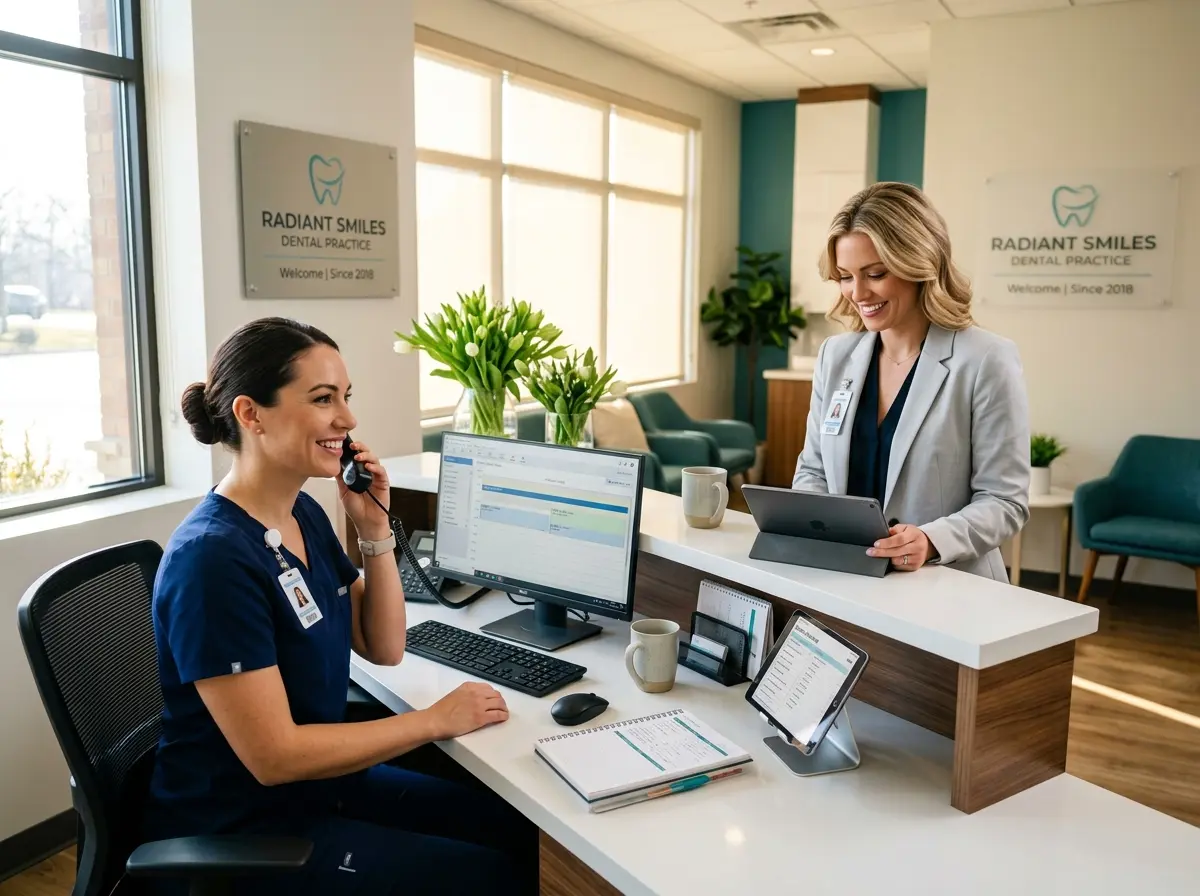
One of the biggest friction points in launching a sleep apnea program isn't clinical — it's administrative. Scheduling consultations, collecting health histories, answering insurance questions, following up on referrals, educating patients about the process — it adds up quickly, and it often falls on an already-stretched front desk team.
This is exactly the kind of operational challenge that Stella, the AI robot employee and phone receptionist, is built to address. Stella can answer incoming calls 24/7, walk patients through your sleep program offerings, and collect intake information through conversational forms — whether over the phone, on your website, or directly at her in-office kiosk. For a dental practice fielding questions like "Do you treat snoring?" or "Does my insurance cover a sleep appliance?" at all hours, having Stella handle those interactions means your human team can focus on the clinical work that actually requires them. Her built-in CRM also lets you tag and track sleep program leads separately, so no interested patient quietly falls off your radar.
Marketing Your Sleep Program Without Feeling Salesy
Education Is Your Best Marketing Tool
Nobody wants to feel like they're being sold a medical appliance. But almost everyone wants to sleep better, feel less exhausted, and stop being elbowed in the ribs by their partner at 3am. Lead with education, not a pitch.
Create content — blog posts, social media, email newsletters — that explains what sleep apnea is, why it's dangerous if left untreated, and what treatment options exist. Highlight the simplicity of oral appliance therapy compared to CPAP. Feature (with permission) patient success stories. Host a free community seminar on sleep health. Partner with local physicians for a lunch-and-learn. When you position your practice as a knowledgeable, trustworthy source of information, the cases follow naturally.
In-Office Promotion That Doesn't Feel Awkward
Your waiting room and operatories are prime real estate for patient education. Brochures, framed informational posters, even a brief video playing in the waiting area can plant the seed before a patient ever sits in the chair. When patients see sleep apnea information at your practice, they're more likely to bring up their own symptoms — turning what might have been a silent problem into an actual conversation.
Train your team to mention the program matter-of-factly during appropriate appointments. "We actually have a sleep health program here — a lot of our patients have found it really helpful" is a perfectly natural thing to say. Make it part of the culture, not a script.
Leveraging Physician Referral Networks for Consistent Case Flow
Don't underestimate the power of a well-maintained physician referral network. Primary care doctors, cardiologists, and ENTs regularly encounter patients with sleep complaints and are often looking for a trusted dental partner to refer them to. Drop off informational packets at nearby practices. Offer to speak at a physician's staff meeting. Send a brief follow-up letter after every co-managed case. These relationships, built consistently over time, can become your single most valuable source of new sleep program patients.
A Quick Note About Stella
Stella is an AI robot employee and phone receptionist that works in-office as a kiosk and answers phone calls around the clock — all for $99/month with no upfront hardware costs. She's already helping dental practices, medical offices, and dozens of other business types handle the front-end communication load so their human teams can focus on what matters most. If your front desk is overwhelmed, Stella is worth a serious look.
Building Your Sleep Program: Where to Start
If you've been on the fence about launching a structured sleep apnea program, here's the honest truth: the longer you wait, the more patients you're missing — and the more ground competitors in your market are gaining. Sleep dentistry is growing rapidly, and the practices building programs now are establishing themselves as category leaders in their communities.
Here are practical first steps to get moving:
- Get trained. Pursue continuing education in dental sleep medicine through organizations like the American Academy of Dental Sleep Medicine (AADSM). Knowledge and credentials build confidence for you and trust with patients and physicians alike.
- Audit your intake process. Add a validated sleep screening tool to your health history forms immediately. This costs nothing and starts generating data right away.
- Identify two or three physician partners. Reach out to local sleep specialists or primary care physicians to introduce yourself and express your interest in co-managing sleep patients.
- Designate a sleep coordinator. Even one team member who owns the sleep program — scheduling, insurance verification, patient follow-up — makes an enormous difference in program consistency.
- Start marketing internally. Your existing patient base is your warmest audience. An email, a social post, a lobby sign — let them know this service exists.
A structured sleep apnea treatment program isn't a side hustle — it's a legitimate, clinically meaningful, financially rewarding service line that your patients genuinely need. Build it with intention, market it with authenticity, and run it with systems that don't rely on heroic effort from your team every single day. Your patients will sleep better. Your practice will perform better. And maybe — just maybe — so will you.