Marketing Is Personal Now — Whether You're Ready or Not
Remember the good old days when you could slap a "SALE" sign in your window and watch the customers pour in? Neither do we, but apparently it was a simpler time. Today's shoppers have been algorithmically spoiled by e-commerce giants who know their shoe size, their coffee order, and probably their deepest fears. Walking into a physical store and being greeted with a generic "let us know if you need anything" feels like showing up to a black-tie event in cargo shorts.
The expectation has shifted: customers want personalized experiences, and they want them everywhere — including your store. The good news? AI has made personalization accessible to businesses that aren't named Amazon. The even better news? You don't need a data science team, a seven-figure budget, or a PhD in machine learning to pull it off. You just need the right tools and a willingness to stop treating every customer like a nameless face walking through your door.
This post walks you through how to use AI to personalize your in-store marketing campaigns in practical, actionable ways — so you can compete with the big guys without losing your mind (or your lunch budget).
Understanding What Personalized In-Store Marketing Actually Means
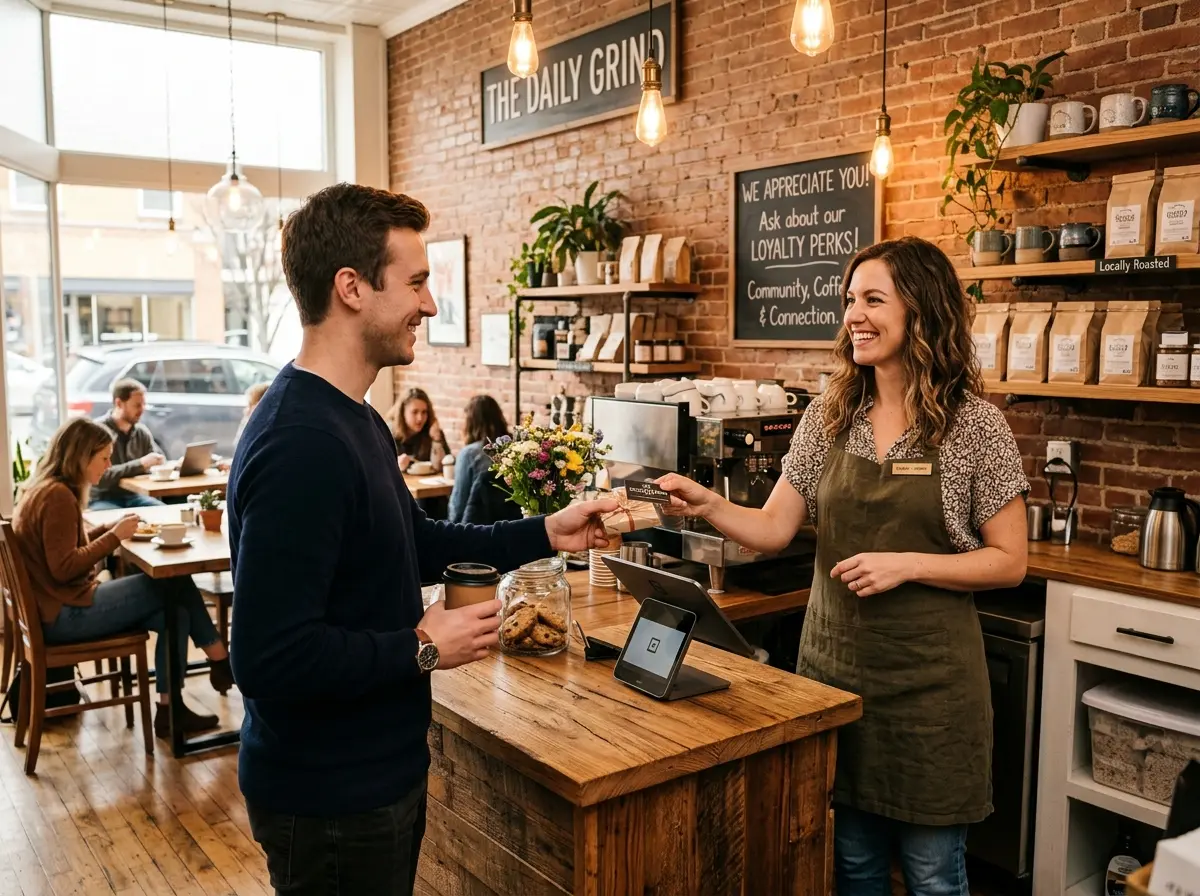
Before we get tactical, let's be clear about what we're talking about. Personalization in a physical retail environment isn't about being creepy — it's about being relevant. It's the difference between a store associate who remembers a returning customer's preferences and one who asks "have you been here before?" to someone wearing your branded loyalty card on a lanyard.
The Data Foundation: Know Before They Walk In
Effective in-store personalization starts long before a customer steps through your door. AI tools today can help you build rich customer profiles by pulling together purchase history, past interactions, browsing behavior (if you have an online presence), and even the outcomes of previous promotions. The goal is simple: when a customer arrives, you should already have context.
If you're running a CRM — and you absolutely should be — AI can automatically tag customers based on behavior patterns, segment them into meaningful groups, and generate profile summaries that give your staff (or your AI-powered kiosk) a head start on the conversation. Think of it as cheat codes for customer relationships, except it's completely legal and nobody gets banned.
Segmentation: Stop Talking to Everyone the Same Way
One of the most powerful things AI enables is smart segmentation. Not all customers are created equal — and more importantly, not all customers want the same things. A first-time visitor to your spa has very different needs than a loyal monthly member. A customer who always buys premium products doesn't need to be pitched your entry-level offer. AI-driven segmentation lets you define these groups automatically and tailor your in-store messaging accordingly.
Consider creating segments like: new visitors, lapsed customers (who haven't been in for 60+ days), high-spenders, promotion-sensitive shoppers, and loyal regulars. Once these groups exist, you can configure your in-store experience — signage, staff talking points, kiosk greetings, even the music or lighting if you're feeling ambitious — to speak directly to whoever is most likely to be in the room at a given time.
Putting AI to Work in the Physical Space
Smart Promotions That Actually Match the Moment
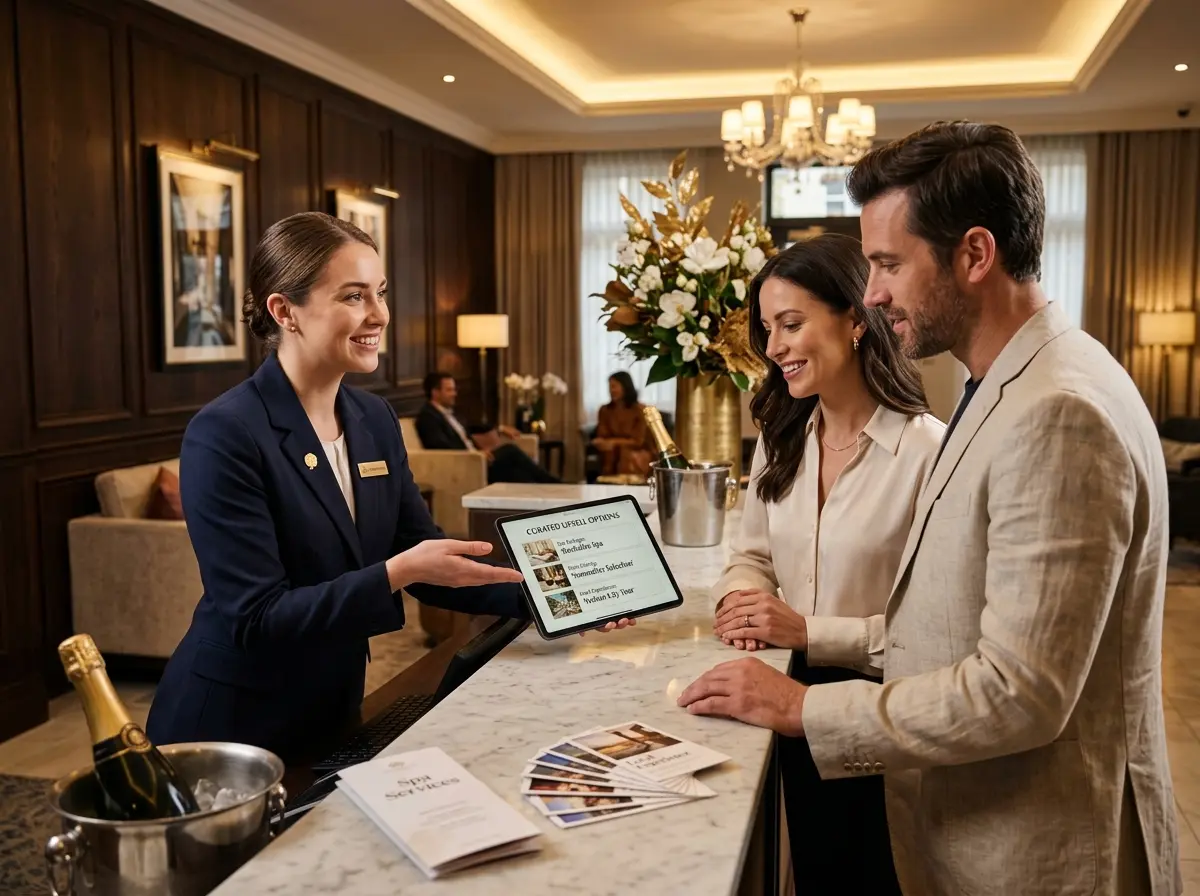
Traditional promotions are broadcasted to everyone and hoped for the best. AI-powered promotions are targeted, timed, and triggered by real behavior. For example, if your data shows that a specific customer segment tends to purchase add-on services when they're already in-store for a primary service, you can configure your in-store experience to surface those upsell suggestions at exactly the right moment — not as a pushy sales tactic, but as a helpful, contextual recommendation.
According to McKinsey, personalization can deliver five to eight times the ROI on marketing spend and lift sales by 10% or more. That's not a rounding error — that's the difference between a slow Tuesday and a record-breaking month.
Let AI Handle the Greeting (Seriously)
Here's where things get interesting. One of the most underutilized opportunities for in-store personalization is the initial customer interaction — and it's also one of the most inconsistent. Staff are busy, distracted, or occasionally just having a human day. AI doesn't have human days.
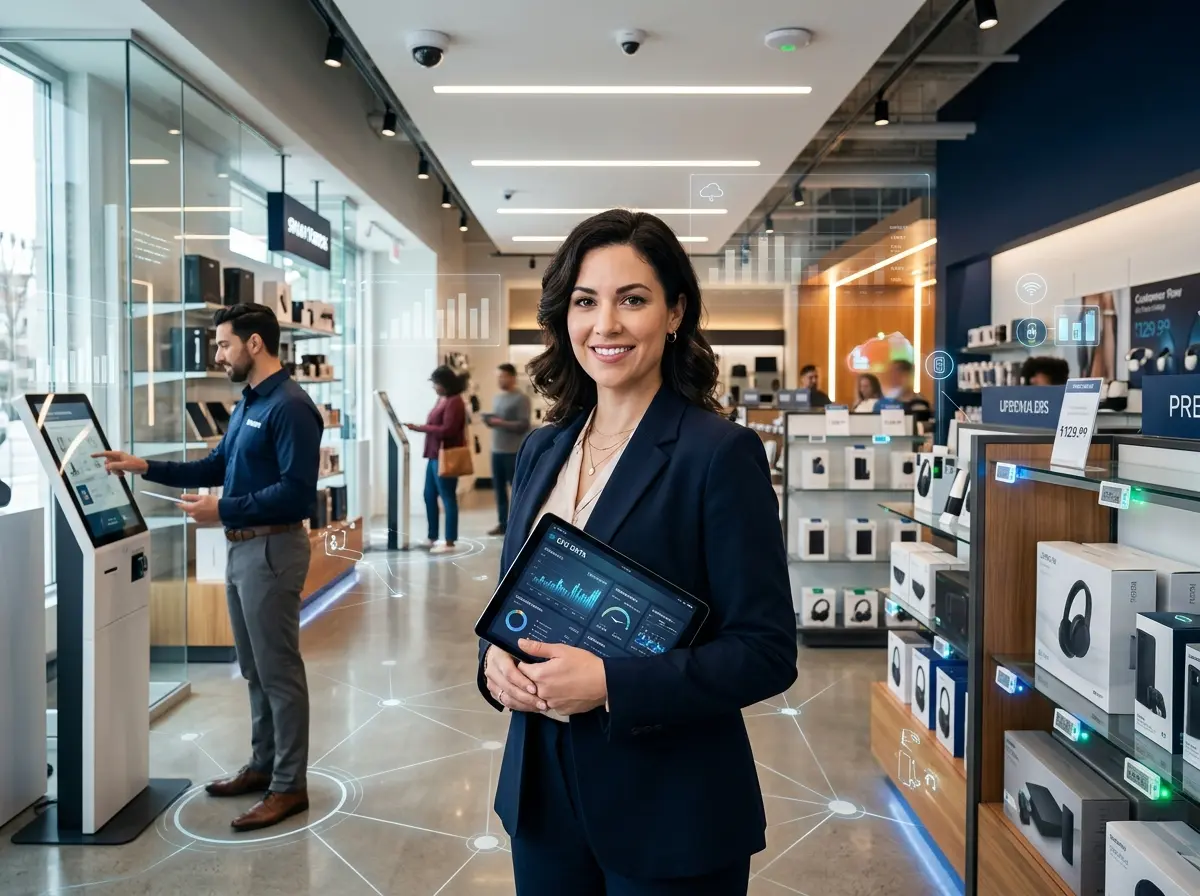
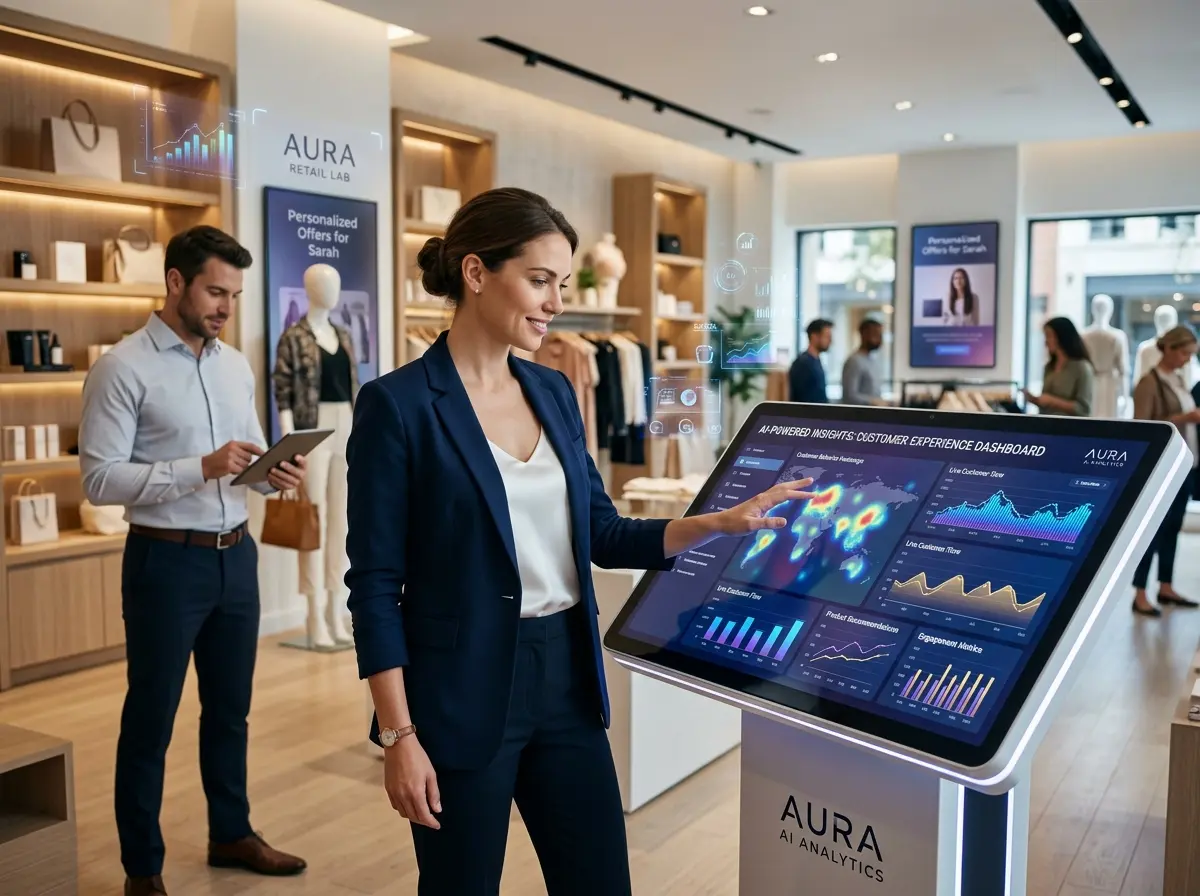
Stella, the AI robot employee and phone receptionist, is designed specifically for this moment. As a human-sized kiosk that stands inside your store, Stella greets every customer who walks by and engages them proactively — promoting current deals, answering questions about products and services, and recommending related items based on the conversation. She also answers your phone calls 24/7 with the same business knowledge she uses in person, so the personalized experience extends even before a customer walks in the door. Her built-in CRM and conversational intake forms mean she's not just collecting information — she's building the kind of customer profiles that make every future interaction smarter.
Building a Personalization Loop That Gets Smarter Over Time
The real magic of AI-driven personalization isn't just what it does today — it's how it improves tomorrow. A well-designed system learns from every customer interaction, feeds those insights back into your marketing strategy, and compounds over time into a genuine competitive advantage. Here's how to build that loop intentionally.
Capture Insights at Every Touchpoint
Every customer interaction is a data point: what they asked about, what they responded to, what they ignored, and what they ultimately bought. Most businesses capture almost none of this. AI tools can help you systematically collect interaction data — whether from kiosk conversations, phone calls, intake forms, or staff notes — and surface patterns you'd never notice manually.
For example, if your AI system reveals that customers who ask about a specific product almost always follow up with a question about pricing, that tells you something important about how to structure your in-store messaging around that product. Maybe the price needs to be more prominent. Maybe you need a comparison display. The data tells the story — you just have to be listening.
Test, Iterate, and Don't Fall in Love with Your First Idea
Personalization is not a "set it and forget it" strategy. The businesses that win at this are the ones who treat their in-store marketing like a living experiment. Run different promotional messages with different customer segments and compare the results. Try a different upsell sequence for first-time visitors versus returning customers. Test whether a proactive greeting from your AI kiosk increases conversion on a specific promotion compared to passive signage alone.
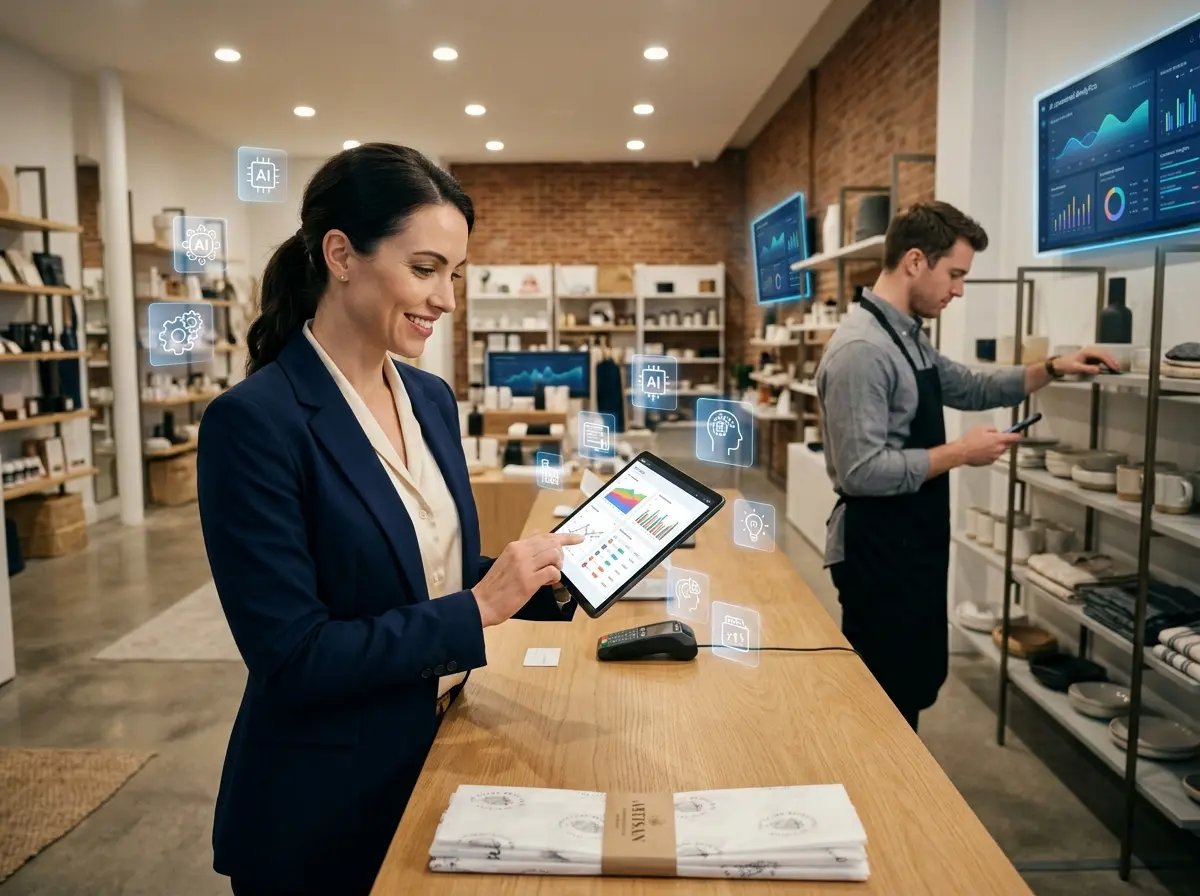
The beauty of AI-powered systems is that they make this kind of iterative testing manageable. You're not manually tracking spreadsheets or relying on gut feelings — you're letting the data tell you what's working and doubling down on it. Over time, your campaigns stop being guesses and start being genuinely informed decisions. What a concept.
Close the Loop with Follow-Up
In-store personalization doesn't end when the customer walks out. AI can help you trigger timely, relevant follow-ups based on what happened during the visit. Did a customer ask about a product that was out of stock? Flag them for a notification when it's back. Did a first-time visitor come in but not purchase? Trigger a welcome offer. Did a loyal customer hit a spending milestone? Acknowledge it meaningfully. These post-visit touchpoints reinforce the in-store experience and make customers feel like you actually remember them — because, with AI, you do.
Quick Reminder About Stella
Stella is an AI robot employee and phone receptionist built for real businesses — from retail shops and restaurants to salons, gyms, medical offices, and more. She greets customers in person, answers phones around the clock, promotes your deals, collects customer information, and manages contacts through a built-in CRM — all for $99/month with no upfront hardware costs. She doesn't call in sick, she doesn't forget the specials, and she's never in a bad mood.
Your Next Steps Toward Smarter In-Store Marketing
Personalized in-store marketing is no longer a luxury reserved for enterprise retailers with sophisticated tech stacks. AI has leveled the playing field, and the businesses that move now are the ones that will build lasting customer loyalty while their competitors are still printing generic flyers.
Here's where to start:
- Audit your current data. What customer information do you already have? Purchase history, contact details, visit frequency? Identify the gaps and put systems in place to fill them.
- Define your customer segments. Even two or three meaningful segments — new visitors, regulars, lapsed customers — will immediately make your campaigns more relevant than treating everyone the same.
- Deploy AI at the point of interaction. Whether it's a smart kiosk, a CRM with AI-generated profiles, or an AI phone receptionist, get tools in place that collect insights and enable personalized conversations in real time.
- Build your feedback loop. Decide how you'll track promotional effectiveness, what metrics matter most, and how often you'll review and adjust your campaigns.
- Start small, then scale. You don't have to do everything at once. Pick one segment, one campaign, and one touchpoint. Learn from it, then expand.
The era of one-size-fits-all in-store marketing is over. The good news is that the tools to do something far better are more affordable and accessible than ever. Your customers already expect a personalized experience — the question is whether your store is going to deliver one.