So You Want to Stop Leaving Money on the Table at Your Med Spa
Here's a scenario that probably sounds familiar: a client walks into your med spa, books a basic facial, pays, and leaves. Meanwhile, she would have gladly added a dermaplaning treatment, a hydrating serum, and a follow-up peel — if only someone had asked her the right questions at the right time. The problem isn't your services. Your services are great. The problem is your consultation process, or more accurately, the lack of a structured one.
A well-designed skincare consultation protocol isn't just a nice-to-have checklist — it's a revenue engine. Med spas that implement consistent, thorough consultation frameworks routinely see average ticket increases of 30–50%. And no, you don't need to train your staff to become high-pressure salespeople. You just need to ask better questions, listen carefully, and present solutions that genuinely serve your clients. Turns out, that's not sarcasm — it actually works.
Let's walk through how to build a consultation protocol that converts curious clients into loyal, high-value ones.
Building the Foundation of Your Consultation Protocol
Before you can increase your average ticket, you need a repeatable process that every client goes through — whether they're booking a $75 facial or a $1,500 laser treatment package. Consistency is the backbone of a profitable consultation system.
Step 1: Pre-Consultation Intake That Actually Does Work
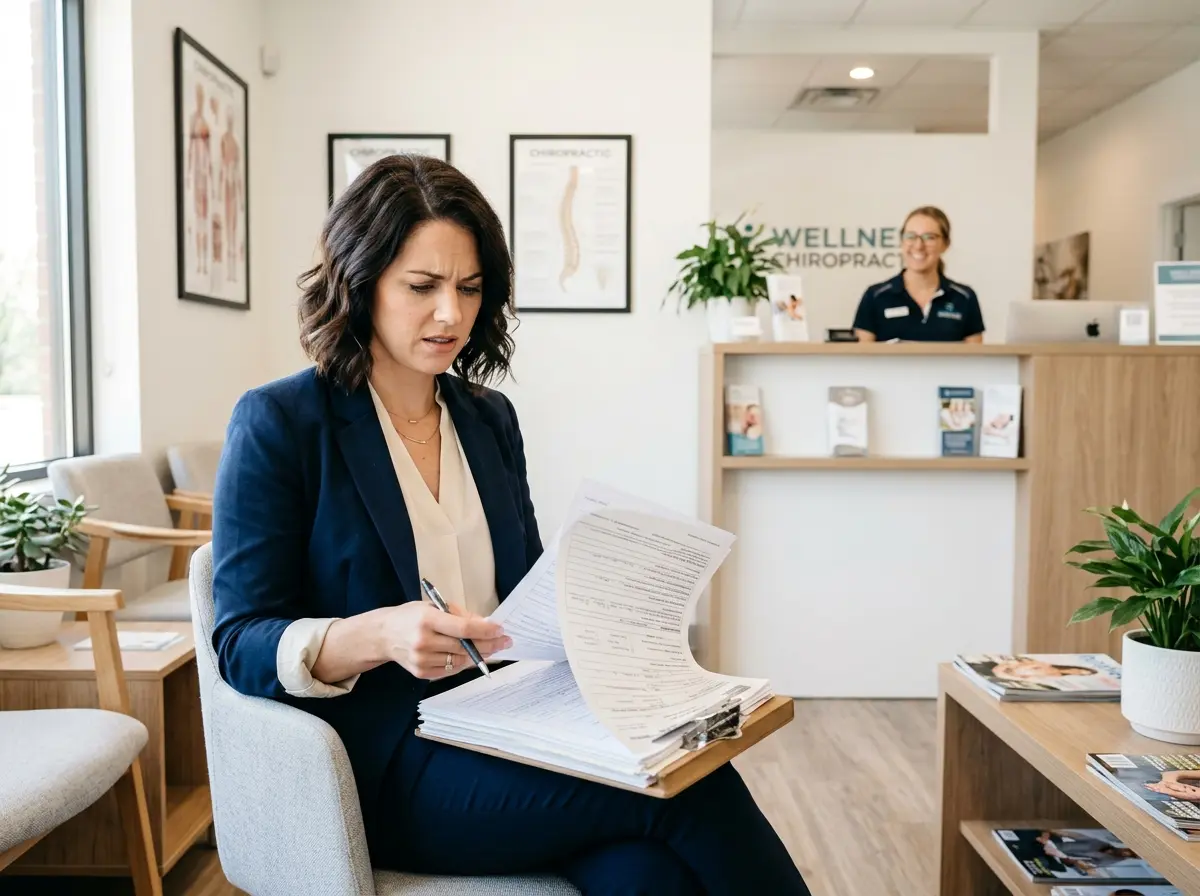
The consultation starts before your esthetician says a single word. A thorough intake form — completed before the appointment — arms your staff with the information they need to make personalized, relevant recommendations. Your intake form should capture skin concerns, lifestyle habits, current skincare routine, past treatments, known sensitivities, and goals. Yes, goals. "I want to look less tired" is a goal, and it opens the door to a whole suite of treatments your client may never have considered.
Don't settle for a generic form with five fields. The more detailed your intake, the more confident your staff will feel recommending premium services — and the more valued your client will feel. People love being seen and understood. Make your intake form do that heavy lifting before the appointment even begins.
Step 2: The Skin Analysis — Make It a Ritual, Not a Formality
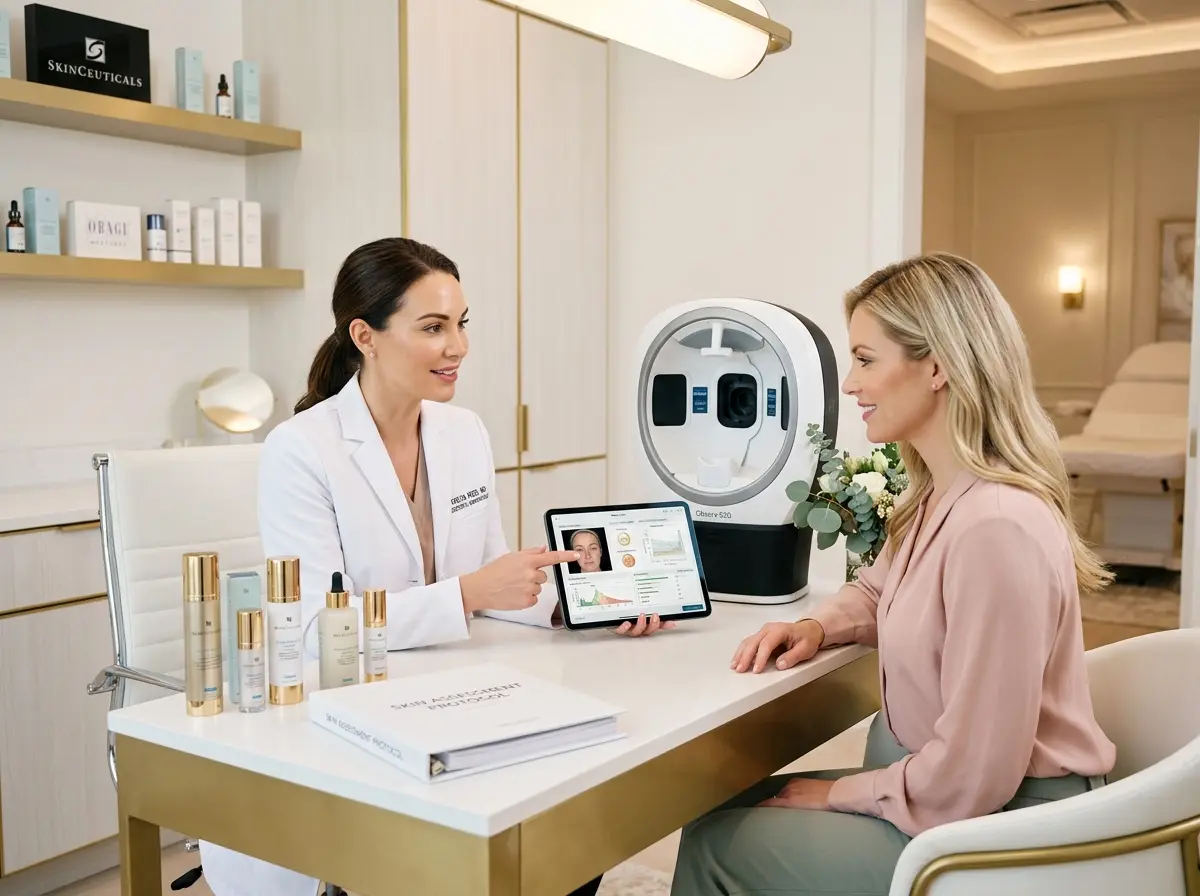
Too many med spas treat the skin analysis like a box to check. It should feel like an event. Use a quality magnification lamp or, better yet, a digital skin analysis tool if your budget allows. Walk the client through what you're seeing in real time. Point out dehydration, hyperpigmentation, congestion, or fine lines — not to alarm them, but to educate them. An educated client is an empowered buyer.
When your esthetician says, "I'm noticing some uneven texture here that would respond really well to a series of chemical peels," that's not a sales pitch. That's clinical expertise being applied to a real observation. Train your team to present findings matter-of-factly and follow every finding with a recommended solution. Observation plus recommendation is the core rhythm of a profitable consultation.
Step 3: Build a Results-Focused Treatment Plan
Here's where most med spas stumble: they recommend one thing at a time when they should be presenting a complete plan. After the skin analysis, your staff should present a short-term and long-term treatment roadmap tailored to the client's concerns and goals. This might look like a three-month plan that includes monthly treatments plus a take-home regimen. Suddenly, you're not selling a single $90 service — you're presenting a $600 journey that actually solves the client's problem.
Clients respond to plans. Plans feel intentional. Plans feel like they're getting a real solution rather than a one-size-fits-all service. And packages, of course, give you the opportunity to bundle services at a slight discount while significantly increasing the total transaction value.
Streamlining Your Intake and Client Management Process
Let Technology Handle the Groundwork
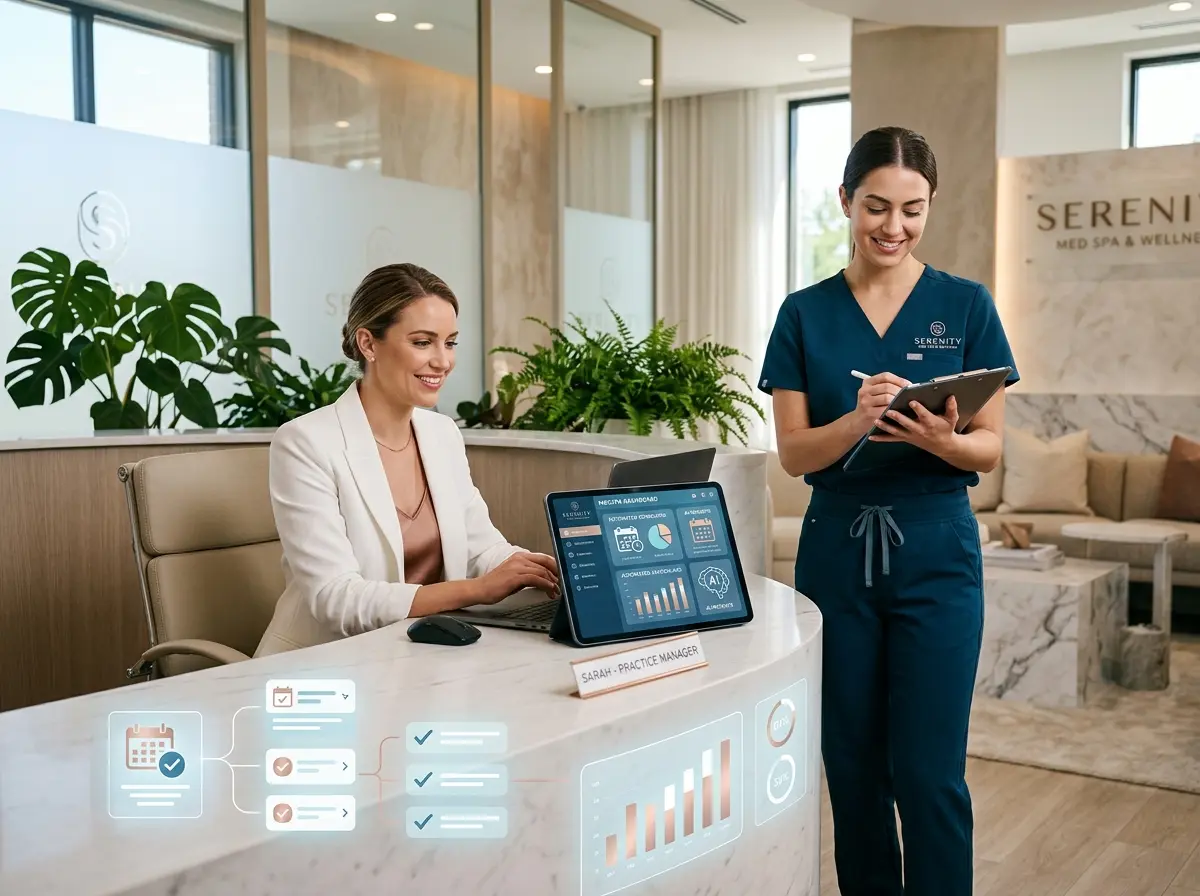
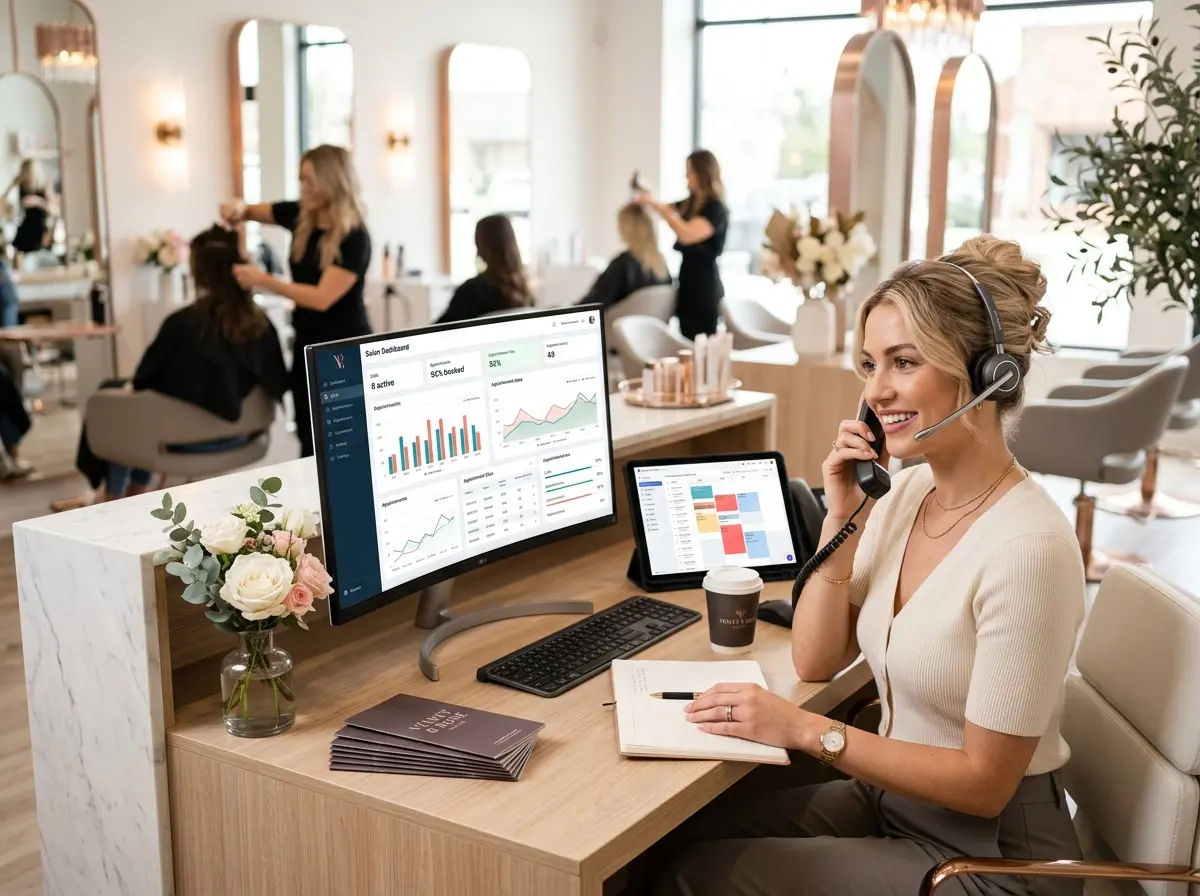
No matter how brilliant your consultation protocol is, it falls apart if your intake process is clunky, your staff is too busy to greet walk-ins, or phone calls interrupt your estheticians mid-appointment. This is exactly where Stella, the AI robot employee and phone receptionist, fits naturally into a med spa environment. Stella can greet clients as they walk in, collect pre-consultation intake information through conversational intake forms at the kiosk, and answer incoming calls around the clock — so your team stays focused on delivering exceptional treatments rather than fielding "do you have Saturday appointments available?" for the twelfth time today.
Stella's built-in CRM stores client information, tags, notes, and AI-generated profiles, meaning your front desk team has a complete picture of each client before they even sit down in the treatment chair. The intake process becomes seamless, the data is organized, and your staff walks into every consultation already informed. That's not magic — that's just a well-designed system doing its job.
Training Your Team to Convert Consultations Into Revenue
You can build the best consultation protocol in the world, and it will collect dust if your team doesn't know how to use it. Staff training is non-negotiable, and it needs to go beyond laminated scripts taped to the back room wall.
Teach the Language of Recommendations, Not Sales
There's a meaningful difference between saying "Would you like to add a vitamin C serum today?" and "Based on the hyperpigmentation we talked about, a vitamin C serum is going to significantly accelerate the results from your peel series — I'd really recommend adding it to your home care routine." The second version is a recommendation. It's grounded in what you just observed. It connects to a goal the client expressed. It doesn't feel like an upsell — it feels like advice from someone who actually knows what they're talking about.
Train your estheticians to always tie their recommendations back to the client's stated goals and observed skin conditions. Role-play these conversations in team meetings. Practice makes this feel natural, and when it feels natural, it works. According to a study by McKinsey & Company, personalized recommendations can drive revenue increases of 10–30% across service-based businesses — and skincare consultations are about as personalized as it gets.
Create a Menu of Tiered Add-On Services
If your staff has to mentally scan your entire service menu to figure out what to recommend, you're losing money in the hesitation. Create a tiered add-on menu specifically designed for consultation use — organized by skin concern. Under "Dullness and Uneven Texture," list your relevant add-ons with a one-line description and price point. Under "Fine Lines and Volume Loss," list yours. This reference tool takes the guesswork out of recommendations and makes it easy for even your newest esthetician to confidently suggest relevant upgrades during a consultation.
Follow Up Like You Mean It
The consultation doesn't end when the client walks out. A structured follow-up process — whether via text, email, or phone — is where loyalty and repeat bookings are built. Reach out within 48 hours to check in on how their skin is feeling post-treatment, remind them of the product recommendations made during their visit, and gently prompt them to book their next appointment. Clients who receive personalized follow-up are significantly more likely to return, and return clients spend more. It's not complicated math.
Quick Reminder About Stella
Stella is an AI robot employee and phone receptionist that works in-person at your med spa as a friendly kiosk presence and answers your phones 24/7 — so no call goes to voicemail during a busy Saturday rush and no walk-in client goes ungreeted while your staff is in a treatment room. At just $99/month with no upfront hardware costs, she's the kind of front desk employee who never calls in sick, never forgets to collect intake information, and never takes a coffee break at exactly the wrong moment.
Your Next Steps Toward a Higher Average Ticket
Building a skincare consultation protocol that meaningfully increases your average ticket isn't about being pushy or manipulative. It's about creating a system that ensures every client gets the full benefit of your expertise — and every service you offer gets the opportunity to be discovered by the people who need it most. The money you're leaving on the table right now isn't leaving because your clients don't want more. It's leaving because no one asked the right questions or connected the dots for them.
Start here: audit your current intake process and identify where information is being lost or left uncollected. Then build or refine your consultation script so that skin analysis findings are always paired with specific, goal-connected recommendations. Train your team on the language of clinical recommendations rather than sales. Create that tiered add-on reference menu. And set up a follow-up sequence that keeps your clients engaged between visits.
Do these things consistently, and your average ticket will reflect it. Your clients will also thank you — because at the end of the day, a great consultation makes them feel heard, cared for, and confident they're in the right hands. That's the kind of experience that builds a thriving med spa business, one thoughtful recommendation at a time.