So, Your Athletes Keep Walking Out the Door (Literally)
This is the gap that a Return-to-Sport (RTS) program is designed to close. And if your physical therapy clinic doesn't have one, you're essentially handing athletes a diploma without making sure they can do the coursework. It's a missed clinical opportunity, a missed revenue opportunity, and — most importantly — a missed chance to truly serve your patients at the highest level.
The Case for a Formalized Return-to-Sport Program
The Rehab-to-Real-Life Gap Is Real (and Dangerous)
Research consistently shows that the injury recurrence rate for athletes who return to sport without formal RTS testing is alarmingly high. For ACL injuries alone, studies suggest that athletes who return without passing objective RTS criteria are up to 15 times more likely to re-injure the same knee. That's not a rounding error — that's a systemic gap in care.
Athletes Are a Different Kind of Patient — Treat Them That Way
It's a Revenue Stream You're Already Leaving on the Table
Running a Smoother Clinic While You Focus on Athletes
Don't Let Front-Desk Chaos Undermine Your Clinical Excellence
This is where Stella, the AI robot employee and phone receptionist, can quietly become one of your clinic's most reliable team members. Stella answers every call 24/7 with full knowledge of your services, programs, hours, and policies — meaning a parent calling at 8pm to ask about your Return-to-Sport program for their injured teen athlete gets a real, helpful response instead of a voicemail. In your physical clinic location, she greets patients as they arrive, answers common questions, and promotes your specialized programs — so your front desk staff can stay focused on what actually requires a human touch.
Building a Return-to-Sport Program That Actually Works
Start with a Standardized Assessment Battery
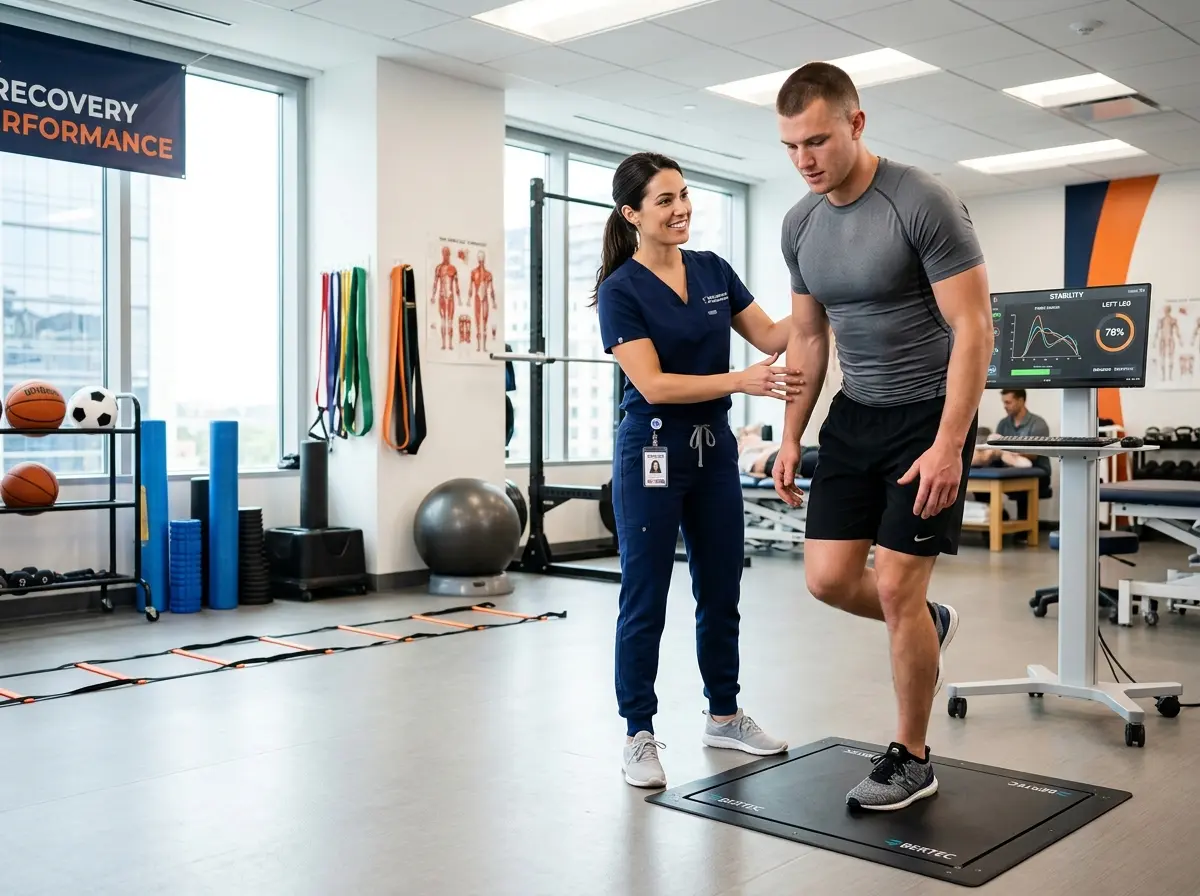
The foundation of any credible RTS program is a reliable, repeatable assessment protocol. This doesn't need to be overly complex — it needs to be consistent. Common tools include the single-leg hop test series (single hop, triple hop, crossover hop, and timed six-meter hop), isokinetic strength testing or handheld dynamometry for limb symmetry, and sport-specific movement screens that mirror the demands of the athlete's position and sport.
Build in Psychological Readiness — It's Not Soft, It's Science
One of the most underutilized components of RTS programs in outpatient PT settings is psychological readiness assessment. The Anterior Cruciate Ligament Return to Sport after Injury (ACL-RSI) scale and similar tools measure an athlete's emotions, confidence, and risk appraisal — and research shows that psychological readiness is a significant independent predictor of actual return to sport and re-injury risk.
Market Your RTS Program Like the Specialized Service It Is
Quick Reminder About Stella
Stella is an AI robot employee and phone receptionist that works 24/7 — answering calls, greeting patients at your front door, promoting your specialized programs, collecting intake information, and never, ever calling in sick. At just $99/month with no upfront hardware costs, she's the front-desk upgrade your clinic didn't know it needed.
Your Next Steps Start Today
- Audit your current discharge process for athletic clients. Where does formal rehab end and sport preparation begin — and is that transition intentional or accidental?
- Select a standardized assessment battery relevant to your most common athletic diagnoses and establish clear benchmarks.
- Create a formal program package with defined session counts, deliverables, and a clearance report at completion.
- Train your entire clinical team on the protocol and the rationale behind each component, including psychological readiness screening.
- Launch your marketing — website, referral outreach, coach education — so the athletes in your community actually know this service exists.
The athletes in your community deserve more than a handshake and a "good luck out there." They deserve a clinically rigorous, data-driven pathway back to the sport they love — and your clinic is uniquely positioned to provide it. Build the program, fill the gap, and watch your clinic become the go-to destination for every serious athlete in town who wants to come back right, not just fast.