Nobody Likes Standing in Line (But Here You Are)
Let's be honest — the only people who enjoy waiting in line are those who've never had to do it. For everyone else, it's a slow march through purgatory, punctuated by the occasional sigh and a lot of phone scrolling. And while you can't always eliminate the line (sorry, that's just retail reality), you absolutely can make it hurt less. In fact, how you handle the wait says a lot about how much you value your customers.
Here's the uncomfortable truth: a frustrating wait doesn't just cost you a customer's patience — it can cost you their loyalty. According to a study by Omnico Group, 86% of shoppers have left a store because of a long line. That's not a small number. That's a significant chunk of revenue walking right out your door, probably to leave a one-star review on the way home.
The good news? There's a lot you can do about it — and most of it doesn't require a complete overhaul of your business. Let's talk strategy.
Understanding the Psychology of Waiting
Before you can fix the problem, it helps to understand why waiting feels so terrible in the first place. Spoiler: it's not always about the clock.
Occupied Time Feels Shorter Than Idle Time
Behavioral economists have studied this extensively, and the finding is delightfully simple: people don't mind waiting nearly as much when they have something to do. Disney figured this out decades ago with their elaborate queue theming and entertainment — and the result is that guests consistently underestimate how long they've waited. You don't need a castle or an animatronic pirate to apply this principle. You just need to give your customers something to engage with while they're standing there contemplating their life choices.
This could be as simple as a well-placed digital display showing your latest promotions, a product demo running on a screen, or even a friendly staff member walking the line to answer questions. The key is engagement. An engaged customer is a patient customer.
Uncertain Waits Feel Longer Than Known Waits
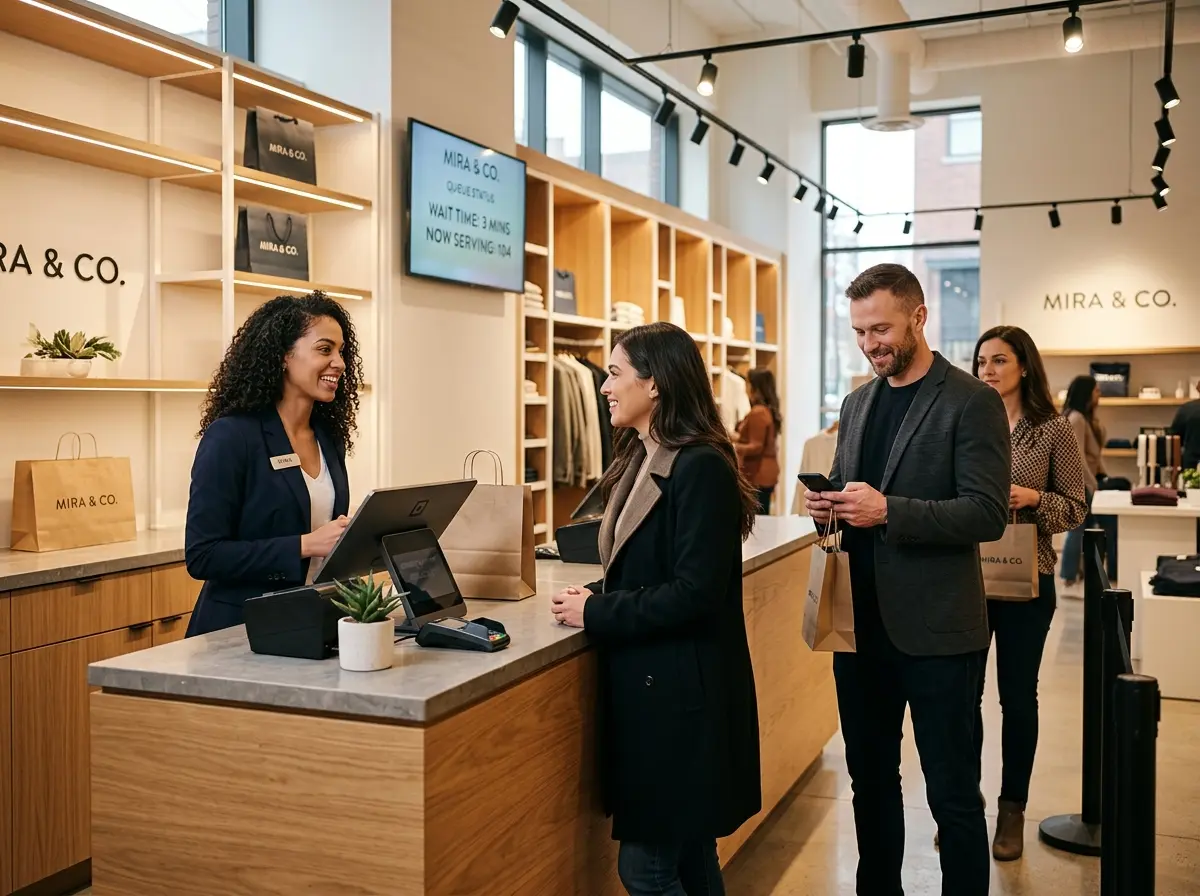
Nothing amplifies frustration like not knowing how long you'll be stuck. When customers have no idea whether the wait is two minutes or twenty, anxiety fills the vacuum. The fix is straightforward: communicate the wait time. Even an approximate estimate dramatically improves the experience. Post a sign, have staff make announcements, or use a digital queue management system. Just tell people what to expect, and watch the tension visibly drop from their shoulders.
Unfair Waits Feel Longer Than Fair Ones
If your customers perceive that someone jumped the line — or that a different checkout lane is moving inexplicably faster — frustration compounds quickly. Consistent, transparent queue management matters. Consider whether your current layout encourages fairness or accidentally undermines it. A single-serpentine queue (one line feeding multiple registers) is almost always perceived as fairer than multiple parallel lines, and it tends to reduce actual wait times too.
Smart Ways Stella Can Help in the Meantime
While your team manages the checkout line, a lot of the surrounding chaos often falls through the cracks — customers wandering around unsure if someone will help them, phones ringing at the counter while your staff is already stretched thin, and questions piling up that could easily be answered without pulling anyone away from their post.
Keeping Customers Informed and Engaged While They Wait
Stella, the AI robot employee and in-store kiosk, is genuinely useful here. Positioned near your entrance or along the queue area, she can proactively greet customers, answer questions about products, pricing, and policies, and even promote current deals — all without requiring a single second of your staff's attention. Customers who might otherwise stand in silence staring at the ceiling now have a natural, conversational resource available to them. That's occupied wait time, which as we just covered, feels significantly shorter.
And when the phones ring mid-rush? Stella handles those too, answering calls 24/7 with the same knowledge she uses in person — so your staff can stay focused on the customers already in front of them. It's a small operational shift with a noticeable impact on the in-store experience.
Practical Tactics to Actually Shorten the Line
Psychology helps, but sometimes you just need fewer people standing in a queue. Here are actionable ways to move customers through faster and reduce the perception (and reality) of a painful wait.
Streamline Your Checkout Process
Take a hard look at what's actually slowing your line down. Is it a clunky point-of-sale system? Cashiers who have to call for a manager every time there's a price discrepancy? Customers fumbling for loyalty cards that require a full account login ritual? Each of these friction points adds seconds — and seconds multiply. Audit your checkout flow as if you were a mildly impatient customer (shouldn't be too hard to imagine), and eliminate every unnecessary step you find.
Mobile payment options, contactless cards, and self-checkout kiosks can all dramatically reduce transaction time. If you haven't explored these yet, your competitors probably have.
Use Your Line as a Marketing Opportunity
This one is underutilized to a frankly surprising degree. The line is captive attention. Your customers aren't going anywhere — use that time wisely. Strategic product placement near the queue (hello, impulse buys) has been a retail staple for decades for good reason. But you can go further: digital signage promoting your loyalty program, a QR code to sign up for your email list, or even a tastefully placed display about your most popular add-on service. A customer who entered the line for one thing can exit having learned about three more things they didn't know they needed.
Staff Smarter, Not Just More
Adding more staff isn't always the answer — but deploying your existing staff more intelligently often is. Consider having a dedicated "line buster" during peak hours: an employee who circulates the queue with a tablet to begin transactions, answer questions, or at minimum acknowledge customers and set expectations. Research from Harvard Business School found that customers who are acknowledged early in the wait process report significantly higher satisfaction — even if the actual wait time doesn't change. A little human attention goes a long way.
Also worth reviewing: your scheduling. If your busiest hours are predictable (and they usually are — your POS data will tell you this), make sure your staffing reflects that reality rather than your optimistic assumptions.
Quick Reminder About Stella
Stella is an AI robot employee and phone receptionist built for businesses exactly like yours. She stands inside your store, engages customers naturally, promotes your offerings, and handles phone calls around the clock — all for $99/month with no upfront hardware costs. Whether you're a retailer, restaurant, salon, gym, or any other customer-facing business, she's ready to work without breaks, bad days, or turnover.
Turn the Wait Into a Win
The line isn't going away — at least not entirely. But it doesn't have to be the part of your customer's experience that they remember (and complain about). With the right mix of psychological awareness, operational improvements, and smart use of available tools, you can transform the wait from a liability into a manageable — and occasionally even productive — part of the visit.
Here's where to start:
- Audit your current wait experience. Stand in your own line during a busy period. What do you notice? What would frustrate you?
- Communicate wait times. Even a rough estimate is better than silence. Implement a simple system to keep customers informed.
- Give customers something to do. Engage them with content, conversation, or product discovery while they wait.
- Remove friction from checkout. Identify the top two or three things slowing down your transaction process and fix them this month.
- Use your peak-hour data. Schedule staff strategically and consider a line-buster role during your busiest windows.
Your customers are choosing to spend their time and money with you — the least you can do is make sure the experience reflects that you value both. A shorter, smarter, more engaging wait isn't just good customer service. It's good business.