When Your Patient List Is a Gold Mine You've Forgotten to Dig
Here's a scenario that plays out in chiropractic offices across the country: you have hundreds — maybe thousands — of patients in your system who came in once, felt better, and then quietly disappeared into the abyss of "I'll schedule when my back acts up again." Spoiler: their back has acted up again. Multiple times. They just haven't called.
This is the silent revenue killer for most chiropractic practices. You spend money on Google ads, social media, and maybe even a sandwich board outside your office to attract new patients, while a perfectly warm audience of existing patients sits dormant in your CRM. According to research in the healthcare industry, it costs five to seven times more to acquire a new patient than to reactivate an existing one. So why are so many practices leaving that money on the table?
One chiropractic practice decided to stop leaving it there. By running a deliberate, well-structured patient reactivation campaign, they booked 40 appointments in a single month — without a single new patient lead. Here's exactly how they did it, and how you can too.
The Anatomy of a Successful Patient Reactivation Campaign
Step One: Segment Your Dormant Patient List
Not all inactive patients are the same, and blasting a generic "We miss you!" email to everyone is roughly as effective as yelling into a parking garage. The practice started by pulling a list of patients who had not visited in 90 days or more, then segmented that list into three buckets: patients inactive for 90–180 days, 180 days to one year, and over one year. Each group received messaging tailored to where they were in their lapse cycle.
Patients who had dropped off recently were easier to re-engage — they just needed a nudge. Patients who had been gone over a year needed a stronger value proposition and, often, an update on what had changed at the practice. This segmentation alone dramatically improved response rates because the outreach felt personal rather than robotic.
Step Two: Build a Multi-Touch Outreach Sequence
The practice did not rely on a single email and hope for the best. They built a multi-touch sequence that included an initial email, a follow-up text message three days later, and then a personal phone call from the front desk for high-value patients. The messaging was warm, brief, and included a time-sensitive offer: a discounted re-evaluation appointment available only during a specific two-week window.
The urgency mattered. Open-ended offers — "come in anytime for a discount" — are easy to ignore indefinitely. A window of "book before the 15th" creates genuine motivation to act. Of the 40 appointments booked, the majority came through within the first ten days of the campaign, which tells you everything you need to know about deadline-driven behavior.
Step Three: Make Booking Frictionless
Here's where a lot of practices drop the ball even after running a great outreach campaign: the patient clicks through, wants to book, and then hits a wall. The phone goes to voicemail. The online booking system requires creating an account. The office is closed. Friction kills conversions, full stop.
This practice made sure that any patient who responded — whether by clicking a link, calling the office, or walking in after receiving a postcard — was met with an immediate, easy path to booking. Online scheduling was available around the clock, and their phone coverage was structured to ensure no call went unanswered during the campaign window. That last part, it turns out, was where an unexpected tool made a real difference.
How AI Can Plug the Gaps in Your Reactivation Workflow
Handling the Surge Without Overwhelming Your Staff
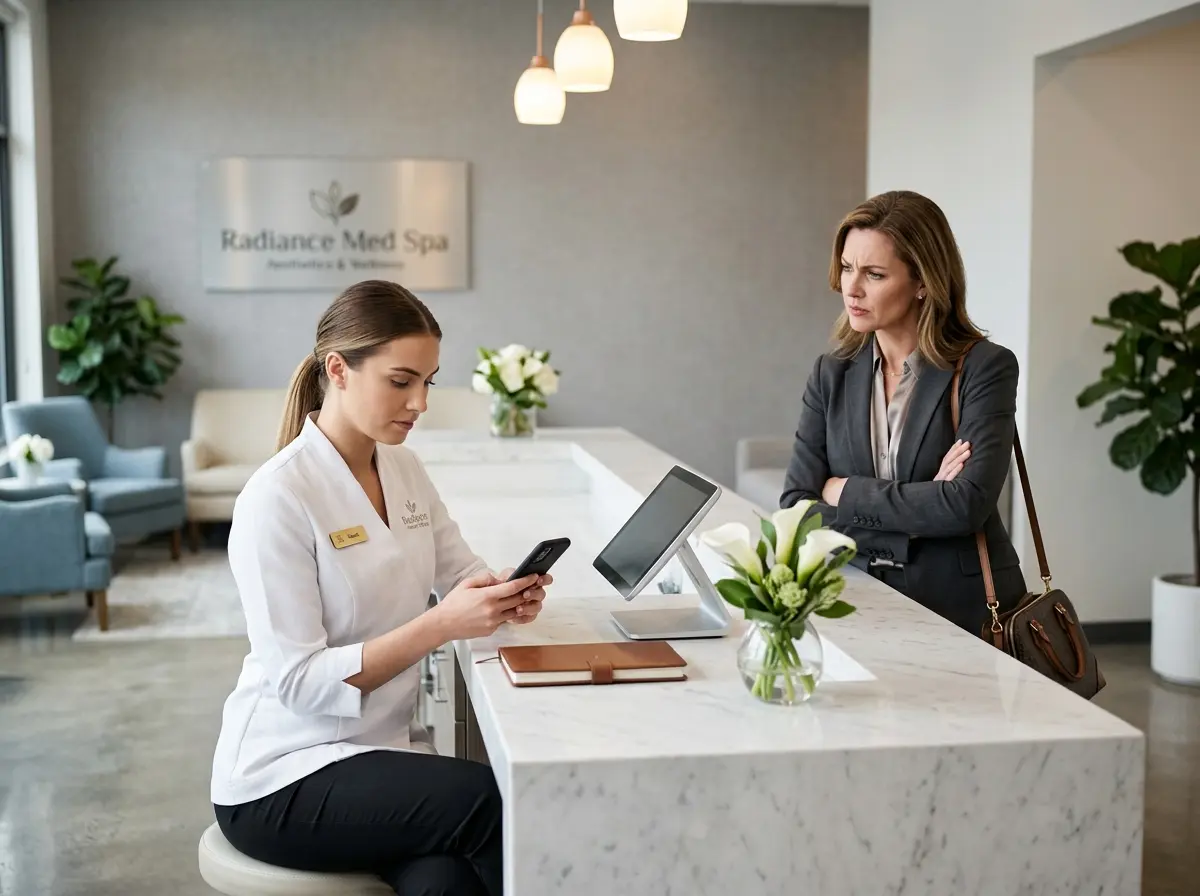
Running a reactivation campaign means your phone is going to ring more than usual — which is great, until your front desk is juggling check-ins, insurance questions, and three simultaneous calls at 10 a.m. on a Tuesday. This is exactly the kind of bottleneck that causes warm leads to slip through the cracks.
Stella, the AI robot receptionist, is built for exactly this kind of scenario. She answers phone calls 24/7 with complete knowledge of your services, current promotions, and scheduling details — which means a patient calling after hours about a reactivation offer gets a helpful, informed response instead of a voicemail. For practices with a physical location, Stella also operates as an in-office kiosk, greeting walk-ins and guiding them through check-in or intake without pulling staff away from clinical duties. Her built-in CRM and conversational intake forms also make it easy to capture patient information during calls and keep your contact records clean and tagged for future outreach — which means your next reactivation campaign will be even easier to run.
Crafting the Right Message for Lapsed Patients
Lead With Value, Not Guilt
One of the most common mistakes in patient reactivation messaging is the subtle guilt trip — "We noticed you haven't been in for a while…" Nobody wants to feel bad about their healthcare choices. The practice that booked 40 appointments in a month led with value first and kept the tone genuinely warm. Their subject line was simply: "Your back deserves a checkup — here's a little help getting there."
The email body acknowledged that life gets busy (relatable, not judgmental), highlighted a specific benefit of returning — a full reassessment to address any new or recurring issues — and closed with the discounted offer. The tone felt like it came from a provider who actually cared, not a business running a promotion. That distinction makes a meaningful difference in open rates and conversions.
Personalization Beyond the First Name
Personalization has become a baseline expectation for patients and customers alike. Slapping a first name in the subject line no longer qualifies. The practice pulled notes from patient records to reference the specific area of complaint from the patient's last visit. A patient who came in for lower back pain received messaging that spoke to that issue specifically. A patient who had been treated for neck tension received different copy.
This level of detail is only possible if your CRM is in good shape — another reason to invest in organized patient records before you launch any reactivation effort. Patients who received personalized messaging converted at nearly twice the rate of those who received generic outreach. Twice. That alone justifies the extra hour of setup time.
Measure Everything and Adjust in Real Time
The practice tracked open rates, click-through rates, call volume, and booking conversions throughout the campaign. Midway through, they noticed that the text message follow-up was dramatically outperforming the initial email in driving actual bookings. They doubled down on SMS for the second half of the campaign and saw a measurable uptick in appointments booked in the final week.
This kind of real-time adjustment is only possible if you set up tracking before the campaign launches. Use UTM parameters on links, track which touchpoints patients mention when they call, and log everything. Data is not glamorous, but it is the difference between a campaign you can learn from and one you simply forget about.
A Quick Reminder About Stella
Stella is an AI robot employee and phone receptionist designed to support businesses of all kinds — including chiropractic offices running exactly the kind of patient reactivation campaign described above. She handles inbound calls around the clock, greets patients in person at her kiosk, manages contact records through her built-in CRM, and ensures that no lead gets lost to voicemail or a missed call. At $99 per month with no upfront hardware costs, she's the kind of front desk support that doesn't take sick days or lunch breaks.
Your Reactivation Campaign Starts with One Decision
The chiropractic practice that booked 40 appointments in one month didn't stumble into those results. They made a deliberate choice to treat their existing patient list as the asset it actually is, built a structured outreach campaign with segmentation and multi-touch follow-up, crafted messaging that led with genuine value, and made sure the booking process was seamless at every point of contact.
If you're a practice owner reading this, here are your immediate next steps. First, pull your inactive patient list and segment it by how long each patient has been dormant. Second, draft a three-touch outreach sequence with email, text, and phone — and build in a time-limited offer that gives patients a reason to act now rather than later. Third, audit your inbound response process to make sure that when patients respond to your campaign, they can actually book without friction. And fourth, track everything so your next campaign is smarter than your last.
The patients are out there. They've used your services before. They know and trust your practice. All they need is a well-timed, well-crafted reason to walk back through your door. Go give them one.