You Have More Customer Data Than You Think — You're Just Not Using It
Here's a fun little exercise: ask yourself how well you actually know your in-store customers. Not your gut feeling about them — actual, documented, actionable knowledge. What do they ask about most? What promotions made them buy? What time of day do they show up? What questions do your staff answer seventeen times a day?
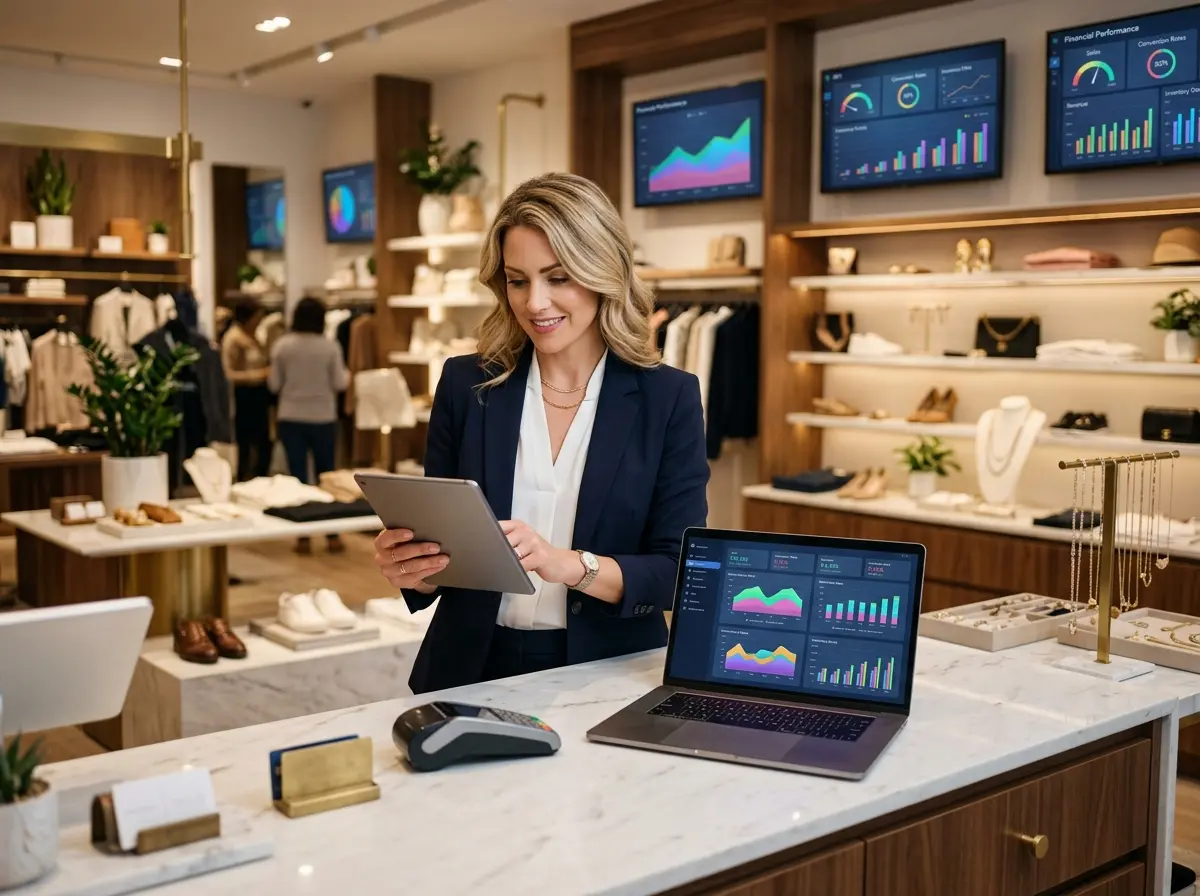
If your answer involves a lot of shrugging and vague phrases like "oh, we get a good mix of people," congratulations — you're leaving serious money on the table, and you're in excellent company. Most brick-and-mortar business owners are sitting on a goldmine of customer behavior data and have absolutely no system for capturing it. They rely on employee memory, anecdotal conversations, and the occasional gut instinct. And while intuition is great for choosing a lunch spot, it's a fairly terrible foundation for a marketing strategy.
Customer Data Platforms (CDPs) are changing that equation — and understanding how to use one for your physical location doesn't require a data science degree or a Silicon Valley budget. Let's break it down.
What Is a Customer Data Platform and Why Should Physical Retailers Care?
The CDP Explained (Without the Jargon)
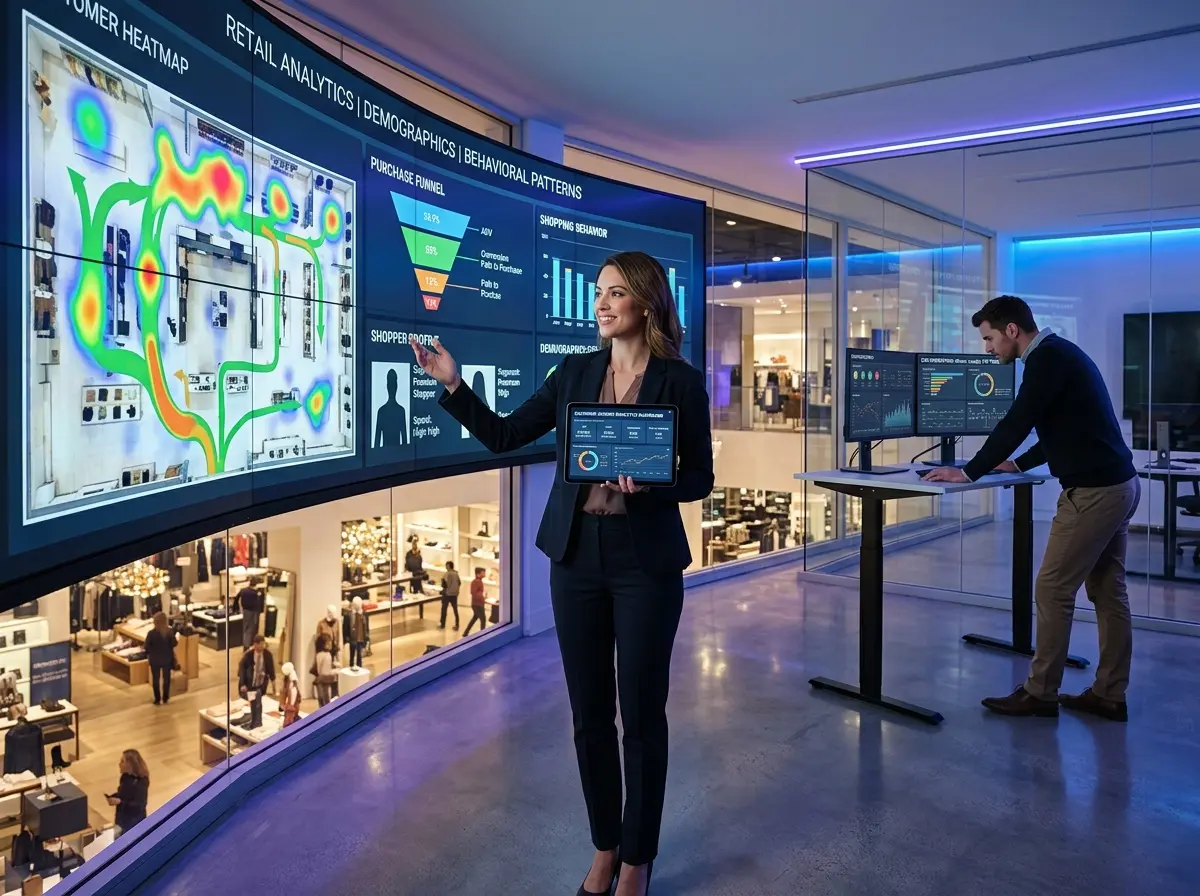
A Customer Data Platform is essentially a centralized system that collects, organizes, and makes sense of customer information from multiple touchpoints. Unlike a traditional CRM — which typically stores contact information and transaction history — a CDP is designed to build a unified profile of each customer by pulling in behavioral data, interaction history, preferences, and more.
For e-commerce businesses, CDPs have been standard practice for years. Every click, cart abandonment, and email open gets tracked, analyzed, and fed back into smarter marketing. But for physical retailers, the challenge has always been that in-store interactions are largely invisible. A customer walks in, browses, asks a question, maybe buys something, and walks out — leaving almost no trace of what they were interested in, what confused them, or what almost convinced them to spend more.
That invisibility is the problem CDPs for in-store retail are now solving.
The Data Points That Actually Matter In-Store
Not all data is created equal. For brick-and-mortar businesses, the most valuable customer data tends to fall into a few key categories:
- Interaction data: What questions are customers asking? What products or services are they inquiring about most?
- Promotional effectiveness: Which deals or specials are generating the most customer engagement versus which ones are being completely ignored?
- Visit patterns: When are customers coming in? Are there peak times you're understaffed for?
- Customer intent signals: Are people asking about pricing, availability, or comparisons? These tell you where they are in the buying journey.
- Contact and preference data: Basic information that helps you follow up, personalize, and retain customers over time.
The catch, of course, is that capturing this data in a physical environment has traditionally required either expensive technology, highly disciplined staff (rare), or both. Which brings us to how modern tools are making this dramatically easier.
How Smart In-Store Technology Is Closing the Data Gap
Let Stella Do the Heavy Lifting
One of the more elegant solutions to the in-store data problem is Stella, an AI robot employee and phone receptionist designed specifically for businesses with physical locations — though she handles phone calls for any type of business too. Stella stands inside your store, greets every customer who walks by, and engages them in natural conversation about your products, services, specials, and promotions. While she's doing all of that friendly, helpful engagement, she's also quietly doing something your human staff rarely has time to do: collecting and organizing data.
Stella captures customer interaction insights, tracks which promotions generate the most engagement, and collects customer contact information through conversational intake forms — the kind that feel like a natural chat rather than a clipboard shoved in someone's face. All of that information flows into a built-in CRM with custom fields, tags, notes, and AI-generated customer profiles. The result is a continuously growing, organized picture of who your in-store customers actually are and what they actually care about.
And because Stella also answers phone calls 24/7 with the same business knowledge she uses in person, you're capturing data from phone inquiries too — not just foot traffic. That's a genuinely unified view of customer interactions that most small businesses have never had access to before.
Turning Customer Data Into Smarter Business Decisions
Personalization That Doesn't Feel Creepy
The word "personalization" gets thrown around so often that it's lost some of its meaning. But the practical version — the one that actually drives revenue — is simpler than most people think. It means knowing enough about your customer segments to speak to them relevantly, and knowing enough about individual customers to treat return visitors like the valued regulars they are.
When your CDP is capturing data points like product interest, past inquiries, and promotional responses, you can start doing things like sending a follow-up offer to a customer who asked about a service but didn't book, or flagging a returning customer for a staff member so they can greet them by name. These aren't gimmicks — according to McKinsey, personalization consistently delivers five to eight times the ROI on marketing spend and can lift sales by 10% or more. The businesses that figure this out early have a meaningful advantage over those still relying on generic promotions and hope as a strategy.
Refining Your Promotions Based on Real Engagement
Here's a scenario that plays out constantly in retail: a business owner runs a promotion, it "seems to go well," and they run a similar one next quarter without ever actually knowing what drove the results. Was it the discount percentage? The timing? The way it was communicated? Nobody knows, so the cycle repeats with the same blind spots intact.
Customer data platforms allow you to tie promotional activity directly to customer engagement and conversion. Which offers prompted customers to ask follow-up questions? Which ones got blank stares? Which price points moved people from browsing to buying? When you have this information across multiple campaigns, you stop guessing and start iterating based on evidence. That's the difference between a marketing budget and a marketing strategy.
Identifying Your Best Customers (And Finding More of Them)
Not all customers are equally valuable, and knowing which ones are worth investing in is one of the most important things a CDP can tell you. By analyzing contact history, purchase behavior, and interaction patterns, you can identify your highest-value customer segments — and then use that profile to inform everything from your advertising targeting to your in-store experience design.
If your data shows that a specific type of customer consistently spends more, refers others, and responds to a particular category of promotion, that's not just interesting — it's actionable intelligence that should be shaping your entire customer acquisition strategy. The businesses winning in competitive markets aren't necessarily the ones with the biggest budgets; they're the ones who understand their customers better than everyone else.
Quick Reminder About Stella
Stella is an AI robot employee and phone receptionist available for just $99/month with no upfront hardware costs. She greets in-store customers, answers phones around the clock, collects customer data through conversational intake forms, and manages it all through a built-in CRM — giving your business the kind of customer intelligence that used to require a dedicated analytics team. She's ready to work the moment you set her up, and unlike most employees, she never calls in sick on a Saturday.
Start Small, Think Big, and Actually Use Your Data
The good news about getting started with customer data for your physical location is that you don't need to boil the ocean on day one. Here's a practical starting framework:
- Audit what you're already capturing. Most businesses have more raw data than they realize — transaction records, contact lists, appointment histories. Start by understanding what you have.
- Identify your most important questions. What do you most want to know about your customers? Start your data strategy by working backward from the decisions you want to make.
- Implement a system that captures in-store interactions. This is the gap for most physical retailers. Tools like in-store AI kiosks, digital intake forms, and integrated CRMs are now accessible at price points that make sense even for small businesses.
- Review your data regularly — and actually act on it. Data you collect but never look at is just digital clutter. Build a simple monthly habit of reviewing customer interaction trends and adjusting accordingly.
- Close the loop between your promotions and your results. Tag campaigns in your CRM, track engagement, and measure what actually works.
The businesses that will thrive over the next decade aren't necessarily the ones with the fanciest products or the lowest prices — they're the ones that understand their customers deeply enough to consistently deliver relevant, valuable experiences. Customer data platforms, once the exclusive domain of enterprise retailers, are now accessible to any business with a physical location and the common sense to use them. The only question is whether you'll be one of the businesses that takes advantage of that shift, or one of the ones that keeps relying on gut feelings and hoping for the best.
Your customers are already telling you exactly what they want. You just need a system that's actually listening.