Why Your Running Store Needs More Than Just Good Shoes
Here's a fun little truth about the running industry: people don't just buy shoes. They buy identity, motivation, and — whether they admit it or not — a reason to not bail on their Saturday morning long run. A good pair of trainers can get someone out the door once. A thriving running community keeps them coming back every week, and more importantly, back to your store.
Group runs are one of the most powerful — and criminally underutilized — tools a running specialty retailer can deploy. They cost relatively little to organize, they build genuine loyalty, and they turn casual customers into passionate brand ambassadors who will happily tell everyone at work about that amazing little running shop they found. But here's the thing: a lot of running stores start a group run, show up enthusiastically for about three weeks, and then slowly let it fizzle out into a ghost town with a cone in the parking lot and a handwritten sign no one reads anymore.
This guide is here to make sure that doesn't happen to you. Let's talk about how to build a running community that actually sticks — and while we're at it, keeps your cash register ringing too.
Building the Foundation of Your Running Community
Start With Consistency, Not Perfection
The number one mistake running stores make when launching a group run program is trying to make it too complicated from day one. Multiple pace groups, custom jerseys, a timing chip system — all great ideas, all things that can wait. What matters most at the beginning is showing up, every single time, without fail.
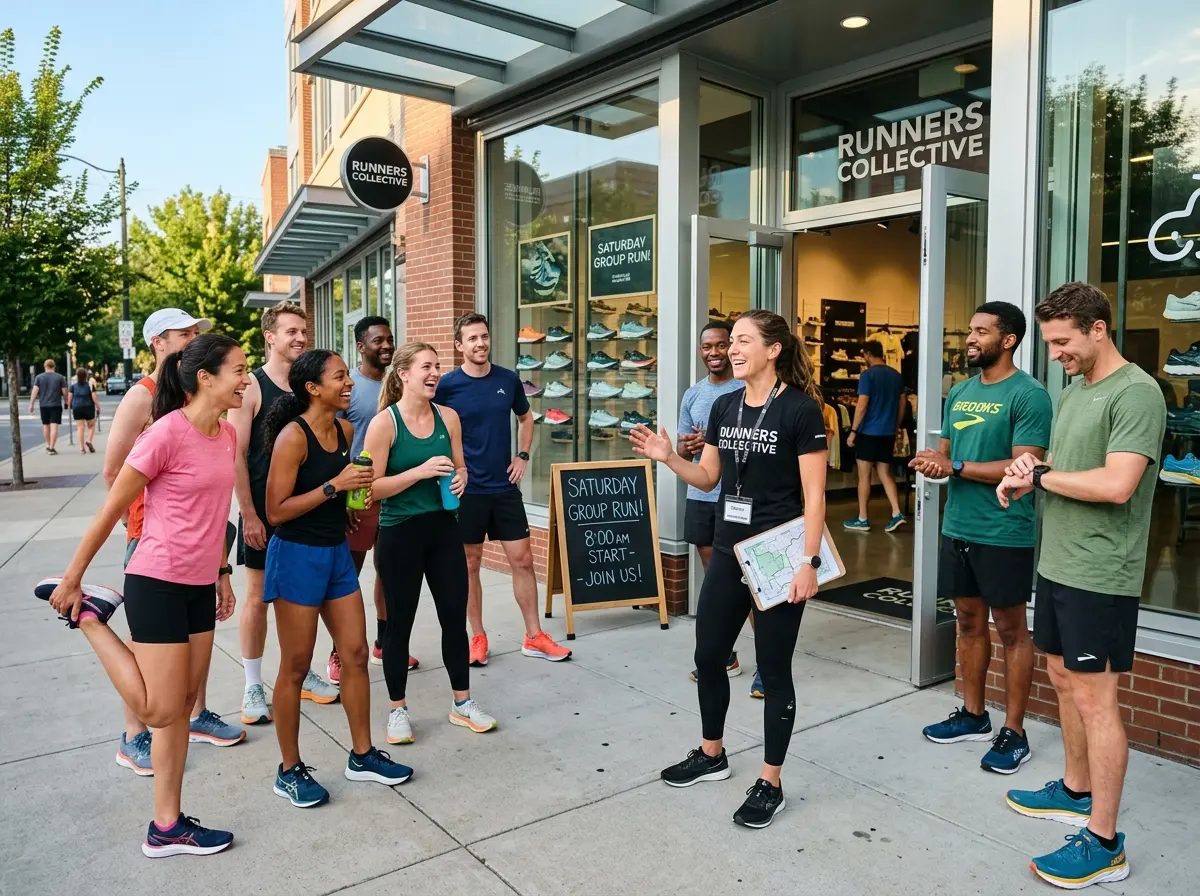
Pick one day and one time that works for your target demographic. Early Saturday mornings work beautifully for the dedicated crowd. Tuesday or Thursday evenings after work are gold for the busy professional runner who needs accountability. Whatever you choose, commit to it publicly, put it on your website, and treat it like a standing appointment. Consistency is what builds trust, and trust is what builds community.
Even if three people show up your first week — and yes, one of them might be your own employee — you run. Because the runner who almost didn't come and then did will tell someone about it. And that's how it starts.
Create a Welcoming Structure for All Paces
Nothing kills a fledgling running community faster than accidentally making slower runners feel unwelcome. Speed snobbery is real, it's unpleasant, and it will absolutely undermine your efforts if you let it take root.
From the very beginning, be explicit and enthusiastic about being pace-inclusive. Structure your runs so that no one is left behind — consider an out-and-back route where faster runners simply turn around sooner, or set up a buddy system where experienced members volunteer to run with newer participants. Make the post-run hangout just as important as the run itself, because that's where the real community bonding happens. A 30-minute stretch and chat in front of your store after the run is worth its weight in gold for retention.
According to Running USA, recreational runners who feel socially connected to a running group are significantly more likely to maintain their running habits long-term — which means they're also more likely to keep buying gear, signing up for races, and referring friends. Your inclusivity is literally good for business.
Leverage Local Race Calendars and Goals
One of the most effective ways to give your group run purpose is to tie it to the local racing calendar. When there's a half marathon in town six weeks out, that's your training anchor. Promote your group runs as informal training prep, create pace-based sub-groups for that specific race, and suddenly your Saturday morning run has meaning beyond just getting some miles in.
You can even partner with local race organizers for discounted entries for your group members — a small perk that adds enormous perceived value. Hang a race calendar in your store, highlight upcoming events in your email newsletter, and position your store as the hub that helps people cross the finish line. That's a story people remember, and more importantly, repeat.
Using Smart Tools to Keep Your Community Organized
Don't Let Logistics Be the Thing That Kills Your Momentum
Running a group run program sounds simple until you're also running a retail store, managing staff, answering phones, tracking inventory, and trying to remember who signed the waiver last week. The administrative side of community building is real, and if it becomes too burdensome, you'll start cutting corners — and eventually, cutting the program altogether.
This is where Stella can genuinely take some weight off your shoulders. As an AI robot employee and phone receptionist, Stella handles in-store customer greetings and phone calls so your staff can stay focused on the humans standing right in front of them — especially during the pre-run chaos when six people walk in at once asking about shoe sizing while the phone rings off the hook. She can answer questions about your group run schedule, store hours, upcoming events, and promotions, and even help collect customer information through conversational intake forms that feed directly into her built-in CRM. That means you're automatically building a database of your running community members without any manual data entry — which is exactly as magical as it sounds.
Growing and Sustaining Your Running Community Long-Term
Build Social Proof and Online Presence
Your group run is only as visible as you make it. If you're not documenting it on social media, it might as well not exist to the 85% of potential customers who will check your Instagram before they ever walk through your door. Designate someone — a staff member, a volunteer regular, literally anyone with a smartphone — to take photos at every run. Post them consistently. Tag people when you can. Create a simple hashtag and encourage participants to use it.
User-generated content is the holy grail of marketing for small businesses because it's authentic, it's free, and it reaches people you'd never find through paid advertising. When a runner posts a sweaty selfie in front of your store with a caption about how much they love your Saturday crew, that's an endorsement no ad budget can buy. Repost it, celebrate it, and thank them publicly. Community members who feel seen become community members who stay.
Create Milestone Moments and Rewards
People are motivated by recognition. It's just human nature — or in the case of runners, extremely sweaty human nature. Create simple milestone moments within your group run program that make participants feel acknowledged and special. A "10 Runs Club" sticker. A shoutout board inside the store. A small discount for members who've participated for six months. These gestures cost almost nothing and generate disproportionate amounts of goodwill.
You can also host occasional special events around your group runs — a local coach doing a free form clinic, a nutritionist talking about fueling for half marathons, a shoe demo night with a brand rep. These events give loyal regulars a reason to bring a friend, which is your most powerful growth mechanism. Word-of-mouth referrals from existing community members will always outperform cold marketing, and giving people something genuinely interesting to share is how you earn those referrals.
Measure What's Working and Adjust Without Drama
Sustainable community building requires honest self-assessment. Track your attendance numbers week over week. Notice which runs have the highest turnout and ask yourself why. Did you promote them differently? Was the weather nicer? Did you try a new route? These patterns matter, and paying attention to them helps you double down on what works and gracefully ditch what doesn't.
Survey your regulars once or twice a year — even informally, just a casual conversation at the end of a run — about what they love, what they'd change, and what would make them more likely to bring a friend. The answers will surprise you and almost certainly improve your program. Community building is not a set-it-and-forget-it strategy. It's a living thing that needs tending, and the stores that treat it that way are the ones with 40 people showing up in the rain every Saturday.
Quick Reminder About Stella
Stella is an AI robot employee and phone receptionist built for businesses exactly like yours — she greets customers in-store, answers your phones 24/7, promotes your events and deals, and keeps your operations running smoothly without breaks, bad days, or turnover. At $99/month with no upfront hardware costs, she's the kind of team member that makes every other part of running your business a little more manageable.
Lace Up and Get Started
Building a running community around your store is not a quick win — it's a long game. But it's one of the most rewarding and commercially effective long games available to a specialty running retailer. The stores that invest in community don't just sell shoes; they become institutions. They become the place in town that runners talk about, train at, and fiercely defend when someone suggests buying their next pair online.
Here's your action plan to get moving — literally:
- Choose your day and time and commit to it publicly on your website and social channels.
- Design a pace-inclusive route that welcomes walkers, beginners, and fast finishers alike.
- Tie your runs to the local race calendar to give participants a shared goal.
- Document every run on social media and encourage participants to do the same.
- Create milestone rewards that make long-term participants feel seen and celebrated.
- Track attendance and gather feedback so you can keep improving over time.
- Let smart tools handle the logistics so you can focus on the community itself.
The finish line for your running store isn't just a healthy revenue number — it's a Saturday morning parking lot full of people who genuinely can't imagine shopping anywhere else. Now go put out that cone, and this time, actually show up.