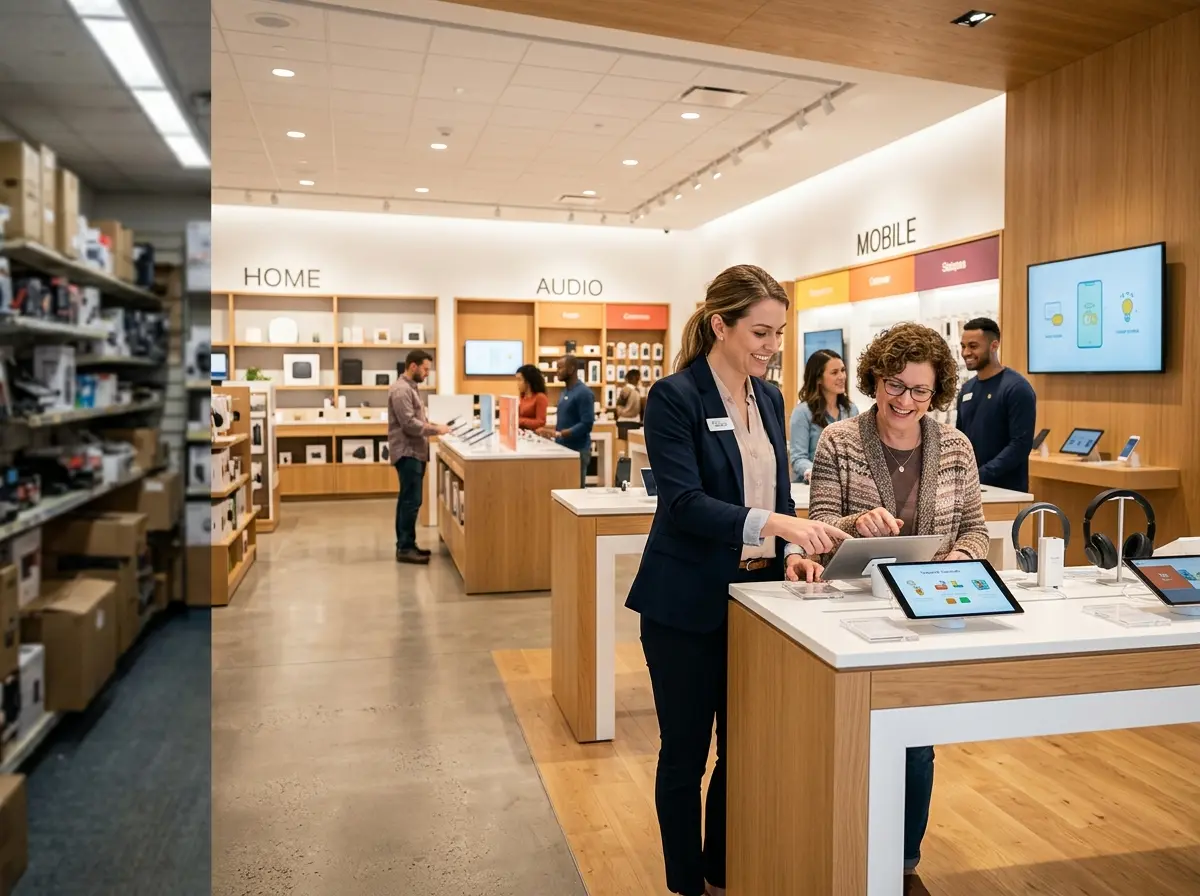
When Keeping a Product "Just in Case" Starts Costing You Real Money
Every retailer has one. That product sitting on the shelf like a polite houseguest who overstayed their welcome — taking up space, collecting dust, and somehow still making it onto the reorder list every quarter. You know the one. It was a great idea at the time. Maybe there was buzz. Maybe a sales rep was very convincing. Maybe you just really believed in it.
Reading the Data: What Your Sales Numbers Are Really Telling You
Before you start pulling items from shelves, you need to understand the difference between a product that's performing poorly and a product that's failing. These are not the same thing, and confusing the two is how retailers accidentally discontinue their future bestsellers.
Sell-Through Rate: The First Number You Should Check
To calculate it: (Units Sold ÷ Units Received) × 100. Simple math, sobering results. Pair this with your carrying costs — storage, insurance, opportunity cost of shelf space — and you'll quickly see that a "cheap" product that doesn't sell is actually quite expensive.
Gross Margin Return on Investment (GMROI)
If sell-through is the pulse check, GMROI is the full physical. It tells you how much gross profit you're earning for every dollar invested in inventory. A GMROI below 1.0 means you're losing money on that product category — full stop. The formula: Gross Margin ÷ Average Inventory Cost.
Days on Hand and Velocity
Using Customer Feedback and Frontline Insights to Fill the Gaps
Data from your POS system tells you what is happening. Your customers and staff tell you why. Both are essential. A product with low sales might be failing because of poor placement, weak promotion, or staff who simply don't know enough about it to recommend it — not because it's inherently unwanted. Before you retire something, make sure you've actually given it a fair chance.
How Stella Can Help You Capture Customer Intelligence
This is exactly where Stella, the AI robot employee and phone receptionist, becomes a genuinely useful asset for retailers. Standing right in your store, Stella greets customers, answers their questions about products, and promotes your current offers — while quietly collecting interaction data that tells you what customers are asking about, what's generating interest, and what's drawing a blank. If nobody's asking about a product and nobody's buying it, that's a pattern worth noting.
Stella also handles phone calls around the clock with the same product knowledge she uses in person, so you're not missing customer inquiries — or insights — after hours. The combination of in-store engagement data and phone interaction trends gives you a richer picture than sales figures alone. Think of her as a frontline data collector who never goes on break and never forgets what customers asked about.
Making the Decision: A Framework for Cutting, Keeping, or Rehabbing
The Three-Category Sort
Sort your underperformers into three buckets. Cut candidates are products with consistently low sell-through, poor GMROI, minimal customer interest, and no clear path to improvement. These should be liquidated, returned to vendor if possible, or bundled with better-selling items to move them out. Rehab candidates are products with reasonable margin potential but poor visibility, pricing issues, or staff knowledge gaps. These deserve a focused 60–90 day improvement push before final judgment. Watch list items are products showing mixed signals — perhaps strong in one location or season but weak elsewhere. These need more data before any decision is made.
The Hidden Cost of Inaction
Executing the Exit Without Burning Cash
Quick Reminder About Stella
Stella is an AI robot employee and phone receptionist built for businesses like yours — she stands in your store engaging customers, answers calls 24/7, promotes your offerings, and helps you capture the kind of frontline insights that make decisions like these a lot easier. At $99/month with no upfront hardware costs, she's the team member who's always on, always informed, and never asks for a day off.