Introduction: Because "Come Back Soon!" Isn't a Loyalty Strategy
Let's be honest — you didn't open a med spa to become a marketing strategist, data analyst, and customer retention expert all at once. And yet, here you are, watching clients float out the door after a beautiful HydraFacial, wondering if you'll ever see them again before their fine lines beat you to it.
The good news: repeat clients are the backbone of a thriving med spa. According to research from Bain & Company, increasing customer retention rates by just 5% can increase profits by 25% to 95%. That's not a typo. The clients already sitting in your treatment rooms are, statistically speaking, your most valuable asset — and yet most med spas put all their energy into chasing new faces instead of delighting the ones already in the building.
A well-designed loyalty points system changes that equation entirely. It gives clients a concrete reason to return, a sense of progress and reward, and — if you build it right — a genuine emotional connection to your brand. Done poorly, it becomes a confusing mess of expiring points and forgotten punch cards. Done well, it becomes one of the most cost-effective retention tools in your business.
This guide is going to walk you through how to build a loyalty program that actually works — not one that sounds good in a meeting and dies quietly in your POS system six months later.
Building the Foundation of Your Loyalty Program
Choosing the Right Points Structure
The first thing you need to decide is how clients earn points, and this matters more than most spa owners realize. A structure that's too complicated will be ignored. A structure that's too easy to game will eat into your margins. You want something simple to understand, satisfying to earn, and meaningful enough to motivate behavior.
A common and effective starting point for med spas is a dollar-based system: earn 1 point for every $1 spent. From there, you can layer in bonus multipliers for high-margin services you want to promote. For example:
- 1 point per $1 on all services
- 2x points on neurotoxin or filler appointments (high-ticket, high-margin)
- 3x points during a seasonal promotion or slow booking period
- Bonus points for writing a review, referring a friend, or booking during off-peak hours
The key is to align your bonus point opportunities with your business goals — not just what sounds generous. If Tuesday afternoons are a ghost town, that's exactly when you should be dangling triple points.
Designing Rewards That Actually Motivate
Here's where a lot of loyalty programs fall flat: the rewards aren't exciting enough to change behavior. If clients need 10,000 points to earn a $5 discount, they're not going to feel particularly inspired. Your rewards need to feel attainable and genuinely valuable.
Consider structuring your redemptions in tiers so clients get early wins but keep reaching for bigger prizes. A sample framework might look like this: 500 points redeems for a complimentary add-on (like a lip treatment or collagen mask), 1,500 points unlocks a $50 service credit, and 3,000 points earns a free signature facial or significant discount on an injectable package. You can also offer non-monetary rewards that feel exclusive — like priority booking, a complimentary consultation with your medical director, or early access to new treatments before they're available to the general public. These cost you very little but carry significant perceived value.
Setting Expiration Policies Without Alienating Clients
Points expiration is a delicate subject. You need some policy to prevent unlimited liability from accumulating on your books, but aggressive expiration dates will frustrate loyal clients and damage trust. A reasonable middle ground is a 12-month rolling expiration — points expire only if the client has had no account activity for 12 months. This rewards engagement without punishing clients who book quarterly rather than monthly. Send a friendly reminder email 60 days before any points are set to expire. It's good customer service, and it'll likely bring them back in for a booking before the deadline — which is, of course, the entire point.
Using Technology to Automate the Experience
Letting Tools Handle the Heavy Lifting
A loyalty program that requires your front desk staff to manually track points, send reminders, and explain the rules to every single client is not a loyalty program — it's a second job. The right technology stack should handle enrollment, point tracking, balance inquiries, and reward redemption with minimal human effort.
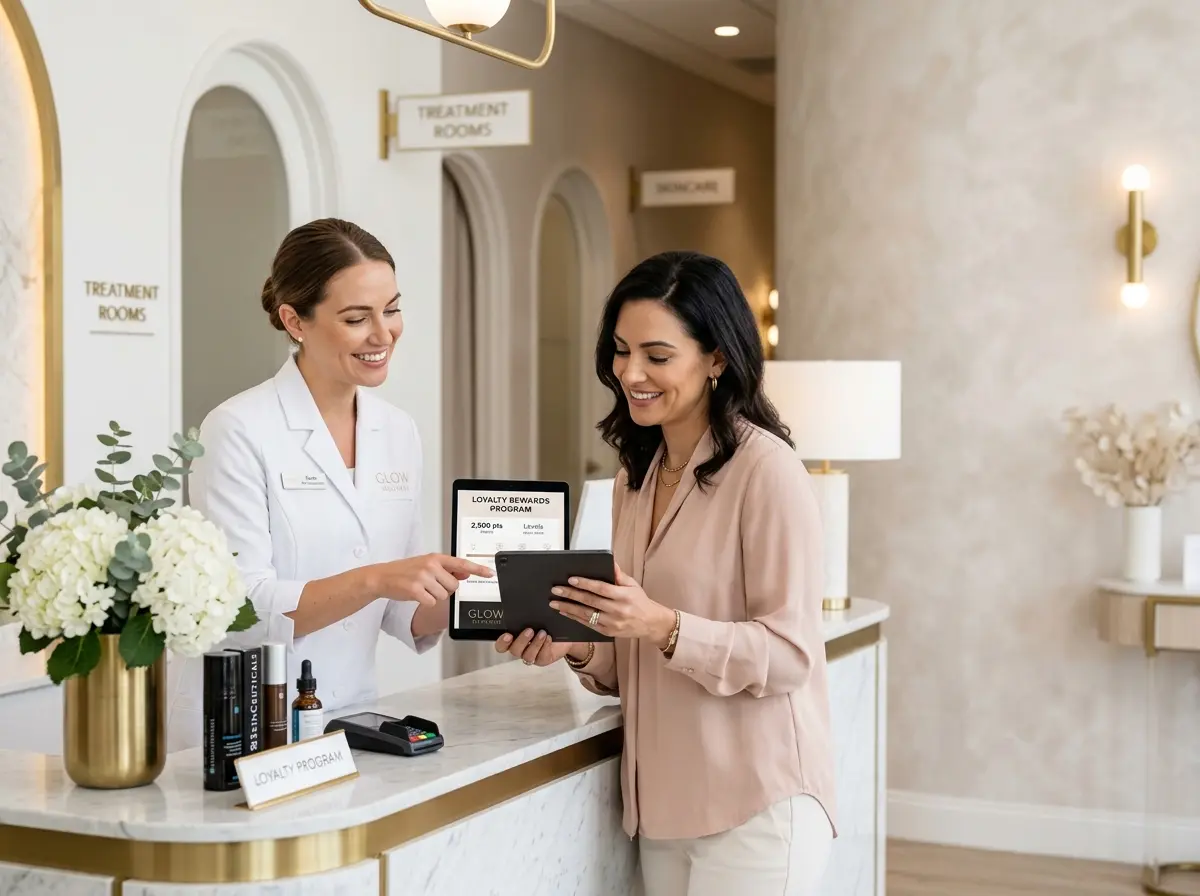
That's where Stella can genuinely pull her weight. As an AI robot receptionist and in-store kiosk, Stella greets clients the moment they walk in — and she can proactively mention your loyalty program, explain how it works, and even prompt clients to sign up or check their points balance without pulling a single staff member away from a treatment room. On the phone side, she answers calls 24/7 and can field common loyalty-related questions like "How many points do I have?" or "What can I redeem them for?" — giving clients the information they need at 9pm on a Sunday when your human staff are (rightfully) off the clock. Her built-in CRM and intake forms also make it easy to capture client information and tag loyalty members so every interaction feels personalized and informed.
Driving Repeat Bookings Through Smart Engagement
Timing Your Communications for Maximum Impact
Earning points is only half of the loyalty equation. The other half is making sure clients remember they have points and feel compelled to use them. This requires a deliberate communication strategy — not a spam campaign, but a thoughtful series of touchpoints that keep your spa top of mind without becoming annoying.
Some of the highest-converting moments to reach out include: immediately after an appointment (a thank-you message with their updated points balance), when they're approaching a reward threshold ("You're only 200 points away from a free add-on!"), on their birthday with a bonus points offer, and during seasonal campaigns or new treatment launches. The goal is relevance and timing. A generic "we miss you!" email sent to your entire client list every month is the marketing equivalent of sending the same card to every person you know on Valentine's Day — technically an effort, but not a particularly meaningful one.
Creating Referral Loops Within Your Loyalty Program
One of the smartest things you can do with a points system is turn it into a referral engine. When a loyal client refers a friend and both parties receive bonus points, you've just used your existing client base to grow it — without paying for a single ad. A simple structure might offer the referring client 250 bonus points when their referred friend completes their first appointment, while the new client receives 100 points just for booking. This creates an immediate incentive for the new client to engage with the program from day one, rather than signing up and forgetting about it.
Rewarding the Behaviors That Matter Most to Your Business
Not all client behaviors are created equal, and your loyalty program should reflect that. Beyond simply rewarding spending, consider awarding points for actions that directly benefit your operations: booking during low-demand time slots, prepaying for a package, following your social media accounts, or leaving a Google review. Each of these behaviors has measurable value to your business — reviews improve your local search ranking, package prepayments improve cash flow, and off-peak bookings balance your schedule. When you reward the behaviors you want to see more of, you're not just running a loyalty program — you're subtly shaping how your clients interact with your business in ways that compound over time.
Quick Reminder About Stella
Stella is an AI robot employee and phone receptionist built for businesses like yours — she greets clients at your kiosk, answers phones 24/7, promotes your services and specials, and manages customer information through a built-in CRM, all for just $99/month. She doesn't call in sick, forget to mention your loyalty program, or put a client on hold while she tracks down an answer. If you're building out systems to run your spa more efficiently, she's worth a serious look.
Conclusion: Stop Hoping They Come Back — Give Them a Reason To
A loyalty points system isn't a magic wand. It won't fix poor service, inconsistent results, or a booking process so frustrating it requires a stress-relief facial just to get through. But when your client experience is already solid, a well-built loyalty program amplifies everything — it deepens relationships, increases visit frequency, boosts average spend, and turns your happiest clients into your most effective marketing channel.
Here's your action plan to get started:
- Define your points structure — keep it simple, and align bonus multipliers with your business goals.
- Design a tiered rewards menu that offers early wins and aspirational prizes.
- Set a fair expiration policy with proactive reminders that bring clients back before they lose anything.
- Automate as much as possible — from enrollment to balance updates to reminder communications.
- Build referral incentives into the program so your loyal clients grow your list for you.
- Review your data quarterly and adjust — what's actually driving bookings, and what's just taking up space?
Your clients want to come back. They just sometimes need a nudge, a reminder, and the quiet satisfaction of watching a points balance tick upward. Give them that, and your appointment book will do the rest.