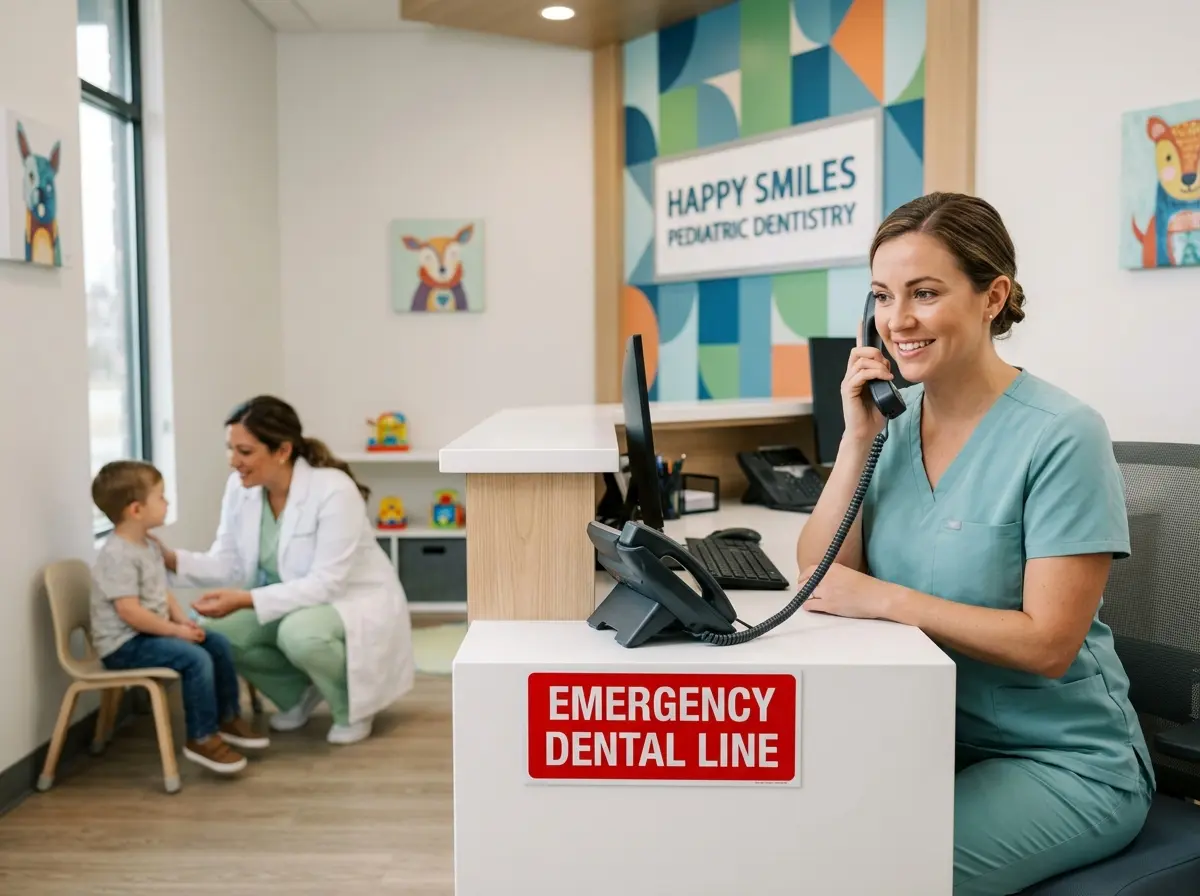
When a Tooth Emergency Strikes, Your Phone Line Shouldn't Be the Problem
Picture this: it's 6:47 PM on a Tuesday. A panicked parent is standing in their kitchen holding a washcloth to their seven-year-old's mouth after a bicycle accident knocked out a tooth. Every second counts — reimplantation windows are narrow, the child is crying, and the parent is frantically Googling your practice's phone number. They call. And they get… a voicemail box. Or worse, they sit on hold while your front desk handles routine appointment reminders.
That parent is not calling back tomorrow to schedule a cleaning. They're calling your competitor.
Dental emergencies don't operate on business hours, and neither do the anxious parents who experience them. If your pediatric dental practice doesn't have a dedicated, clearly communicated emergency line — with a reliable system behind it — you're not just losing patients. You're losing trust at the worst possible moment. Let's talk about why a dedicated emergency line matters, how to set it up properly, and how to make sure it actually works when it needs to.
The Case for a Dedicated Dental Emergency Line
Emergencies Are More Common Than You Think
According to the American Academy of Pediatric Dentistry, dental trauma affects roughly one in three children at some point during childhood. Add to that sudden toothaches, lost crowns, soft tissue injuries, and post-operative complications, and you've got a steady stream of after-hours calls that deserve more than a generic voicemail greeting. A dedicated emergency line signals to parents — before they even speak to anyone — that your practice takes urgent situations seriously. That alone builds confidence and loyalty.
Your Main Line Wasn't Built for This
Your general practice phone line is handling appointment scheduling, insurance questions, billing inquiries, and the occasional parent who wants to know if it's normal that their kid still has a loose tooth at age nine. Mixing emergency calls into that queue is a recipe for delayed responses, overwhelmed staff, and frustrated families. A dedicated line allows you to set up specific protocols — different routing, different greetings, different escalation rules — so emergency calls get the immediate attention they deserve without disrupting your normal operations. Think of it as a dedicated lane on a highway. Everyone moves faster.
Liability and Reputation Are on the Line
Failing to have a clear, accessible emergency contact pathway isn't just a customer service issue — it can carry real professional and reputational consequences. Parents talk. Reviews get written. And in a world where a single one-star review mentioning "couldn't reach anyone during my child's emergency" can deter dozens of prospective families, the cost of not having a dedicated line far outweighs the cost of setting one up. Beyond reputation, documented emergency protocols also demonstrate due diligence — something your malpractice insurer may appreciate.
How Technology (and Stella) Can Help You Manage the Chaos
Automating the Front Lines of Emergency Intake
You don't need a full-time emergency dispatcher to handle after-hours dental calls effectively. What you need is a smart, reliable system that can triage incoming calls, collect critical patient information, and escalate appropriately — all without requiring your exhausted front desk team to be on-call around the clock. This is exactly where Stella, the AI robot employee and phone receptionist, fits neatly into the picture. Stella answers calls 24/7, can walk a caller through a structured intake process to capture the patient's name, age, nature of the emergency, and callback number, and can then forward the call to on-call staff based on your configured rules. For a pediatric dental office, that means a parent gets an immediate, calm, professional response at 9 PM — and your on-call dentist only gets the calls that genuinely need them. Stella's built-in CRM also logs the interaction automatically, so nothing falls through the cracks and every emergency contact is documented.
Setting Up Your Emergency Line the Right Way
Choose the Right Routing Structure
Not every dental emergency requires your personal cell phone ringing at midnight. Set up a tiered routing system: an automated greeting that clearly identifies the emergency line, an intake process that captures key information, and defined escalation thresholds. True emergencies — significant trauma, uncontrolled bleeding, severe swelling — should route to an on-call provider. Less urgent situations, like a lost retainer or mild post-operative discomfort, might be handled with recorded guidance and a next-morning callback. The goal is smart triage, not chaos management at midnight.
Communicate the Number Everywhere
A dedicated emergency line only works if parents can find it in a moment of panic. Post it prominently on your website — not buried in the footer. Include it in your new patient welcome materials, your post-procedure care sheets, and your voicemail greeting on your main line. Consider sending it via text or email after appointments. When a parent has your emergency number saved in their phone before they need it, you've already won half the battle. Make it memorable if possible, and make sure it's a number that will actually be answered.
Train Your Team on Emergency Call Protocols
Technology handles a lot, but your human team still needs clear protocols for when a call gets escalated to them. Define what constitutes a true after-hours emergency versus what can wait until morning. Create a simple script for on-call staff so they know how to respond calmly and consistently. Document everything — who received the call, what was reported, what advice was given, and what follow-up was scheduled. This documentation protects your practice and ensures continuity of care. A quick 30-minute team training session on emergency call handling can prevent a lot of confusion down the road.
Building Trust Before the Emergency Even Happens
Proactively Educate Parents at Every Visit
The best time to tell a parent about your emergency line is when everything is calm — not when their child has a broken front tooth and they're already panicking. Make emergency preparedness part of your standard patient communication. At checkout, hand families a simple card with the emergency number and a few bullet points on what to do in common pediatric dental emergencies (knocked-out tooth, bitten lip, cracked tooth, etc.). Send a periodic email to your patient list with a "dental emergency guide." Parents who feel informed and prepared are more loyal, more likely to refer friends, and far less likely to end up in a hospital emergency room for something your practice could have handled.
Turn Emergency Responses Into Lifelong Patient Relationships
Here's a truth that every pediatric dentist knows but not enough practices actively leverage: how you handle a family's worst moment defines your relationship with them forever. A parent who calls your emergency line at 8 PM, gets a calm and helpful response, and has their child seen promptly will be your most loyal patient family for the next decade. They'll tell every parent at school pickup about "the amazing dentist who picked up right away." Emergency responsiveness isn't just damage control — it's your most powerful marketing tool. Build your systems around it accordingly.
A Quick Reminder About Stella
Stella is an AI robot employee and phone receptionist that answers calls 24/7, greets patients in-office, collects intake information, manages a built-in CRM, and keeps your practice running smoothly — all for $99/month with no upfront hardware costs. For a pediatric dental practice managing emergency lines, routine scheduling, and a busy front desk all at once, Stella is the reliable, always-available team member who never calls in sick and never puts a panicked parent on hold unnecessarily.
Your Next Steps Start Today
Setting up a dedicated dental emergency line isn't a weekend project — it's a few focused decisions followed by consistent execution. Here's where to start:
- Choose or designate a dedicated phone number specifically for dental emergencies. Keep it separate from your main line.
- Set up intelligent call routing with a clear greeting, an intake process, and defined escalation rules for true after-hours emergencies.
- Communicate the number everywhere — your website, welcome packets, post-op instructions, and social media profiles.
- Brief your team on emergency call protocols and document every after-hours interaction for continuity and liability protection.
- Leverage technology to handle initial triage and information collection, so your on-call staff only gets involved when they truly need to be.
Your patients' families are trusting you with their children's health — including the moments that happen outside of business hours. A dedicated emergency line is one of the simplest, most impactful ways to honor that trust. The technology exists, the process isn't complicated, and the upside is enormous. The only real question is: what are you waiting for?