Your Phone Is Ringing — And Your Revenue Is Walking Out the Door
Let's be honest: your med spa is gorgeous. The aesthetic is immaculate, the treatments are top-tier, and your staff is talented. But somewhere between a potential client picking up the phone and actually booking an appointment, something is going wrong. And it's happening more often than you'd like to admit.
Phone communication is one of the most underestimated revenue drivers in the medical spa industry. Studies suggest that missed calls cost small businesses billions in lost revenue annually — and med spas, with their high-ticket services and repeat clientele, feel that pain acutely. A single missed Botox consultation or a fumbled upsell opportunity for a membership package can mean hundreds of dollars evaporated before lunch.
The frustrating part? Most of these revenue leaks aren't caused by bad staff or a broken business model. They're caused by five very specific phone habits that have quietly become the norm. Let's expose them — and more importantly, fix them.
The Habits That Are Doing the Most Damage
1. Letting Calls Go to Voicemail During Business Hours
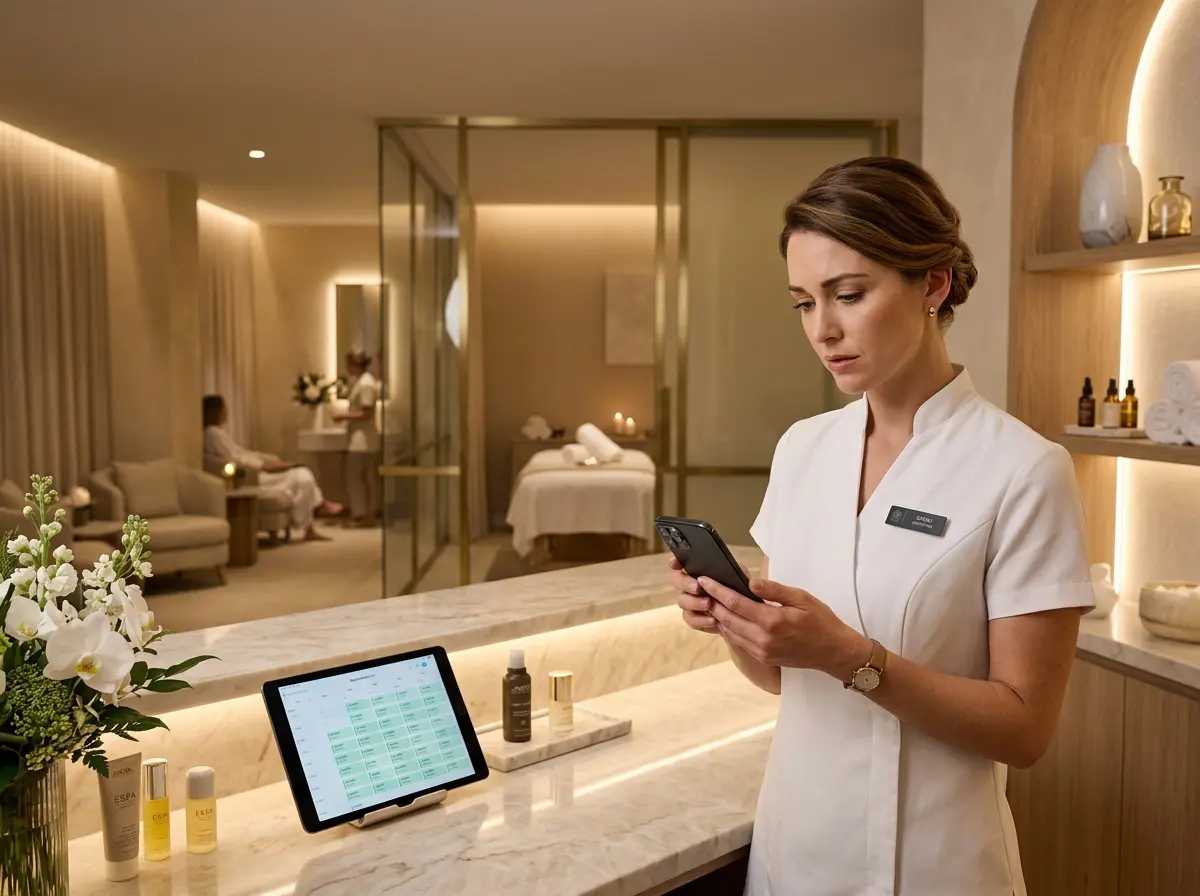
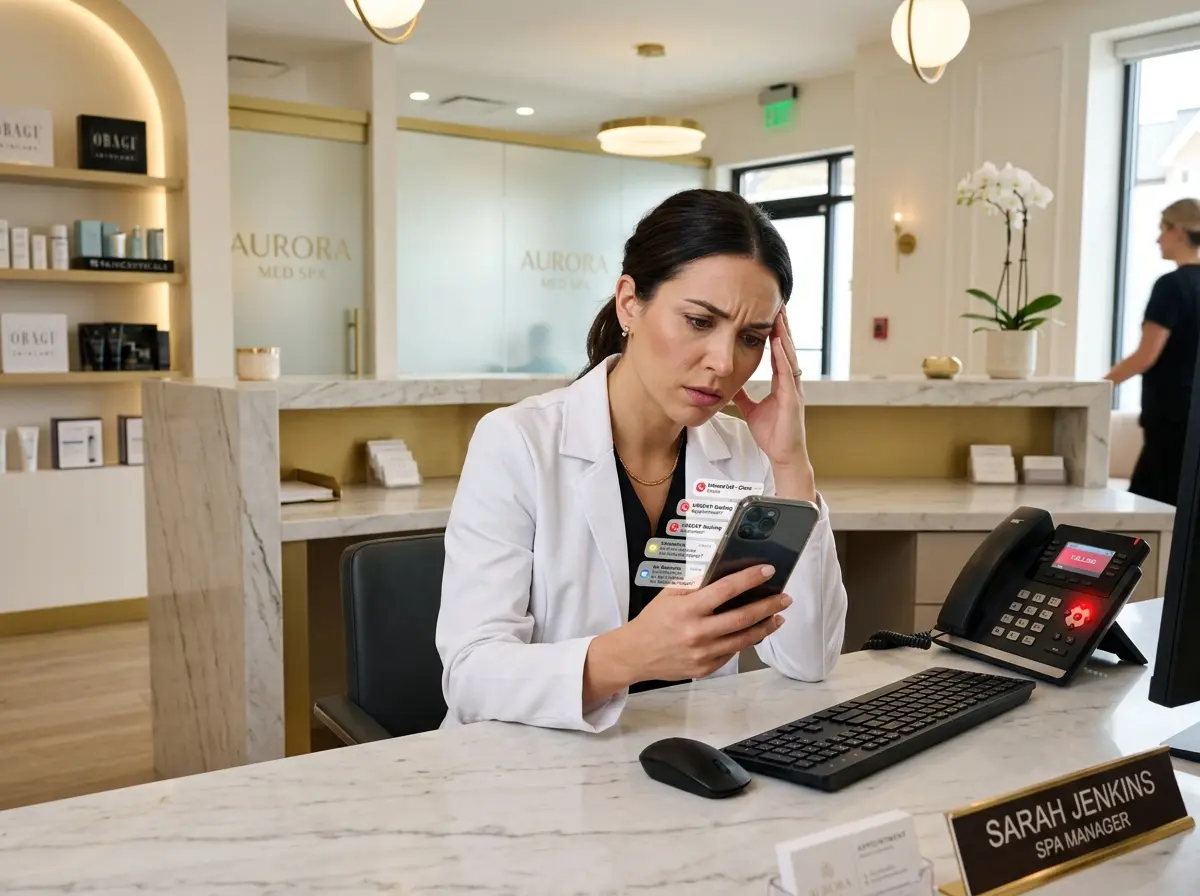
Nothing says "we don't really want your business" quite like a voicemail greeting at 2 PM on a Tuesday. Yet this happens constantly in med spas where front desk staff are pulled in seventeen directions at once — checking people in, processing payments, answering questions from the esthetician in room three. The phone rings, nobody gets to it in time, and a prospective client — who was already nervous about asking about that laser treatment — quietly hangs up and Googles your competitor.
The data is sobering: 85% of callers who don't reach a live answer will not call back. They're gone. And in a service business where an average client lifetime value can easily exceed $3,000 to $5,000, letting that call go to voicemail isn't a minor inconvenience — it's a financial decision with real consequences.
2. Providing Inconsistent or Inaccurate Information
When a potential client calls to ask about your HydraFacial pricing, your PRP packages, or whether you accept CareCredit, they deserve a confident and accurate answer — not a "let me check on that and call you back" that never actually happens. Inconsistency erodes trust before the relationship even begins.
This isn't always the staff's fault. Menus change, promotions rotate, and pricing evolves. But if your front desk team isn't consistently updated, callers get different answers on different days, which creates confusion, frustration, and — inevitably — cancellations or no-shows from clients who booked based on incorrect information.
3. Failing to Upsell or Cross-Sell During the Call
A client calls to book a chemical peel. Your receptionist books the chemical peel. End of call. Clean and professional, right? Maybe. But also a missed opportunity. Did anyone mention that pairing a peel with a customized skincare consultation can enhance results? Did anyone bring up the monthly membership that would save this client money on every future visit? Probably not — because your front desk team is busy, not trained in sales strategy, and frankly not incentivized to think about it in the moment.
Every inbound call is a warm lead. The client already wants to spend money with you. The question is whether you're maximizing that interaction or just processing a transaction.
How the Right Technology Can Quietly Fix All of This
Consistent, Always-On Phone Coverage
This is where Stella — an AI robot employee and phone receptionist — makes an immediate and measurable difference for med spas. Stella answers every call, every time, with the same accurate, up-to-date information about your services, pricing, promotions, and policies. Whether it's 9 AM or 9 PM, whether your front desk is slammed or your office is closed for the weekend, Stella is there. She can handle calls entirely on her own, forward them to a human when conditions call for it, or take detailed voicemails with AI-generated summaries pushed directly to your phone as notifications.
Beyond phone coverage, Stella also brings her knowledge and friendliness to your physical location as a human-sized AI kiosk — proactively greeting clients, answering questions, and even promoting current specials before they've made it to the front desk. Her built-in CRM and conversational intake forms mean that every new caller becomes a managed contact with a profile, not just a missed note on a sticky pad. If you've ever lost a lead because nobody wrote down a callback number correctly, you understand why this matters.
Three More Habits That Deserve a Closer Look
4. No Follow-Up System for Interested-But-Not-Ready Callers
Some clients call to inquire, decide they need to "think about it," and hang up with full intentions of calling back later. Spoiler: most of them don't. Not because they lost interest, but because life happened — and your spa didn't have a system in place to follow up before their attention drifted elsewhere.
A proper follow-up process — even something as simple as capturing the caller's name, number, and area of interest, then reaching out within 24 to 48 hours — can convert a significant percentage of those "maybes" into booked appointments. The problem is that capturing that information in the first place requires a structured intake process, which most med spa phone calls don't have. Your receptionist is managing the conversation in their head, not logging it into a system in real time. By the time the call ends, half the details are already fuzzy.
5. Treating After-Hours Calls as Lost Causes
The assumption that after-hours calls don't matter is a costly one. Many of your ideal clients — professionals, parents, people with full schedules — do their research and make decisions in the evenings or on weekends. When they call your spa at 7:30 PM and hit a generic voicemail, they experience your brand as unavailable, unresponsive, and frankly behind the times.
After-hours isn't dead time. It's prime decision-making time for a significant portion of your target demographic. If you're not capturing those inquiries — and ideally converting them into booked consultations — you're leaving real money on the table every single night your office is closed.
Building a Phone Experience That Matches Your Brand
Here's the thing: your med spa likely invests heavily in the in-person experience. The ambiance, the music, the skincare consultation process, the follow-up product recommendations — all of it is intentional and polished. But the phone experience? For many spas, it's whatever happens to happen that day, depending on who picks up and how busy they are.
Your phone is a brand touchpoint. It's often the first touchpoint. Treating it as an afterthought is the equivalent of having a stunning lobby but a broken front door. Fix the door. Define what your phone experience should sound and feel like, train to that standard consistently, and make sure the right systems are in place to deliver it reliably — even when your team is stretched thin.
A Quick Reminder About Stella
Stella is an AI robot employee and phone receptionist built for businesses exactly like yours. She answers calls 24/7, greets clients at your kiosk, promotes your services and specials, collects intake information, manages contacts through her built-in CRM, and never calls in sick. She runs on a simple $99/month subscription with no upfront hardware costs — which, compared to the revenue walking out your door every time a call goes unanswered, is an easy conversation to have.
It's Time to Stop Leaving Money on the Table
None of the five habits covered here are complicated problems. They're process problems — and process problems have process solutions. Here's where to start:
- Audit your missed calls. Pull your call logs for the past 30 days and count how many went unanswered or to voicemail during business hours. The number will probably surprise you.
- Standardize your scripts. Make sure every person answering your phone has the same accurate, updated information — and a gentle framework for mentioning relevant promotions or service add-ons during the conversation.
- Create a follow-up workflow. Every inbound inquiry that doesn't convert on the first call should enter a follow-up sequence within 24 hours. This alone can meaningfully improve your booking rate.
- Stop ignoring after-hours. Whether you use an AI solution, a live answering service, or a well-configured voicemail system with real callback protocols, treat after-hours as a legitimate revenue window.
- Evaluate your technology. If your current setup makes any of the above difficult to execute consistently, that's the real problem — and it's worth solving.
Your med spa has worked too hard building something exceptional to lose clients over a phone call. The good news is that these are fixable problems, and the fixes don't require a complete overhaul — just a little intention, the right systems, and maybe one very capable AI receptionist who never takes a lunch break.