You're Leaving Money on the Table — Literally
Your clients are already in your spa, already relaxed, already in a buy things kind of mood — and yet somehow, your retail shelf is just sitting there collecting dust next to the eucalyptus diffuser. Sound familiar? You're not alone. Most spa owners pour enormous energy into booking more clients, running promotions, and training staff, while the retail side of the business quietly underperforms month after month.
Here's the thing: retail revenue doesn't require new clients. It doesn't require more bookings. It doesn't even require a bigger space. What it requires is a strategy — one that turns your existing foot traffic into consistent product sales. Industry data suggests that the average spa generates only about 5–15% of total revenue from retail, while top-performing spas push that number to 30% or higher. The difference isn't magic. It's intentional.
This post is your practical guide to building a spa retail revenue strategy that adds real, meaningful income every single month — without hunting for a single new client. Let's get into it.
Building the Foundation of Your Retail Strategy
Curate With Purpose, Not Just Aesthetics
One of the most common retail mistakes spa owners make is stocking products that look beautiful but don't actually connect to the services clients just received. Your retail offering should be a natural extension of your treatment menu. If you're offering a signature hydrating facial, there should be a cleanser, serum, and moisturizer on your shelf that your esthetician can hand directly to the client after the service and say, "This is what I used on you today."
That moment of personalized connection is worth more than any promotion you could run. Clients aren't just buying a product — they're buying the continuation of an experience they already loved. Keep your product selection focused and curated. More SKUs does not mean more sales. In fact, too many choices often leads to decision paralysis and no sale at all. Aim for depth over breadth: a few excellent product lines with strong storytelling behind them will always outperform a chaotic wall of everything.
Train Your Team to Sell Without Selling
Your staff are your most powerful retail asset, and most of them hate being told to "sell." That's fair — nobody wants to feel like a pushy salesperson. But there's a meaningful difference between selling and recommending, and that distinction is everything. Train your team to speak naturally about the products they use during treatments. Encourage them to share what they love, what they use at home, and what they genuinely recommend for each client's specific skin type or concern.
A simple scripted sentence like, "I used this oil during your massage today — a lot of my clients love taking it home," is not a sales pitch. It's a conversation. When retail recommendations come from a place of genuine care and professional expertise, clients don't feel pressured — they feel served. Consider building retail performance into your team's goals and celebrating wins together, rather than setting individual quotas that create stress and resentment.
Price Strategically and Display Intentionally
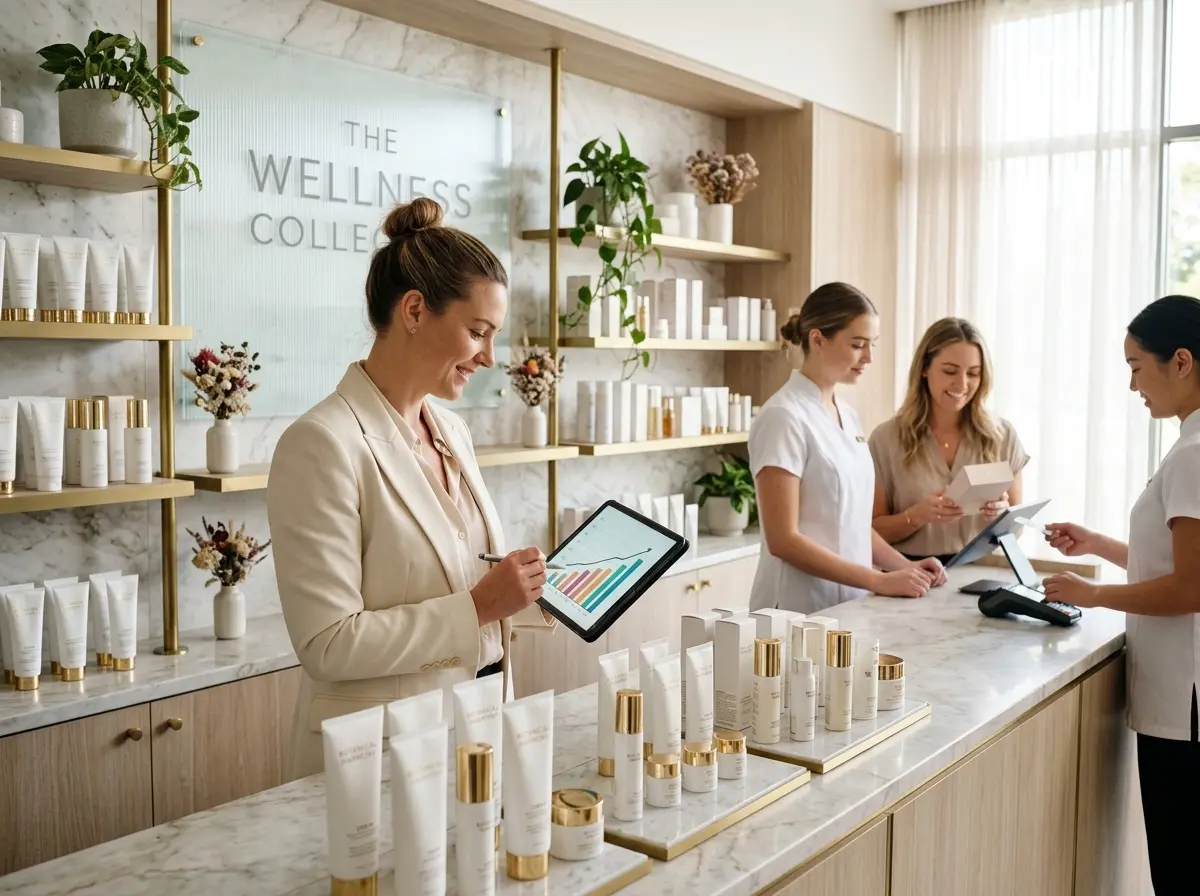
Your retail display is either working for you or it isn't — there's no neutral. Products tucked away behind a counter, poorly lit, or displayed without any context are essentially invisible. Invest in your presentation. Group products by benefit or by service type. Use signage that explains what each product does and who it's for. Include your staff's personal favorites with handwritten recommendation cards. These small touches create an emotional connection that drives purchasing decisions.
On pricing, resist the urge to undercut yourself. Spa clients are not price-shopping the way they might on Amazon. They're buying convenience, expertise, and trust. Price your retail at full suggested retail and stand behind the value of what you carry. If a client can buy it cheaper online, give them a reason to buy it from you — your recommendation, your expertise, and ideally a loyalty benefit for purchasing in-spa.
Let Technology Do Some of the Heavy Lifting
Promote Retail Without Adding to Your Team's Plate
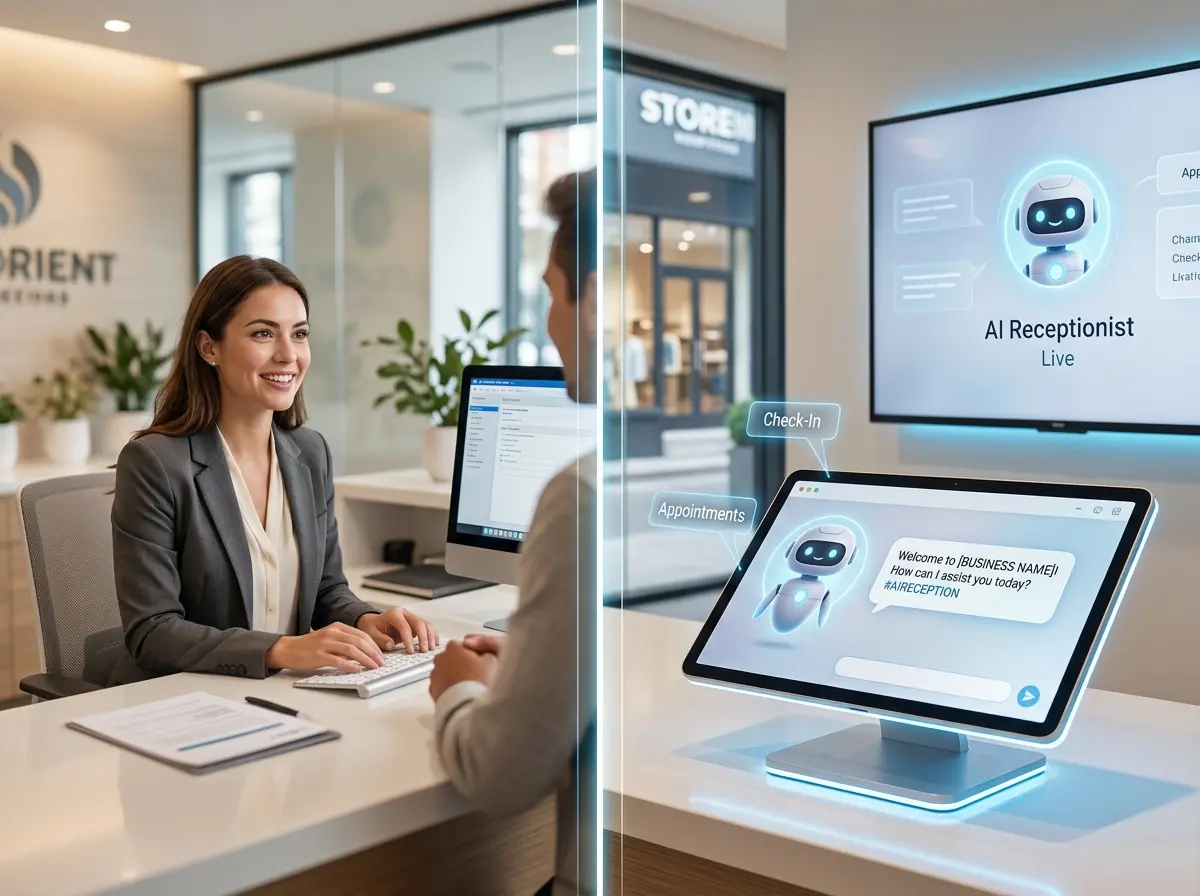
Your staff are busy delivering services, managing appointments, and keeping clients happy. Asking them to simultaneously remember to promote every product, every special, and every bundle deal is a tall order — and it leads to inconsistency. This is where smart tools make a real difference. Stella, the AI robot employee and phone receptionist, is designed exactly for moments like this. As a physical kiosk inside your spa, Stella greets every client who walks by, proactively engages them in conversation, and can highlight your current retail promotions, product spotlights, and service-and-product bundles — consistently and without fail.
On the phone side, Stella answers calls 24/7 and can share information about retail offerings, current deals, and product availability with callers who inquire. She also collects customer information through conversational intake, feeding into a built-in CRM that helps you track what clients are interested in — so your team can follow up with genuine, personalized recommendations rather than generic blasts. It's retail support that doesn't burn out, doesn't forget, and doesn't call in sick.
Turning One-Time Buyers Into Repeat Retail Customers
Create Rituals, Not Transactions
A client who buys a product once is great. A client who replenishes that product every six to eight weeks — and picks up something new each time — is transformative for your revenue. The key to building that behavior is helping clients create a home ritual that they associate with your spa. When they use your recommended cleanser every morning, they think of you. That emotional anchor is what drives them back to your retail shelf rather than to a drugstore or an online marketplace.
Encourage ritual-building by putting together simple home care guides that correspond to your most popular treatments. A one-page card that says "How to extend the results of your HydraFacial at home" — with three to four product recommendations — is easy to produce and incredibly effective. It positions your team as educators and your spa as a complete wellness solution, not just an appointment on a calendar.
Bundle, Reward, and Make It Easy to Say Yes
Bundles are one of the highest-converting retail strategies in the spa industry. A "Weekend Recovery Kit" that pairs a body scrub, a calming oil, and a hydrating mask at a slight discount is far more compelling than three individual product pitches. Bundles tell a story, they simplify the decision, and they increase your average transaction value in a single moment.
Layering in a loyalty or rewards structure keeps the cycle going. Even a simple punch-card system — buy five retail products, get one at a discount — creates a reason for clients to consolidate their beauty purchases with you instead of splitting them across multiple sources. Digital loyalty programs tied to your booking software can make this even more seamless, sending automated reminders when a client is close to a reward or when a product they previously purchased might be running low.
Use Data to Refine What's Working
Gut instinct is useful, but data is better. Track your retail sales by product, by service provider, by day of week, and by treatment type. Most point-of-sale systems will give you this information — the key is actually reviewing it on a regular basis and acting on it. Which products are consistently moving? Which ones have been sitting since last quarter? Are certain staff members dramatically outperforming others on retail? That's a coaching opportunity, not a coincidence.
Set a monthly retail review as a non-negotiable part of your business operations. Celebrate what's working, adjust what isn't, and involve your team in the conversation. When staff understand which products are resonating and why, they become better advocates for them organically. The goal is a retail strategy that continuously improves itself based on real customer behavior — not one that gets set up once and forgotten.
Quick Reminder About Stella
Stella is an AI robot employee and phone receptionist that works inside your spa as a physical kiosk and answers your phone calls around the clock. She promotes your products and specials, answers client questions, handles intake, and supports your team without adding to their workload — all for $99/month with no upfront hardware costs. For a spa looking to boost retail revenue without burning out staff, she's worth a look.
Your Next Steps Start This Week
Building a spa retail revenue strategy that adds thousands per month isn't about reinventing your business — it's about being intentional with what you already have. You have the clients, you have the trust, and you have the expertise. The gap is usually in consistency, communication, and follow-through.
Start with a retail audit this week. Walk your space and ask honestly: Does this display invite engagement? Do my clients know what we carry and why it matters to them? Are my team members confident talking about products during services? From there, identify one or two high-priority changes — a better-curated display, a new bundle offering, a simple staff training conversation — and implement them before the month is out.
Small, consistent improvements compound. A spa that adds just $50 per day in retail sales — an entirely achievable number — adds more than $18,000 to its annual revenue. That's not a fantasy. That's a strategy. Go build one.