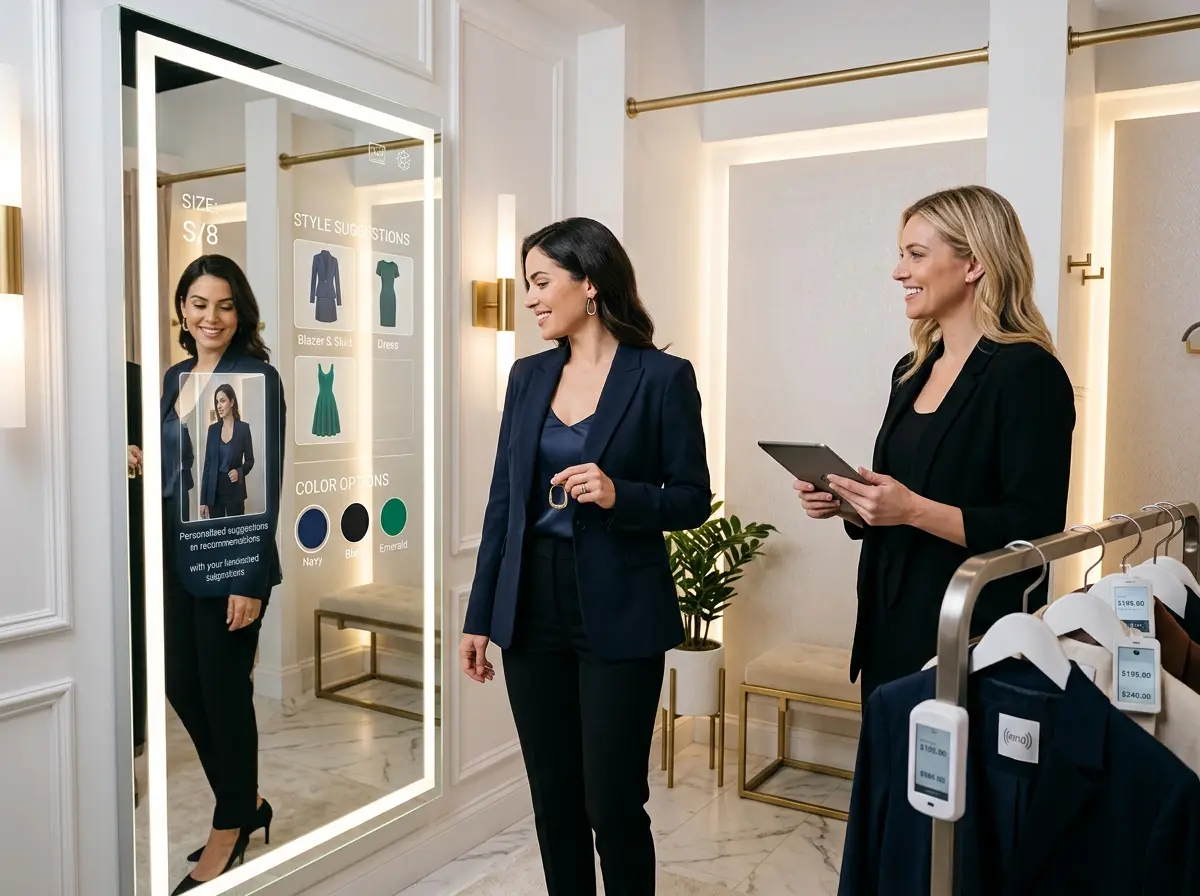
Welcome to the Future of Trying On Clothes (It's Smarter Than You Think)
Remember when a fitting room was just a curtain, a hook, and a three-way mirror that made everyone look slightly unfortunate? Those days are numbered. The modern apparel boutique is undergoing a quiet revolution, and it's happening in the most overlooked square footage of your store — the fitting room.
Today's shoppers are more demanding, more distracted, and more digitally fluent than ever. They've grown accustomed to the personalization of online shopping — recommendations, reviews, "customers also bought" nudges — and they expect something more than a pile of hangers when they step into your store. Smart fitting room technology is closing that gap, blending the convenience of e-commerce with the irreplaceable experience of trying something on before you buy it.
If you're running an apparel boutique and the most advanced thing in your fitting room is a dimmer switch, this guide is for you. Let's walk through what smart fitting room tech actually looks like, why it matters for your bottom line, and how to implement it without needing an engineering degree or a Silicon Valley budget.
What "Smart" Actually Means in a Fitting Room
RFID and Item Recognition Technology
At the core of most smart fitting room systems is RFID (Radio Frequency Identification) technology. Each garment is tagged with a small chip, and when a customer brings items into a fitting room equipped with an RFID reader, the system automatically detects what they've brought in. No scanning, no staff assistance required.
This triggers a cascade of useful actions: the in-room display (typically a touchscreen mirror or tablet) shows product details, available sizes, colors, and care instructions. It can also surface customer reviews and styling suggestions. For boutique owners, this means customers are getting a rich, informative experience without monopolizing your staff's attention. According to a study by Retail Perceptions, shoppers who use fitting rooms are 71% more likely to make a purchase than those who don't — so making that room experience exceptional isn't a luxury, it's a conversion strategy.
Interactive Mirrors and Digital Displays
The interactive mirror is the headline act of the smart fitting room world. These systems — offered by companies like Oak Labs, MemoMi, and others — turn a standard mirror into a touchscreen interface where customers can request additional sizes, browse complementary items, change the lighting to simulate different environments (office fluorescents vs. evening ambiance — because yes, that matters), and even flag a staff member for help without opening the door.
For boutique owners, the business case is straightforward: customers who can request a different size without getting re-dressed and wandering the floor are customers who stay in the fitting room and keep trying things on. That persistence translates directly to larger transaction sizes. Some retailers report increases in average order value of 15–20% after introducing smart fitting room technology.
Data Collection and Inventory Insights
Here's where things get genuinely exciting for the operationally minded boutique owner. Smart fitting rooms generate data that your store desperately needs but has never had access to before. You can track which items are being tried on most frequently, which sizes are constantly in demand, and — critically — which items are being tried on but not purchased. That last metric is gold. A high try-on-to-purchase gap signals a problem: maybe the fit is off, maybe the price point feels wrong, or maybe customers love it but it's never in stock in the right size.
This kind of insight used to require expensive market research or a lot of hopeful guesswork. Now it's a byproduct of running a modern fitting room.
Adding a Human Touch — Without the Human Overhead
How AI Assistance Bridges the In-Store Gap
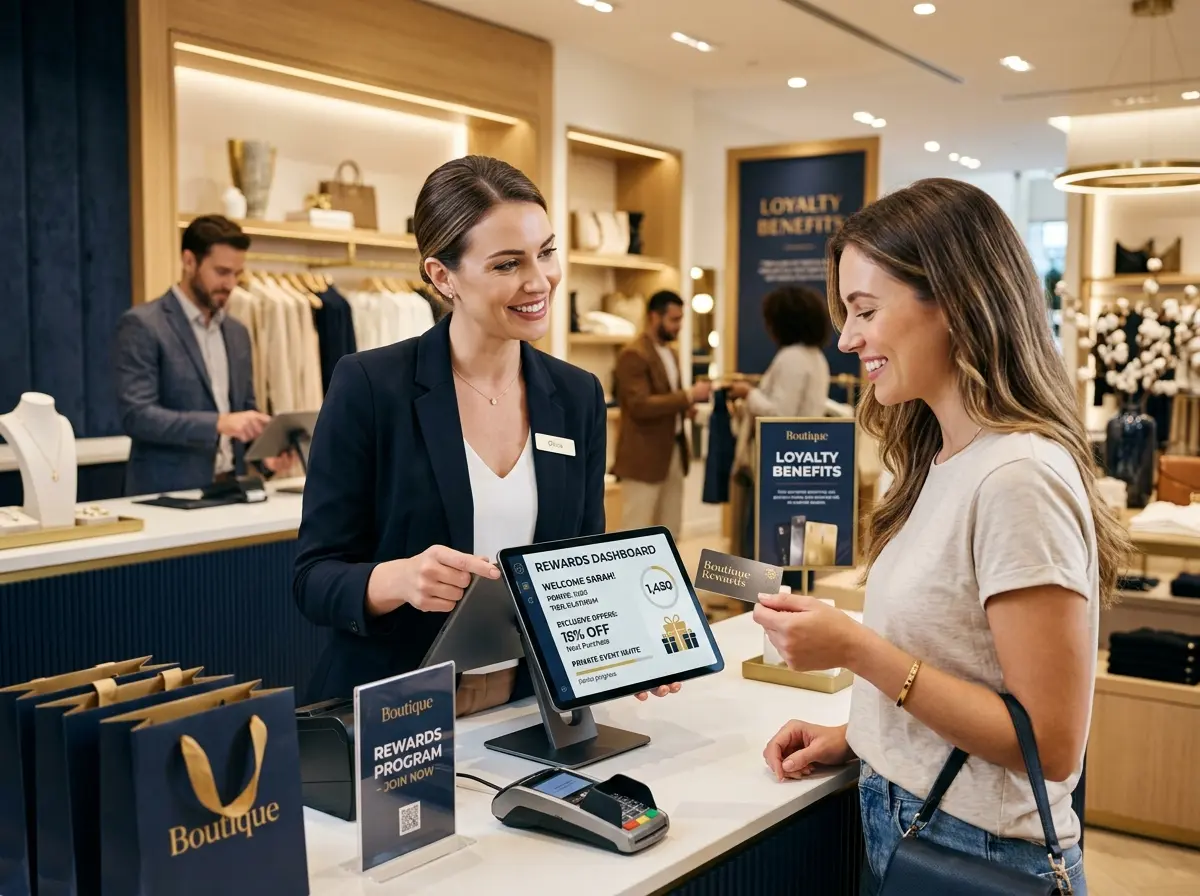
Smart fitting rooms reduce friction, but they don't replace the need for a knowledgeable, welcoming presence on your floor. That's where Stella — an AI robot employee and phone receptionist — fits naturally into a tech-forward boutique environment. While your fitting rooms handle the digital self-service experience, Stella greets customers as they walk in, proactively promotes your current deals, answers questions about your inventory, policies, and hours, and even upsells complementary items — all without pulling your human staff away from higher-value tasks.
And when customers aren't in the store? Stella answers your phone calls 24/7 with the same product and policy knowledge she uses in person. She can forward calls to staff when needed, take AI-summarized voicemails, and even collect customer information through conversational intake forms. For boutiques juggling in-store traffic and phone inquiries simultaneously, that's not a nice-to-have — it's a sanity-saver.
Implementing Smart Fitting Room Tech Without Losing Your Mind
Start Small: The Phased Approach
You don't need to gut your fitting rooms and rebuild from scratch to modernize your customer experience. A phased approach is both financially sensible and operationally realistic for independent boutiques. Start with the infrastructure: ensure your fitting rooms have reliable Wi-Fi coverage and adequate lighting. These aren't glamorous upgrades, but they're the foundation everything else runs on.
From there, consider a single pilot installation — one smart fitting room with an interactive display or tablet system — before rolling out to all rooms. This lets you observe customer behavior, gather feedback, and work out any kinks without a full-scale commitment. Many vendors offer pilot programs or scalable pricing that makes this kind of staged adoption accessible for smaller retailers.
Staff Training and Change Management
Technology is only as effective as the people working alongside it. When you introduce smart fitting room systems, your staff needs to understand how they work, what customers will experience, and how to troubleshoot basic issues. More importantly, they need to see these tools as allies rather than threats. The goal isn't to replace your team's expertise — it's to free them from repetitive tasks (fetching sizes, answering the same questions on repeat) so they can focus on relationship-building and genuine service moments.
Invest in a proper training rollout. Walk staff through the customer journey from the moment someone picks up an item to the moment they check out. When your team understands the system holistically, they can reinforce and enhance it rather than accidentally working against it.
Choosing the Right Technology Partners
Not all smart fitting room solutions are created equal, and the boutique market has different needs than a 200-store national chain. When evaluating vendors, ask the right questions: How does the system handle items without RFID tags? What happens when the software crashes mid-Saturday? Is inventory integration included, or is that an expensive add-on? What does the data dashboard actually look like, and will you realistically use it?
Look for vendors who have experience with independent and specialty retail, who offer responsive support (not just a ticket system that responds in 72 hours), and whose pricing model makes sense at your scale. Some of the most practical options for boutiques include tablet-based systems that integrate with existing POS platforms like Shopify or Square — offering meaningful smart room features without requiring a full RFID infrastructure overhaul from day one.
A Quick Reminder About Stella
Stella is an AI robot employee and phone receptionist designed to work inside physical retail locations and answer calls for any business, 24/7. For apparel boutiques embracing smart in-store technology, she's a natural complement — handling customer greetings, product questions, and promotional conversations on the floor, while simultaneously managing phone inquiries so nothing falls through the cracks. At $99/month with no upfront hardware costs, she's the kind of upgrade that pays for itself faster than most fitting room renovations.
Your Next Steps Toward a Smarter Store
The smart fitting room isn't a futuristic concept reserved for flagship luxury retailers in Manhattan. It's an accessible, practical investment that boutique owners across the country are making right now — and the ones who move early are building customer experiences that are genuinely hard to replicate online.
Here's a simple roadmap to get started:
- Audit your current fitting room experience. Walk through it as a customer would. What's missing? What's frustrating? Where are the obvious friction points?
- Research two or three vendors that cater to independent or specialty retail. Request demos and ask specifically about boutique-scale implementations.
- Start with one pilot room and measure the impact over 60–90 days before expanding.
- Train your staff thoroughly and gather their feedback — they'll notice things you won't.
- Layer in supporting technology for the rest of your store experience, so that the smart fitting room isn't an island of innovation in an otherwise static environment.
The apparel boutique that wins in the next decade will be the one that marries genuine human warmth with intelligent technology — using data to serve customers better, and using tools to free up staff to do what humans do best. Your fitting rooms are a great place to start that transformation. Go make them smarter.