Introduction: The Seasons Change. Your Revenue Doesn't Have To.
Here's a fun scenario: a homeowner's air conditioner breaks down on the hottest day of the year. They're sweating, miserable, and frantically Googling HVAC companies. They find three options. One is your company — the one that actually called them two months ago to remind them about spring maintenance. Do you think they remember that call? Absolutely. Do you think they're calling you first? You'd better believe it.
This is the magic of a seasonal maintenance reminder campaign, and if your HVAC company isn't running one, you're leaving money — and loyalty — on the table. The good news is that it's not complicated. The better news is that your competitors probably aren't doing it well either, so the bar is refreshingly low.
A well-executed seasonal reminder campaign keeps your schedule full during predictable slow periods, builds genuine relationships with customers, and positions your company as the proactive professional rather than the reactive repairman. Let's break down exactly why this matters and how to make it work.
Why Seasonal Campaigns Are a No-Brainer for HVAC
Your Industry Practically Runs on Seasons
HVAC is one of the few industries where the calendar essentially writes your marketing strategy for you. Spring means air conditioning tune-ups before summer heat. Fall means furnace checks before winter cold. This isn't guesswork — these are predictable, recurring revenue opportunities that happen every single year. According to the Air Conditioning Contractors of America, HVAC systems that receive regular maintenance last significantly longer and operate up to 15% more efficiently than neglected systems. That's a compelling stat to put in front of a homeowner who's staring down a $5,000 replacement bill.
The challenge isn't identifying when to reach out — that part is obvious. The challenge is building the system that actually does the reaching out, consistently, without relying on someone remembering to send emails between service calls. When your team is deep in busy season, marketing is usually the first thing that falls through the cracks. A campaign built ahead of time solves that problem entirely.
The Economics Are Hard to Argue With
Acquiring a new customer costs five to seven times more than retaining an existing one. For HVAC companies, this is especially relevant because a single household can generate recurring revenue for decades if you keep them happy and keep showing up (proactively, not just when things break). A seasonal maintenance reminder campaign is, at its core, a retention strategy dressed up as a marketing campaign.
Consider a simple example: you have 500 past customers in your database. You run a spring tune-up campaign offering a $20 discount on AC maintenance. If just 15% of those customers book an appointment, that's 75 jobs — likely generating somewhere between $6,000 and $10,000 in revenue from a campaign that cost you a few hours of setup and some email or text message fees. The return on investment is almost embarrassingly good.
You Build Trust Before the Emergency
Nobody thinks about their HVAC system until it's not working. Your job is to change that. When you send a friendly, helpful reminder in April saying "Hey, summer's coming — let's make sure your AC is ready," you're not being salesy. You're being useful. Customers remember businesses that looked out for them before there was a crisis. That goodwill is worth more than any advertising dollar you'll ever spend.
How Stella Can Support Your HVAC Business
Never Miss a Lead — Even When You're on a Roof Somewhere
Running a seasonal campaign means phones are going to ring. More inquiries, more scheduling requests, more "can you tell me what's included in a tune-up?" questions. If those calls go to voicemail during busy hours, you're losing the very leads your campaign worked to generate. That's where Stella comes in — an AI robot employee and phone receptionist that answers calls 24/7 with full knowledge of your services, pricing, seasonal promotions, and scheduling information.
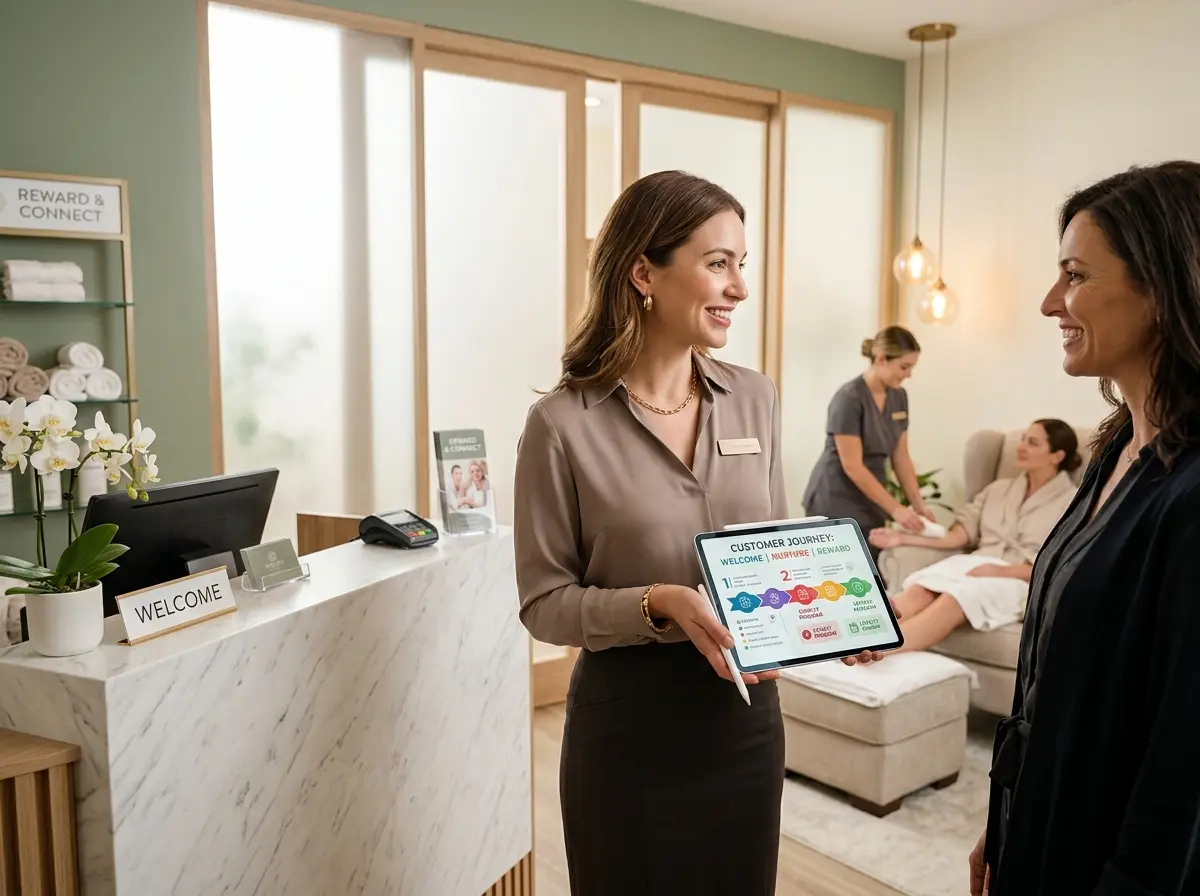
When a homeowner calls at 7 PM after receiving your spring reminder email, Stella is there to answer, explain the promotion, collect their contact information through a conversational intake form, and even log everything into her built-in CRM — so your team walks in the next morning with a ready-to-go list of warm leads, complete with AI-generated summaries. For HVAC companies with a physical showroom or office, she also greets walk-in customers and promotes current seasonal deals without any prompting from staff. At just $99/month, she's significantly cheaper than a missed service call.
Building a Seasonal Reminder Campaign That Actually Works
Step One: Segment and Organize Your Customer List
Before you send a single message, you need to know who you're talking to. Not all customers are the same, and a generic blast to your entire list is the marketing equivalent of handing out flyers in a parking lot — technically it reaches people, but not very impressively. Segment your list by factors like last service date, equipment type, whether they're on a maintenance plan, and geographic area. A customer whose furnace you serviced six months ago needs a different message than someone who hasn't heard from you in three years.
Good segmentation also helps you personalize your outreach, which dramatically improves response rates. An email that says "Hi Sarah, it's been about a year since your AC tune-up — here's a reminder to get ahead of the summer rush" performs far better than "Dear Valued Customer." It sounds obvious, but you'd be surprised how many HVAC companies are still in the "Dear Valued Customer" era.
Step Two: Choose Your Channels Strategically
Email remains one of the highest-ROI marketing channels available, but combining it with SMS reminders significantly improves open and response rates. Text messages have an average open rate of around 98%, compared to roughly 20–30% for email. For time-sensitive seasonal campaigns, a well-timed text can be the difference between a booked appointment and a missed opportunity.
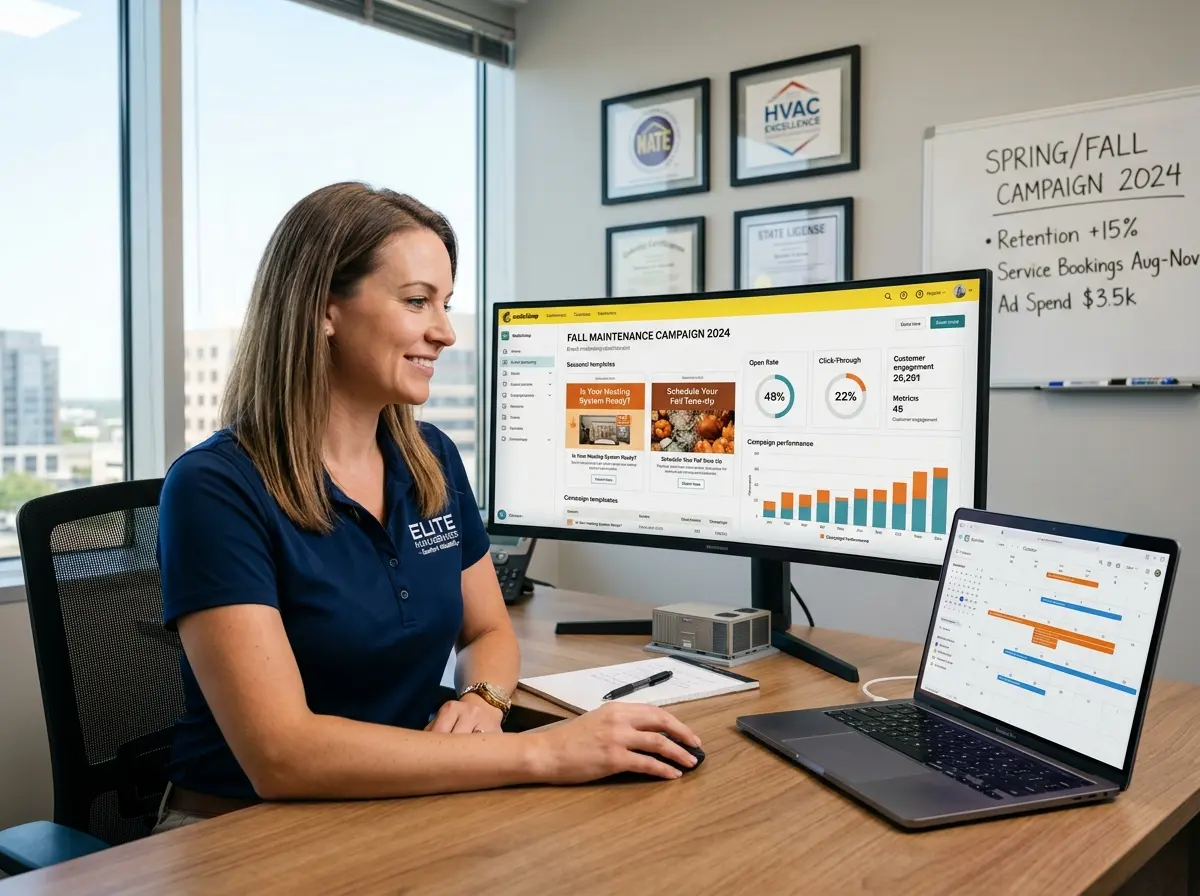
A practical multi-touch approach might look like this: send an initial email six weeks before peak season explaining the value of preventative maintenance and introducing any seasonal promotion. Follow up with a shorter email two weeks later for those who didn't open or click. Then send a brief SMS reminder one week before your promotion ends. Three touches, minimal effort once the sequence is built, and you've dramatically increased your visibility without spamming anyone.
Step Three: Make the Offer Easy to Say Yes To
Your reminder campaign needs a clear, specific call to action. "Schedule your spring tune-up" is fine. "Schedule your spring AC tune-up this week and save $25 — spots are limited" is better. Urgency and specificity consistently outperform vague, open-ended messaging. You don't need to slash your prices to make an offer compelling; even a modest discount, a free filter replacement, or priority scheduling for loyal customers can be enough to tip someone from "I should probably do that" to "I'm booking right now."
Also — and this is important — make it easy to respond. Include a direct booking link in your emails. Make sure your phone is answered promptly. If someone has to jump through hoops to give you their money, they'll find a competitor who makes it simpler. Every friction point in your booking process is a leak in your campaign's revenue potential.
Quick Reminder About Stella
Stella is an AI robot employee and phone receptionist built for businesses exactly like yours — she answers calls around the clock, greets walk-in customers, promotes your seasonal deals, collects leads through smart intake forms, and manages customer information in a built-in CRM. She's ready to work from day one, costs just $99/month with no upfront hardware costs, and — unlike your busiest technician — never calls in sick during a heatwave. If your seasonal campaign is going to drive more inbound interest, having Stella in your corner means none of those opportunities fall through the cracks.
Conclusion: Stop Waiting for Customers to Remember You
The HVAC companies that win long-term aren't just the ones that do great work — they're the ones that stay visible, stay proactive, and make it easy for customers to come back. A seasonal maintenance reminder campaign is one of the simplest, most cost-effective ways to do all three at once.
Here's your actionable starting point:
- Clean up and segment your customer list this week. Even a rough sort by last service date is a massive improvement over treating everyone the same.
- Map out your two key campaign windows — spring (February/March launch for AC season) and fall (August/September launch for heating season) — and put them on the calendar now.
- Build a simple three-touch sequence for each campaign: one email, one follow-up email, one SMS. Write the copy in advance so it's ready to go.
- Audit your inbound response process. When your campaign drives calls and inquiries, who — or what — is answering them promptly and professionally?
The homeowners in your service area need HVAC maintenance twice a year, every year, for as long as they own their homes. The only question is whether they're calling you or someone else. A seasonal reminder campaign is how you make sure the answer is you — reliably, repeatedly, and profitably.
Now go set up that campaign. Your future customers are out there right now, blissfully unaware that their AC filter hasn't been changed since 2021. Be the company that tells them.