You Can't Wing It in a Med Spa — And Yet, Here We Are
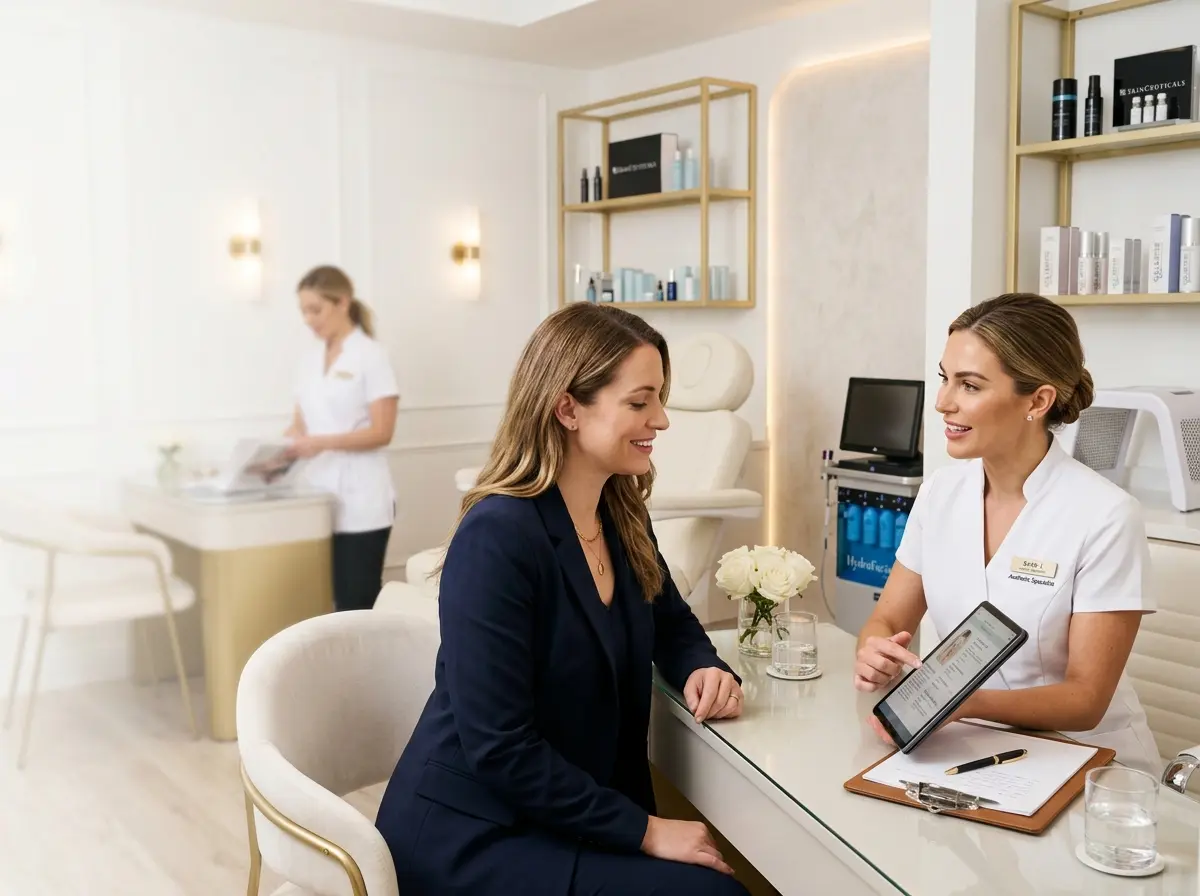
Picture this: A potential client walks into your med spa, nervous but curious about a treatment she's been researching for months. She's ready to be guided, educated, and yes — converted into a paying client. Then your front desk team member greets her warmly, answers a few questions... and then kind of just... hands her a brochure and asks if she wants to book. She says she'll "think about it." You never see her again.
Sound familiar? You're not alone. Across the aesthetics industry, med spas are pouring thousands of dollars into marketing, equipment, and gorgeous interiors — and then leaving the most critical moment (the consultation-to-treatment conversion) entirely up to improvisation. The hard truth is that a great injector or esthetician does not automatically make a great closer, and without a structured script, even the most talented staff member is essentially guessing.
The solution isn't to turn your team into pushy salespeople. It's to give every single staff member — from your receptionist to your lead practitioner — a reliable, professional framework that guides clients from curious to committed. Let's break down exactly why this matters and how to make it happen.
The Real Cost of an Unscripted Consultation
Inconsistency Is Quietly Killing Your Conversion Rate
Here's a fun game: ask three different staff members how they handle a new client consultation. You'll likely get three completely different answers — and none of them will be wrong, exactly, but they won't be consistently right either. Inconsistency in the consultation process means your conversion rate is essentially a lottery, dependent on which staff member happened to be working that day and how much coffee they had.
Industry data suggests that the average med spa consultation-to-treatment conversion rate hovers around 40–60%, but top-performing spas consistently hit 70–80% or higher. The difference? Structure. When every team member follows the same proven framework, you stop relying on individual charisma and start building a repeatable, scalable system. That's not robotic — that's smart business.
Your Clients Are More Uncertain Than You Think
Most people walking into a med spa for the first time are dealing with a cocktail of emotions: excitement, anxiety, skepticism, and budget guilt — often all at once. They want to be gently walked across the finish line. A structured consultation script isn't about manipulating clients into spending money; it's about reducing friction, answering objections before they arise, and helping clients feel confident in a decision they were already leaning toward. When your staff doesn't have a script, they often inadvertently leave these objections unaddressed, and the client walks out saying they'll "think about it" — which, in med spa language, usually means goodbye forever.
New Staff Shouldn't Have to Reinvent the Wheel
Staff turnover in the aesthetics industry is notoriously high. Every time you hire someone new, you're not just training them on treatments — you're hoping they somehow absorb your business's consultation style through osmosis. A documented, structured script means your new hire can be effective in week one instead of fumbling through consultations for three months while your conversion rate quietly suffers. Think of it as the franchise model applied to your front desk: consistency at scale, regardless of who's holding the clipboard.
What a Great Consultation Script Actually Looks Like
The Non-Negotiable Phases Every Script Needs
A well-designed consultation-to-treatment conversion script isn't a word-for-word sales pitch — it's a flexible framework with clear phases. At minimum, every script should include a warm welcome and rapport-building opener, a structured needs assessment (the "discovery" phase where you ask questions instead of talking), a tailored treatment recommendation with clear explanation of benefits, a soft objection-handling section, and a confident, low-pressure closing ask. The magic is in that middle section. Most untrained staff skip straight from "here's what we offer" to "so do you want to book?" — bypassing the discovery and recommendation phases entirely, which is exactly where trust is built.
How Stella Fits Into Your Conversion Strategy
Covering the Gaps Before and After the Consultation
Before a potential client ever sits down for a consultation, there are critical touchpoints where opportunities are won or lost — the first phone call, the walk-in greeting, the initial questions about pricing and availability. This is where Stella, an AI robot employee and phone receptionist, can meaningfully support your med spa's conversion pipeline. Standing as a friendly, knowledgeable presence inside your location, Stella greets every person who walks in, proactively engages them about your services and current promotions, and answers common questions so your clinical staff can stay focused on client care. She also answers phone calls 24/7 with the same business knowledge she uses in person, collecting intake information through conversational forms and ensuring no lead falls through the cracks. Stella's built-in CRM even builds client profiles automatically, so by the time a potential client reaches your consultation chair, your team already has context. She's not replacing your consultation script — she's making sure the clients who need to hear it actually show up.
Building and Implementing Your Script Across the Entire Team
Getting Buy-In From Staff Who Hate the Word "Sales"
Let's address the elephant in the treatment room: many med spa staff — especially clinicians — bristle at anything that feels like selling. And honestly, fair enough. Nobody went to aesthetics school to become a commissioned salesperson. The key is reframing the consultation script not as a sales tool, but as a client care framework. When positioned correctly, the script is simply a structured way to ensure clients receive complete, accurate information and feel confident in their choices. You're not pressuring anyone — you're being thorough and professional. Frame it that way in your training, and you'll find most staff are far more receptive than you'd expect.
Start by involving your top performers in the script-writing process. Ask your best converter to walk you through how they handle consultations, then document and systematize it. This approach does two things: it captures your most effective techniques, and it gives your star employee ownership over the final product — which makes them a natural advocate when rolling it out to the rest of the team.
Training, Role-Playing, and Actually Enforcing It
Writing the script is the easy part. Actually getting every team member to use it consistently is where most med spa owners drop the ball. The solution is deliberate, repeated practice — yes, that means role-playing, awkward as it may feel. Schedule monthly consultation training sessions where staff practice the script on each other, rotating through client and practitioner roles. Record these sessions when possible so staff can self-evaluate. Then, track conversion rates by staff member so you have data to identify who's thriving with the script and who needs additional coaching. This isn't about micromanaging — it's about building accountability into a process that directly impacts your revenue.
Regularly Auditing and Updating Your Script
A consultation script isn't a "set it and forget it" document. Client objections evolve, new treatments get added to your menu, and seasonal promotions change the conversation. Schedule a quarterly review of your script with a small team — at least one clinical staff member and one front desk employee — to assess what's working, what objections keep coming up that the script doesn't address, and what new offerings need to be incorporated. A living document that improves over time is infinitely more valuable than a polished PDF that gathers digital dust in a shared folder nobody opens.
A Quick Reminder About Stella
Stella is an AI robot employee and phone receptionist that works inside your med spa as a friendly, knowledgeable kiosk — greeting clients, promoting services, and answering questions — while also handling phone calls 24/7 so no lead goes unanswered. At just $99/month with no upfront hardware costs, she's the kind of team member who's always on time, never has an off day, and never goes off-script.
Your Next Steps Toward a Higher-Converting Med Spa
The good news is that building a structured consultation-to-treatment conversion script isn't complicated — it just requires intentionality that most med spa owners haven't prioritized yet. Here's a practical roadmap to get started:
- Audit your current process. Observe or record (with consent) a few consultations this week. Note where the conversation goes off the rails or where staff seem uncertain.
- Draft your script framework using the phases outlined above: welcome, discovery, recommendation, objection handling, and closing. Involve your top performer in the process.
- Roll it out with training, not just a memo. Host a dedicated training session with role-playing exercises before you put the new script into practice.
- Track your conversion rate by staff member starting immediately, so you have a baseline to measure improvement against.
- Review and refine quarterly. Treat your script like a living asset — because that's exactly what it is.
The med spas winning the conversion game aren't necessarily the ones with the fanciest equipment or the most Instagram followers. They're the ones that have systematized excellence — including what happens in that consultation room. Give your team the structure they need, and watch your "I'll think about it" rate drop to the floor where it belongs.