When a Cancelled Appointment Becomes a Revenue Black Hole
It happens every single day in dental offices across the country. A patient calls to cancel their 2:00 PM cleaning, and suddenly you're staring at a 45-minute gap in your schedule that represents somewhere between $150 and $400 in lost revenue — depending on what was planned. Multiply that by even three or four cancellations per week, and you're looking at thousands of dollars quietly slipping out the back door while you're busy, you know, actually running a dental practice.
The traditional solution? Have your front desk staff frantically work through a paper waitlist, calling patients one by one, leaving voicemails, waiting for callbacks, and hoping someone is both available and willing to come in on short notice. It's time-consuming, hit-or-miss, and frankly, a poor use of your team's skills. They went into dental administration to help patients, not to spend half their afternoon playing phone tag with someone who won't call back until after closing.
There's a smarter way to handle this — and it involves automating the process so that your cancelled slots fill themselves (or get as close to that as humanly, or rather, technologically possible). Let's break it down.
Building a System That Works Before You Even Know There's a Gap
Maintain a Dynamic, Segmented Waitlist
The foundation of any effective cancellation-filling strategy is a well-maintained waitlist — and not just a sticky note on the front desk. A real, organized waitlist that includes key information about each patient: their preferred days, preferred times of day, how far in advance they need notice, and what type of appointment they need. A patient who needs a two-hour crown prep can't fill a 45-minute hygiene slot, and calling them anyway is a waste of everyone's time.
Segment your waitlist by appointment type and duration. Keep hygiene patients separate from restorative patients. Flag patients who've explicitly said they can come in same-day or next-day. This kind of organization transforms your waitlist from a vague backlog into a precision tool. When a slot opens, you know exactly who to contact first — no guesswork, no wasted calls.
Automate Outreach Through Multiple Channels
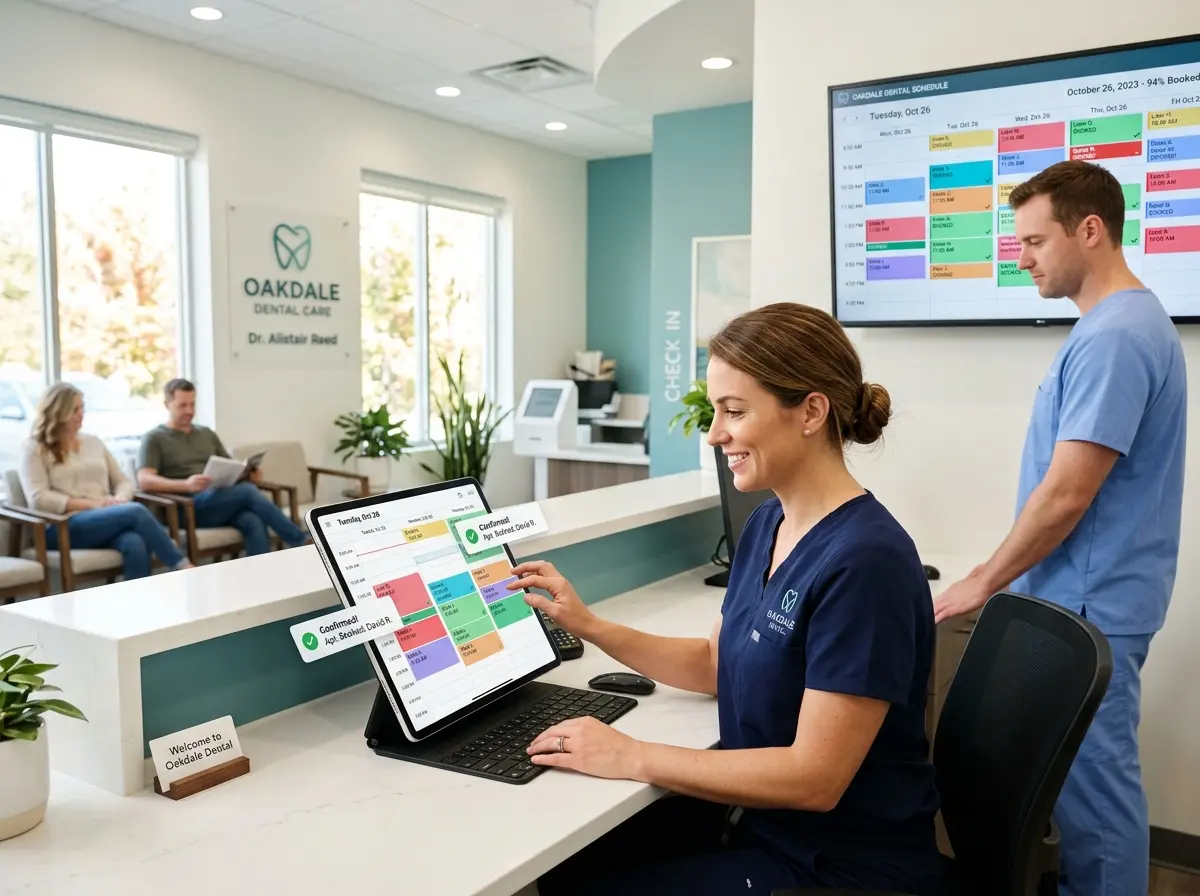
Once your waitlist is organized, the outreach process itself should be as automated as possible. This means using your practice management software or a connected communication platform to send automated texts and emails to the appropriate waitlist patients the moment a slot opens up. The message should be friendly, brief, and include a clear call to action — ideally a one-click link to confirm the appointment.
Speed matters enormously here. Research from the dental industry consistently shows that same-day cancellation slots are most likely to be filled within the first hour of outreach. If your system waits for a staff member to manually initiate contact, you've already lost precious time. Automation ensures that the moment a cancellation is logged, the right patients are notified — before your team has even finished their morning coffee.
Set Clear Policies That Reduce Cancellations in the First Place
No cancellation-filling system is complete without addressing why patients cancel in the first place. Implement a clear cancellation policy — 24 to 48 hours' notice is standard — and communicate it consistently at booking, in appointment reminders, and on your website. Consider a modest cancellation fee for short-notice no-shows, though this should be applied with discretion to avoid damaging patient relationships.
Equally important: send reminder sequences that actually work. A reminder three days before, one day before, and the morning of the appointment dramatically reduces last-minute cancellations. Patients don't usually cancel out of spite — they forget, something comes up, or they feel anxious about dental work. Addressing these triggers proactively keeps your schedule intact far more reliably than scrambling to fill gaps after the fact.
How Stella Can Help Keep Your Schedule (and Your Sanity) Intact
Around-the-Clock Phone Coverage for Last-Minute Changes
Here's an underappreciated reality of dental office scheduling: patients often call to cancel after hours. They think about their appointment at 9:00 PM, decide they can't make it tomorrow, and leave a voicemail that your team won't hear until 8:00 AM — leaving almost no time to fill the slot. Stella, the AI robot employee and phone receptionist, answers every call 24/7, meaning she can capture that cancellation in real time, log the information, and ensure your team receives an immediate AI-generated summary and push notification rather than discovering the gap mid-morning rush.
Beyond cancellations, Stella can handle inbound calls from waitlisted patients looking to schedule sooner, answer questions about appointment availability and office policies, and collect patient intake information through conversational intake forms — all without pulling your front desk staff away from patients who are physically in the office. Her built-in CRM also means patient contact details, preferences, and notes are organized and accessible, making it easier to manage your waitlist intelligently rather than relying on scattered spreadsheets or sticky notes.
Turning Cancelled Slots Into Opportunities (Not Just Damage Control)
Use Gaps Strategically for High-Value Services
Not every cancelled slot has to be filled with the exact same type of appointment that was cancelled. When a gap appears, consider whether it could be used for a high-value, shorter-duration service — a whitening consultation, a new patient exam, or a follow-up for a patient whose treatment plan has been sitting unscheduled. These types of appointments can often be booked quickly because the patient is motivated and the commitment feels smaller.
Train your front desk team to think like revenue managers when a slot opens. Ask: who on our active patient list has an outstanding treatment plan? Who has been meaning to come in but hasn't rescheduled after a cancellation of their own? A quick, targeted call to one of these patients can turn a scheduling headache into a productive conversation — and possibly a confirmed appointment within the hour.
Incentivize Last-Minute Availability Without Devaluing Your Services
Some practices successfully fill last-minute slots by offering small perks to patients who come in on short notice — a complimentary fluoride treatment, a free whitening kit, or simply genuine appreciation and priority scheduling for their next visit. The key is to frame this as a thank-you for their flexibility, not a discount that suggests your services are negotiable in price.
You can communicate these last-minute openings through your practice's social media, a short email to your patient list, or even a text broadcast to opted-in patients. Keep the message light and friendly: "A spot just opened up — want it?" is surprisingly effective. Patients who are already due for an appointment often respond well to a nudge that feels timely rather than pushy.
Track Your Cancellation Patterns and Adjust Proactively
If you're not tracking your cancellation data, you're essentially flying blind. Most practice management systems can generate reports on cancellation frequency by day of week, time of day, provider, and appointment type. Use this data to identify your highest-risk slots and double-book them strategically, or schedule your most reliable patients during historically volatile windows.
For example, if Monday mornings consistently see higher cancellation rates — which is common across many service industries — consider scheduling new patients or shorter appointments during those slots rather than lengthy procedures that are difficult to reschedule. Over time, this kind of pattern recognition turns your scheduling strategy from reactive to genuinely proactive, and your revenue consistency will reflect it.
A Quick Reminder About Stella
Stella is an AI robot employee and phone receptionist built for businesses exactly like yours. She answers calls around the clock, greets patients, handles intake, manages your CRM contacts, and keeps your team informed — all for $99 a month with no upfront hardware costs. For dental offices juggling a busy front desk, she's the extra set of hands that never calls in sick and never puts a patient on hold to deal with something else.
Stop Letting Empty Chairs Cost You Money
Cancelled appointments are an unavoidable part of running a dental practice, but they don't have to mean lost revenue. The offices that handle cancellations best aren't the ones with the most aggressive policies or the most persistent staff — they're the ones with smart systems in place that respond quickly, communicate clearly, and turn gaps into opportunities before the ink is dry on the cancellation.
Start by auditing your current waitlist process. Is it segmented and up to date? Next, look at your outreach speed — how long does it currently take from cancellation to patient contact? If the answer is "whenever someone gets around to it," that's your biggest opportunity for improvement. Add automated notifications, tighten your reminder sequences, and ensure your phones are always covered so no cancellation — and no eager waitlisted patient — slips through the cracks.
An empty chair is just a problem. An empty chair with a system waiting to fill it is practically an opportunity in disguise. Build the system, and let it work for you.