Your Clients Are Hanging Up — And It's Costing You More Than You Think
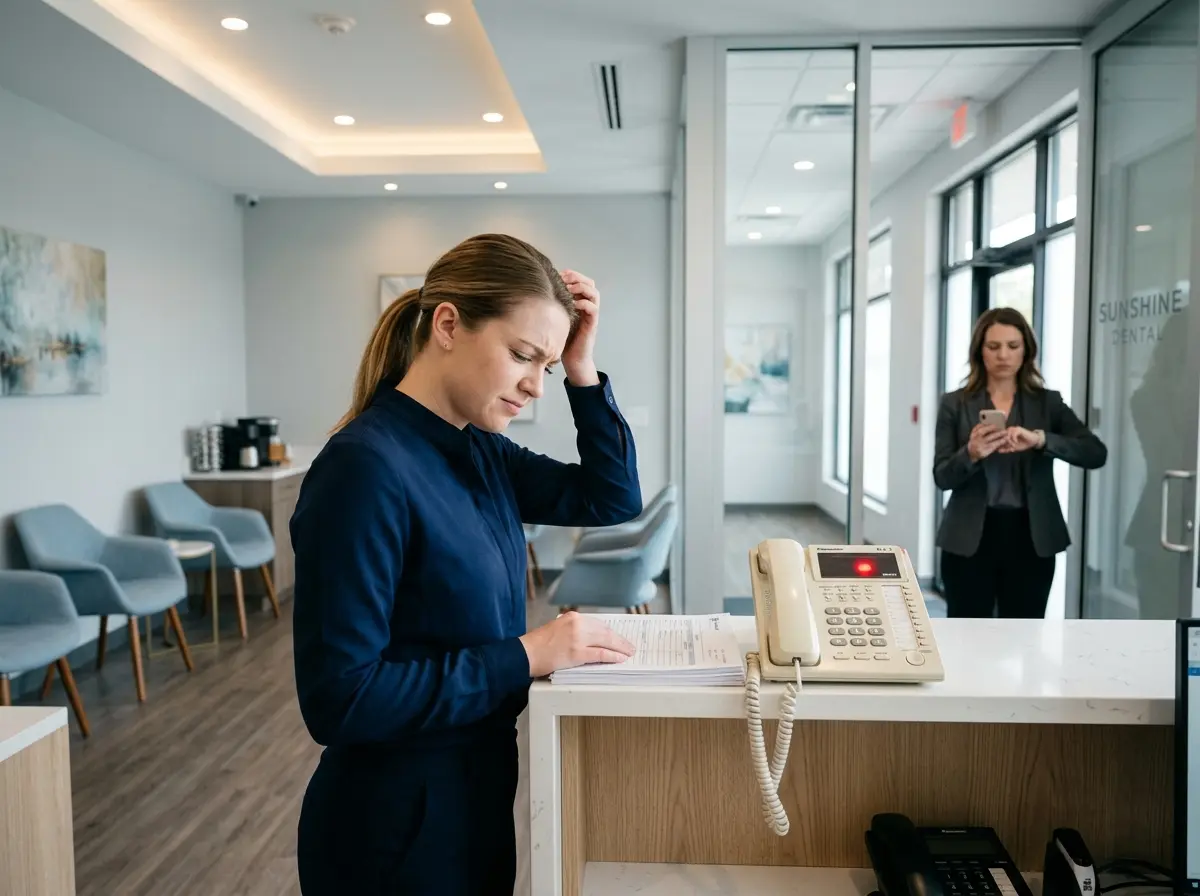
Picture this: a potential client calls your salon to book a color correction appointment. They've been thinking about it for weeks, they're finally ready, and they dial your number with excitement. Then... they wait. And wait. And then they hang up and book with the salon down the street. Congratulations — you just lost a $200 appointment, and you'll never even know it happened.
This is call abandonment, and it's one of the sneakiest revenue leaks in the salon industry. Unlike a bad Yelp review or a no-show, you don't get a notification when it happens. There's no angry email, no dramatic confrontation — just silence. And silence, in this case, is expensive. Studies suggest that businesses lose up to 75% of callers who hang up to competitors who simply answered faster. For salons, where a single loyal client can be worth thousands of dollars annually, that's not a rounding error — that's a real problem.
The good news? Call abandonment is measurable, manageable, and very fixable. Let's dig in.
Understanding Call Abandonment: What It Is and How to Track It
What Is Call Abandonment Rate, Exactly?
Your call abandonment rate is the percentage of incoming calls where the caller hangs up before reaching a real person (or getting what they need). It's calculated simply: divide the number of abandoned calls by the total number of incoming calls, then multiply by 100. If you received 100 calls last week and 20 people hung up before speaking to anyone, your abandonment rate is 20%.
For most service businesses, an acceptable abandonment rate is generally considered to be under 5–8%. Salons, however, often see rates far higher than that — sometimes pushing 20–30% — simply because stylists are in the middle of a balayage, the front desk is juggling three things at once, and nobody has a free hand to grab the phone. This isn't a staffing failure; it's a structural one.
How to Actually Measure Your Rate
You can't fix what you can't see, so the first step is getting visibility into your call data. Here's how to start measuring:
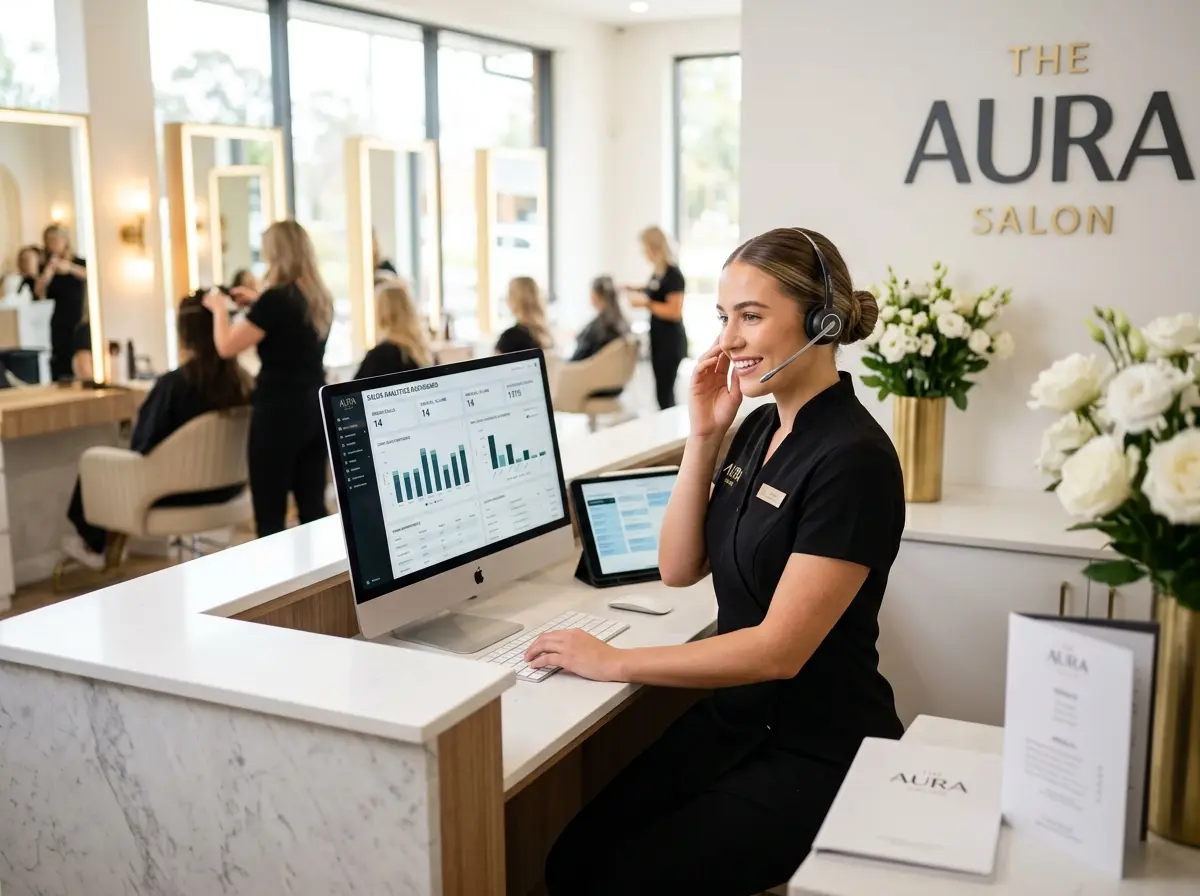
- Use a VoIP or cloud-based phone system that provides call analytics dashboards. Most modern systems (like Google Voice for Business, RingCentral, or Grasshopper) track missed calls, call duration, and wait times automatically.
- Check your voicemail drop rate. If you have voicemail enabled but people aren't leaving messages, they're simply hanging up. A high call volume paired with low voicemail count is a red flag.
- Review your booking software. If you use a platform like Vagaro, Mindbody, or Square Appointments, compare inbound call volume to actual bookings made by phone. A large gap is a sign people are calling and leaving without booking.
- Ask your front desk staff to start informally logging how many times the phone rings without being answered. It's low-tech, but it's an eye-opener.
Once you have a baseline number — even a rough one — you can start tracking progress as you make changes. Improvement is motivating. Data makes the motivation real.
When Are Calls Being Abandoned?
Timing matters. Most salons see abandonment spikes during predictable windows: Saturday mornings, lunch hours, and the 30-minute rush after closing when people finally remember to call. Knowing when your phones are going unanswered is just as valuable as knowing how often. If you can identify your peak abandonment windows, you can target your solutions strategically rather than throwing money at a general staffing problem.
A Smarter Fix: Let Technology Answer What Your Team Can't
Why an AI Receptionist Makes Sense for Salons
Here's a truth most salon owners already know deep down: hiring a dedicated full-time receptionist to cover phones costs anywhere from $28,000 to $40,000 per year when you factor in wages, taxes, and turnover. And even then, that person takes breaks, calls in sick, and still can't answer two calls simultaneously. There's a better way.
Stella is an AI robot employee and phone receptionist that answers every call, every time — day or night, during the Saturday morning rush, or at 11 PM when someone impulsively decides they need to book a keratin treatment. She knows your services, your pricing, your hours, and your current promotions, and she handles calls with the same friendly professionalism a great front desk person would — without the turnover, the sick days, or the $35,000 salary.
For salons with a physical location, Stella also operates as an in-store kiosk, greeting walk-ins, answering questions, and promoting specials while your team focuses on delivering great services. She can collect client information through conversational intake forms and manage those contacts through her built-in CRM — so every caller becomes a tracked, nurtured lead, not a lost opportunity. At $99/month, the math is pretty straightforward.
Practical Strategies to Reduce Your Abandonment Rate
Reduce Wait Times with Smarter Call Routing
If clients are waiting more than 30–60 seconds before someone picks up, you're in the danger zone. The fix isn't always "hire more people" — it's often about routing calls more intelligently. Configure your phone system so that calls roll over to a second line, another staff member's cell, or an AI receptionist after a set number of rings. Give callers options: press 1 to book, press 2 for general questions. A simple structure reduces the cognitive load on your front desk and gets callers where they need to go faster.
Also, stop letting calls go to a generic voicemail during business hours. If someone reaches a voicemail box at 2 PM on a Tuesday, they're gone. Voicemail is fine as a last resort, but it should never be the first answer a potential client gets.
Set Clear Expectations and Use Callback Options
Sometimes you genuinely can't answer immediately, and that's okay — as long as you manage the caller's experience. If your phone system supports it, implement a callback feature that lets callers leave their number and receive a return call without waiting on hold. Research consistently shows that over 60% of callers prefer a callback to waiting on hold, and it dramatically reduces hang-up rates.
If a callback feature isn't in the budget right now, at minimum record a hold message that tells callers how long they're likely to wait and thanks them for their patience. Silence on hold is a conversion killer. A warm, friendly voice that says "We're with another client and will be right with you" keeps people on the line far longer than hold music that sounds like it was recorded in 1987.
Train Your Team to Answer Efficiently
This one sounds obvious, but it's often overlooked: speed and efficiency on the phone are skills, not instincts. Train your front desk staff to answer within three rings, use a consistent greeting, and move callers through booking quickly. Every extra minute of small talk during a busy Saturday is another call going unanswered in the queue. Role-playing common call scenarios — booking, cancellations, pricing questions — can cut average call handle time significantly, freeing up capacity to take more calls overall.
Also, designate a "phone champion" during peak hours. This is one staff member whose primary job during the rush is to be on the phone. Not folding towels, not helping with product questions — on the phone. It sounds simple because it is simple, and it works.
Quick Reminder About Stella
Stella is an AI robot employee and phone receptionist designed for businesses like yours — answering calls 24/7, greeting in-store clients, promoting services, and managing customer information through a built-in CRM. She's available for $99/month with no upfront hardware costs and is built to handle exactly the kind of call volume spikes that salons deal with every day. Think of her as the front desk employee who never has a bad day, never calls in sick, and always answers on the first ring.
Start Fixing Your Abandonment Rate This Week
Call abandonment isn't a glamorous problem. It doesn't come with a dramatic alert or an obvious invoice. But it quietly costs salons real money, real clients, and real growth — every single day. The encouraging part is that it's one of the most actionable problems you can tackle, and the improvements are measurable almost immediately.
Here's where to start this week:
- Pull your call data. Log into your phone system and find out how many calls you're missing. If your current system doesn't track this, consider upgrading to one that does.
- Identify your peak abandonment windows. Look for patterns in when calls are being missed and address those hours first.
- Implement at least one quick fix. Whether it's a call rollover, a callback option, or a designated phone champion during rush hours, do something this week — not next quarter.
- Consider an AI receptionist. If your call volume consistently outpaces your team's capacity, a solution like Stella can eliminate the problem entirely — not just manage it.
Your clients want to book with you. They're calling because they're ready to spend money at your salon. All you have to do is make sure someone — or something — is there to answer. The clients are already dialing. Don't make them hang up.