Running a Massage Therapy Practice Shouldn't Feel Like a Second Job
You became a massage therapist to help people relax, relieve pain, and feel their best — not to spend your evenings playing phone tag with clients, manually confirming appointments, and chasing down no-shows like a debt collector. And yet, here you are. Sound familiar?
The good news is that building a fully automated booking experience is no longer reserved for large wellness chains with dedicated IT departments and bottomless budgets. Whether you're a solo practitioner operating out of a single treatment room or managing a multi-therapist spa, the tools exist today to let technology handle the administrative chaos while you focus on what you actually love doing.
In fact, according to a study by Accenture, 64% of consumers prefer to self-schedule appointments online rather than call. That means every hour your booking system is unavailable — or every call that goes unanswered — is a potential client quietly clicking over to your competitor. Let's make sure that stops happening.
Building the Foundation: Your Online Booking System
Before you can automate anything, you need a solid booking infrastructure. Think of it as the spine of your practice — everything else connects to it. A clunky or incomplete booking setup is like a massage table with a broken support bracket: technically still functional, but nobody's walking away feeling great.
Choosing the Right Booking Software
There's no shortage of booking platforms built specifically for massage therapists and wellness businesses. Popular options include Mindbody, Vagaro, Square Appointments, and Jane App. Each has its own strengths, but when evaluating your options, prioritize the following features:
- 24/7 online self-booking — clients should never have to wait for business hours to schedule
- Real-time availability updates — no double-bookings, no awkward phone calls
- Service menu customization — deep tissue, hot stone, prenatal, sports massage — list them all with descriptions and durations
- Intake form collection — health history, pressure preferences, and areas of focus should be captured before the appointment, not while the client is already on your table
- Payment processing — deposits or full prepayment drastically reduce no-shows
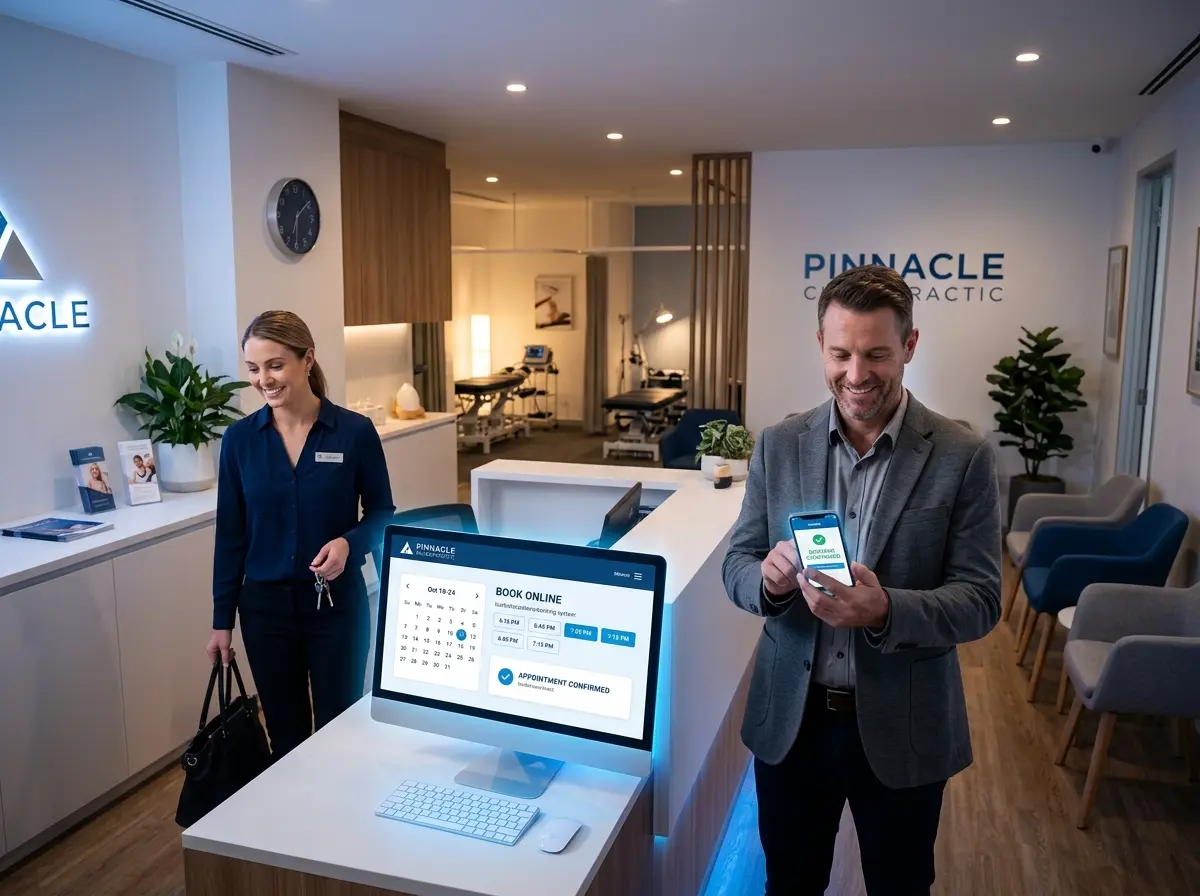
Once your booking platform is live and embedded prominently on your website, your homepage is no longer a digital brochure — it's a 24/7 appointment machine. Congratulations on the promotion.
Setting Up Automated Confirmations and Reminders
Confirmation emails and text reminders are the unsung heroes of appointment-based businesses. A well-timed reminder sequence doesn't just reduce no-shows — and research suggests automated reminders can reduce no-show rates by up to 29% — it also creates a professional first impression that builds client confidence before they ever walk through your door.
A solid reminder sequence for massage therapy looks something like this: a confirmation sent immediately after booking, a reminder 48 hours before the appointment, and a final nudge 2–4 hours ahead of time. Most booking platforms let you automate this entirely. Set it up once, and it runs forever. That's the dream, and it's real.
Handling Cancellations and Rebooking Automatically
Life happens. Clients cancel. The difference between a practice that absorbs that gracefully and one that scrambles is an automated cancellation and rebooking workflow. Configure your booking software to automatically open the cancelled slot, notify waitlisted clients, and send the cancelling client a friendly link to rebook. You'll recover more revenue, frustrate fewer people, and — most importantly — not have to personally manage any of it.
How AI Can Reinforce Your Booking Experience Around the Clock
Even the most polished online booking system has a gap: phone calls. Not every potential client wants to book online. Some people want to ask a question first — about your pressure style, your availability, whether you work on specific injuries, what to wear. And those calls? They often come at exactly the wrong moment: mid-session, during lunch, or at 9pm when you're finally off your feet.
Letting an AI Receptionist Handle What Your Booking Page Can't
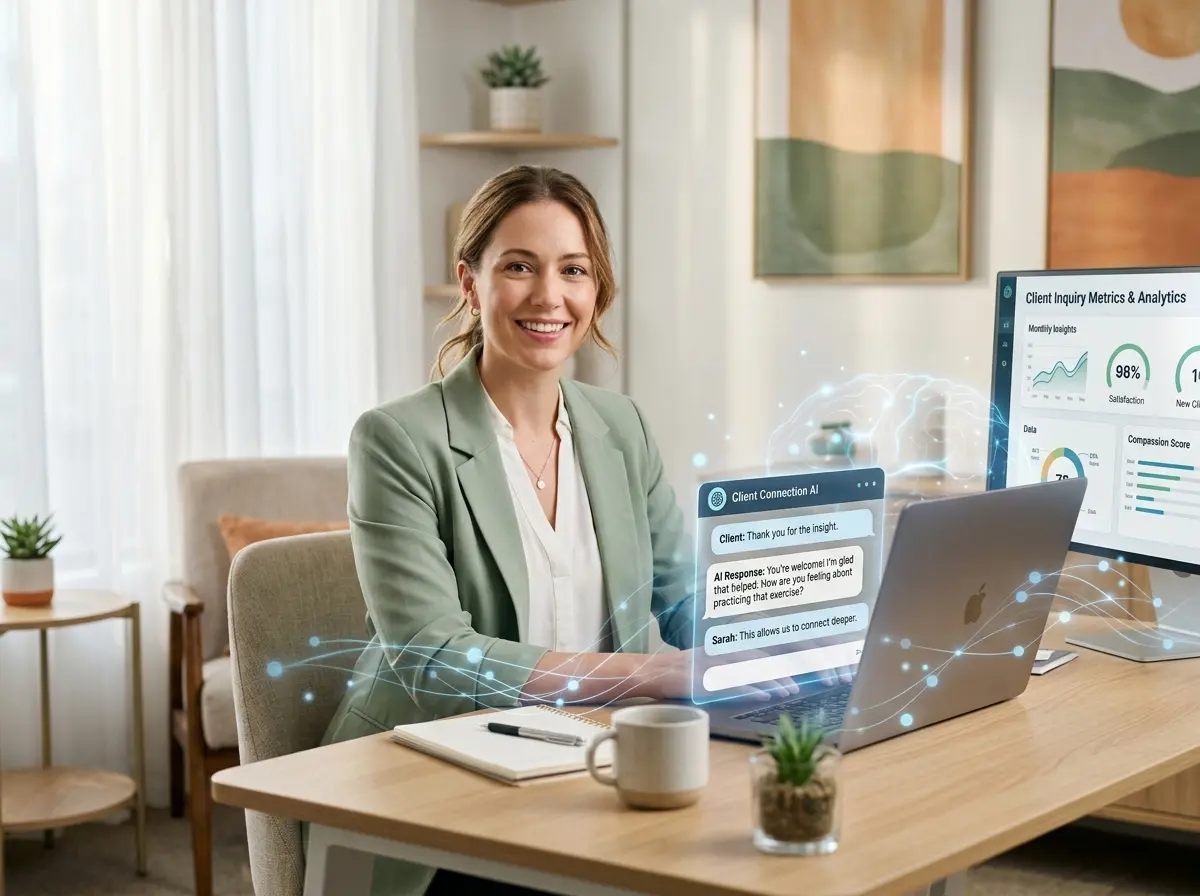
Stella is an AI robot employee and phone receptionist that answers calls 24/7 with full knowledge of your services, pricing, availability, and policies. When a potential client calls after hours to ask whether you offer prenatal massage or how long a deep tissue session runs, Stella answers naturally — the same way a well-trained front desk employee would, just without the overhead, the sick days, or the occasional bad attitude.
For massage therapists with a physical location, Stella also operates as an in-person kiosk, greeting walk-ins, answering questions, and promoting your current packages or seasonal specials. She can collect client information through conversational intake forms — on the phone, on your website, or in person — and store everything in her built-in CRM, complete with custom fields, tags, and AI-generated client profiles. It's the kind of organized client management system that used to require a full-time coordinator.
Reducing No-Shows and Maximizing Your Schedule
Let's talk money. A single no-show in a one-therapist practice doesn't just cost you the session fee — it costs you the entire hour, plus the opportunity cost of a client who could have had that slot. At an average massage therapy rate of $80–$120 per hour, even two or three no-shows a month add up to a meaningful loss over a year. Automation is how you close that leak.
Requiring Deposits at Booking
Requiring a deposit — even a modest one, like 25–50% of the service price — immediately filters out the casual, uncommitted booker. People who have already paid something show up. It's human psychology, and it works reliably. Most booking platforms make it straightforward to require deposits for new clients or for high-demand time slots like evenings and weekends. If the deposit requirement feels awkward to implement, reframe it as a "reservation fee" in your client communications. It lands better, and it means the same thing.
Building a Waitlist System
A waitlist isn't just a nice feature — it's a revenue safety net. When a cancellation happens, your booking software should automatically reach out to waitlisted clients in sequence, offering them the newly available slot. If you have a loyal, repeat client base (and a well-run practice will), your waitlist can fill cancellations within minutes. Configure this once, test it once, and then let it run quietly in the background while you do literally anything else.
Using Follow-Up Sequences to Drive Repeat Bookings
The easiest client to book is one who already loves you. An automated post-appointment follow-up sequence — sent 3–7 days after a session — is one of the highest-return automations you can implement. Thank them for visiting, ask for a review, and include a direct link to rebook their next session. If your software supports it, include a small incentive for rebooking within a specific window, like a 10% discount on their next same-month appointment. Repeat clients are the backbone of a sustainable practice, and a little automated nudge at the right moment goes a long way.
Quick Reminder About Stella
Stella is an AI robot employee and phone receptionist that works 24/7 — answering calls, greeting walk-in clients at her in-store kiosk, collecting intake information, managing client records through a built-in CRM, and promoting your services and specials without ever needing a break. She's available for just $99/month with no upfront hardware costs and is designed to be up and running quickly, even for solo practitioners. For a massage therapist building a fully automated client experience, she fills the gaps that booking software alone can't cover.
Your Next Steps Toward a Hands-Free Booking Operation
Building a fully automated booking experience doesn't happen in a single afternoon, but it also doesn't require a technical background or a large team. It requires the right tools, a clear setup process, and the willingness to trust automation to do what it does best — so you can do what you do best.
Here's a practical starting roadmap:
- Choose and configure a booking platform that supports 24/7 self-booking, intake forms, and automated reminders.
- Set up your confirmation and reminder sequence — at minimum, one confirmation, one 48-hour reminder, and one same-day reminder.
- Require deposits for new clients and high-demand time slots to reduce no-shows immediately.
- Build a cancellation and waitlist workflow so lost slots are recovered automatically.
- Add a post-appointment follow-up sequence to encourage reviews and drive repeat bookings.
- Address your phone gap with an AI receptionist so calls outside business hours are answered professionally and potential clients don't fall through the cracks.
The goal isn't to remove the human touch from your practice — your clients book with you because of your skill, your warmth, and your ability to actually help them. The goal is to remove the administrative friction that wastes your time and quietly drains your revenue. Once the systems are in place, your practice runs more smoothly, your clients experience a more polished journey, and you get to spend more time doing the work that made you want to be a massage therapist in the first place.
Now go take a break. You've earned it — and soon, your booking system will make sure it stays that way.