Let's Be Honest: Your Salon's Front Desk Is a Mess
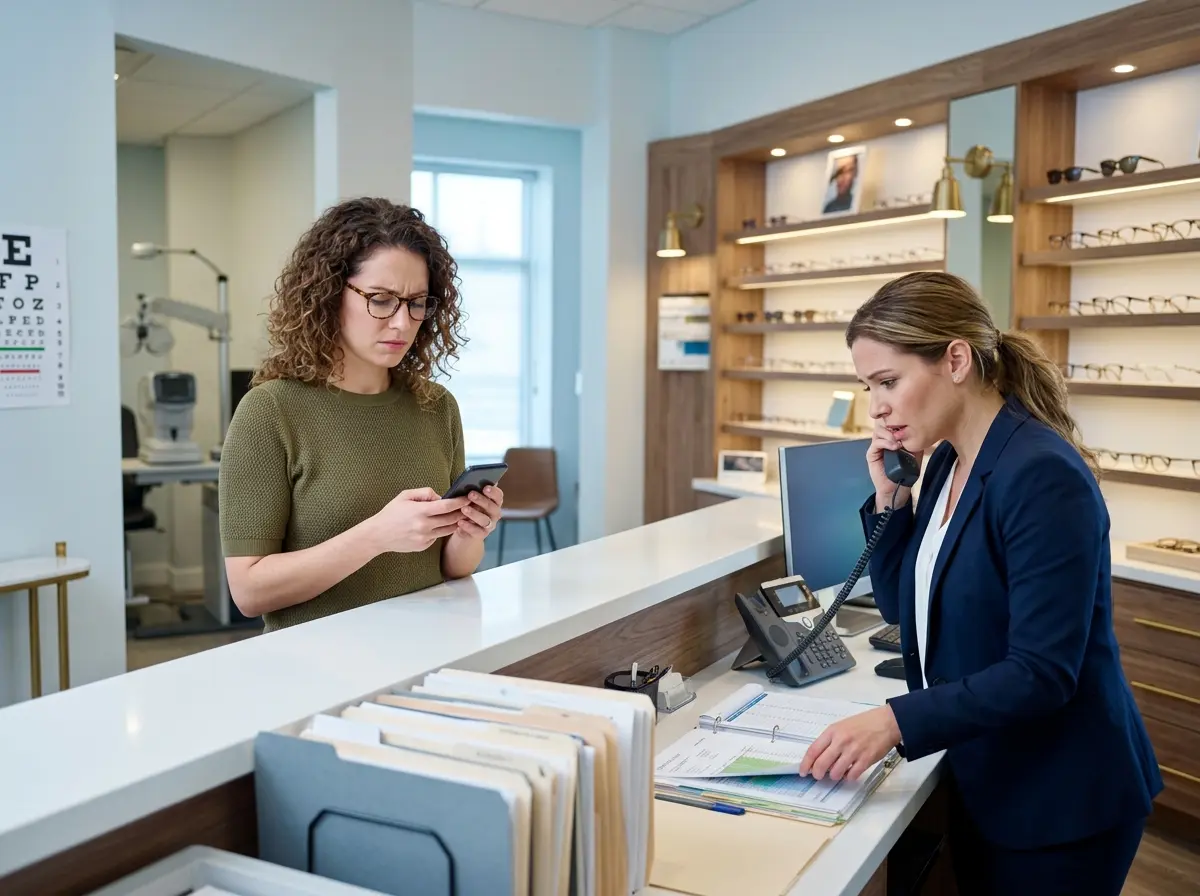
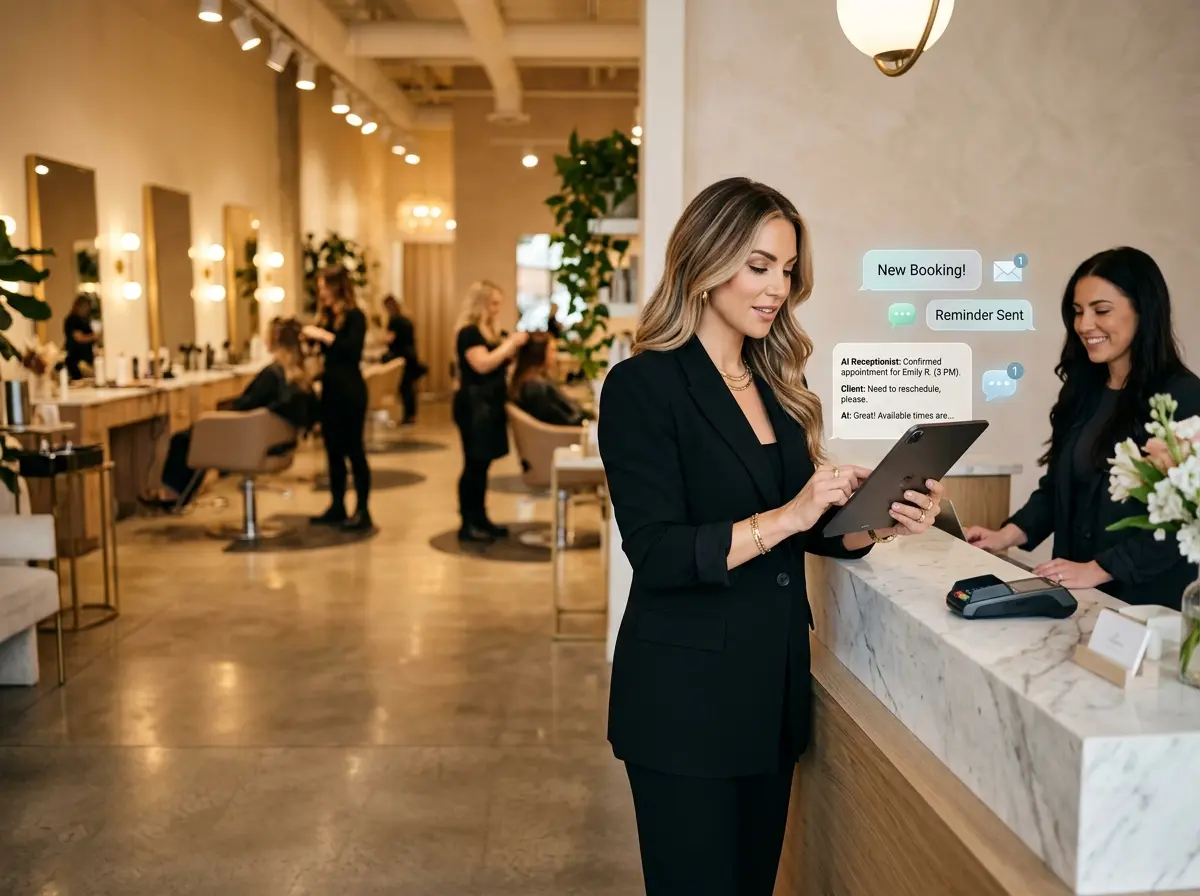
Picture this: it's a busy Saturday afternoon. Your stylists are elbow-deep in color treatments, the blow dryer chorus is at full volume, and your phone is ringing. Again. Nobody answers. The caller — a potential new client with a wedding party booking worth several hundred dollars — hangs up and calls your competitor down the street. Meanwhile, your receptionist is trying to check out a client, answer a question about balayage pricing, and locate a lost appointment card simultaneously. This is not a system. This is barely controlled chaos.
The good news? You don't have to live like this. AI-powered client communication tools are no longer the stuff of sci-fi movies or tech giants with bottomless budgets. They're practical, affordable, and increasingly becoming the quiet secret behind salons that seem to run effortlessly. Whether you're a solo booth renter juggling everything yourself or a multi-chair salon owner trying to scale without losing your mind, automating your client communication isn't just a convenience — it's a competitive advantage.
Let's break down why your salon's client communication is probably costing you more than you think, and what you can do about it today.
The Hidden Cost of Missed Connections
Every Missed Call Is a Missed Paycheck
Here's a sobering statistic: 85% of customers whose calls go unanswered will not call back. They move on. And in the salon industry, where client acquisition costs can run anywhere from $50 to $150 per new customer, letting calls go to voicemail isn't just an inconvenience — it's an expensive habit. A single missed wedding party booking could represent $500 or more in lost revenue. Do that a few times a week, and you're looking at a significant leak in your business pipeline that no amount of Instagram promotion can patch.
The problem isn't that your team doesn't care. It's that answering phones while delivering great service is genuinely difficult to do well. Clients in your chair deserve your full attention. Clients on the phone deserve the same. You cannot split that atom, no matter how talented your staff is.
After-Hours Inquiries Are Worth Real Money
Your salon is open maybe 50 or 60 hours a week. The internet is open 24 hours a day, 7 days a week, 365 days a year — and so is human curiosity. People research salons at 10 PM on a Tuesday. They wonder about your pricing for keratin treatments on Sunday morning. They want to know if you offer kids' cuts before they drive across town on a Wednesday afternoon. If there's no one to answer those questions in the moment, that curiosity cools, and so does their intent to book.
After-hours availability used to require hiring additional staff or paying for expensive answering services with zero personality and even less product knowledge. Neither option is particularly appealing. Fortunately, there's now a third option that doesn't involve a depressing hold music loop.
Inconsistent Communication Erodes Client Trust
One of the most underrated threats to salon client retention isn't pricing or location — it's inconsistency. When clients call and get a warm, knowledgeable response one day and a harried, distracted half-answer the next, they notice. Trust is built through repetition of positive experiences. If your front desk communication is inconsistent because it depends entirely on who happens to be available and how stressed they are at that moment, you're leaving client loyalty up to chance. That's not a strategy — that's a lottery.
How Automation Can Transform Your Salon's Client Experience
Meet the Reception Team Member Who Never Has a Bad Day
This is where Stella, the AI robot employee and phone receptionist, enters the picture. Stella is designed to handle exactly the kind of client communication that creates bottlenecks in busy salons. For salons with a physical location, she operates as a friendly, human-sized kiosk right inside your space — greeting clients who walk in, sharing information about your current promotions, answering questions about services, and even upselling add-ons like deep conditioning treatments or scalp massages. She's also a full-time phone receptionist, answering calls 24/7 with the same depth of knowledge she uses in person.
Stella can handle call forwarding based on conditions you configure, take AI-summarized voicemails with push notifications sent directly to you, collect client intake information through conversational forms, and manage your contacts through a built-in CRM with custom fields, tags, and AI-generated client profiles. All of this runs on a straightforward $99/month subscription with no upfront hardware costs — which, for context, is less than the cost of one hour of a booth renter's time on a busy Saturday.
Building a Communication Strategy That Actually Scales
Standardize Before You Automate
Before any tool — AI or otherwise — can represent your salon effectively, you need to know what you want it to say. That means getting intentional about your brand voice, your most frequently asked questions, your service menu details, and your current promotions. Think of it as writing the script for your ideal receptionist. What tone do you want? Warm and casual? Polished and professional? A little witty? The more clearly you define this, the more naturally any communication system — human or AI — will be able to represent your brand.
Start by documenting the 20 questions your front desk gets asked most often. Pricing, availability, service duration, parking, cancellation policy, product recommendations — these are table stakes. Once you have that list, you have the foundation of a communication system that can be trained, automated, and scaled.
Don't Automate Everything — Automate the Right Things
There's a temptation when discovering automation tools to want to automate every touchpoint, every interaction, every follow-up email. Resist that temptation. The goal isn't to remove the human element from your salon — it's to free up your humans to do what they do best. Color consultations, relationship-building, the creative and tactile work that keeps clients coming back — those are irreplaceable. But answering the same question about your Sunday hours for the 40th time this month? That's a job for automation.
Think about where your staff's attention is most valuable, and protect it fiercely. Route everything else through systems designed to handle it efficiently and consistently. Your team will thank you, your clients will get faster and more reliable responses, and you'll stop losing bookings to voicemail.
Use Client Data to Drive Retention and Revenue
One of the most underutilized growth levers in the salon industry is client data. Most salons collect it — name, contact info, maybe a service history — but very few actually use it strategically. Knowing that a client gets a color service every six weeks is the difference between hoping they come back and proactively reaching out at the five-week mark. Knowing that a client mentioned they were interested in a smoothing treatment is an opportunity to follow up with a targeted promotion when you're running a deal.
Modern AI tools can help you build richer client profiles automatically through conversational intake during calls or at a kiosk. Over time, those profiles become a goldmine for personalized communication, loyalty programs, and seasonal promotions that actually convert because they're relevant to the specific client receiving them. This isn't big-brand marketing magic — it's just using the information your clients are already willing to share.
Quick Reminder About Stella
Stella is an AI robot employee and phone receptionist built for businesses like yours — salons, spas, and beyond. She greets clients in-store, answers your phones around the clock, promotes your services and specials, and manages client data through a built-in CRM — all for $99/month with no complicated setup. She doesn't call in sick, doesn't have an off day, and never puts a client on hold to go find someone who knows the answer.
Your Next Steps Toward a Smarter Salon
The salons that will thrive in the next five years won't necessarily be the ones with the most talented stylists or the trendiest interiors — though those things certainly help. They'll be the ones that figured out how to deliver a consistently excellent client experience at every touchpoint, without burning out their staff or leaving money on the table every time the phone rings at 7 PM.
Here's a practical path forward:
- Audit your current communication gaps. How many calls go unanswered in a typical week? How long does it take to respond to after-hours inquiries? Where are clients falling through the cracks?
- Document your most common client questions and the answers your best receptionist gives. This becomes the brain of any system you build or adopt.
- Identify which communication tasks can be automated without sacrificing the personal touch your clients expect — and start there.
- Explore AI-powered tools that are built for businesses your size, with pricing that makes sense for a salon budget.
- Measure the difference. Track calls answered, bookings captured after hours, and client retention rates before and after implementing changes. The numbers will tell you everything you need to know.
Your clients want to feel heard, informed, and valued — from the moment they think about calling you to the moment they walk out your door. The technology to deliver that experience consistently, affordably, and without adding to your team's stress load already exists. The only question is how long you're willing to wait before using it.