So, Your Merchandise Keeps Walking Out the Door
Retail theft — affectionately known in the industry as "shrink" — is one of those problems that business owners love to ignore until it becomes impossible to. After all, who wants to think about the fact that a portion of their hard-earned inventory is quietly vanishing while they're busy running a business? According to the National Retail Federation, retail shrink costs the industry over $100 billion annually, with shoplifting accounting for roughly 36% of that figure. The rest? Employee theft, vendor fraud, and administrative errors — which means the threat is coming from multiple directions simultaneously.
Understanding the Enemy: Types of Retail Shrink
Shoplifting: The Obvious Culprit
Internal Theft: The Uncomfortable Truth
Here's the statistic nobody puts on a motivational poster: employee theft accounts for approximately 29% of retail shrink, according to industry research. That means nearly a third of your losses may be walking out the door wearing a name tag. Internal theft can take many forms — cash skimming at the register, sweethearting (giving unauthorized discounts to friends), merchandise theft, or falsifying returns. It's an uncomfortable topic, but ignoring it is far more expensive than addressing it.
Administrative Errors and Vendor Fraud
Technology and Deterrence: Letting Tools Do the Heavy Lifting
How a Visible Presence Changes Behavior
One of the most consistently effective theft deterrents isn't a camera or an alarm — it's a person. Or, more accurately in 2024 and beyond, something that functions like one. Research has long shown that acknowledged customers are significantly less likely to steal. When someone greets you at the door and makes eye contact, the anonymous comfort of theft evaporates quickly. This is why well-staffed stores with proactive customer service tend to experience less shoplifting than understaffed ones where customers can wander unnoticed for minutes at a time.
This is where Stella, the AI robot employee and phone receptionist, becomes genuinely useful for retail businesses. Stella stands inside your store and greets every single customer who walks by — proactively, consistently, and without ever taking a lunch break. That automatic acknowledgment creates the same psychological deterrent effect as a human greeter, while simultaneously helping real customers find what they need. She can answer questions about products, highlight current promotions, and engage shoppers in natural conversation, which means your human staff can stay focused on high-value tasks rather than hovering near the entrance hoping to catch someone's eye. On the phone side, Stella handles incoming calls 24/7, so your team isn't ducking away from the floor to answer basic questions — another common window of opportunity for theft.
Physical Store Design and Loss Prevention Best Practices
Layout Matters More Than You Think
Security Technology Worth Investing In
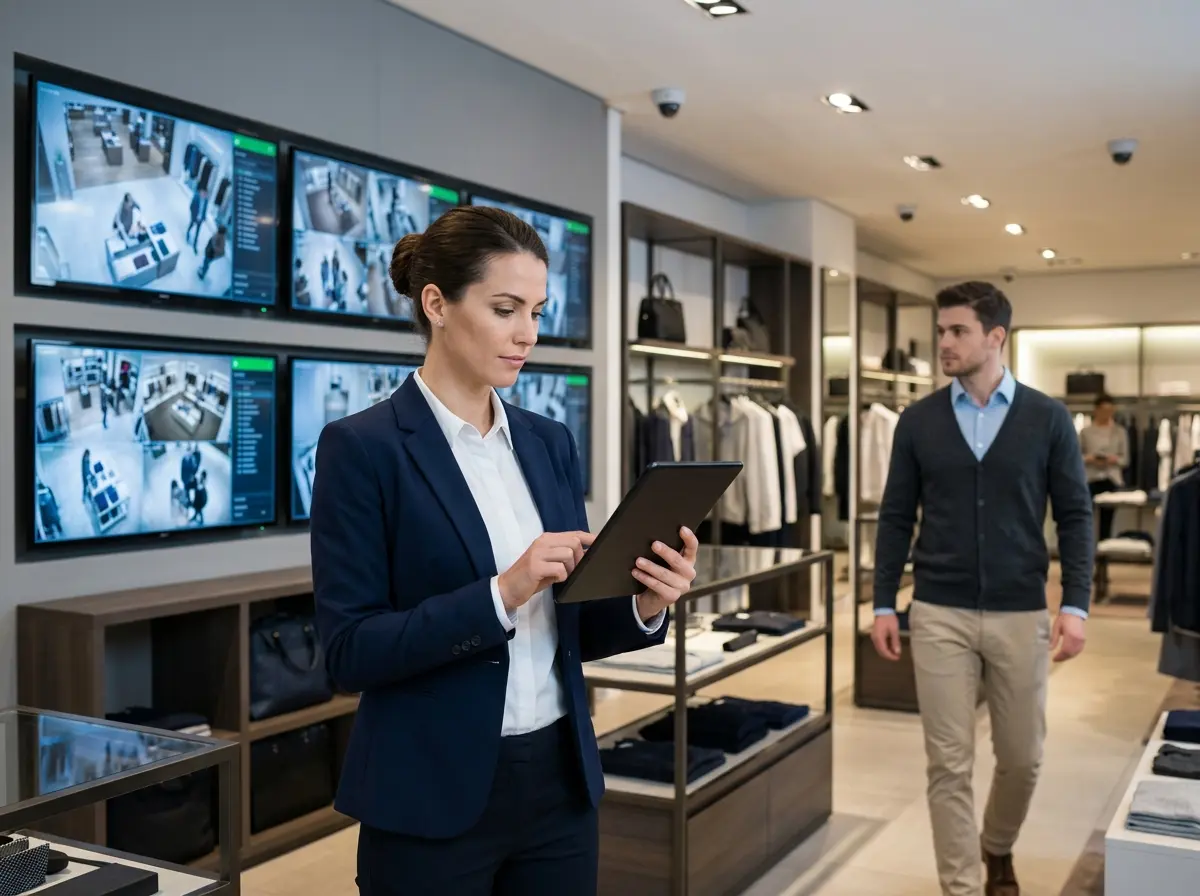
- High-definition CCTV systems with visible cameras — the visibility itself is a deterrent, and the footage is invaluable when prosecution becomes necessary.
- Electronic Article Surveillance (EAS) tags — those hard plastic security tags and sticker labels that trigger alarms at exits are still among the most cost-effective deterrents available.
- Point-of-sale analytics — modern POS systems can flag unusual transaction patterns, excessive voids, or suspicious return activity that may indicate internal theft.
- Inventory management software — real-time inventory tracking makes shrink visible quickly rather than only at annual count time, giving you the ability to investigate anomalies before they grow.
Staff Training: Your Most Underutilized Asset
Quick Reminder About Stella
Stella is an AI robot employee and phone receptionist built for businesses of all sizes — including retail stores where a consistent, welcoming presence on the floor can make a real operational difference. She greets customers in-store, answers calls around the clock, promotes your current deals, and keeps your team free to focus on what matters. At $99/month with no upfront hardware costs, she's the kind of staff member who never calls in sick, never gets distracted, and never lets a customer walk past unacknowledged.
Protect Your Bottom Line — Starting Today
Here's your practical action plan to get started:
- Audit your current shrink — calculate your shrink rate (inventory losses divided by total sales) and identify where losses are occurring.
- Walk your store like a shoplifter would — identify blind spots, poor lighting, and unsupervised areas and address them.
- Review your receiving and inventory processes — tighten up administrative procedures to eliminate error-based shrink.
- Train your team — on loss prevention best practices, customer engagement as deterrence, and internal reporting procedures.
- Invest in visible deterrents — cameras, EAS tags, and a proactive in-store presence that ensures every customer is acknowledged.
- Use data — leverage your POS and inventory systems to catch anomalies early rather than discovering them at year-end.