The Call That Could Have Changed Everything
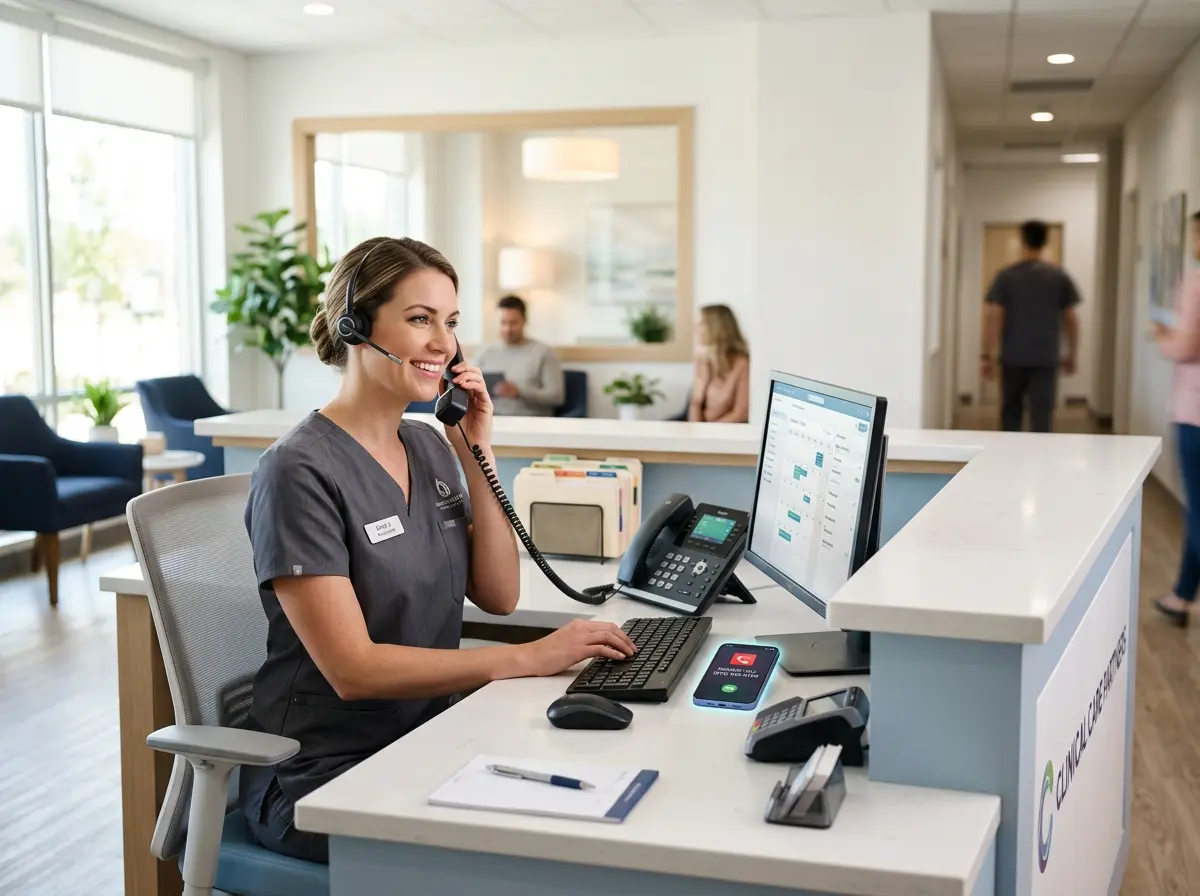
Picture this: A new patient calls your medical office on a Tuesday afternoon. Maybe they've been putting off this appointment for weeks. Maybe they finally worked up the courage to call about that thing they've been ignoring. They dial your number, listen to it ring four times, and then — voicemail. They hang up. They don't leave a message. They call the office down the street instead.
You never knew they called. You never knew you lost them. And your phone system certainly didn't send you a memo.
In the healthcare world, a missed call isn't just a missed call. It's a missed patient relationship, a missed appointment slot, and — let's be honest — missed revenue. Studies suggest that nearly 67% of patients who reach a voicemail will not leave a message, and a significant portion will simply move on to another provider. In an industry where trust, availability, and responsiveness are everything, your phone management strategy deserves the same attention you give your clinical protocols. Maybe more.
This guide is here to help you fix that — practically, professionally, and without making you feel too guilty about that stack of unheard voicemails from last Thursday.
Why Medical Offices Struggle With Phone Management
The Front Desk Is Already Doing Five Things at Once
Let's give your front desk staff the credit they deserve. They are scheduling appointments, verifying insurance, checking in patients, handling copays, answering clinical questions they probably shouldn't have to answer, and simultaneously managing the emotional experience of every person who walks through the door. Adding "answer every call on the first ring with warmth and professionalism" to that list is a bit like asking someone to juggle while performing surgery. Technically possible, but not exactly ideal for anyone involved.
The result? Calls go unanswered during busy check-in periods. Patients get placed on hold for uncomfortable stretches of time. Callbacks pile up. And the overall patient experience quietly degrades in ways that don't show up on a chart — until patients start showing up less often.
After-Hours Calls Are a Black Hole
Your office hours are posted on your website. But patient needs don't operate on a 9-to-5 schedule. Someone is always going to call at 7:15 PM to ask about their upcoming procedure, reschedule an appointment, or figure out whether their symptoms require urgent attention. If your after-hours solution is a generic outgoing voicemail message — the kind that hasn't been updated since 2019 — you are not exactly inspiring confidence in your patient base.
After-hours call handling is one of the most overlooked gaps in medical office operations. A patient who calls after hours and gets a helpful, informative response feels cared for. A patient who gets dead air or a robotic prompt to "press 1 for emergencies" feels like a number — and acts accordingly at their next appointment search.
The Real Cost of Dropped Calls
Beyond the emotional and experiential costs, there are real financial consequences to poor phone management. A single new patient, depending on your specialty, can represent hundreds to thousands of dollars in lifetime value. If your practice is missing even five to ten new patient calls per week due to poor phone coverage, the math becomes uncomfortable pretty quickly. Multiply that by a year, add in the indirect cost of negative word-of-mouth, and you have a very compelling case for taking your phone system seriously.
How the Right Tools Make the Difference
Technology That Fills the Gaps Without Replacing Your Team
The goal isn't to replace your front desk staff — it's to make sure that when they're busy, overwhelmed, or simply off the clock, patients still get a responsive, professional experience. This is where tools like Stella, the AI robot employee and phone receptionist, genuinely shine. Stella answers calls 24/7 with the same knowledge and tone your staff would use during business hours. She can handle appointment inquiries, answer questions about your services and policies, collect patient intake information through conversational forms, and forward calls to a human team member when the situation genuinely requires it.
What makes this particularly useful for medical offices is Stella's built-in CRM, which captures and organizes patient contact details, interaction history, and AI-generated summaries from every call. That means no more sticky notes, no more "I think someone called about rescheduling but I'm not sure who," and no more missed follow-ups. Every voicemail comes with an AI-generated summary and a push notification to your manager, so nothing slips through the cracks even at midnight. For physical locations, Stella also functions as an in-office kiosk — greeting patients as they arrive, answering questions, and keeping your waiting room experience as professional as your clinical one.
Building a Phone Management System That Actually Works
Start With an Honest Audit
Before you can fix your phone system, you need to know where it's actually breaking down. Pull your call logs for the past 30 days and ask some pointed questions. How many calls went unanswered? What was your average hold time? How many voicemails were left versus how many calls simply disconnected? What percentage of calls came in after hours? If your current system can't answer these questions, that itself is a significant problem worth addressing. You can't manage what you can't measure, and in healthcare, the stakes are too high to operate blind.
Once you have the data, look for patterns. Are calls dropping primarily on Monday mornings when the week's appointments are being confirmed? Are after-hours calls spiking before long weekends? Is one front desk team member handling a disproportionate call volume? The answers will tell you exactly where to focus your energy.
Create a Protocol for Every Call Type
Not all calls are created equal, and your staff shouldn't have to make judgment calls on the fly about how to handle each one. A clearly documented call routing protocol removes ambiguity, reduces stress, and ensures a consistent patient experience regardless of who picks up the phone. Consider categorizing calls into tiers: urgent clinical matters that need immediate human attention, administrative inquiries that can be handled by front desk or AI, scheduling requests that can be managed through automated tools, and general information questions that require nothing more than a knowledgeable, friendly response.
When your team knows exactly what to do with every type of call — and when your technology is configured to handle the rest — you stop playing defense and start delivering a proactive patient experience.
Train Your Team on Phone Etiquette Like It Matters
Because it does. A patient's first impression of your practice is often formed entirely over the phone, before they ever walk through your door. That means tone of voice, how quickly a call is answered, whether the staff member sounds engaged or exhausted, and how gracefully calls are transferred all contribute to how safe and cared for a patient feels. Invest in short, regular training sessions on phone etiquette. Role-play difficult scenarios. Listen to call recordings together and give constructive feedback. It doesn't have to be elaborate — even fifteen minutes a month can meaningfully shift the quality of your phone interactions over time.
Quick Reminder About Stella
Stella is an AI robot employee and phone receptionist designed for businesses of all sizes — including medical offices looking to modernize their patient communication without hiring additional staff. At just $99 per month with no upfront hardware costs, she handles calls around the clock, greets in-office patients, collects intake information, manages contacts through a built-in CRM, and keeps your team informed with smart summaries and real-time notifications. She's professional, always available, and — unlike your most tenured receptionist — never has a bad Monday.
Your Next Steps Start Today
If you've made it this far, you already know that phone management is not a minor operational detail — it's a core part of your patient experience strategy. The good news is that fixing it doesn't require a complete overhaul of your practice. It requires honest assessment, smart systems, clear protocols, and a genuine commitment to treating every inbound call as the opportunity it truly is.
Start small. Audit your call data this week. Document your top five most common call types and decide how each should be handled. Evaluate whether your current after-hours solution is actually serving patients or just technically existing. And consider how AI-powered tools can fill the gaps your human team simply cannot cover at scale.
Your patients are calling. Some of them are calling right now, while you're reading this. The question is whether your practice is ready to answer — professionally, consistently, and without making them feel like an inconvenience. Because the office that picks up the phone is usually the one that gets the appointment. And the appointment, as we've established, is kind of the whole point.