Introduction: The Loyalty Program Graveyard Is Real
Somewhere in your customers' wallets right now, there's a punch card for your store. It has exactly one punch on it. It was issued 14 months ago. Nobody is coming back for that free coffee.
Loyalty programs are one of the most powerful tools in retail — when they actually work. The problem is that most of them don't. They get launched with fanfare, handed to customers at checkout with zero explanation, and then quietly die in a pile of forgotten keychains and expired app notifications. Meanwhile, the business owner wonders why the program isn't driving repeat visits.
Here's the truth: a loyalty program isn't a set-it-and-forget-it solution. It's a relationship-building engine that requires the right structure, the right communication, and — critically — the right touchpoints to keep customers engaged. The good news? Building a program that customers actually use isn't rocket science. It just requires being intentional about a few key things. Let's break it down.
Designing a Program Worth Joining in the First Place
Before you worry about engagement, you need to make sure your program is actually worth a customer's time. This is where most retail loyalty programs fail before they even launch — they're designed around what's convenient for the business, not what's motivating for the customer.
Make the Reward Feel Attainable (and Desirable)
Nothing kills loyalty faster than a reward that feels impossibly far away. If a customer needs to spend $2,000 to earn a $5 discount, they're not going to feel loyal — they're going to feel mildly insulted. Research from Bond Brand Loyalty consistently shows that customers are more likely to actively participate in programs where they can see progress quickly and where the reward is something they genuinely want.
A good rule of thumb: customers should be able to earn a meaningful reward within two to four visits. Whether that's a free product, a percentage discount, exclusive access, or a birthday perk, the reward needs to feel worth chasing. Survey your existing customers if you're unsure — people are surprisingly willing to tell you exactly what they want in exchange for their loyalty.
Keep the Mechanics Simple
Points multipliers, tiered levels, bonus categories, expiration windows — sound familiar? If your loyalty program requires a flowchart to explain, you've already lost. Simplicity wins. Customers should be able to understand the program in one sentence: "Spend $10, earn a point. Earn 10 points, get $5 off." Done.
Digital programs through apps or text-based platforms have largely replaced physical punch cards, and for good reason — they're easier to track and more engaging. But don't overcomplicate the digital experience either. If signing up takes more than 90 seconds, expect significant drop-off. Frictionless enrollment is not optional; it's the entire game.
Differentiate With Personalization
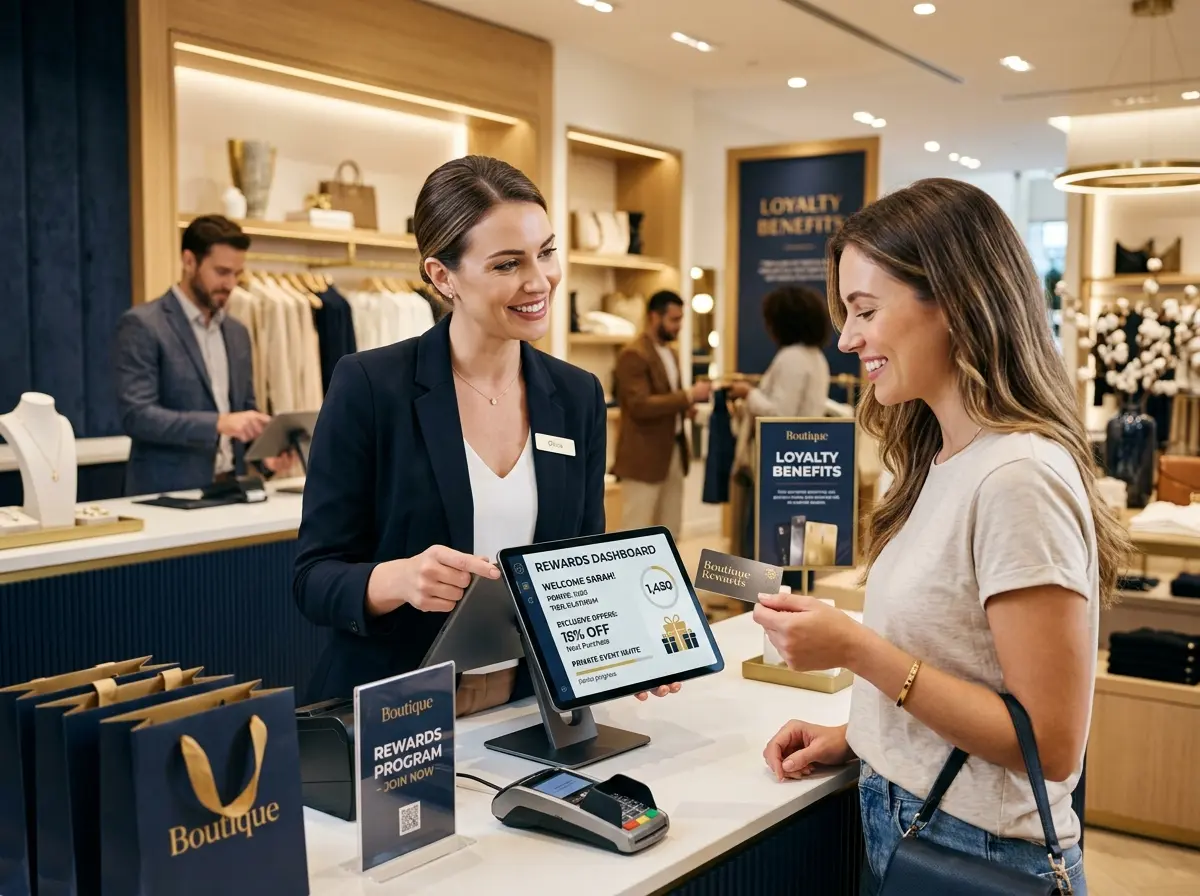
Generic loyalty programs feel generic. The retailers winning at loyalty right now — think Sephora's Beauty Insider or Starbucks Rewards — aren't just tracking purchases. They're using customer data to deliver personalized offers, birthday rewards, and recommendations that feel tailored rather than mass-blasted. Even small retailers can do this. Simply remembering that a customer always buys a specific product category and sending them a relevant offer can make a world of difference in engagement and perceived value.
Using Smart Tools to Stay Connected With Customers
Even the best-designed loyalty program will underperform if customers aren't consistently reminded it exists. This is where having the right systems in place — ones that capture customer information and create natural touchpoints — becomes a genuine competitive advantage.
Capture Customer Data Without Being Creepy About It
You can't personalize what you don't know. Collecting customer contact information — email, phone number, purchase history, preferences — is the foundation of any loyalty strategy. The key is making data collection feel natural and valuable rather than like an interrogation at the checkout counter.
This is one area where Stella, the AI robot employee and phone receptionist, can genuinely help. In-store, Stella's kiosk can engage customers in friendly, natural conversation and collect enrollment information through conversational intake forms — no awkward staff prompts required. When customers call in, Stella can handle phone-based enrollment and capture contact details directly into her built-in CRM, complete with custom fields, tags, and AI-generated customer profiles. It's a smooth, consistent experience that happens automatically, whether the interaction is in person or over the phone.
Keeping Customers Engaged After They Sign Up
Enrollment is the beginning of the relationship, not the finish line. The brands that win at loyalty don't just sign customers up — they stay top of mind through consistent, relevant communication and give people genuine reasons to keep coming back.
Communicate Regularly, But Don't Be Annoying About It
There's a fine line between staying relevant and becoming the business that customers unsubscribe from. Email and SMS open rates drop significantly when messaging feels irrelevant or too frequent. The sweet spot for most retailers is one to two communications per week, focused on genuine value — a promotion, a new product, a loyalty milestone, or a personalized recommendation.
Timing matters enormously. A well-timed "You're only 1 point away from a reward!" message sent shortly after a purchase is far more effective than a generic monthly newsletter. Automation tools make this easy to set up once and let it run, turning passive customer data into active engagement triggers.
Create Reasons to Visit Beyond Transactions
The most loyal customers don't just buy — they feel connected to the brand. Exclusive early access to new products, member-only events, behind-the-scenes content, or even a simple "thank you" message on a loyalty anniversary can shift a customer from transactional to genuinely attached. According to research by Accenture, 57% of consumers spend more on brands they feel loyal to — and that emotional loyalty is built through experiences, not just discounts.
Think about what you can offer that goes beyond the purchase itself. A local boutique might host a styling event for top loyalty members. A gym might offer early registration for classes exclusively to members. A restaurant might provide a complimentary appetizer on a member's loyalty anniversary. Small gestures, consistently executed, build the kind of loyalty that's genuinely hard for competitors to steal.
Monitor, Measure, and Adjust
A loyalty program you don't measure is just a marketing expense with no feedback loop. Track redemption rates, enrollment growth, visit frequency before and after enrollment, and average transaction value for loyalty members versus non-members. These numbers will tell you what's working and what's quietly failing.
If redemption rates are low, the reward structure probably needs adjustment. If enrollment is high but visit frequency isn't improving, your post-enrollment communication strategy needs work. Treat your loyalty program like any other business system — review it quarterly, make data-driven tweaks, and don't be afraid to sunset features that aren't performing.
Quick Reminder About Stella
Stella is an AI robot employee and phone receptionist that works inside your store as a friendly kiosk — greeting customers, answering questions, and promoting your offers — while also answering your business phone calls 24/7. At just $99/month with no upfront hardware costs, she's always on, always consistent, and never calls in sick. For retail businesses looking to streamline customer engagement and keep operations running smoothly, she's worth a serious look.
Conclusion: Stop Launching Programs and Start Building Relationships
The retailers with the most successful loyalty programs share one thing in common: they stopped thinking of loyalty as a marketing tactic and started treating it as a core part of the customer experience. That shift in mindset changes everything — from how the program is designed, to how customers are enrolled, to how ongoing communication is handled.
Here's your practical action plan to get started:
- Audit your current program (or the idea of one) against the simplicity test. Can you explain it in one sentence? If not, simplify it.
- Define your reward structure around what your customers actually want, not just what's cheapest for you to offer.
- Set up a system to capture customer data at every touchpoint — in-store, by phone, and online — so you can personalize from day one.
- Build an automated communication cadence that delivers relevant, timely messages without requiring manual effort every week.
- Review your metrics quarterly and make adjustments based on what the numbers are actually telling you.
A loyalty program that customers actually use isn't a unicorn — it's a well-designed system backed by consistent execution. Build it right, communicate it clearly, and make your customers feel genuinely valued. The repeat business will follow.