Introduction: Your Shelves Are Talking — Are They Saying the Right Thing?
You've spent years perfecting your massage menu. Your therapists are skilled, your clients leave floating on a cloud, and your studio smells like a dream. And then there's your retail shelf — sitting in the corner, slightly dusty, holding a collection of products that may or may not have anything to do with what just happened on your treatment table. Sound familiar?
Here's the thing: retail is one of the most underutilized revenue streams in the massage industry. According to the American Massage Therapy Association, the average massage studio generates less than 10% of its revenue from retail — even though clients are already in a relaxed, receptive state and primed to invest in their own wellness. That's a missed opportunity the size of a Swedish massage boulder.
The good news? You don't need to overhaul your entire business model. You just need to align what you sell with what you do. When your retail offerings directly support the treatments on your menu, the upsell feels less like a sales pitch and more like a natural extension of the care your clients are already receiving. This guide will walk you through how to build that alignment — and how to make sure your team (human and otherwise) is equipped to communicate it.
Building a Retail Strategy Around Your Treatment Menu
Start With Your Most Popular Services
Before you think about products, think about treatments. Pull your booking data and identify your top three to five most-requested services. These are your anchors. Every retail product you stock should either extend the benefits of one of these services at home or enhance the experience during the session itself.
For example, if deep tissue massage is your bestseller, consider stocking arnica-based muscle recovery balms, foam rollers, or magnesium bath salts — items that help clients manage soreness between appointments. If hot stone therapy is a signature offering, curated essential oil blends or warming massage candles make perfect retail companions. The logic is simple: clients trust your expertise in the treatment room. That trust transfers to your product recommendations when the connection is clear and genuine.
Create Intentional Product Pairings
Once you've mapped your services to product categories, take it a step further by creating intentional pairings — think of them as "take-home protocols." These aren't just add-ons; they're prescriptive recommendations that reinforce what your therapists just did for 60 or 90 minutes.
A prenatal massage package might pair beautifully with an unscented belly oil and a pregnancy-safe bath soak. A sports recovery treatment could come with a curated kit including a cooling gel, a resistance band, and a targeted stretch guide. When you package these thoughtfully and display them near the corresponding service descriptions, clients don't have to guess — they just say yes. Bonus: bundled retail items have higher perceived value, which means you can price them accordingly.
Train Your Therapists to Speak the Language of Retail
Your therapists are not salespeople — and they shouldn't feel like they are. The key is to reframe retail recommendations as part of the treatment conversation, not a transaction. Encourage therapists to briefly mention a relevant product during the session wrap-up using language that feels clinical and caring rather than commercial.
Something like: "Your hamstrings were really tight today — I'd recommend applying this magnesium gel tonight before bed to help with the tension." That's not a sales pitch; that's professional aftercare advice. When therapists feel confident about why a product matters, the recommendation becomes authentic. Consider holding monthly mini-training sessions where you introduce one or two products and explain exactly how they tie into your treatment protocols.
Making Retail Effortless at the Point of Experience
Display Products Where the Conversation Happens
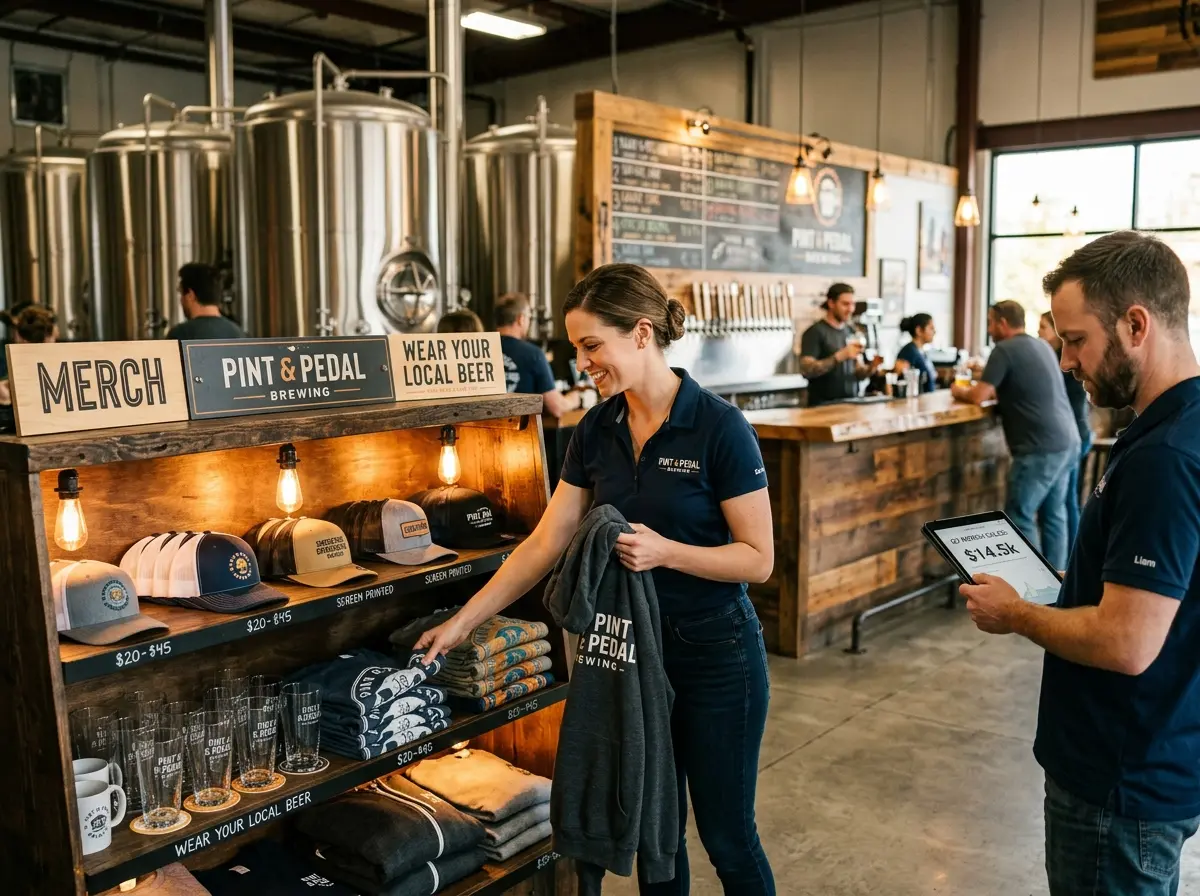
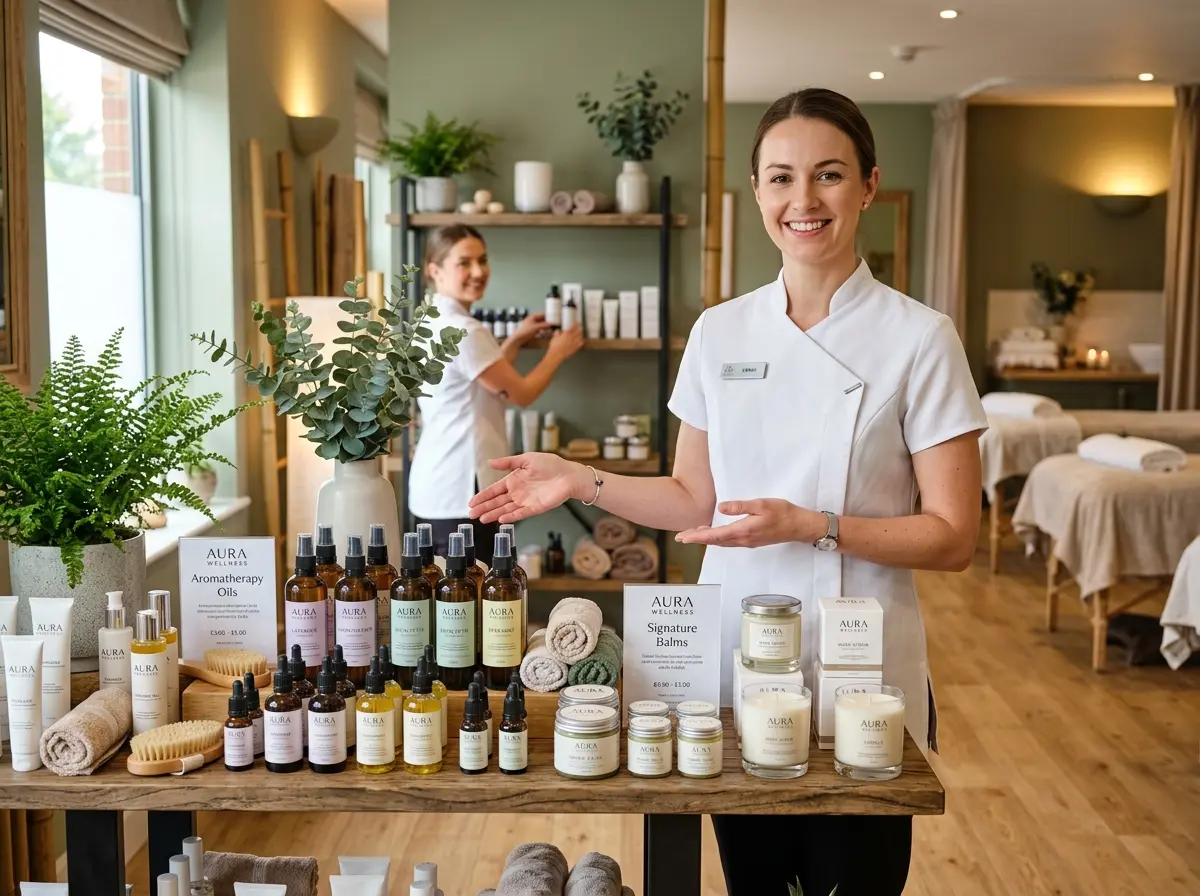
Product placement matters more than most massage studio owners realize. If your retail items are tucked behind the front desk or crammed onto a single shelf near the exit, you're working against yourself. Position products near your waiting area, at the checkout counter, and — where hygienically appropriate — within treatment rooms as visual cues during the session.
Consider using small cards or shelf talkers that explain each product's connection to your services. A simple label that reads "Used in our Signature Relaxation Massage" does a tremendous amount of selling without requiring a single word from your staff. Visual merchandising doesn't have to be elaborate — it just has to be intentional.
Let Technology Handle the Retail Conversation When Your Staff Can't
Your front desk team is juggling bookings, check-ins, and checkout — and that's before someone asks them to explain the difference between a CBD muscle rub and an arnica balm while three clients are waiting. This is where Stella, the AI robot employee and phone receptionist, genuinely earns her keep.
As an in-store kiosk, Stella stands in your studio and proactively engages clients — greeting them, answering questions about your products and services, and highlighting current promotions without pulling your therapists away from treatment rooms. She can explain which retail products complement which treatments, mention any bundle deals you're running, and upsell naturally as part of a friendly conversation. On the phone side, she answers calls 24/7 with the same product and service knowledge she uses in person — so a client calling at 9 PM to ask what you recommend for post-massage soreness gets a real, informed answer instead of voicemail. For a studio trying to maximize every client touchpoint, that kind of consistent presence is hard to replicate with staff alone.
Pricing, Margins, and Making It Actually Worth Your While
Know Your Numbers Before You Stock Your Shelves
Retail in a massage studio should carry a minimum 50% gross margin — ideally closer to 60–70% for professional-grade products. If you're pricing products at only a modest markup because it "feels weird" to charge more, you're leaving money on the table and potentially undermining the perceived value of what you're selling. Clients expect to pay a premium for curated, expert-recommended products. Price accordingly and without apology.
Be selective about your vendor relationships too. Look for brands that offer exclusive or semi-exclusive distribution arrangements, strong educational support, and professional-grade positioning. Selling the same product your clients can find on Amazon for 30% less is a losing game. Differentiate through curation — stock things people can't easily buy elsewhere, or products that come with your studio's personal recommendation baked in.
Track What Sells and Why
Many studio owners stock retail based on intuition and then forget to evaluate what's actually moving. Set a monthly review cadence to assess which products are selling, which are collecting dust, and whether there's a correlation between retail sales and specific service offerings or promotional pushes.
If a particular product spikes in sales after your therapists receive training on it, that's data worth acting on. If a product has been on your shelf for four months without a single sale, it either needs better placement, better context, or a swift exit. Treat your retail section like a curated menu, not a permanent fixture — it should evolve with your services, your seasons, and your clients' needs.
Run Intentional Promotions That Tie Retail to Services
Seasonal promotions that bundle a service with a retail product are one of the most effective ways to drive both bookings and retail revenue simultaneously. A "Winter Recovery Package" that includes a deep tissue session plus a take-home muscle soak kit gives clients a complete experience and a reason to spend more in a single visit. Mother's Day, athletic event seasons, and the post-holiday "I need to decompress" period in January are all natural windows for these kinds of offers.
Make sure your promotions are visible everywhere — in-studio signage, your website, social media, and especially when clients call to book. If your front desk staff isn't consistently mentioning the current promotion during every booking call, you're missing a significant conversion opportunity each time the phone rings.
Quick Reminder About Stella
Stella is an AI robot employee and phone receptionist designed to work inside your studio as a kiosk and answer your phones around the clock — starting at just $99/month with no upfront hardware costs. She greets clients, answers product and service questions, promotes your current offers, and upsells naturally without ever needing a break, a training refresher, or a pep talk before a busy Saturday. For massage studios trying to do more with lean teams, she's the kind of reliable presence that pays for itself.
Conclusion: Turn Your Retail Shelf Into a Revenue Stream That Makes Sense
Retail success in a massage studio isn't about stocking more products — it's about stocking the right products and making sure every client understands why they belong in their home wellness routine. Start by anchoring your retail strategy to your most popular services, build intentional pairings that feel like professional recommendations rather than upsells, and make sure your pricing reflects the expertise behind the curation.
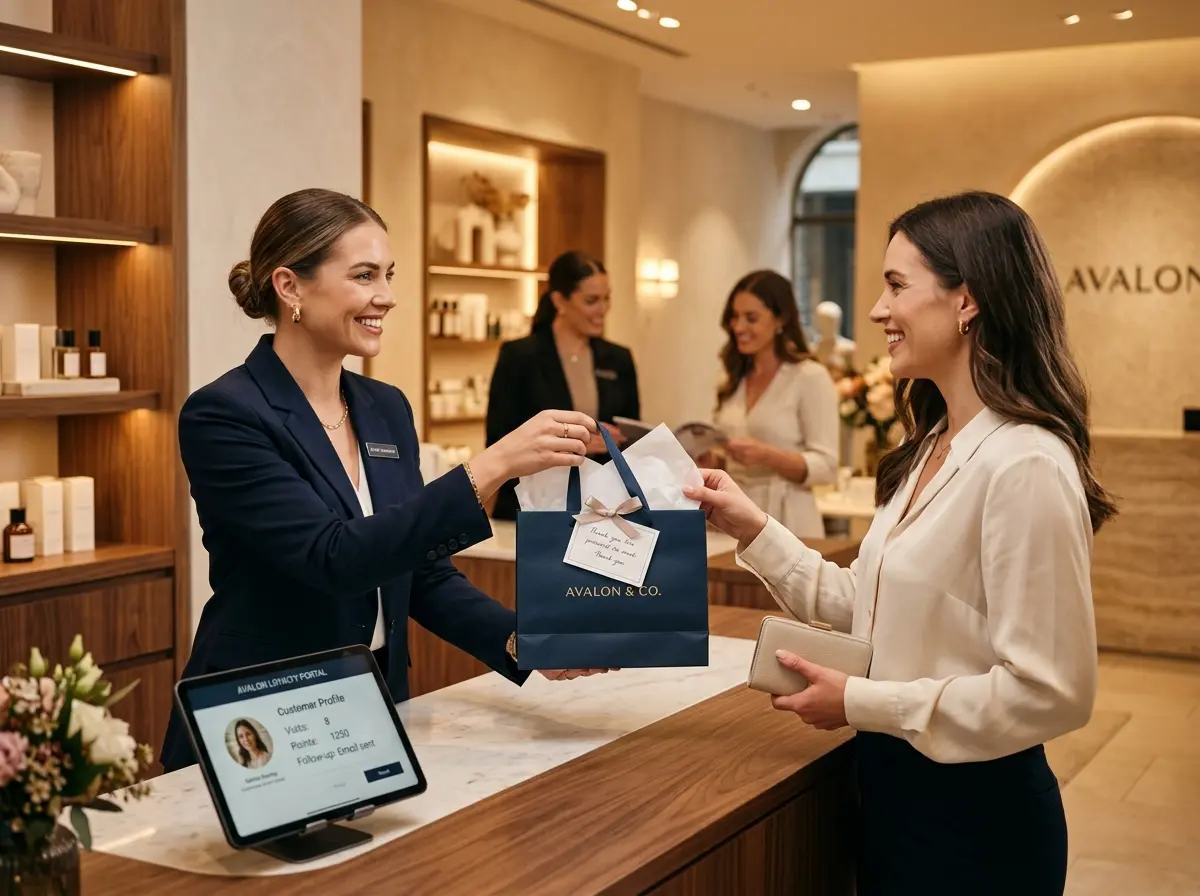
From there, focus on the experience: display products where clients can see and touch them, train your therapists to speak about retail as part of aftercare, and leverage every client touchpoint — in-studio, on the phone, and online — to communicate the value of what you carry. A small, well-chosen retail selection that your entire team can speak confidently about will always outperform a packed shelf that nobody mentions.
Your clients already trust you with their bodies. Extend that trust to their take-home routine, price it properly, and watch your retail revenue grow from an afterthought into a meaningful part of your business — no dust required.