Introduction: The Green Industry's Best-Kept Secret for Boosting Revenue
Let's be honest — most landscaping businesses are leaving serious money on the table. You're already showing up at properties week after week, mower humming, crew hustling, and clients happily waving from their kitchen windows. But are you looking up? Like, literally — are you looking at those trees? Because right above every freshly mowed lawn is an untapped revenue stream with branches (pun absolutely intended).
Tree and shrub care add-on programs are one of the most underutilized growth strategies in the landscaping industry, and yet they're perfectly positioned for businesses that already have maintenance contracts. You've earned the trust, you have the access, and your clients already know where to find their checkbook when your invoice arrives. Adding a structured tree and shrub care program doesn't just pad your bottom line — it deepens client relationships, increases annual contract value, and makes you genuinely harder to replace. A client who gets their lawn mowed by you is a client. A client who gets their lawn mowed and their Japanese maple fertilized and their boxwoods shaped by you? That's a client for life.
This guide will walk you through building a profitable, professional tree and shrub care add-on program from scratch — including how to structure your services, price them confidently, sell them without feeling awkward, and keep your clients coming back year after year.
Building the Foundation: Services, Certifications, and Pricing
Deciding Which Services to Offer
Before you start printing new service agreements, you need to figure out what you're actually selling. Tree and shrub care is a broad category, and trying to offer everything on day one is a fast track to chaos. The most practical approach is to start with services that complement what you already do and require the least additional equipment investment.
Foundational services to consider include deep root fertilization, ornamental pruning and shaping, insect and disease management, dormant oil sprays, mulching, and seasonal shrub health assessments. These services have strong demand, reasonable material costs, and can be bundled into tiered packages that make upselling feel natural rather than pushy. As your program matures, you can layer in more specialized offerings like soil aeration, plant health care consultations, or even subcontracted tree removal partnerships with a certified arborist — which keeps the revenue in your ecosystem without requiring you to buy a bucket truck.
Getting the Right Credentials
Here's where a lot of landscapers hesitate, and understandably so. Tree and shrub care — especially anything involving pesticide applications — typically requires licensing. Depending on your state, you may need a pesticide applicator's license, an arborist certification, or both. The International Society of Arboriculture (ISA) offers a Certified Arborist credential that carries real weight with clients and gives you a legitimate competitive advantage.
If pursuing certification feels like a significant undertaking right now, consider hiring or partnering with someone who already holds one. Many solo certified arborists are looking for steady work pipelines, and a formal subcontracting arrangement can help you launch your program quickly while you build internal expertise over time.
Pricing Your Program for Profitability
The biggest pricing mistake landscapers make with add-on programs is undercharging because they're afraid clients will say no. Don't do this to yourself. Tree and shrub care commands premium pricing because it requires expertise, specialized materials, and accountability. According to industry data, the average annual tree and shrub care program for a residential client can range from $400 to $1,200 per year, depending on property size and service frequency — and that's per client, on top of your existing contract value.
Structure your pricing in tiers: a basic package covering fertilization and one inspection, a standard package adding seasonal treatments and pruning, and a premium package that includes everything plus priority scheduling and a written plant health report. Tiered pricing gives clients a sense of control while naturally steering many of them toward the middle or upper option — exactly where your margins live.
Streamlining Client Communication and Enrollment
Making It Easy to Say Yes
The fastest way to kill an upsell opportunity is to make it complicated. If a client has to wait three days for a callback, dig through their email for a PDF proposal, and then call back during business hours to enroll — most of them simply won't bother. Streamlining the enrollment process is just as important as the program itself.
This is where Stella — the AI robot employee and phone receptionist — becomes a genuinely useful tool for landscaping businesses. Stella answers your phones 24/7, which means a homeowner who just noticed something alarming on their oak tree at 8pm on a Saturday can call your business, get a professional, knowledgeable response about your plant health care services, and even have their information collected for a follow-up — all without you lifting a finger. For businesses with a physical office or showroom, Stella's in-store kiosk presence means walk-in clients are greeted immediately and can learn about your add-on programs without waiting for a staff member to become available. Her built-in CRM and conversational intake forms also make it easy to capture client details, property notes, and service interests — so your follow-up calls are warm, informed, and a lot more likely to convert.
Selling the Program Without Feeling Like a Salesperson
The Art of the Contextual Upsell
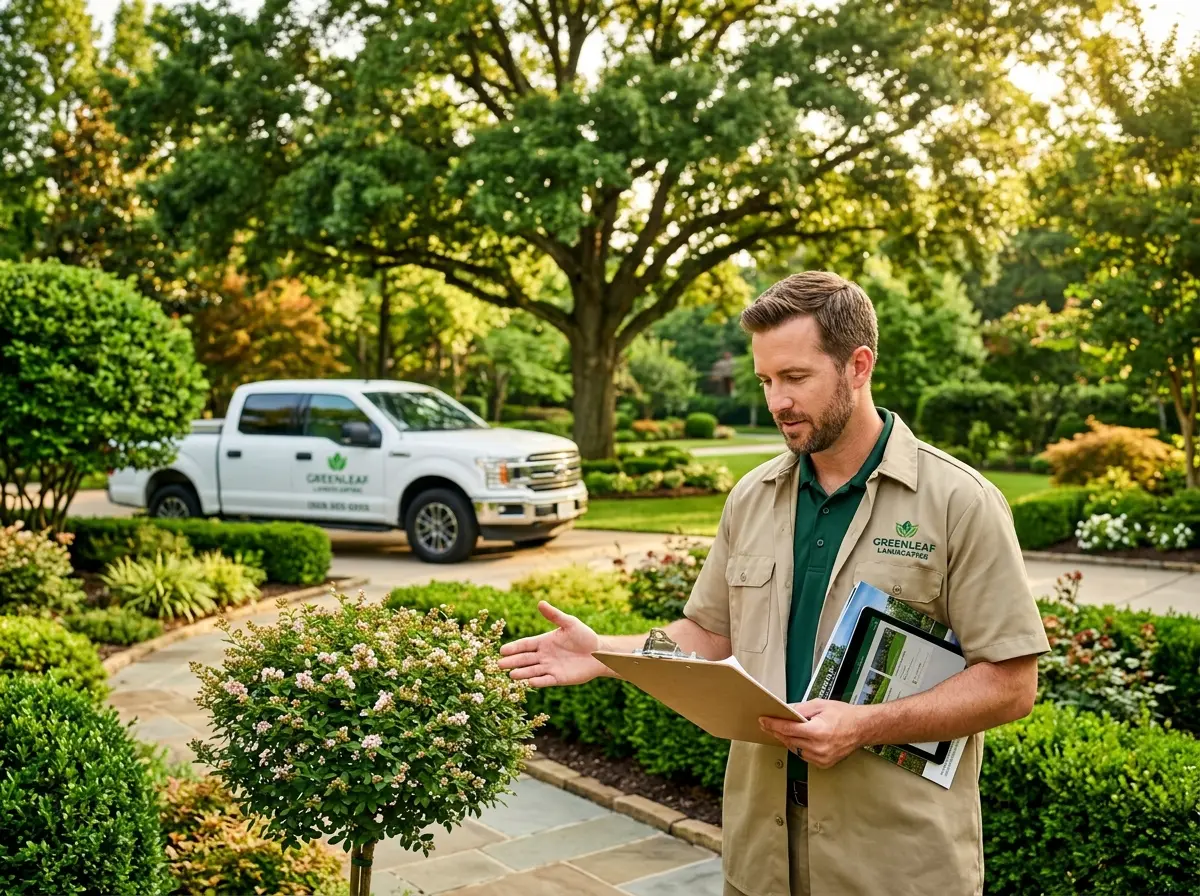
The best time to sell a tree and shrub care program is when you're already standing on the property doing what you were hired to do. When your crew notices a shrub with signs of pest damage, a tree with visible fungal growth, or ornamentals that clearly haven't been fertilized since the previous administration, that's a natural, contextual conversation — not a sales pitch. Train your crew to flag these observations and document them with photos. Then, when your account manager or you personally follow up with the client, you're not selling them something they don't need. You're solving a problem they didn't know they had.
Use a simple format: describe what was observed, explain why it matters, and present your solution with a clear price. Clients respond well to transparency and specificity. "We noticed your arborvitae along the north fence are showing early signs of spider mite damage — here's what we recommend and what it costs" is infinitely more effective than a generic brochure about your plant health care division.
Timing Your Offers Strategically
Seasonal timing matters enormously in this industry. Late winter and early spring are ideal for selling fertilization programs and dormant oil treatments. Fall is the perfect moment to discuss winterization services and root health. Build a simple annual marketing calendar that prompts you to reach out to existing maintenance clients at these key windows — an email, a door hanger left by the crew, or a phone follow-up from your office can all be effective touchpoints.
Consider offering a limited-time incentive for early program enrollment, such as a discounted first treatment or a complimentary spring assessment. Scarcity and value work in any industry, including landscaping — and a small discount on the front end often translates to a multi-year client relationship on the back end.
Building Retention Into the Program Structure
Recurring programs are the holy grail of service business revenue because they remove the need to re-sell every year. Structure your tree and shrub care program as an annual agreement with automatic renewal, and include a plant health report at the end of each season that documents what was treated, what improved, and what to watch in the coming year. This report serves double duty: it demonstrates your expertise and reminds the client exactly what they'd be walking away from if they decided not to renew.
Happy clients also refer other clients. A well-documented, results-driven program gives your clients something concrete to brag about to their neighbors — which, in a residential neighborhood, is essentially free marketing with a very high conversion rate.
Quick Reminder About Stella
Stella is an AI robot employee and phone receptionist that answers calls 24/7, greets customers in person at your location, promotes your services, and captures client information — all for just $99/month with no upfront hardware costs. She's the teammate who never calls in sick, never forgets to mention your add-on programs, and never puts a potential client on hold during dinner. For landscaping businesses building out new service offerings, she's a practical way to ensure every inbound inquiry gets a professional, informed response without adding overhead.
Conclusion: Your Trees Are Talking — Are You Listening?
Building a tree and shrub care add-on program isn't just a smart revenue move — it's a logical extension of the expertise you're already bringing to your clients' properties. The groundwork is already laid. You have the relationships, the access, and the recurring contract structure that makes upselling feel like a natural conversation rather than a cold call.
Here's your action plan to get started:
- Audit your current client list and identify properties where tree and shrub care needs are visible and unmet.
- Define your initial service menu — start with three to five core offerings and expand as demand grows.
- Get licensed or partner with someone who is — credibility is your most valuable sales tool in this category.
- Build tiered packages with clear pricing and annual agreement structures.
- Create a simple seasonal marketing calendar to prompt outreach at high-conversion windows throughout the year.
- Systematize your enrollment process so saying yes is effortless for your clients.
The landscaping businesses that will thrive over the next decade aren't just the ones with the best equipment or the biggest crews. They're the ones that build deep, multi-service relationships with their clients and make themselves indispensable. A tree and shrub care program is one of the most effective ways to do exactly that — and your competitors probably aren't offering one yet. So get moving before they figure it out.