When "Please Hold" Becomes a Four-Letter Word
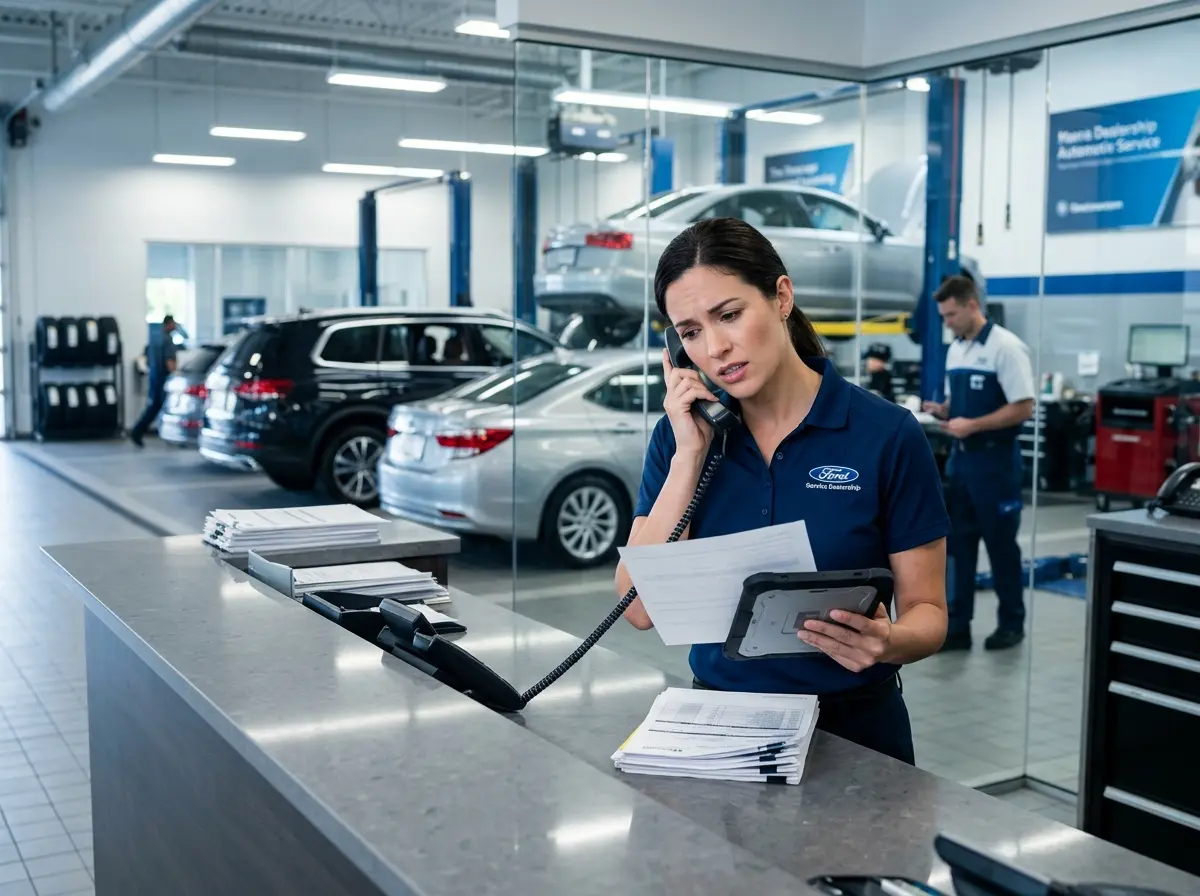
Picture this: A customer pulls into your service lane on a Tuesday morning, drops off their vehicle, and heads back to the office. An hour later, they call to check on the status of their car. The phone rings. And rings. And rings some more. Eventually, they either hang up in frustration, get transferred three times, or land in a voicemail black hole they never expect to hear back from. Meanwhile, your service advisors — bless their hearts — are juggling walk-ins, repair orders, technician updates, and the guy who absolutely needs to know if his cabin air filter is "really that dirty."
This is not a hypothetical. This is Tuesday. This is also, in no small part, why your CSI scores might be quietly suffering while you scratch your head wondering what went wrong.
Customer Satisfaction Index scores are the lifeblood of your dealership's reputation, OEM relationships, and bonus structures. And while a lot of attention gets paid to the quality of the repair itself, the communication experience surrounding that repair is increasingly where CSI battles are won or lost. If your service lane phone experience is an afterthought, you're leaving satisfaction — and money — on the table.
The Hidden CSI Killers Lurking in Your Phone Lines
The Hold Time Problem Nobody Wants to Talk About
According to industry research, customers who experience long hold times or unanswered calls during the service process are significantly more likely to give lower satisfaction scores — even when the actual repair was completed correctly and on time. Think about that for a moment. You could fix the car perfectly, on schedule, under budget, and still tank your survey because someone couldn't get through on the phone to ask a simple question.
The average automotive service department receives dozens of inbound calls daily, and a meaningful percentage of those calls go unanswered or result in holds exceeding two minutes. Two minutes doesn't sound like much until you're the one sitting in a conference room trying to find out if your car is ready before your 2 p.m. meeting. Then it feels like an eternity.
Customers don't separate "the people who fixed my car" from "the people who left me on hold for five minutes." To them, it's all one experience — your dealership.
Inconsistency Is the Silent Reputation Killer
One of the most underrated threats to a strong CSI score isn't rudeness — it's inconsistency. When a customer calls and gets a warm, knowledgeable, helpful response one day, but a rushed, distracted, or misinformed response the next, it creates uncertainty. And uncertain customers don't feel confident. Customers who don't feel confident don't give top-box scores.
Service advisors are human. They have great days and rough days. They sometimes give slightly different answers about pricing, timelines, or availability. This isn't a character flaw — it's just reality. But that reality has real consequences when your OEM surveys hit inboxes and customers are asked to rate their overall experience.
Missed Calls Are Missed Opportunities (and Missed Scores)
Beyond satisfaction, there's a more immediate financial consideration. A missed call from a customer trying to approve additional repairs is a missed upsell. A missed call from someone trying to schedule a follow-up service is a missed appointment. And a missed call from a frustrated customer who eventually gives up and calls a competitor? That one stings on multiple levels.
When your front lines are stretched thin — which, let's be honest, they usually are — calls fall through the cracks. It doesn't mean your team isn't working hard. It means your systems aren't set up to support the volume and expectations of today's customers.
A Smarter Way to Handle the Phones (Without Hiring Another Full-Time Person)
Let Technology Carry the Weight Your Team Can't
This is where a tool like Stella enters the picture. Stella is an AI-powered phone receptionist — and for dealerships with a physical service drive, also an in-store kiosk — that answers calls 24/7 with consistent, professional, business-specific knowledge. She doesn't get flustered during the Monday morning rush. She doesn't accidentally quote the wrong labor rate. She doesn't put someone on hold to go ask a coworker a question she should already know the answer to.
Stella can handle incoming calls from service customers, answer questions about hours, appointment availability, and service offerings, and route calls to the appropriate advisor when a human touch is genuinely needed. She also collects customer information through conversational intake forms and stores it in a built-in CRM — so when a customer calls about their vehicle, there's a record of who they are, what they drive, and what they've asked before. That kind of continuity doesn't just improve efficiency. It improves how customers feel about your dealership, which is precisely what CSI measures.
At $99/month with no upfront hardware costs, she's a considerably less expensive solution than a full-time BDC hire — and she works nights, weekends, and holidays without complaint.
Building a Phone Experience That Actually Supports Strong CSI
Set Expectations Early and Communicate Proactively
One of the single most effective ways to improve service lane satisfaction is deceptively simple: communicate before the customer has to ask. When customers call to check on their vehicle, it's often because they haven't heard anything and anxiety is starting to creep in. Proactive outreach — a call or text when the vehicle is being inspected, when additional work is recommended, and when it's ready — dramatically reduces inbound "just checking in" calls and the frustration that comes with not being able to get through.
Train your service advisors to set clear timeline expectations at drop-off and follow through consistently. When customers feel informed and respected, they rate their experience accordingly.
Script for Consistency Without Sounding Scripted
Consistency in communication doesn't mean robotically reading from a script. It means establishing clear standards for how calls are answered, how holds are handled, how pricing questions are addressed, and how concerns are escalated. Role-play common scenarios with your service team regularly. Identify the questions customers ask most often and make sure everyone is giving accurate, aligned answers.
Customers pick up on when a team is well-coordinated. It signals professionalism and builds trust — which translates directly to how they feel about the experience overall.
Follow Up After Pickup — Because the Survey Comes Later
The CSI survey doesn't arrive while the customer is standing at your service counter. It arrives days later, when the initial convenience of getting their car back has faded and what remains is the overall impression of how they were treated. A brief, genuine follow-up call or message after service — thanking them for their business, inviting feedback, and making sure everything is running as expected — can be the difference between a satisfied customer and a delighted one.
Delighted customers give top-box scores. Satisfied customers sometimes do. Everyone else is just waiting to express their disappointment somewhere official.
A Quick Reminder About Stella
Stella is an AI robot employee and phone receptionist built for businesses that want to deliver a reliable, professional customer experience without the overhead of additional staffing. She answers calls around the clock, greets customers in-store, promotes services, captures customer information, and keeps your team focused on the work that actually requires a human. For dealerships navigating the constant balancing act between service volume and customer satisfaction, she's worth a serious look.
Your CSI Scores Are Telling You Something — It's Time to Listen
If your CSI scores are trending in the wrong direction — or even if they're just stubbornly refusing to reach the top-box levels your OEM is looking for — resist the urge to assume it's purely about repair quality. Dig into the communication experience. Talk to your service advisors about what happens when the phone rings during peak hours. Mystery shop your own service lane. Listen to what customers are actually saying in their survey comments.
The path to stronger scores is rarely one dramatic fix. It's a series of deliberate improvements to how customers are made to feel throughout the entire service journey — from the moment they call to schedule, through drop-off, through the repair process, and all the way to that post-pickup follow-up. Here's where to start:
- Audit your call answer rate. If you don't know how many calls go unanswered or how long holds last, find out. You can't fix what you're not measuring.
- Evaluate your communication touchpoints. Map out every moment a customer could benefit from hearing from you and make sure those moments are consistently delivered.
- Invest in tools that support your team. Whether that's AI phone support, updated scheduling software, or a better CRM, the right technology makes consistent excellence achievable.
- Train and reinforce communication standards. Great phone etiquette and proactive communication don't happen by accident. Build them into your culture deliberately.
Your customers are forming opinions about your dealership every time they interact with it — including every time they call and nobody picks up. The good news is that this is entirely fixable. And the dealerships that figure it out first will have the CSI scores, the OEM relationships, and the loyal customer base to show for it.
The phone is ringing. This time, let's make sure someone — or something — answers it well.