Introduction: Why Prenatal Chiropractic Deserves Its Own Strategy
Congratulations — you've decided to build a prenatal adjustment program. You understand the value of supporting expectant mothers through pregnancy discomfort, pelvic alignment, and the general chaos that comes with growing a human being. You're certified, you're confident, and your adjustment table is ready. There's just one small problem: nobody knows about it.
Prenatal chiropractic care is one of the most underutilized — and undermarketed — services in the chiropractic world. According to the American Pregnancy Association, chiropractic care during pregnancy has been shown to help manage back pain, control nausea symptoms, and even reduce labor time. That's a compelling value proposition. And yet, most chiropractic practices either quietly mention it on their website or assume word-of-mouth will do the heavy lifting. Spoiler: it won't.
Building a prenatal program that actually attracts new families requires more than good intentions and a pregnancy pillow. It requires a deliberate, structured approach — from how you present your services to how you onboard anxious first-time parents who are Googling everything at 2 a.m. This guide walks you through exactly how to build that program, market it effectively, and keep those new family relationships growing long after the baby arrives.
Building the Foundation of Your Prenatal Program
Define Your Offerings With Specificity
Vague services don't sell. "We work with pregnant women" is not a program — it's a disclaimer. A real prenatal program has a clear structure: defined appointment types, trimester-specific protocols, and transparent communication about what patients can expect at each stage. Consider offering a tiered approach — a First Trimester Wellness Visit focused on postural assessment and education, Second Trimester adjustment protocols targeting the sacroiliac joint and round ligament discomfort, and Third Trimester sessions that include Webster Technique certification and birth preparation positioning.
Being specific accomplishes two things. First, it builds trust with expectant mothers who are understandably cautious about any new treatment during pregnancy. Second, it positions you as a specialist rather than a generalist — and specialists can charge accordingly. When you can hand a patient a clear, printed program outline on their first visit, you're not just informing them; you're demonstrating that you've thought this through.
Get (and Flaunt) Your Credentials
If you haven't yet pursued Webster Technique certification through the International Chiropractic Pediatric Association (ICPA), now is the time. The Webster Technique is the gold standard for prenatal chiropractic care, specifically designed to reduce sacral subluxation and balance pelvic ligaments. Beyond the clinical benefits, the certification is a powerful marketing asset. Display it prominently — on your website, in your office, on your Google Business Profile, and in any printed materials you produce.
Additionally, consider pursuing additional training in prenatal exercise, nutrition basics, or birth doula collaboration so you can speak credibly to the full spectrum of prenatal wellness. Parents in this season of life are researching everything, and the more comprehensively qualified you appear, the more likely they are to choose you over the generalist down the street.
Create a Comfortable, Family-Friendly Environment
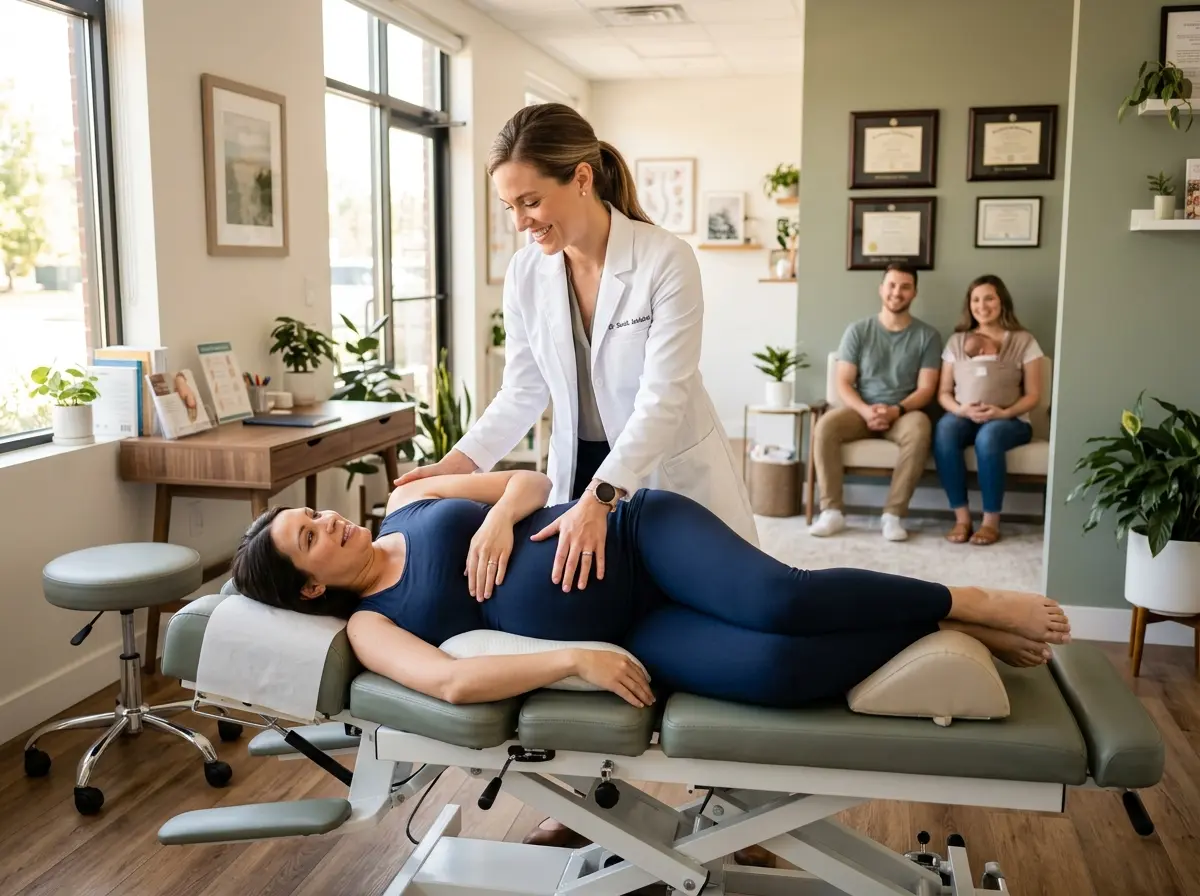
This one seems obvious, but it's worth saying plainly: your office needs to feel safe and welcoming to pregnant women and young families. That means having a proper pregnancy-adapted table or bolster system, clear signage that acknowledges prenatal services, and a waiting area that doesn't feel clinical and cold. A small section with parenting resources, a water station, and comfortable seating goes a long way. You're not just adjusting spines — you're building relationships that will last through the postpartum period and into pediatric care for years to come.
Streamlining Patient Communication and Intake
First Impressions Happen Before They Walk In
Here's a reality check: most expectant mothers searching for prenatal chiropractic care are doing so on their phones, often at odd hours, and they will call multiple providers before choosing one. If your phone goes to voicemail during business hours — or after them — you've likely lost that patient before you ever had a chance to earn her trust.
This is where Stella, the AI robot employee and phone receptionist, becomes genuinely useful for chiropractic practices. Stella answers phone calls 24/7, handles questions about your prenatal program, services, and availability, and can collect new patient intake information conversationally — even outside of office hours. For practices with a physical location, she also functions as an in-office kiosk, greeting patients as they arrive and helping reduce front-desk bottlenecks during busy clinic hours. Her built-in CRM lets you track prenatal patient profiles, notes, and intake data all in one place, so your team always has context before the first appointment. For a practice targeting a demographic that makes decisions quickly and emotionally, being available and responsive at every touchpoint isn't a luxury — it's a competitive requirement.
Marketing Your Prenatal Program to Attract New Families
Build Referral Relationships With OBs, Midwives, and Doulas
The most valuable referral source for a prenatal chiropractic program isn't Google — it's a trusted midwife or OB-GYN who recommends you by name. These professionals interact with expectant mothers at every prenatal visit, and a personal recommendation from them carries enormous weight. Invest time in building genuine relationships with local birth professionals. Offer to host a lunch-and-learn at a midwifery practice. Send a thoughtful, personalized introduction letter to OBs in your area explaining your Webster certification and the specific outcomes you focus on. Attend local birth professional networking events.
Make it easy for them to refer. Create a simple one-page referral card they can hand out that explains what you do, what to expect, and how to book. Consider a dedicated phone line or booking link just for referred patients so you can track which relationships are producing results. When a midwife refers someone and that patient has a wonderful experience, that midwife will refer again — and again.
Use Content Marketing to Educate and Attract
Expectant parents are voracious consumers of information. A consistently updated blog, YouTube channel, or social media presence that answers real questions — "Is chiropractic care safe in the first trimester?" or "What is the Webster Technique and how does it help with fetal positioning?" — can drive significant organic traffic to your website over time. You don't need to produce Hollywood-quality videos; a genuine, well-lit 90-second explanation filmed on a smartphone will outperform no content every single time.
Consider creating a free downloadable resource, such as a "Prenatal Wellness Guide" or "What to Expect at Your First Prenatal Chiropractic Visit," in exchange for an email address. This builds your list, establishes authority, and keeps your practice top-of-mind as the due date approaches — and as the new family grows.
Don't Ignore the Postpartum and Pediatric Opportunity
Here's where many practices leave significant revenue on the table: prenatal care is the door, not the destination. A family that trusts you through pregnancy is primed to return for postpartum recovery adjustments, infant wellness visits, and ongoing pediatric and family care. Build this transition intentionally. At around 36 weeks, mention postpartum care in conversation. Send a congratulatory message when a patient delivers. Offer a complimentary postpartum assessment visit as part of the prenatal package.
Families who find a chiropractor they trust during one of the most significant seasons of their lives tend to become long-term patients. The lifetime value of a prenatal patient — when cultivated correctly — can easily represent thousands of dollars in family care over the years. That's not cynical; that's the beautiful intersection of good medicine and good business.
Quick Reminder About Stella
Stella is an AI robot employee and phone receptionist available for just $99/month with no upfront hardware costs. She handles phone calls around the clock, greets patients at your front desk, collects intake information, and helps your team stay organized — so your staff can focus on care instead of call volume. She's the front-desk upgrade your practice didn't know it was missing.
Conclusion: Build It Like You Mean It
A prenatal adjustment program that actually grows your practice doesn't happen by accident. It happens because you defined your services clearly, earned the credentials to back them up, built relationships with the professionals who influence expectant mothers' decisions, and created a patient experience so thoughtful and consistent that families have no reason to go anywhere else.
Here are your actionable next steps to get started:
- Audit your current setup. Does your office, website, and intake process adequately communicate that you serve prenatal patients? Fix what's broken first.
- Pursue or refresh your Webster Technique certification if you haven't already, and display it everywhere.
- Identify five local birth professionals — OBs, midwives, or doulas — and schedule introductory conversations within the next 30 days.
- Create one piece of educational content per week for the next month targeting prenatal chiropractic questions your ideal patients are already asking.
- Review your phone and front-desk systems to ensure no inquiry goes unanswered — because a missed call from an anxious expectant mother is a missed family for life.
The families in your community are looking for providers they can trust — before the baby, after the baby, and for all the appointments in between. Build the program that earns that trust, and the growth will follow.