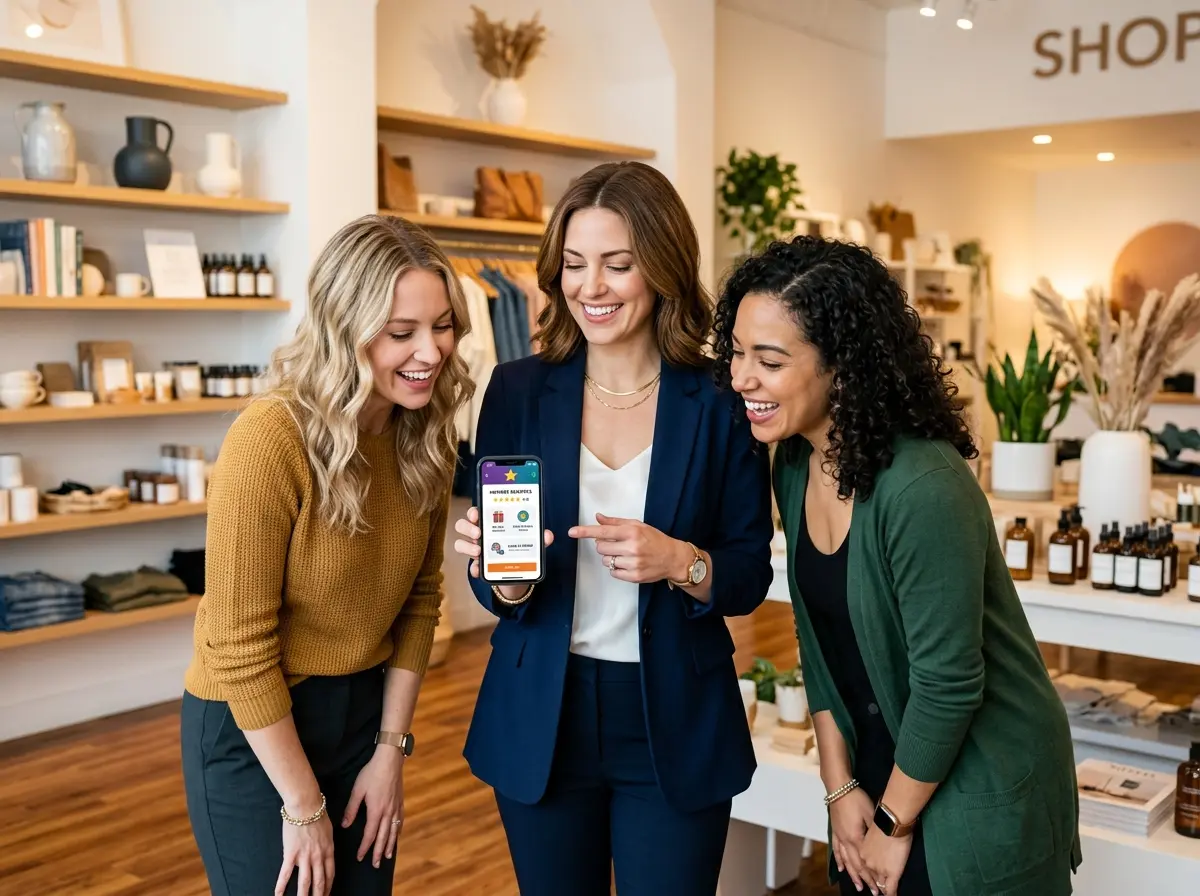
Your Customers Already Trust You — So Why Aren't They Selling For You?
Here's a fun little truth bomb: your happiest customers are walking, talking billboards for your business — and most of them have absolutely no idea. They rave about you to their friends, post about you on social media, and casually mention you at dinner parties. And what do you give them in return? A smile and a receipt. Bold strategy.
Word-of-mouth has always been the holy grail of marketing, and for good reason. Referred customers convert at higher rates, spend more over their lifetime, and — here's the kicker — they refer even more people. According to the Wharton School of Business, referred customers have a 16% higher lifetime value than non-referred ones. That's not a rounding error. That's a strategy.
The problem is that most retail businesses leave this entirely to chance. A referral program changes that. Instead of hoping your customers spread the word, you give them a reason to do it on purpose — and a system that makes it easy. This guide will walk you through how to build one that actually works, not just one that looks good in a PowerPoint deck.
The Building Blocks of a Referral Program That Works
Start With the Incentive: Make It Worth Their While
The single biggest mistake businesses make when launching a referral program is offering an incentive so underwhelming that customers would rather just keep quiet. A 5% discount? Please. That's not motivation — that's an insult dressed up as a reward.
Your incentive needs to be compelling enough to make a customer stop mid-conversation and say, "Wait, you have to check out this place." The sweet spot is usually a dual-sided reward — something for the referrer and something for the new customer. This removes the awkwardness of "I'm recommending this because I get something out of it" and replaces it with "We both win."
For example, a local gym might offer the referrer a free month and the new member their first month at half price. A boutique retail store might offer $20 store credit to both parties when a referred friend makes their first purchase. A spa could offer a complimentary add-on service to the referrer when their friend books a treatment. The format doesn't matter as much as the perceived value. Make sure the reward feels meaningful relative to what you sell.
Keep It Simple Enough That Your Customers Won't Give Up Halfway Through
If your referral program requires customers to download an app, create an account, enter a 14-digit code, and mail a postcard — congratulations, you've built the referral program equivalent of an IKEA instruction manual. Nobody is finishing that.
Simplicity is everything. Customers should be able to refer a friend in under two minutes, ideally with a single shareable link, a unique code, or even just their name. The redemption process for the new customer should be equally frictionless. The best referral programs almost feel accidental — they blend into the natural flow of a customer interaction without requiring heroic effort from anyone involved.
Consider where your customers are most engaged. At the point of purchase? After a great experience? Via email follow-up? Build your program around those natural touchpoints and remove every unnecessary step you can find.
Promote It Like It Matters — Because It Does
A referral program that nobody knows about is just a document on your computer. You need to actively promote it at every customer touchpoint: in-store signage, on receipts, in email campaigns, on your website, and through your social media channels. Train your staff to mention it naturally during transactions. Consider making it part of your post-purchase follow-up sequence.
The businesses that see the best results from referral programs treat them as an ongoing marketing initiative, not a "set it and forget it" add-on. Rotate your messaging, refresh the incentives seasonally, and celebrate your top referrers. A little public recognition goes a long way — people love being seen as the person who "discovered" a great business.
Using Technology to Keep the Momentum Going
Track Everything So You Know What's Working
A referral program without tracking is just vibes. You need to know how many referrals are being made, who your most active referrers are, what the conversion rate looks like, and what the actual revenue impact is. Most dedicated referral platforms — like ReferralCandy, Friendbuy, or even built-in Shopify apps — will handle this automatically. If you're running a simpler program manually, a spreadsheet and a consistent intake process can work in the early stages, though you'll eventually want to graduate to something more robust.
This is also where a tool like Stella can quietly pull its weight. Stella is an AI robot employee and phone receptionist that helps retail businesses engage customers both in-store at her kiosk and over the phone 24/7. With her built-in CRM, custom fields, tags, and AI-generated customer profiles, she can help you capture and organize the customer contact information that fuels your referral tracking — whether she's greeting someone who walks in or collecting intake details during a phone call. If a new customer mentions a referral while calling in after hours, Stella logs it. That's the kind of consistency that humans on rotating shifts simply can't guarantee.
Turning Referral Customers Into Repeat Referrers
The Onboarding Experience Is Everything
Here's something most businesses forget: the referred customer is watching you very closely. They came in on a recommendation from someone they trust, which means their expectations are already calibrated. If you nail that first experience, you don't just gain a new customer — you potentially gain another referrer. If you drop the ball, you've not only lost them, you've also quietly embarrassed the person who sent them.
Give referred customers a slightly elevated first experience. Acknowledge the referral with genuine warmth. Make sure your staff knows how to handle them gracefully. A small "welcome gift" or bonus added to their first transaction can make a memorable impression that costs very little but pays off significantly in loyalty and word-of-mouth.
Build a Loyalty Loop, Not a One-Time Transaction
The goal isn't just to get one referral from each happy customer — it's to build a cycle where referred customers become referrers themselves. This requires a deliberate retention strategy layered on top of your referral program. Think loyalty points, VIP tiers, personalized follow-ups, and regular communication that keeps your business top of mind without being annoying about it.
Email sequences triggered after a referral conversion, exclusive "referrer-only" perks, and periodic reminders about the program all help keep the engine running. Customers who feel genuinely appreciated — not just marketed to — are far more likely to keep sending people your way. The economics here are remarkable: acquiring a new customer through referral typically costs 30–50% less than paid advertising, and those customers often stay longer. That's not a side strategy. That's your growth engine.
Measure, Adjust, and Don't Be Precious About It
No referral program survives first contact with reality completely intact. Maybe the incentive isn't resonating. Maybe the redemption process has a hidden friction point you didn't notice. Maybe certain customer segments are far more active referrers than others. The only way to know is to look at the data and be willing to make changes without ego getting in the way.
Set a 90-day review cadence when you first launch. Look at your referral rate (how many customers are actually referring), your conversion rate (how many referred leads actually buy), and your cost-per-acquisition through the program. Adjust your incentives, messaging, or process based on what you find. The businesses that win with referral programs are the ones that treat them as living systems, not static campaigns.
Quick Reminder About Stella
Stella is an AI robot employee and phone receptionist designed for businesses of all sizes — whether you have a storefront, a service business, or you're a solopreneur working from your kitchen table in questionable pajamas. She greets customers in-store, answers phone calls around the clock, promotes your offers, and manages customer information through her built-in CRM — all for $99/month with no upfront hardware costs. If your referral program generates new inquiries at 11pm on a Saturday, she's already on it.
It's Time to Put Your Happiest Customers to Work
Building a referral program isn't complicated, but it does require intention. Start with an incentive that actually excites people. Make the process simple enough that a distracted person could complete it in two minutes. Promote it consistently across every touchpoint. Track your results, celebrate your top referrers, and refine as you go.
Your action steps are straightforward. First, decide on your incentive structure — dual-sided rewards tend to perform best. Second, map out the simplest possible referral flow for your specific business model. Third, identify the three or four touchpoints where you'll promote the program most prominently. Fourth, set up a tracking mechanism before you launch so you're not flying blind. And fifth — actually launch it, because a perfect program sitting in draft mode helps exactly no one.
Your customers are already talking about you. A referral program just makes sure that conversation ends with someone walking through your door.