Introduction: The Missed Opportunity Sitting Right on Your Dispensing Table
Let's be honest — your patients are already sitting in your chair, trusting your expertise, and about to spend money. And yet, somehow, a significant number of them walk out the door with the most basic lens package available. No anti-reflective coating. No blue light filtering. Definitely no photochromic upgrade. Just plain, unadorned lenses that will have them squinting at their phone screen and blaming their prescription by next Tuesday.
Here's the uncomfortable truth: most upselling failures in optical shops aren't about price resistance — they're about timing, framing, and consistency. Patients don't reject upgrades because they hate nice things. They reject them because nobody made a compelling case, or because the recommendation felt like a sales pitch rather than professional guidance. According to industry data, optical practices that implement structured lens upgrade conversations see a 20–35% increase in average transaction value. That's not a rounding error. That's a meaningful shift in revenue without adding a single new patient to your schedule.
This guide is your playbook for turning every appointment — from the routine exam to the quick frame adjustment — into a genuine opportunity to serve patients better and grow your bottom line. Because recommending the right lens features isn't upselling. It's just good optometry.
Building a Culture of Confident Recommendations
Train Your Team to Lead with Clinical Value, Not Price
The fastest way to kill an upsell is to lead with cost. The fastest way to close one is to lead with benefit. Your team should be trained to present lens upgrades as clinical recommendations — because, frankly, that's exactly what they are. Anti-reflective coatings reduce glare and eye strain. Blue light filters support visual comfort for screen-heavy lifestyles. Photochromic lenses eliminate the hassle of switching between glasses and sunglasses. These aren't luxury add-ons. They're solutions to real problems your patients already have.
Role-playing upgrade conversations during staff meetings sounds awkward, but it works. Have your opticians practice presenting upgrades as a natural extension of the exam findings. "Based on how much time you spend on screens, I'd strongly recommend our blue light filtering option — most patients notice a real difference in end-of-day eye fatigue." That one sentence costs nothing to say and frequently results in a "sure, let's do it."
Create a Consistent Touchpoint at Every Stage of the Visit
Upselling isn't a single moment — it's a thread woven through the entire patient experience. The front desk sets the tone when a patient checks in. The exam room is where clinical recommendations gain credibility. The dispensing table is where the decision is made. If your team is only mentioning lens upgrades at one of these stages, you're leaving money and patient satisfaction on the table.
Consider building simple scripts or conversation prompts for each stage. Check-in staff can ask about screen time habits or outdoor activity levels — information that feeds directly into later upgrade recommendations. The doctor can note during the exam that certain coatings or features would complement the new prescription. By the time the patient reaches the dispensing table, the upgrade isn't a surprise. It's the logical conclusion of a conversation that started an hour ago.
Use the Lens Itself as a Teaching Tool
Patients are far more likely to invest in something they can see and feel. Keep demonstration lenses on hand — one with anti-reflective coating and one without, held under a light. Show the difference. Let them try on photochromic lenses and walk toward the window. Hand them a lens with a scratch-resistant coating and explain what "standard" actually means in terms of durability. When the upgrade is tangible and visual, the value becomes obvious without a single sales-y word leaving your mouth.
How Technology Can Quietly Do Some of the Heavy Lifting
Let Automation Handle the Groundwork Before and After Appointments
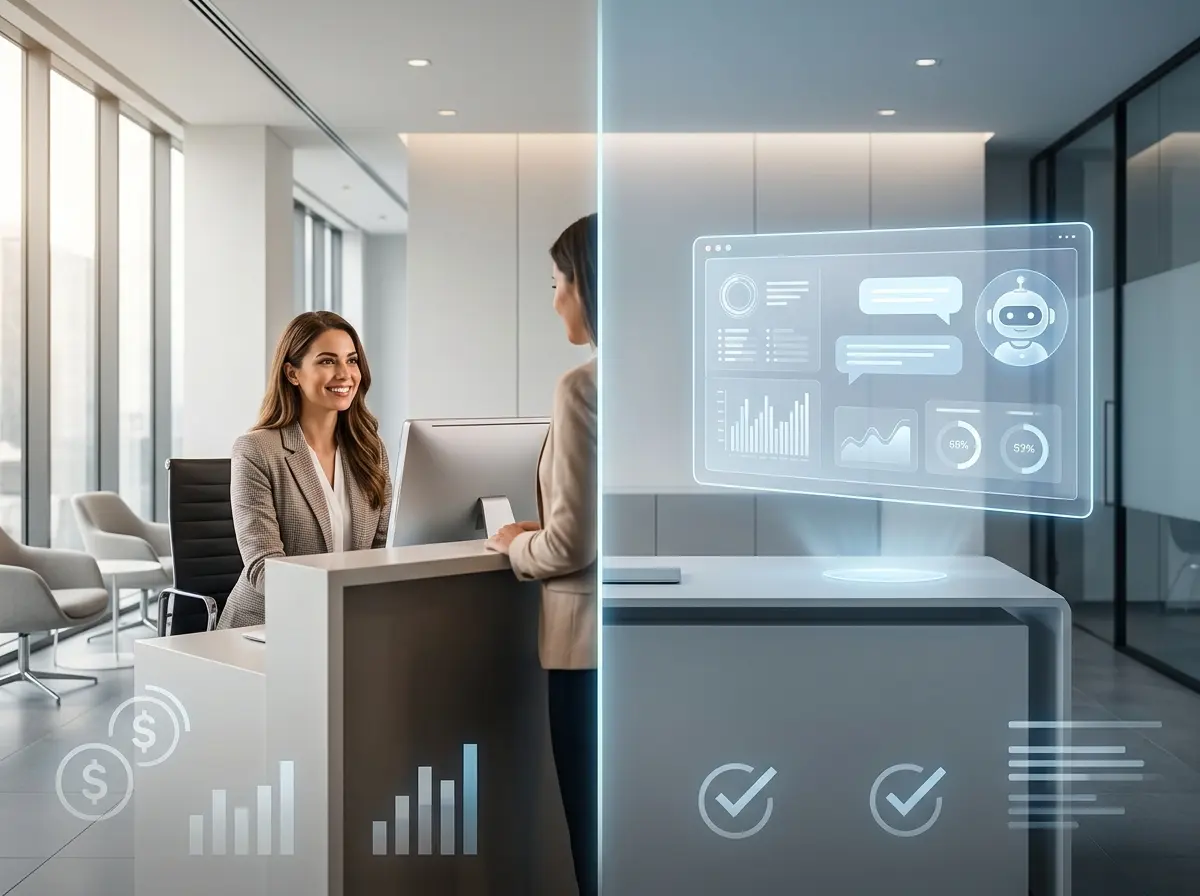
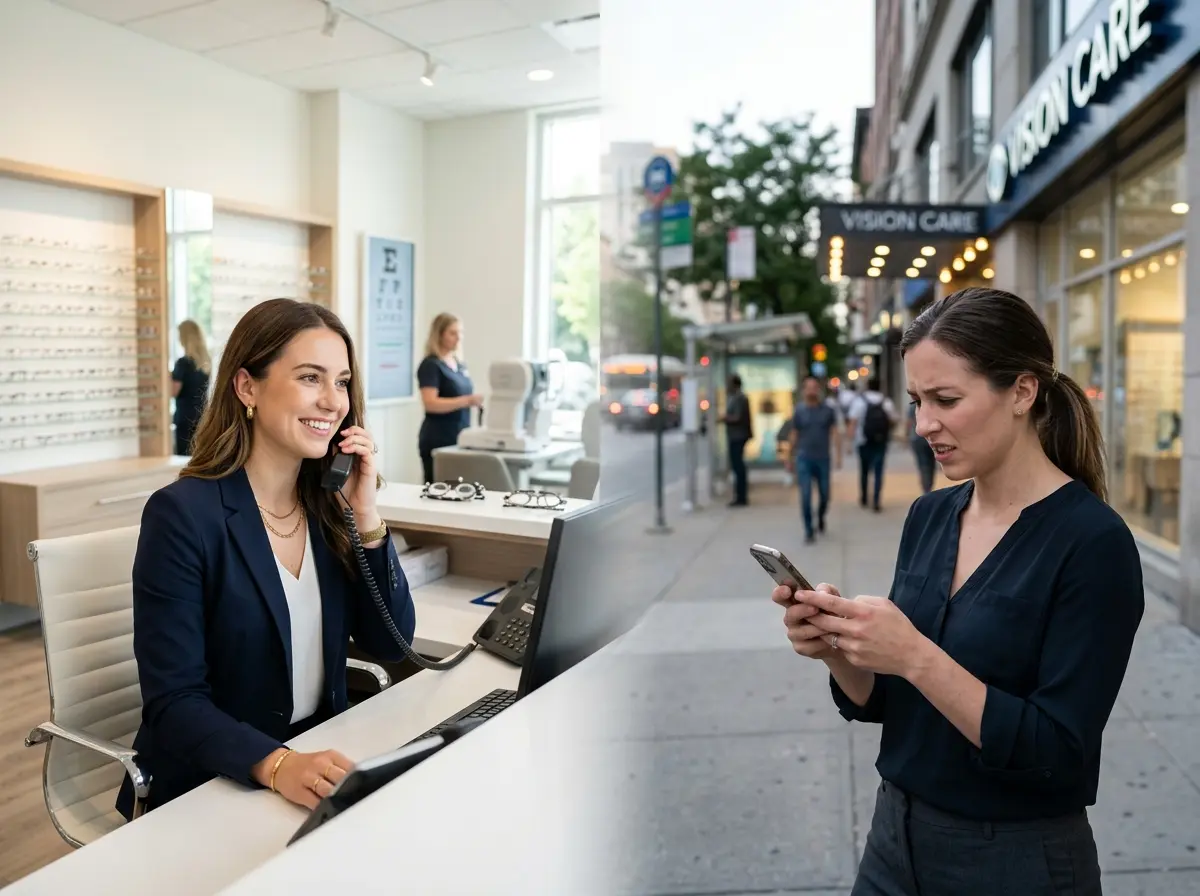
Your staff is busy. Between patient flow, insurance verification, frame selection, and a dozen other priorities, remembering to mention every lens upgrade for every patient is genuinely hard. That's where smart tools earn their keep. Stella, the AI robot employee and phone receptionist, can help optical shops stay consistent without adding more to your team's plate. Whether she's greeting walk-in patients at a kiosk or answering phone calls after hours, Stella can proactively highlight current promotions on lens packages, answer common questions about coating options, and even collect intake information that primes the appointment conversation before a patient ever sits in the chair.
Her built-in CRM also means that patient preferences, upgrade history, and interaction notes can be tracked and referenced — so your team walks into every conversation with context, not guesswork. It's the kind of consistency that's hard to achieve with humans alone, and it costs a fraction of what you'd spend on additional staff.
Structuring the Dispensing Conversation for Maximum Impact
Present Packages, Not Line Items
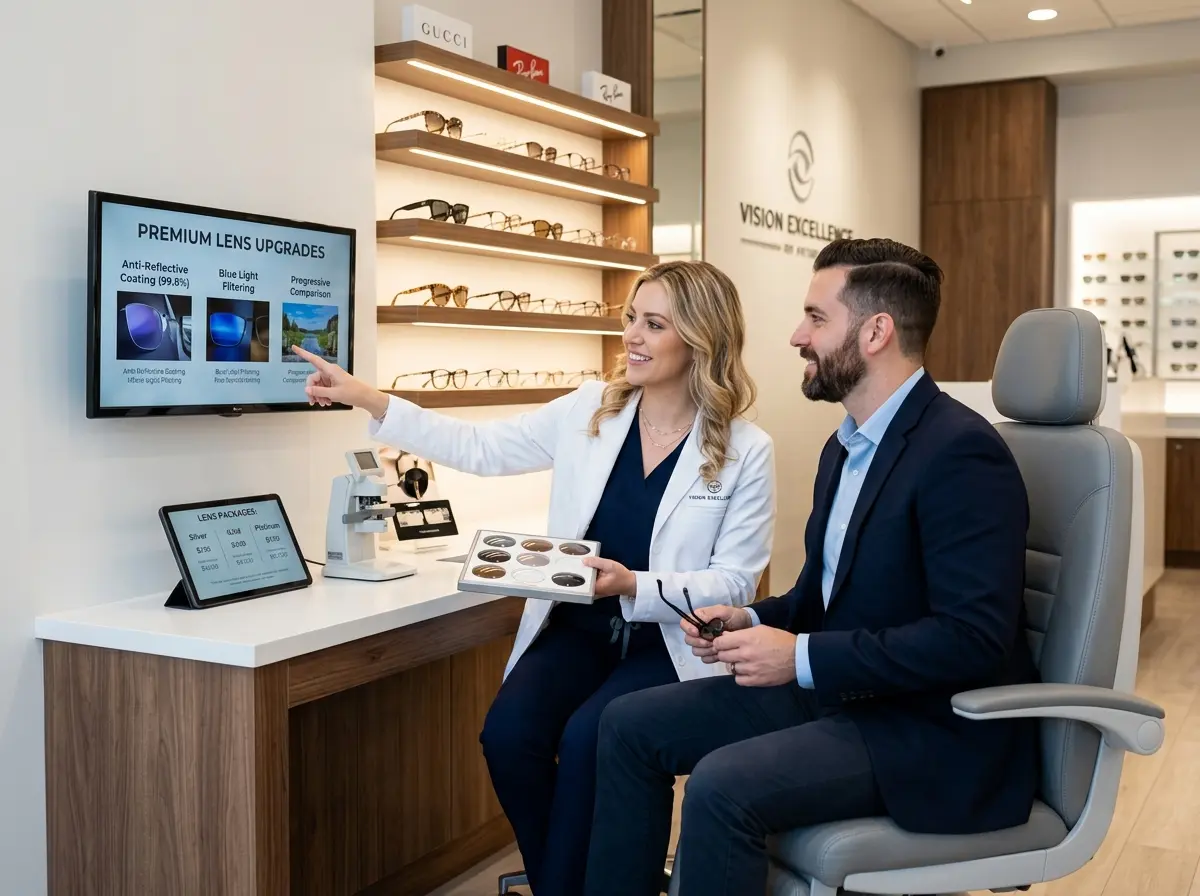
Itemized pricing is the enemy of the upsell. When a patient sees a list of add-ons with individual prices, their brain immediately starts doing subtraction math. Instead, present lens options in tiered packages — Good, Better, Best — where each tier bundles logical combinations of features at a compelling total value. "Our premium package includes anti-reflective coating, blue light filtering, and scratch resistance for an additional $85" lands very differently than three separate $30 charges listed out. The patient is comparing packages, not hunting for things to cut.
This approach also simplifies the conversation for your staff. Instead of remembering to mention six different features, they're presenting three clear options and letting the patient self-select based on lifestyle and budget. It's easier to execute consistently, and consistency is what drives results over time.
Address Objections Before They Become Objections
Most lens upgrade objections follow predictable patterns. "I don't really spend that much time on screens" (they do). "I had that coating before and it scratched anyway" (it was probably cheap, single-layer AR). "I'll just get them next time" (they won't). Train your team to gently preempt these with patient-friendly responses that don't feel defensive or pushy.
For the screen skeptic, a simple "Most people are surprised when they actually count it up — do you have a smartphone you use throughout the day?" opens a productive conversation. For the coating cynic, explaining the difference between standard and premium multi-layer coatings with a demonstration lens closes the objection before it fully forms. The goal isn't to argue patients into upgrades. It's to remove the friction and misinformation that's standing between them and a better visual experience.
Follow Up After the Purchase — and Before the Next One
The upsell conversation doesn't end when the patient leaves. A simple follow-up message two weeks after pickup — asking how they're adjusting to their new lenses and noting any features they might want to consider next time — builds trust and plants seeds for the next visit. Practices that use patient communication tools to send upgrade reminders at the six-month or one-year mark report measurably higher lens upgrade rates on subsequent purchases. The patient already knows you, already trusts you, and is already open to guidance. Use that relationship.
Quick Reminder About Stella
Stella is an AI robot employee and phone receptionist that works in your optical shop — greeting walk-in patients, answering calls around the clock, promoting lens upgrades and specials, and keeping your staff free to focus on patient care. At just $99/month with no upfront hardware costs, she's the kind of team member who never calls in sick and always remembers to mention the promotion. Worth a look if you haven't already.
Conclusion: Stop Leaving Upgrades to Chance
Upselling lens upgrades isn't about squeezing patients for every dollar — it's about ensuring they leave your practice with the best possible solution for their vision and lifestyle. When you build consistent, clinically grounded upgrade conversations into every stage of the appointment, train your team to lead with value rather than price, and use smart tools to stay consistent even when things get busy, the revenue follows naturally.
Here's where to start this week:
- Audit your current dispensing conversation. Shadow one of your opticians and note how and when upgrades are introduced — or if they are at all.
- Build or refresh your tiered lens packages so staff have clear, simple options to present rather than an overwhelming à la carte menu.
- Schedule one team training session focused specifically on upgrade conversations, including role-play scenarios for the most common objections.
- Identify one technology tool — whether that's a patient communication platform, a CRM, or a front-of-house solution like Stella — that can help you stay consistent without burning out your staff.
Your patients are coming in anyway. They're trusting your expertise anyway. The only question is whether they leave with lenses that genuinely serve them — or whether they leave with the bare minimum because nobody made the case. Make the case. Every time.