Introduction: The Hidden Revenue Sitting Right Under Your Boots
Let's be honest — most landscaping companies are leaving money on the table with every single job they complete. Not because they're doing bad work. Not because their prices are wrong. But because they finish trimming the hedges, collect the check, and drive away without ever asking the one question that could have earned them an extra $500: "Is there anything else we can help you with today?"
It sounds almost too simple, right? And yet, the average landscaping company relies almost entirely on the original scope of work, never proactively offering the additional services that customers would gladly pay for — if someone just brought them up. A client who hired you to mow their lawn probably hasn't thought about aeration. The homeowner who asked for a spring cleanup might not realize you also do irrigation setup. That commercial property manager scheduling your crew for hedge trimming? They have no idea you offer seasonal mulching packages.
The solution isn't a complete business overhaul. It's a strategic approach to service add-ons — a structured, repeatable system that gets your team presenting the right upgrades at the right moments. One landscaping company in the Midwest implemented exactly this kind of approach and added an average of $500 per job to their bottom line. Here's how they did it, and how you can too.
Building a Strategic Add-On Menu That Actually Sells
Know Your High-Margin Services Before You Bundle Anything
Before you can add $500 per job, you need to know which services deserve a spot on your add-on menu. Not every service is created equal — some are labor-intensive with thin margins, while others take minimal time and carry excellent profitability. Lawn aeration, for example, typically runs $75–$200 for a residential property and takes under an hour with the right equipment. Mulching, overseeding, fertilization treatments, and seasonal flower bed installations follow a similar pattern: high perceived value for the customer, efficient execution for your crew.
Start by auditing your current service list and identifying the top five to seven offerings with the best margin-to-time ratio. These become your "add-on all-stars" — the services your team should be recommending on nearly every visit. Build a simple one-page reference sheet for your crew that lists these services with brief descriptions and suggested pricing, so everyone is speaking the same language when they're in the field.
Timing Is Everything: When to Make the Ask
There's an art to the upsell, and it mostly comes down to timing. The worst moment to recommend a $300 irrigation tune-up is when the customer is clearly rushing out the door or when your crew is packing up and visibly ready to leave. The best moments are when the customer is already engaged — during the initial walkthrough, mid-job when you spot something worth flagging, or right after you've delivered a result that made them genuinely happy.
The landscaping company in our case study trained their crew leads to conduct a brief "opportunity walk" at the end of every job — a casual two-minute stroll around the property before leaving where they'd note anything that could be addressed on the next visit or right then. This wasn't a pushy sales pitch; it was framed as a professional courtesy. "While we were here, I noticed your beds could really benefit from a fresh layer of mulch before summer — want us to take care of that?" Simple, helpful, and effective. Their conversion rate on these casual mentions was nearly 40%.
Package It, Price It, and Make It Easy to Say Yes
Customers love simplicity. When you offer a bundled package — say, a "Spring Property Refresh" that includes aeration, overseeding, and fertilization for one flat rate — you remove the friction of decision-making. Instead of evaluating three separate line items, the customer evaluates one. Research in behavioral economics consistently shows that bundling increases purchase rates and average transaction value, sometimes by as much as 30%.
Create two or three seasonal bundles that your team can quote on the spot. Keep the names descriptive and benefit-focused. "Fall Lawn Protection Package" sounds far more compelling than "Aeration + Overseeding + Winterizer Application." Price your bundles so the customer perceives savings compared to booking each service individually — even a modest 10% perceived discount can significantly increase uptake.
Letting Technology Handle the Follow-Up You're Too Busy to Do
Why Most Add-On Opportunities Die in the Follow-Up
Here's where most landscaping companies fall apart: the crew mentions the add-on in the field, the customer says "maybe, let me think about it," and that lead evaporates into the void. Nobody follows up. The office is busy. The crew forgets to log the conversation. Weeks pass, and that potential $500 job quietly walks across the street to a competitor.
This is exactly the kind of gap that Stella was built to close. As an AI-powered phone receptionist and customer engagement tool, Stella can handle inbound calls from customers who are calling back to say yes — and she does it 24/7, without putting them on hold or missing the call because your office manager is out mowing a demo lawn. She can collect intake information, confirm service interest, and even log the interaction directly into her built-in CRM so nothing slips through the cracks. For landscaping companies with a physical office or showroom, her in-store kiosk presence means walk-in customers get greeted, informed about seasonal packages, and pointed toward the services they didn't know they needed — all before a human staff member says a word.
Turning Add-Ons Into a Repeatable Business System
Train Your Team to Sell Without Feeling Like Salespeople
The word "upsell" makes a lot of tradespeople cringe. They got into landscaping because they love working outdoors, not because they want to feel like a car dealership finance manager. The good news is that effective add-on recommendations don't require a sales personality — they require a service mindset. When your crew frames additional offerings as genuine observations and professional recommendations rather than pitches, customers receive them entirely differently.
Role-play a few common scenarios during your next team meeting. Practice the "opportunity walk" conversation. Coach your crew leads on phrasing: "I noticed..." beats "Would you be interested in..." every time. Reward team members who successfully close add-ons in the field with a small commission or bonus — even $20–$30 per upsell can meaningfully motivate a crew and cost you far less than the revenue it generates.
Track What's Working and Iterate Aggressively
You can't improve what you don't measure. Start tracking add-on attach rates by crew, by service type, and by season. Which packages are selling? Which ones are getting blank stares? Is one crew lead consistently converting add-ons while another never mentions them? This data is gold — it tells you where to invest in additional training, which bundles to retire, and which services to promote more heavily.
Even a simple spreadsheet tracking "jobs completed vs. add-ons sold" each week will surface patterns quickly. The landscaping company from our earlier example discovered that mulching add-ons were almost always accepted when mentioned during spring cleanups, but almost never during fall visits — so they shifted their promotional focus accordingly and saw immediate results. Small data, big impact.
Build Add-Ons Into Your Estimate Templates and Invoices
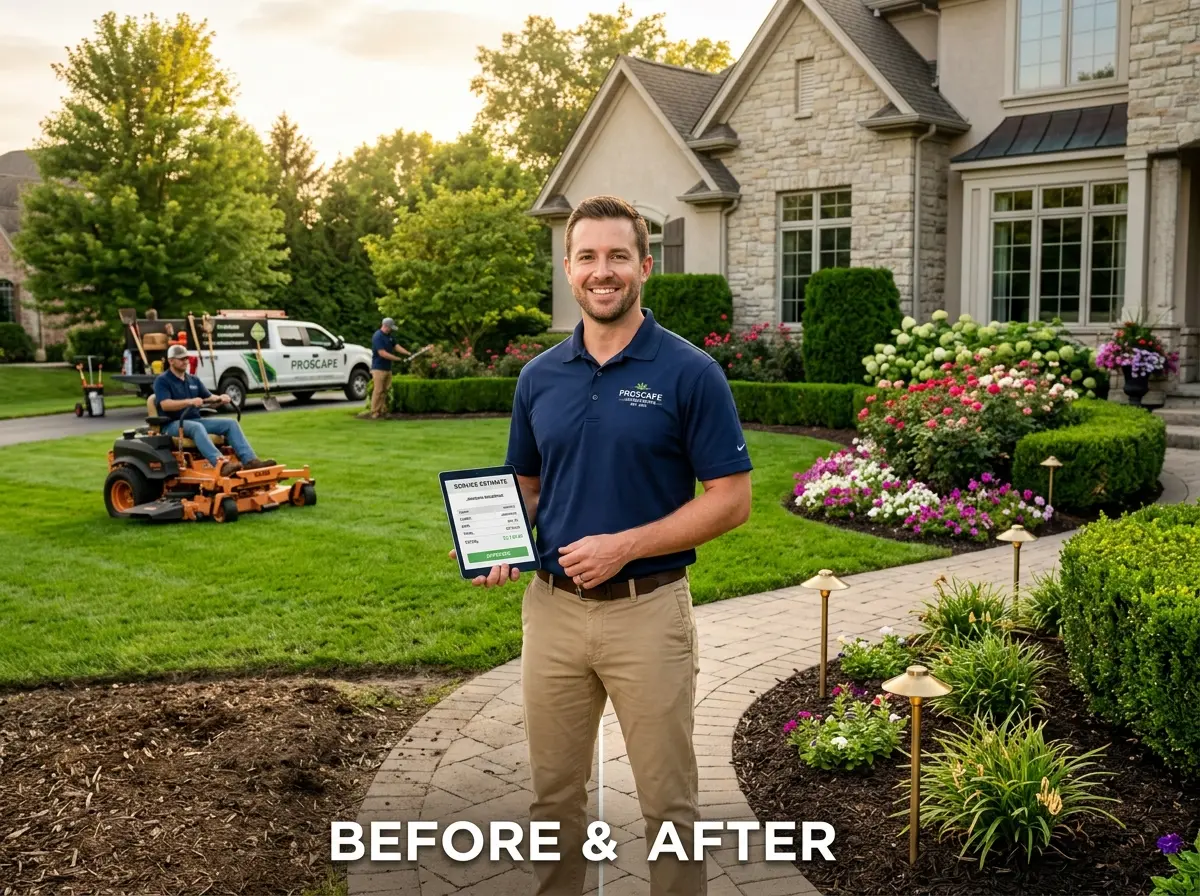
Don't wait for the in-person conversation. Build your most popular add-ons directly into your estimate templates as optional line items. When a customer receives a quote for their seasonal maintenance contract and sees "Optional: Spring Aeration Package — $150" already listed and ready to check, the conversion rate climbs dramatically compared to mentioning it verbally later. The same principle applies to invoices — a brief note at the bottom reading "Ask us about our Summer Irrigation Tune-Up — now scheduling for June" is low-effort marketing that reaches customers at exactly the right moment.
Quick Reminder About Stella
Stella is an AI robot employee and phone receptionist that works 24/7 for just $99/month — no upfront hardware costs, no sick days, and no forgetting to mention the mulching special. Whether she's greeting customers in-store at a kiosk or answering your phones after hours, she's always on, always professional, and always ready to help your business make a great first impression and capture more revenue.
Conclusion: $500 Per Job Isn't a Fantasy — It's a Process
Adding $500 per job isn't about squeezing customers or reinventing your business model. It's about having a system — a consistent, repeatable process where the right services get recommended at the right time, follow-up actually happens, and your team is equipped and motivated to have natural, helpful conversations that lead to more work.
Start small. Pick your top three add-on services, build one seasonal bundle, and train your crew to do the opportunity walk after every job this week. Measure the results after 30 days. Adjust, refine, and repeat. If you convert even two add-ons per week at $250 each, that's an extra $26,000 per year — from conversations your team is already having, just without the ask.
The money is already there. Your customers already trust you — that's why they hired you. Now give them more reasons to keep saying yes.