Pedal to the Metal: Why Corporate Wellness Programs Are Your Bike Shop's Best Kept Secret
Let's be honest — you got into the bike business because you love cycling, not because you dreamed of cold-calling HR managers. And yet, here we are, about to make the case that those very HR managers could become some of your most valuable business relationships. Corporate wellness programs have exploded in popularity over the past decade, with companies spending an estimated $51 billion annually on employee wellness initiatives in the United States alone. A significant chunk of that budget is actively looking for exactly what you sell. The only question is whether it finds your shop or your competitor down the road.
The good news is that positioning your bike shop to tap into corporate wellness contracts doesn't require a business degree or a complete personality transplant. It requires a smart strategy, a compelling offer, and the right systems to back it up. Let's dig in.
Understanding the Corporate Wellness Opportunity
Why Companies Are Investing in Bikes
Companies aren't spending wellness dollars out of the goodness of their hearts — they're doing it because it works. Employees who commute by bike or exercise regularly take fewer sick days, report higher job satisfaction, and are measurably more productive. For employers, that translates directly to reduced healthcare costs and lower turnover. The American Heart Association found that for every dollar spent on employee wellness programs, companies see an average return of $3.27 in reduced healthcare costs. Bikes fit neatly into this equation, whether as commuter tools, recreational equipment, or fitness gear.
This means the person you need to convince isn't just enthusiastic about cycling — they're enthusiastic about spreadsheets. Come prepared with numbers, not just passion, and you'll immediately separate yourself from the competition.
Who You're Actually Selling To
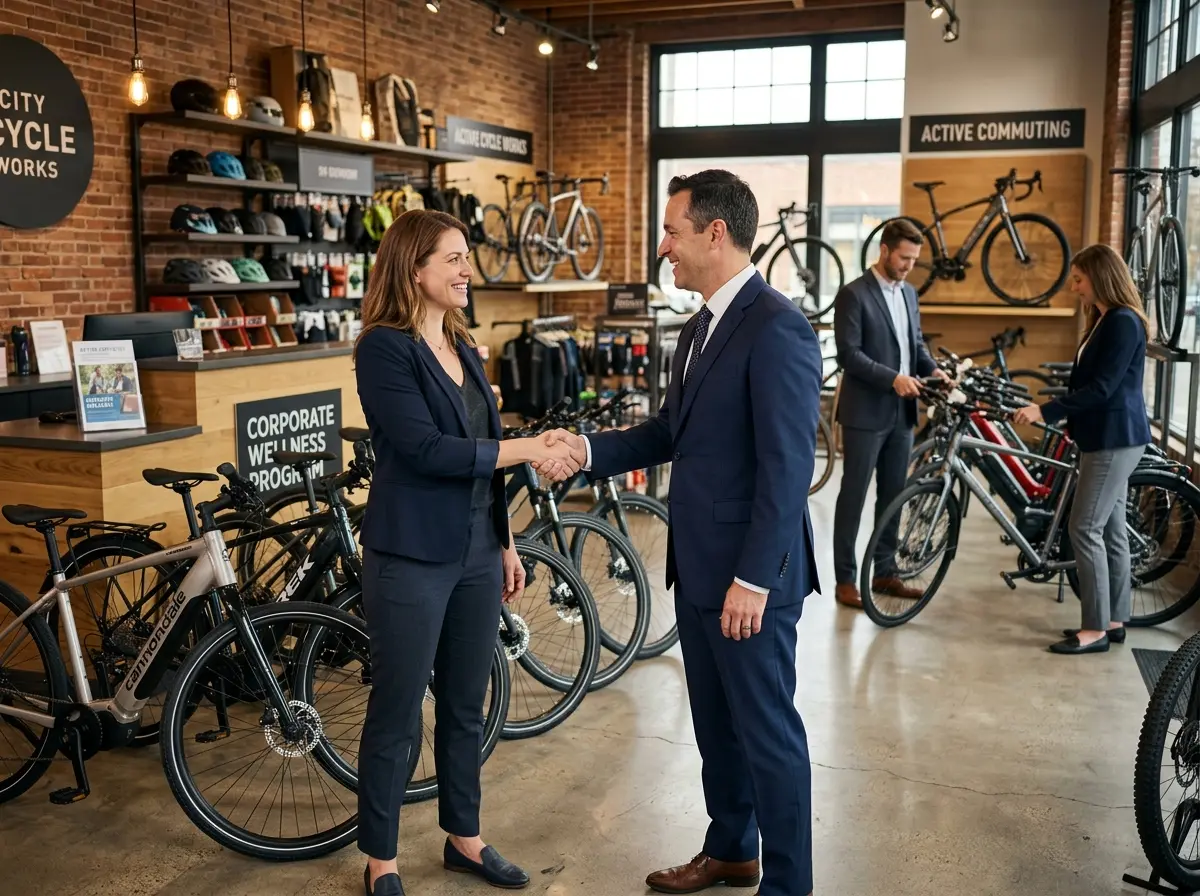
Your target contacts inside corporate organizations will typically include HR directors, benefits coordinators, wellness committee chairs, and sometimes office managers or executive assistants who handle vendor relationships. These people evaluate proposals based on employee uptake, ease of administration, and cost-effectiveness. They are not, as a general rule, cycling enthusiasts — so your pitch should lead with business value and let the love of biking be the cherry on top.
Mid-to-large employers with 50 or more employees are your sweet spot, especially those located within a few miles of your shop. Tech companies, healthcare organizations, and professional services firms tend to have more robust wellness budgets, but don't sleep on manufacturing facilities, logistics companies, and municipal employers either. Many of them have active commuter incentive programs and are actively looking for local partners.
Crafting an Offer That Gets Meetings
The most effective corporate wellness packages combine a few key elements: group discounts on bikes and accessories, ongoing service agreements, and some kind of engagement component like a bike-to-work challenge or on-site fitting event. Think about what you can bundle rather than discount. Offering 15% off everything in the store is fine, but offering a "Commuter Ready Package" that includes a bike, lock, helmet, and one year of free tune-ups tells a much more compelling story — and has a much better margin conversation attached to it.
Streamlining Your Operations to Handle Corporate Volume
How Stella Can Keep Your Shop Running Smoothly
Here's the unglamorous truth about landing corporate wellness contracts: they generate volume, and volume exposes every crack in your operations. Phone calls from employees asking about their discount, questions about service timelines, inquiries about whether the wellness benefit covers e-bikes — it all adds up fast. That's where Stella, the AI robot employee and phone receptionist, becomes genuinely useful for a bike shop in growth mode.
Stella can stand inside your shop as a friendly, human-sized kiosk and greet every customer who walks in — including employees from your corporate partners who may be visiting for the first time and have no idea where to start. She can walk them through your wellness program offerings, highlight current promotions, and answer questions about services without pulling your staff away from a tune-up mid-derailleur. On the phone side, she answers calls 24/7 with the same knowledge she uses in person, which means a curious employee calling during their lunch break at 12:15 on a Tuesday actually gets a helpful answer instead of voicemail. She can also collect customer information through conversational intake forms — handy when you need to track which employees came from which corporate partner for reporting purposes.
Building and Maintaining Corporate Relationships That Last
The Onboarding Experience Matters More Than You Think
You've done the hard work of landing the contract. Don't blow it with a clunky rollout. A smooth onboarding experience — where employees feel welcomed, informed, and not pressured — sets the tone for the entire relationship. Consider hosting a launch event at your shop after hours, offering a free basic fitting with every corporate purchase in the first month, and providing the HR contact with a simple one-page overview of how their employees can take advantage of the program. The easier you make it for the HR manager to look good in front of their team, the more fiercely loyal they will be to renewing your contract.
Clear communication upfront also saves you headaches later. Establish exactly what the discount covers, how employees verify their eligibility, and what the process is for service work. Ambiguity is the enemy of a smooth partnership.
Tracking Results and Proving Your Value
At renewal time — and there will always be a renewal conversation — you want to walk in with data. How many employees used the program? What was the average spend? How many came back for service? Even rough numbers tell a powerful story when the alternative is shrugging and saying "it went pretty well, we think." Keep a record of corporate-referred customers, track redemption rates, and ask your HR contact for any internal wellness survey data they're willing to share.
This kind of reporting not only makes renewals easier — it positions you as a professional vendor rather than a local shop that got lucky with a contract. That distinction matters enormously when the company grows, opens a new office nearby, or refers you to a business partner in their network.
Expanding Within Your Corporate Accounts
Once you're in, look for ways to deepen the relationship. Could you offer a quarterly bike maintenance clinic at their office? A group ride for employees on National Bike to Work Day? A raffle or giveaway tied to their wellness challenge? These touchpoints keep your shop top of mind and create organic word-of-mouth among employees who haven't engaged with the program yet. Corporate accounts that start as a simple discount arrangement can evolve into multi-year sponsorships, event partnerships, and referral pipelines — if you're intentional about nurturing them.
Quick Reminder About Stella
Stella is an AI robot employee and phone receptionist designed to help businesses like yours stay professional and responsive without adding headcount. She works as an in-store kiosk, a 24/7 phone receptionist, and a customer engagement tool — all for $99 a month with no upfront hardware costs. For a bike shop managing corporate wellness relationships on top of regular retail traffic, she's the kind of dependable presence that never calls in sick and never forgets a talking point.
Time to Clip In
Corporate wellness programs represent a real, scalable revenue opportunity for independent bike shops — one that most shops are leaving completely untouched. The path forward is straightforward, even if it requires some intentional effort: identify local employers, build a compelling package, nail the onboarding experience, track your results, and keep showing up as a professional partner.
Here are your actionable next steps to get started:
- Build your target list. Identify 10–20 local employers with 50 or more employees. LinkedIn, local chamber of commerce directories, and a simple Google Maps search are great starting points.
- Design your wellness package. Create two or three tiered offerings with clear inclusions, pricing, and employee eligibility processes.
- Prepare a one-page pitch. Lead with the business case — ROI, employee productivity, commuter benefits — and keep the cycling enthusiasm to the supporting role it deserves in this context.
- Reach out to HR contacts directly. Email and LinkedIn work well. Offer a brief 20-minute call or an informal shop tour as your ask.
- Set up systems before volume arrives. Make sure your staff, your scheduling, and your customer communication tools are ready to handle increased traffic without dropping the ball.
The companies around you are already spending money on employee wellness. With the right approach, a meaningful portion of that budget can flow straight through your front door — ideally greeted professionally, answered promptly, and converted efficiently. Now get out there and close some deals. Your bottom line will thank you, and honestly, so will the commuters.