Your Patients Are on Hold. Literally.
Picture this: a patient calls your clinic to schedule an appointment. They're greeted by a cheerful recorded voice that says, "Press 1 for appointments, Press 2 for billing, Press 3 for prescription refills, Press 4 for our hours, Press 5 to hear these options again." They press 1. They wait. They get transferred. They wait some more. They hang up. They Google your competitor.
Sound familiar? If you're running a medical clinic — or honestly any healthcare-adjacent practice — there's a good chance your phone system is quietly sabotaging your business while you're busy actually doing the thing you're trained to do. Phone trees, also known as Interactive Voice Response (IVR) systems, were designed to help manage call volume. In practice, they often just manage to frustrate people until they give up.
The good news? Simplifying your call routing doesn't mean hiring three more receptionists or performing some kind of IT miracle. It means being smarter about how calls flow through your practice — and using the right tools to make it happen. Let's break it down.
Why Clinic Phone Systems Go Wrong
Before you can fix the problem, it helps to understand how it got so bad in the first place. Most clinics don't design their phone systems maliciously. They just add options as problems arise, layer workarounds on top of workarounds, and end up with a call routing labyrinth that no one fully understands anymore — including the staff.
The "We'll Just Add Another Option" Trap
It starts innocently enough. You add a billing option because the front desk kept getting billing calls. Then you add a nurse line. Then a refill line. Then a COVID screening line. Then a line for the new telehealth portal. Before long, you have nine menu options, two of which no one has updated since 2021, and one that still references a staff member who left the practice two years ago.
According to a study by Clutch, nearly 60% of customers say they feel frustrated by automated phone systems, and the number one complaint is having to navigate too many menu layers before reaching a real person. For clinics specifically, the emotional stakes are even higher — patients calling a medical office are often anxious, unwell, or dealing with time-sensitive concerns. A confusing phone tree doesn't just annoy them. It erodes trust.
The Hold Time Problem Nobody Talks About
Even well-designed call routing systems can collapse under real-world conditions. Your routing might be perfectly logical at 9 AM on a Tuesday, but completely broken at 4:45 PM on a Friday when half your staff has mentally checked out and the other half is drowning in end-of-day tasks.
Research from Nextiva found that over 60% of customers who are put on hold will hang up within two minutes, and a significant portion of those will not call back. For a clinic that books appointments over the phone, every abandoned call is a potential patient you didn't get to serve — and revenue you didn't capture. The phone system that was supposed to help manage your front desk has become the bottleneck itself.
When Routing Logic Doesn't Match Patient Needs
Here's the uncomfortable truth: most phone trees are designed around how your clinic is organized internally, not around how patients think or what they actually need. A patient calling about a referral doesn't know if that goes to the front desk, the nurse, or the billing department. They just know they need help. Making them guess — and penalizing them with hold music when they guess wrong — is a patient experience failure hiding in plain sight.
How Smarter Tools Can Fix This (Including Stella)
The solution to call routing chaos isn't more complexity. It's intelligent simplicity — systems that can understand what someone needs and get them there without making them feel like they're solving a puzzle.
Conversational AI Is Replacing the Press-1 Era
Modern AI-powered phone receptionists can have actual conversations with callers. Instead of forcing patients to listen to a menu and guess which option applies to them, they can simply say what they need — "I want to reschedule my appointment" or "I have a question about my copay" — and be handled accordingly. No menus. No wrong turns. Just a natural interaction that gets them where they need to go, or answers their question outright.
This is exactly where Stella, the AI robot employee and phone receptionist, can make a meaningful difference for clinics. Stella answers calls 24/7, engages in natural conversation, and can be configured to handle routine inquiries — hours, directions, general policies — while forwarding calls to specific staff members based on conditions you define. She also collects patient intake information conversationally and stores it in a built-in CRM with custom fields, tags, and AI-generated summaries, so your front desk already has context before they even pick up a forwarded call. For clinics managing high call volumes with limited front desk bandwidth, that's not a minor convenience — it's a meaningful operational upgrade.
Building a Call Routing System That Actually Works
Whether you overhaul your system with AI or simply streamline what you have, the principles of good call routing are the same. Here's how to build something your patients won't want to flee from.
Audit Before You Redesign
Before you touch anything, listen to your own phone tree as if you were a confused patient calling for the first time. Time how long it takes to reach a human. Count the menu levels. Note how many options you don't actually use anymore. Talk to your front desk staff — they usually know exactly where calls are falling through the cracks, because they're the ones fielding the complaints. A fifteen-minute audit can reveal problems you've been too close to notice.
Once you have a clear picture, ruthlessly cut anything that doesn't serve a high-volume, clearly distinct patient need. If fewer than a handful of people per day need a specific option, it probably doesn't deserve a dedicated menu position. Consolidate, simplify, and resist the urge to add anything new without a very good reason.
Design Around Patient Intent, Not Org Charts
The most effective routing systems are built around the questions patients actually ask, not around your internal department structure. Common patient needs typically fall into a handful of categories: scheduling, billing questions, urgent clinical questions, medication refills, and general information. Structure your routing around those — and make sure your staff on the receiving end of each route is empowered to handle what comes in.
It also helps to build in a clear, easy path to a real human being at any point. Patients should never feel trapped. Offering a "speak to someone" option that's easy to access — not buried after four menus — dramatically reduces frustration and abandoned calls. Yes, it means your front desk takes more calls. But they'll be from people who actually want to talk to someone, which tends to make those conversations more productive anyway.
Plan for After Hours (Because Patients Don't Keep Business Hours)
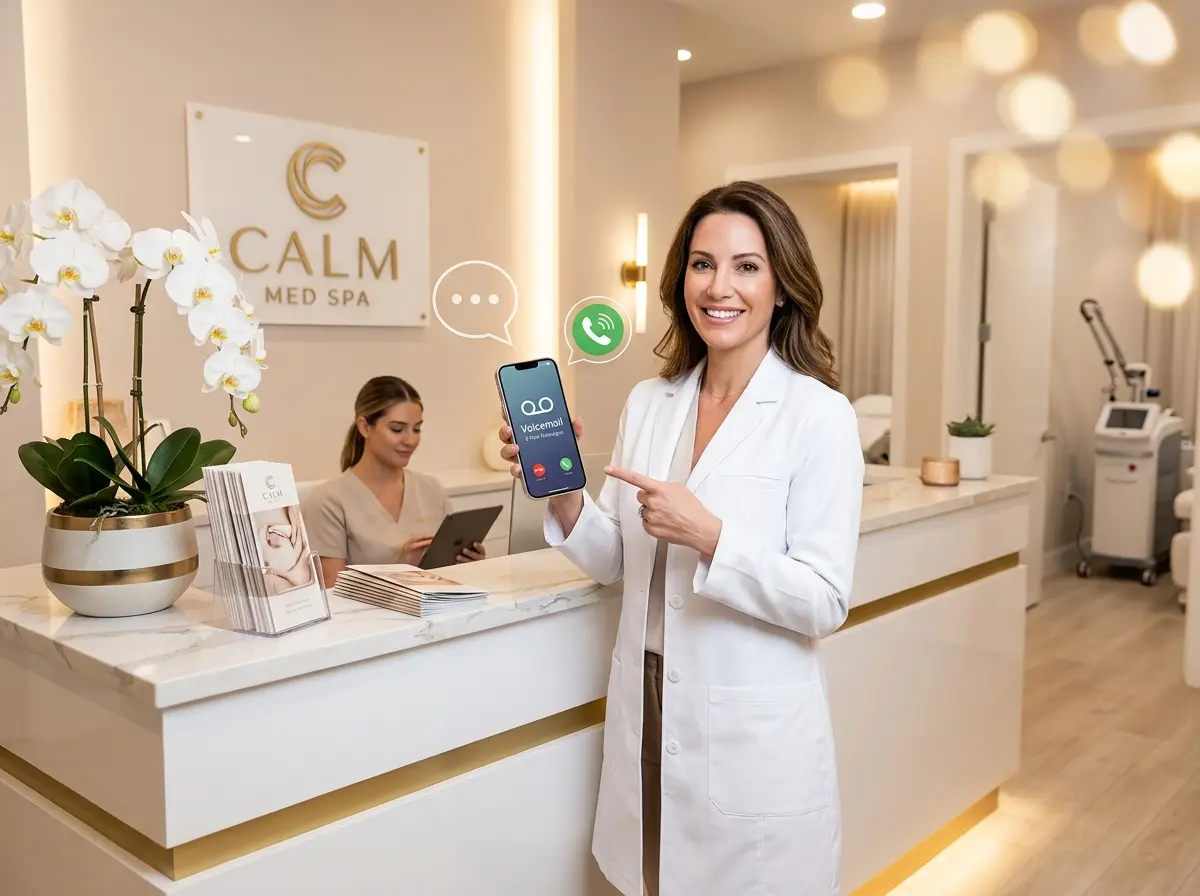
One of the most overlooked failure points in clinic call routing is after-hours handling. Many practices still default to a generic voicemail box that no one monitors consistently, or worse, no voicemail at all. Patients who call at 7 PM because they're trying to schedule around their work schedule are left with nothing — and no particular reason to call back instead of just booking with whoever answers first.
Effective after-hours routing should include a clear message about when the clinic is available, an easy way to leave a message that will actually be reviewed, and ideally some mechanism for routing urgent matters to an on-call provider. If you're using an AI-based phone system, this becomes even more powerful — intelligent after-hours handling can capture intake information, answer common questions, and flag urgent voicemails for immediate attention, even when no humans are physically available.
Quick Reminder About Stella
Stella is an AI robot employee and phone receptionist that answers calls around the clock, handles patient inquiries naturally, and keeps your front desk from drowning in routine questions — all for $99 per month with no upfront hardware costs. For clinics with a physical location, she also operates as a human-sized in-store kiosk, greeting and engaging patients the moment they walk through the door. She's easy to set up, always available, and doesn't take sick days.
Your Next Steps Toward a Phone System That Works
If your clinic's call routing is a source of ongoing headaches — for your staff, your patients, or both — the path forward is clearer than it might seem. Start with an honest audit of your current system. Identify where calls are getting lost, where wait times spike, and which menu options have outlived their usefulness. Then redesign with patient intent as your north star, not internal convenience.
From there, evaluate whether your current technology can support the experience you want to deliver. If the answer is no — or if "after hours" currently means "crossed fingers and a generic voicemail" — it's worth exploring modern AI-powered alternatives that can handle the load intelligently and affordably.
The phone is still one of the primary ways patients reach their healthcare providers. A system that treats that call as an inconvenience to be managed, rather than a relationship to be built, is costing you more than you probably realize. The fix doesn't have to be complicated. It just has to be intentional — and it has to actually work when someone calls at 4:47 PM on a Friday.
Start simple. Stay patient-focused. And for the love of everything, retire the nine-option menu.