When "Free" Becomes the Most Profitable Word in Your Marketing Vocabulary
Let's be honest — when most accountants think about growing their client base, they picture cold calls, expensive ad campaigns, or awkwardly sliding business cards across restaurant tables. Not exactly the stuff of dreams. But what if one of the most effective client acquisition strategies costs you almost nothing upfront and positions you as the smartest person in the room at the same time?
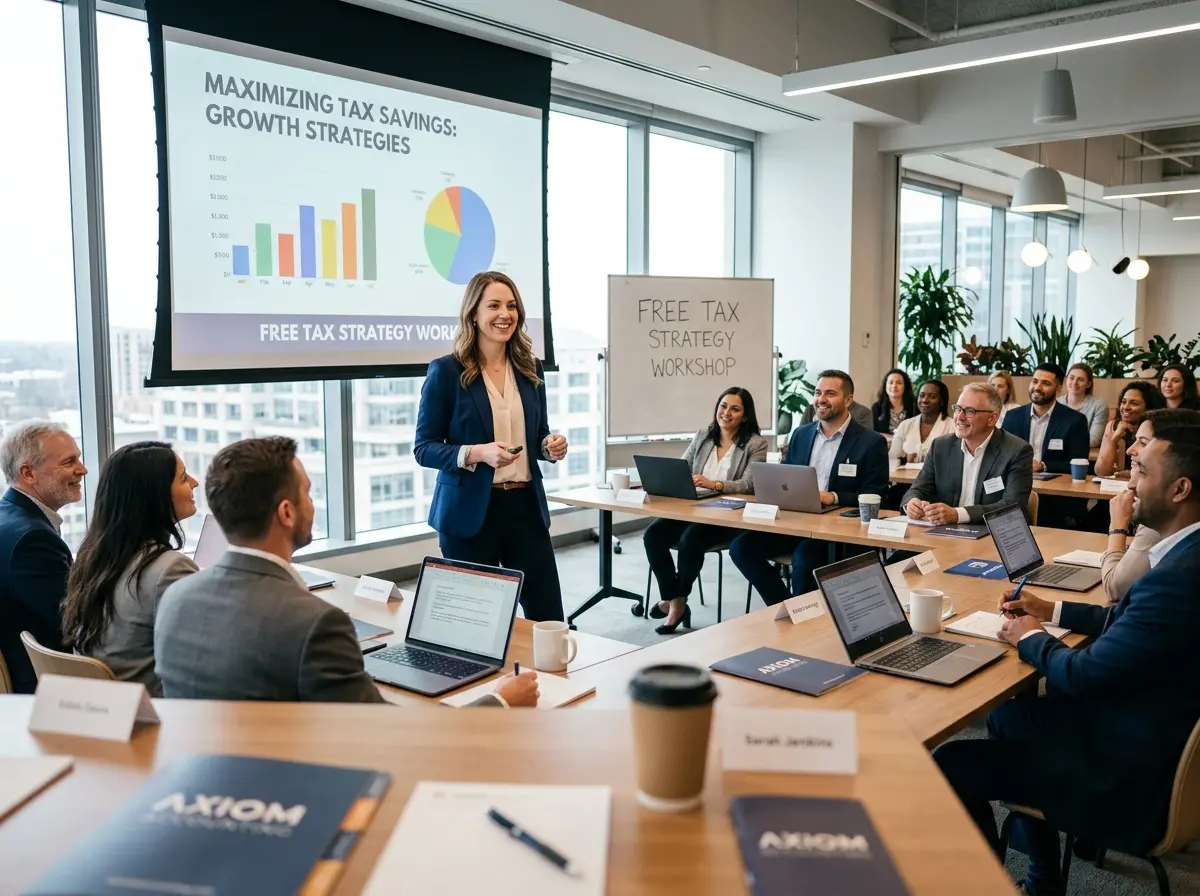
That's exactly what happened with Marcus Webb, a certified public accountant based in Austin, Texas. In a single month, Marcus added 20 new paying clients to his practice — not through paid ads, not through a referral blitz, and not through some mysterious algorithm hack. He did it with a free two-hour workshop called "5 Tax Mistakes Small Business Owners Are Paying For Right Now." Catchy title, zero admission fee, and a waiting list by week two.
So how did he pull it off? And more importantly, how can you replicate it — whether you're an accountant, a consultant, a lawyer, or any other service professional looking to fill your calendar with qualified leads? Let's break it down.
The Workshop Strategy That Actually Works
Choosing a Topic That Speaks Directly to Pain
The first and arguably most critical decision Marcus made was choosing a workshop topic that made his target audience feel personally called out — in a good way. He didn't host a seminar called "Introduction to Accounting Principles." Nobody is racing to sign up for that on a Tuesday evening. Instead, he zeroed in on a specific, emotionally resonant pain point: money business owners are unknowingly losing right now.
The psychology here is straightforward. People respond to urgency and specificity. "5 Tax Mistakes" is concrete. "Small Business Owners" tells the audience exactly who this is for. And "Paying For Right Now" adds an urgency that makes procrastination feel expensive. Before you design a single slide, ask yourself: What is keeping my ideal client up at night, and can I solve it in two hours? If the answer is yes, you have a workshop topic.
Choosing the Right Format and Venue
Marcus ran his workshop in a hybrid format — a live in-person session at a local coworking space with a simultaneous Zoom stream for remote attendees. This approach doubled his reach without doubling his effort. He capped in-person attendance at 30 seats to create a sense of exclusivity and kept the virtual side open to anyone in his metro area.
If you're just getting started, don't overthink the venue. Local libraries, coworking spaces, chambers of commerce, and even restaurant private dining rooms are often free or low-cost for community events. The goal is a professional environment that communicates credibility — not a ballroom at the Ritz. For virtual-only workshops, platforms like Zoom, StreamYard, or even LinkedIn Live can work beautifully with zero venue cost.
Filling the Room Without a Big Marketing Budget
Here's where most service professionals stumble — they build a great workshop and then tell approximately seven people about it. Marcus took a more systematic approach. He posted consistently in three local Facebook groups for small business owners, sent a personal email to every contact in his existing network, partnered with a local bookkeeper who promoted the event to her own clients, and ran a modest $150 Facebook ad campaign targeting small business owners within 20 miles.
The result? Sixty-four registrants for his first session. His total promotional spend was under $200. The lesson isn't that Facebook ads are magic — it's that a multi-channel promotion strategy compounds. Each channel picks up the people the others miss, and personal outreach from a trusted source will always outperform a cold ad impression.
How the Right Tools Keep Your Pipeline From Leaking
Capturing and Nurturing Workshop Leads Automatically
Hosting a great workshop is only half the battle. The other half is making sure you don't lose track of the 40 people who attended, loved your content, and then got distracted by life before booking a consultation. This is where most solopreneurs and small practice owners quietly lose thousands of dollars in potential revenue — not because the leads weren't interested, but because there was no system to follow up.
This is exactly where Stella, the AI robot employee and phone receptionist, earns her keep for service-based businesses. For accounting firms and other professional service providers, Stella can handle inbound calls from workshop attendees who are ready to take the next step — answering questions about your services, collecting intake information through conversational forms, and logging every contact directly into her built-in CRM. That means no leads slipping through the cracks at 9 PM when you're off the clock, and no sticky notes with phone numbers you'll never decipher. Every inquiry gets captured, summarized, and ready for your review in the morning.
Converting Workshop Attendees Into Paying Clients
The Offer You Make at the End
Marcus didn't end his workshop with a vague "feel free to reach out sometime." He made a clear, low-pressure offer: a free 30-minute tax strategy review, available exclusively to workshop attendees for the next seven days. The scarcity was real — he only had 25 slots available — and he booked 22 of them before he left the parking lot that night.
The lesson here is that specificity closes. A free consultation is nice. A free 30-minute tax strategy review, limited to 25 spots, expiring in seven days, that you can book right now on this sign-up sheet — that closes. Give your audience a crystal-clear next step with a reason to take it immediately. Remove friction by having a booking link, QR code, or sign-up sheet ready before you deliver your final slide.
The Follow-Up Sequence That Seals the Deal
Of Marcus's 22 strategy review calls, 20 converted to paying clients. That conversion rate — roughly 91% — sounds almost too good to be true, but it reflects a simple reality: people who attend a free workshop, consume two hours of your expertise, and then voluntarily book a follow-up call are already sold on you. The strategy review isn't a sales call; it's an onboarding conversation wearing a sales call's name tag.
That said, Marcus also sent a three-email follow-up sequence to attendees who didn't book immediately. The first email went out the same evening with a recap and booking link. The second arrived three days later with a bonus tip he "forgot to mention." The third was a gentle nudge on day six, one day before the offer expired. Between the workshop conversions and the follow-up sequence, he captured clients who needed a little more runway before committing — and he did it without a single uncomfortable cold call.
Turning One Workshop Into a Repeatable Growth Engine
Marcus didn't treat his workshop as a one-time event. He now runs it quarterly, refines his content based on attendee questions, and has built a reputation in his local business community as the accountant who actually teaches people things. Word of mouth has become his second-largest lead source, driven almost entirely by satisfied workshop alumni who recommend him to fellow entrepreneurs.
The scalability here is significant. Once you've built and delivered a workshop once, the marginal effort of running it again is dramatically lower. Your slides exist. Your follow-up emails are written. Your booking system is configured. What was once a significant project becomes a reliable quarterly revenue injection — and each iteration tends to outperform the last as your audience grows and your delivery sharpens.
A Quick Reminder About Stella
Stella is an AI robot employee and phone receptionist that works 24/7 — greeting customers at your physical location through her in-store kiosk and answering phone calls for any business, including solopreneurs and online-only service providers. At just $99/month with no upfront hardware costs, she handles inquiries, collects lead information, manages your CRM contacts, and keeps your business running professionally even when you're busy running workshops. She's the team member who never calls in sick and never misses a lead.
Your Next Steps Toward 20 New Clients
The playbook Marcus used isn't proprietary, industry-specific, or even particularly complicated. It's a repeatable system built on a generous first step — sharing real expertise for free — followed by a clear, well-timed offer and a disciplined follow-up process. The results speak for themselves.
Here's how to start building your own version this week:
- Identify your audience's single biggest pain point and ask whether you can address it meaningfully in two hours. If yes, you have a workshop topic.
- Choose a date four to six weeks out and commit to a venue or virtual format before you're "ready." Deadlines create momentum.
- Promote across at least three channels — personal outreach, social media communities, and one paid channel if your budget allows.
- Design a clear, limited offer for attendees to take before they leave, with a specific booking link or sign-up mechanism ready on the day.
- Build a three-email follow-up sequence to nurture attendees who don't convert immediately but are still warm prospects.
- Set up your systems in advance — including how you'll capture inbound calls and inquiries from interested attendees — so no lead falls through the cracks.
Twenty new clients in one month didn't happen because Marcus is superhuman. It happened because he built a smart system, executed it with intention, and made it easy for interested people to say yes. You can do the same — and once you've run it once, you'll wonder why you ever handed a stranger a business card at a networking event instead.