Introduction: The Silent Revenue Killer Hiding in Your Salon's Phone System
Picture this: a potential client is desperately trying to book a balayage appointment before her best friend's wedding. She calls your salon. It rings. And rings. And rings some more. Then — click. She's gone, off to book with your competitor down the street, who will happily take her money and her recurring business for the next decade. Congratulations, you just lost a customer without even knowing it happened.
This is call abandonment, and it's one of the sneakiest revenue leaks in the salon industry. Unlike a bad Yelp review or a no-show appointment, abandoned calls leave no trace — no angry email, no complaint to address, no obvious sign that anything went wrong. They just quietly disappear, taking potential revenue with them.
The average call abandonment rate across service industries hovers around 20–30%, which means roughly one in four people who call your salon may be hanging up before anyone answers. For a busy salon, that could translate to thousands of dollars in lost bookings every single month. The good news? Call abandonment is entirely measurable, and more importantly, it's fixable. Let's dig in.
Understanding Call Abandonment: What It Is and Why It Happens
Defining Call Abandonment Rate
Your call abandonment rate is simply the percentage of inbound calls that are disconnected by the caller before they reach a staff member (or before their call is resolved). The formula is straightforward:
Call Abandonment Rate = (Abandoned Calls ÷ Total Inbound Calls) × 100
So if your salon receives 200 calls in a week and 40 of those callers hang up before speaking to anyone, your abandonment rate is 20%. Industry benchmarks suggest that anything above 8–10% is worth addressing seriously. Above 20%? That's a five-alarm fire disguised as a minor inconvenience.
It's also worth distinguishing between calls abandoned during hold time versus calls that go unanswered entirely. Both are problems, but they have different causes and different solutions. Understanding which one you're dealing with is step one.
The Most Common Culprits
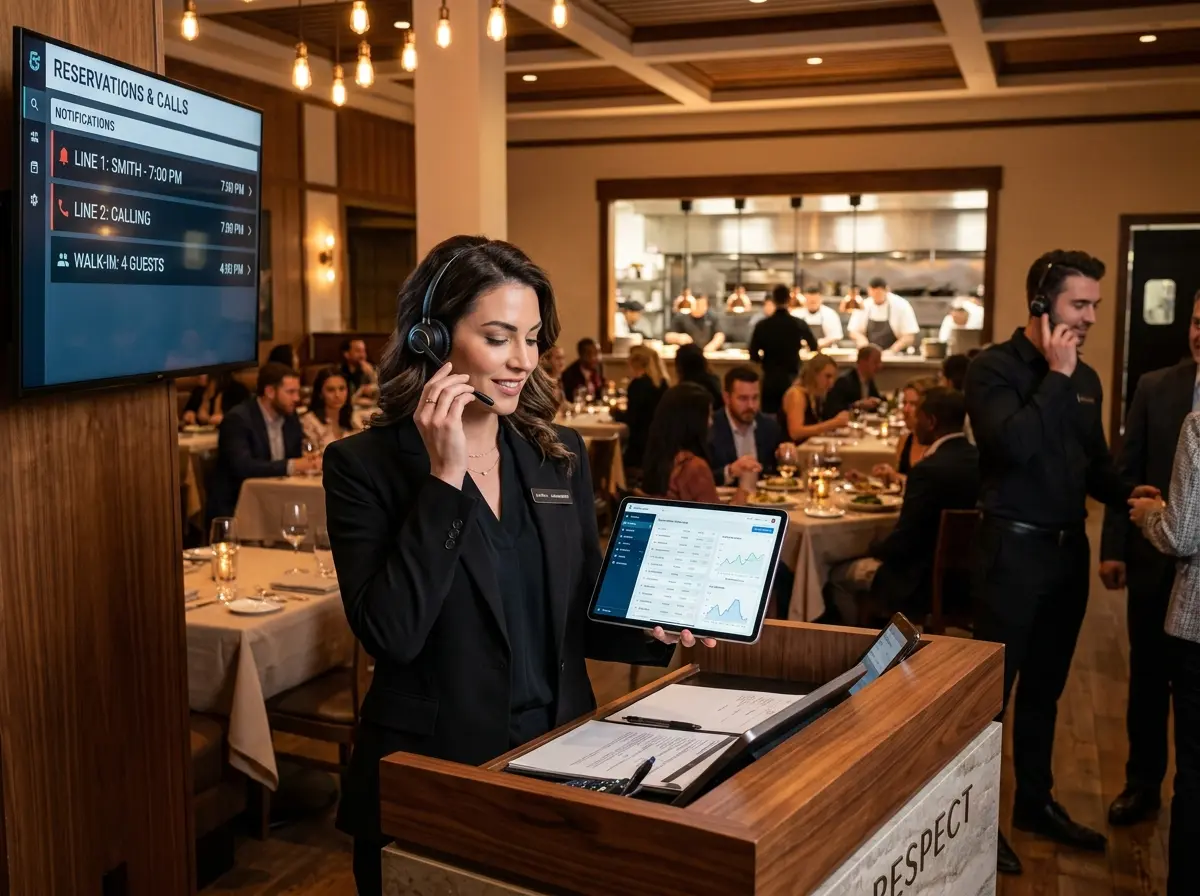
Salons are uniquely vulnerable to high abandonment rates for a few painfully obvious reasons. Your staff are busy — like, hands-literally-covered-in-hair-dye busy. Unlike a call center where answering phones is the job, your stylists and front desk staff are simultaneously checking people in, processing payments, mixing color, and trying to remember if Mrs. Henderson takes her coffee with oat milk. Answering every incoming call with warmth and professionalism under those conditions is... ambitious.
The most common causes of salon call abandonment include:
- No dedicated front desk coverage during peak hours or when staff are with clients
- Long hold times caused by understaffing or high call volume
- Calls going to voicemail after hours, with no after-hours answering option
- Phone systems with no queue management, leaving callers uncertain how long they'll wait
- Missed calls during busy periods like mornings, lunch hours, and weekends
How to Measure Your Own Abandonment Rate
You can't fix what you can't measure, so the first practical step is getting your hands on actual data. Most modern business phone systems — including VoIP platforms like RingCentral, Grasshopper, or Google Voice for Business — include call analytics dashboards that track total call volume, missed calls, average hold time, and abandonment rates. If you're still running on a basic landline with zero reporting, that's a separate (and urgent) conversation.
Spend two to four weeks tracking your call data before drawing conclusions. Look for patterns: Are most abandoned calls happening on Saturday mornings? During school pickup hours? Right after you open? Identifying when abandonment spikes will tell you exactly where to focus your efforts.
How Technology — Including AI — Can Plug the Gap
The Case for Automated Phone Answering in Salons
Here's the uncomfortable truth: no matter how talented your front desk team is, there will always be moments when no one can pick up the phone. The question isn't whether those moments exist — it's what happens during them. A voicemail that gets checked three hours later? That caller already booked elsewhere. An endless hold loop? Same result, with added frustration.
This is exactly where Stella — the AI robot employee and phone receptionist — earns her keep. Stella answers every phone call, 24 hours a day, 7 days a week, without ever putting a client on hold because someone's in the middle of a highlights appointment. She can answer questions about your services, pricing, availability, and policies conversationally — the same way a knowledgeable front desk employee would — and she can collect client intake information directly during the call using built-in conversational intake forms. That information flows right into her built-in CRM, so your team arrives the next morning with new client profiles already created, no manual data entry required.
For salons with a physical location, Stella also stands inside the salon as a friendly kiosk presence, greeting walk-ins, answering questions, and promoting current specials — so your stylists can stay focused on the client in their chair rather than fielding "do you do Brazilian blowouts?" for the eleventh time that day.
Proven Strategies to Reduce Call Abandonment
Optimize Your Staffing and Coverage During Peak Times
Data is your best friend here. Once you've identified your high-abandonment time windows, you can adjust staffing accordingly. If Saturday mornings are a black hole for answered calls, that's not a surprise — it's a scheduling problem with a scheduling solution. Consider staggering staff start times so someone is specifically available for phone coverage during your busiest windows, even if that means your stylists rotate front desk duty on a set schedule.
It's also worth evaluating whether your front desk team has too many competing responsibilities during peak hours. If one person is simultaneously checking clients in, running the register, booking appointments, and answering phones, something is going to slip. Streamlining workflows and clearly assigning phone responsibility — or supplementing with technology — can make a significant difference without hiring additional staff.
Implement a Callback System and Set Caller Expectations
One of the simplest ways to reduce abandonment is to give callers a reason to stay on the line — or a clear alternative if they don't want to wait. If your phone system supports it, a brief, friendly queue message that gives an estimated wait time dramatically reduces hang-ups. Callers who know they'll be helped in two minutes will generally wait. Callers staring into the void of an endless ring? Not so much.
A callback option — where callers can leave their number and receive a return call when a staff member is free — is another highly effective tool. Studies suggest that offering a callback option reduces abandonment by as much as 32%. Many modern VoIP systems include this feature, and it costs nothing but a small setup investment to configure.
Don't Neglect After-Hours Calls
Your salon closes at 7pm. Your clients think about booking appointments at 9pm while watching television and finally having a quiet moment. These two facts are in direct conflict, and the loser is usually your booking rate.
After-hours calls represent a substantial portion of missed opportunities for most salons. Sending every after-hours caller to a generic voicemail is the equivalent of putting a "gone fishing" sign on your booking pipeline. At minimum, your after-hours message should be warm, informative, and clear about how to book online. Better yet, invest in a solution that can actually handle these calls intelligently — answering questions, capturing client information, and ensuring no interested caller falls through the cracks simply because it's past closing time.
Quick Reminder About Stella
Stella is an AI robot employee and phone receptionist built for businesses exactly like yours — salons, spas, and service providers that need a reliable, professional presence without the overhead of additional staff. She answers calls around the clock, greets walk-in clients in person at her kiosk, collects client details through conversational intake forms, and keeps everything organized in her built-in CRM. All of this runs on a straightforward $99/month subscription with no upfront hardware costs and no complicated setup.
Conclusion: Stop Letting Ringing Phones Cost You Money
Call abandonment is one of those problems that's easy to ignore precisely because it's invisible. No one storms into your salon to complain that they hung up last Tuesday — they just never come back. But the revenue impact is very real, and for most salons, addressing it doesn't require a massive overhaul. It requires awareness, measurement, and a few strategic changes.
Here's your action plan to get started:
- Audit your current phone system and confirm it has call analytics. If it doesn't, upgrade to one that does.
- Track your abandonment rate for 2–4 weeks and identify when and why calls are being abandoned.
- Adjust staffing and coverage during peak abandonment windows.
- Add a callback option or queue message to your phone system to reduce hold-related hang-ups.
- Solve your after-hours problem — whether through online booking, an AI receptionist, or both.
- Revisit your data monthly to measure progress and adjust as needed.
Your phones are ringing right now. The only question is whether your salon is ready to answer. With the right systems in place, you can turn every incoming call into an opportunity rather than a missed connection — and your revenue numbers will thank you for it.