Introduction: The Secret Weapon Hiding in Your Customer List
Let's be honest — most roofing companies are out here treating their customer list like a one-night stand. You fix the roof, collect the check, and never call again. Then you wonder why you're spending a fortune on ads to find new customers when you've got a goldmine of past clients sitting in a spreadsheet somewhere, collecting digital dust.
Here's the uncomfortable truth: acquiring a new customer costs five to seven times more than retaining an existing one. Yet the roofing industry — bless its hardworking, shingle-tossing heart — is notorious for ignoring repeat business. It's an industry where most companies assume customers won't need them again for 20 years, so why bother staying in touch?
Because gutters need cleaning. Because storms happen. Because that one neighbor who finally gets their roof done asks your past customer, "Hey, who did yours?" and your past customer has already forgotten your name.
This is the story of how one roofing company stopped leaving money on the table and used a CRM — Customer Relationship Management software — to increase their repeat and referral business by 60%. It's practical, it's proven, and it's something you can start doing this week.
The Problem: Why Roofing Companies Lose Customers They've Already Won
Out of Sight, Out of Mind (and Out of Business)
Ridge Top Roofing (name changed because, well, privacy) was a solid mid-sized roofing company doing good work in a competitive suburban market. Their crews were skilled, their reviews were decent, and their close rate on estimates was respectable. But year after year, their revenue growth was almost entirely dependent on new customer acquisition — paid ads, door knocking, storm chasing, the whole hustle.
When the owner, let's call him Marcus, finally sat down and looked at his data, he discovered something alarming: less than 8% of his revenue was coming from past customers or direct referrals from past customers. That meant 92% of his revenue required him to fight for attention every single day. Exhausting doesn't begin to cover it.
The Data Problem Behind the Revenue Problem
The root cause wasn't that Marcus's customers didn't like him. It was that he had no system for staying in their lives. Customer information lived in invoices, email threads, sticky notes, and the memory of whichever sales rep had originally handled the job. There was no central record of what work was done, when it was done, or when it might make sense to follow up.
Without organized data, there's no follow-up. Without follow-up, there's no relationship. Without a relationship, there's no repeat business and no referrals. It's a simple chain of cause and effect that many roofing companies are unknowingly breaking every single day.
The Solution: Building a CRM Strategy That Actually Works
Setting Up the Foundation
Marcus implemented a CRM — in his case, a straightforward platform that allowed him to log every customer with fields for contact details, job type, materials used, warranty expiration dates, and notes from the project. Every completed job became a structured record rather than a closed invoice.
The key was tagging. Each customer was tagged by service type (full replacement, repair, gutter install, inspection), property type (residential, commercial), and neighborhood. This turned a flat list of names into a segmented, searchable database — the difference between a junk drawer and a filing cabinet.
Automating Follow-Up Without Losing the Human Touch
With the data organized, Marcus built out a simple follow-up sequence. Every customer received a check-in email 30 days after job completion, asking about their experience and gently requesting a review. At the six-month mark, they received a seasonal maintenance reminder. At the one-year mark, a more personalized note went out referencing the specific work done and offering a discounted inspection.
The magic wasn't the automation — it was the personalization within the automation. Emails that mentioned the customer's address, the job type, and the season felt like they came from a real person who actually remembered them. Because the CRM made that information readily available, crafting those messages took minutes, not hours.
Within the first year of this system, Ridge Top Roofing saw repeat service calls increase by 34% and referral-driven leads jump by 26%. Combined, that added up to their 60% improvement in repeat and referral revenue — without spending an extra dollar on advertising.
How Technology Like Stella Can Support Your Customer Management
Capturing Customer Data Without the Chaos
One challenge Marcus faced early on was getting customer information into the CRM in the first place. Data entry is boring, humans are busy, and things fall through the cracks. This is where tools designed to automate intake can make a serious difference.
Stella, the AI robot employee and phone receptionist, has a built-in CRM with custom fields, tags, and AI-generated customer profiles — exactly the kind of structured data system that made Marcus's follow-up strategy work. When customers call to request an estimate or ask about services, Stella can handle the intake conversationally over the phone, collecting names, addresses, job descriptions, and contact preferences — all of which feed directly into the CRM without anyone on your team having to type a word.
For roofing companies fielding calls after storms (which, as any roofer knows, come at the absolute worst times), having a system that answers calls 24/7 and captures lead information accurately is genuinely game-changing. No more missed calls. No more incomplete lead sheets. Just clean data ready for follow-up.
Turning Your CRM Into a Revenue Engine
Seasonal Campaigns That Feel Personal
Once you have organized customer data, you can run campaigns that feel personal even at scale. Before spring, send a targeted message to every customer whose roof is more than five years old about post-winter inspections. Before fall, reach out to anyone who had gutter work done about gutter cleaning services. These aren't generic blasts — they're relevant messages to the right people at the right time.
Roofing may be a low-frequency purchase, but the surrounding services are not. Inspections, cleaning, minor repairs, skylight maintenance, and emergency assessments can all become regular revenue streams if you stay in front of your past customers with the right message at the right moment. Your CRM makes that targeting possible.
Referral Programs That Actually Get Used
Your happiest customers are your best salespeople — they just need a little nudge. Ridge Top Roofing added a simple referral program into their CRM workflow: any customer who referred a friend received a $100 credit toward future services. This was communicated at the 30-day follow-up mark, when satisfaction was highest.
The result was a steady pipeline of warm referrals coming in organically. Unlike cold leads from ads, these referrals came pre-sold on the company's quality because a trusted friend had already made the recommendation. Closing rates on referral leads were nearly double those of paid leads — and the cost per acquisition was essentially zero.
Using Data to Predict and Prevent Churn
One underrated CRM feature is the ability to identify customers who haven't engaged in a while. If a customer had significant work done two years ago and hasn't responded to any follow-up, that's a signal worth acting on. A personalized "we haven't heard from you" message with a special offer can re-engage customers who might otherwise default to calling whoever shows up first on Google next time they need help.
Proactive outreach based on engagement data is the difference between reacting to lost business and preventing it — and it's only possible when your customer information is organized and accessible.
Quick Reminder About Stella
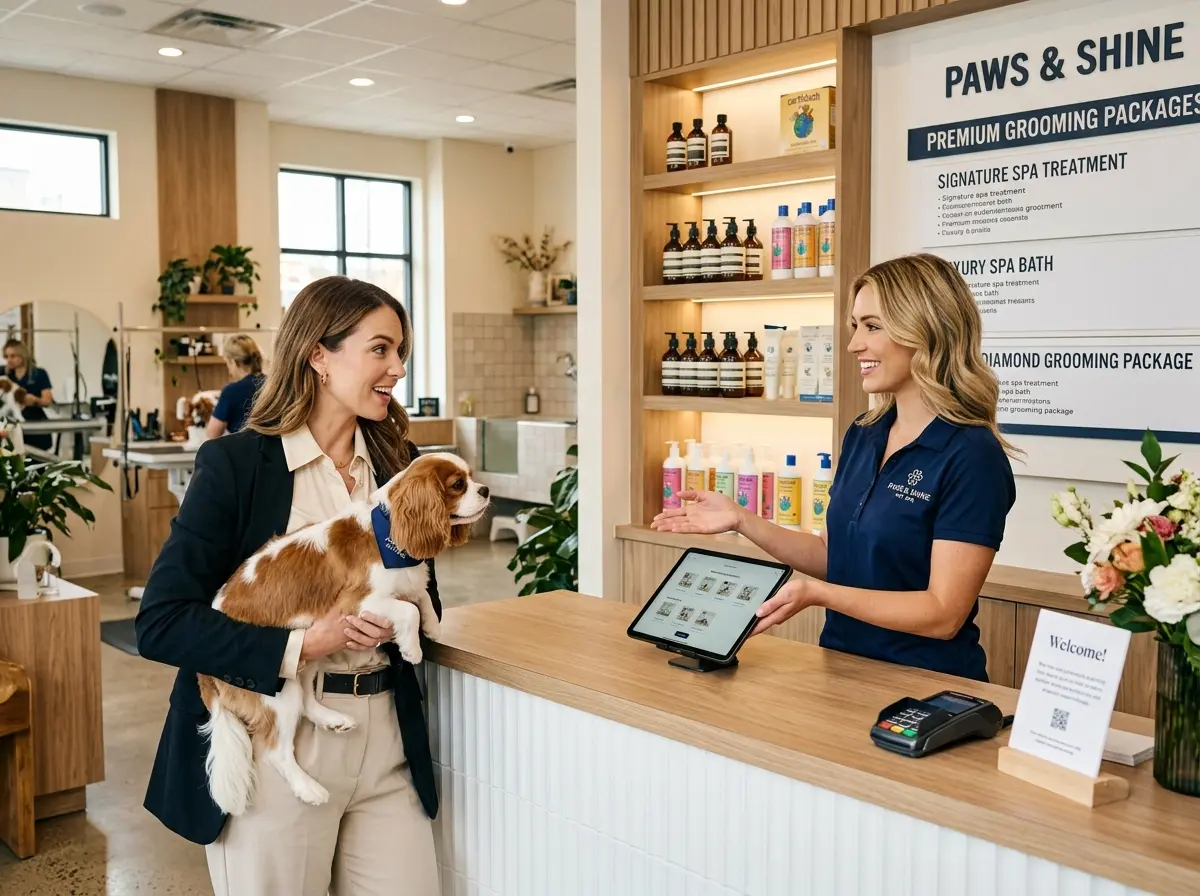
Stella is an AI robot employee and phone receptionist that answers calls 24/7, collects customer information through conversational intake forms, and manages it all through a built-in CRM — making her a practical fit for roofing companies that want better data without more admin work. She also greets walk-in customers at a physical location, handles promotions, and keeps your front-of-house running smoothly at just $99/month with no upfront hardware costs. If the thought of manually entering customer data into a CRM makes you want to climb back up on the roof and stay there, she's worth a look.
Conclusion: Your Past Customers Are Your Next Revenue Stream
The roofing industry doesn't have a customer problem — it has a relationship maintenance problem. The customers are there. The work has been done. The goodwill has been earned. What's missing, for most companies, is the system that keeps those relationships alive and turns them into ongoing revenue.
Here's what you can do this week to start moving the needle:
- Audit your existing customer data. Find it, consolidate it, and get it into a single CRM platform with consistent fields and tags.
- Build a simple three-touch follow-up sequence — 30 days, 6 months, and 12 months post-job — with personalized messaging based on the work done.
- Create at least two seasonal campaigns targeting past customers with relevant services based on time of year and job history.
- Launch a referral program and communicate it during your highest-satisfaction touchpoint.
- Automate your customer intake so new leads and customers are captured accurately from the start, whether they come in by phone, web, or in person.
Marcus didn't reinvent his business. He didn't hire a marketing agency or overhaul his service model. He just stopped ignoring the customers he'd already worked hard to win — and let a system do the remembering for him. A 60% increase in repeat business later, it's safe to say the investment in a CRM paid for itself many times over.
Your customer list isn't a graveyard. It's a pipeline. Start treating it like one.