The Moment of Truth Nobody Talks About
You've invested in your salon's ambiance. You've trained your stylists to perfection. You've curated a retail wall that would make a beauty editor weep with joy. And then your client walks up to the front desk to check out — and the magic evaporates. The stylist who just did a flawless balayage is now fumbling with a credit card reader, forgetting to mention the retail product they literally just used, and sending your client out the door with a vague "see you next time!" that means absolutely nothing.
Congratulations. You just lost a rebooking.
The checkout experience at your salon is not a formality. It is the final — and often most powerful — impression you leave on a client. Done well, it drives rebooking rates, boosts retail sales, and builds the kind of loyalty that fills your books months in advance. Done poorly, it quietly bleeds your business dry while you wonder why your client retention numbers look like a sad graph. Let's fix that.
Why Most Salon Checkout Experiences Quietly Fail
The Stylist Shouldn't Be the Cashier
Here's an uncomfortable truth: your stylists are artists, not salespeople — and most of them really don't want to be. When you ask the same person who just spent 90 minutes building a relationship behind the chair to immediately pivot into retail recommendations, rebooking pitches, and payment processing, you're asking a lot. And under the pressure of a packed schedule, the checkout conversation gets rushed, generic, or skipped entirely.
The result? Clients leave without products that would genuinely help them. They leave without their next appointment booked. And they leave without a clear reason to choose you over the salon that just opened two blocks away. The structural problem here isn't your staff — it's the workflow. Checkout deserves its own dedicated attention, not whatever energy is left over after a color correction.
The Rebooking Window Is Smaller Than You Think
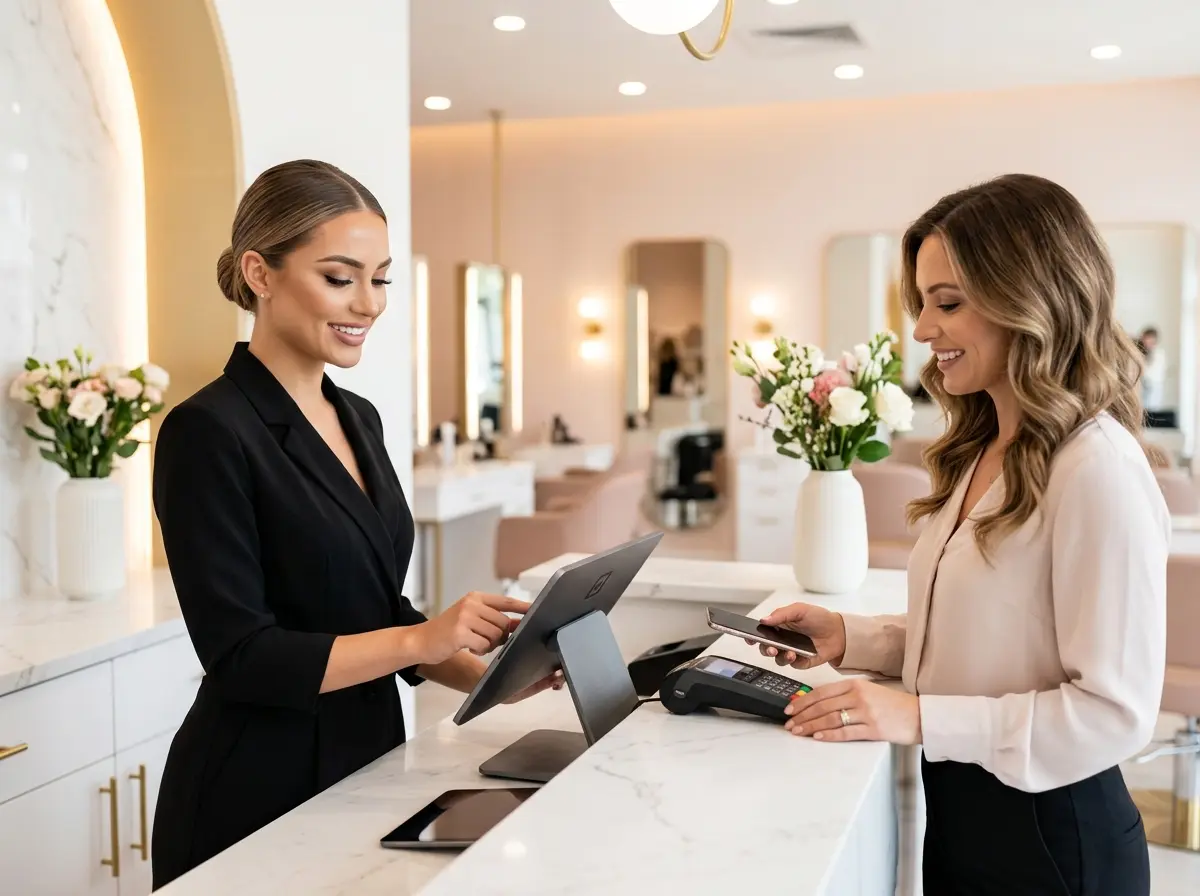
Industry data consistently shows that clients are most likely to rebook at the point of checkout — not when you send them an email three weeks later, not when you post a reminder on Instagram, and definitely not when they're standing in someone else's salon wondering if they should try something new. That window at the front desk, credit card in hand, fresh blowout in the mirror? That's it. That's your moment.
Research from the Professional Beauty Association suggests that salons with a structured rebooking process at checkout can achieve rebooking rates of 70% or higher. Salons without one often hover around 30–40%. That gap doesn't just represent appointments — it represents the entire lifetime value of each client relationship.
Retail Is an Afterthought When It Should Be a Conversation
Most salon retail strategies amount to "have nice products on a shelf and hope someone asks." This is not a strategy. This is optimism with a price tag. Retail should be a natural extension of the service conversation — the stylist mentions the volumizing mousse they used, the front desk confirms it's in stock, and checkout becomes a seamless moment of "would you like to take that home today?" instead of an awkward sales pitch nobody asked for.
When your checkout process doesn't have a clear handoff from service to retail, you're leaving real money on the table. Salon retail margins typically range from 40–50%, making it one of the highest-profit revenue streams available to you — and one of the most underutilized.
How Technology Can Take the Pressure Off Your Team
Letting Your Front Desk Focus on What Actually Matters
One reason checkout suffers is that your front desk staff — if you have dedicated front desk staff — are constantly pulled in seventeen directions at once. They're checking people in, answering the phone, responding to texts, managing the retail wall, and trying to remember which client is sensitive about being asked if they want to rebook because she always says she'll "call when she's ready" (she never calls). It's a lot.
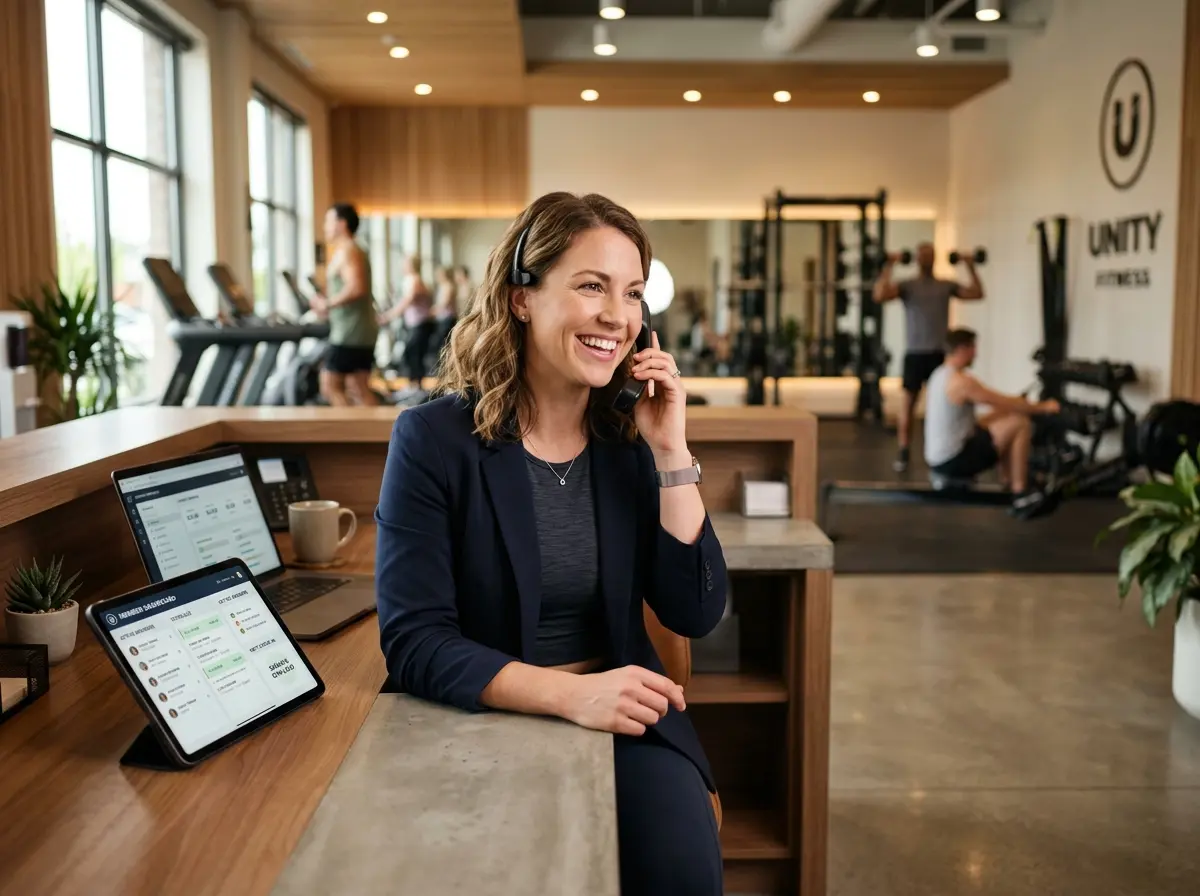
This is where Stella makes a quiet but meaningful difference. As an AI robot receptionist and in-store kiosk, Stella can greet walk-ins, answer common questions about services and pricing, and handle phone calls around the clock — so your human staff aren't constantly interrupted while trying to give checkout the attention it deserves. Her built-in CRM also means client information, notes, and preferences are organized and accessible, making personalized checkout conversations actually possible instead of theoretically nice. For salons juggling intake forms, consultation details, or loyalty tracking, Stella's conversational intake tools help keep everything connected without adding to your team's mental load.
Building a Checkout Process That Actually Works
Create a Consistent Checkout Script — Then Make It Human
Every client who walks to your front desk should experience roughly the same checkout flow — not a robotic recitation, but a reliable sequence that covers the essentials. A solid checkout script typically moves through four moments: a genuine compliment or transition from the service ("You're going to love how that color holds"), a retail recommendation tied to what was actually used, a rebooking invitation with a specific suggestion ("We'd love to see you back in about six weeks — want to lock in a time while you're here?"), and a warm send-off that doesn't feel like you're herding them out the door.
Train your team on this structure, then give them permission to personalize it. Scripts are guardrails, not cages. The goal is consistency in what gets communicated, not uniformity in how it sounds.
Make Rebooking the Default, Not the Exception
Stop asking clients if they want to rebook and start asking them when they'd like to come back. This subtle language shift changes the entire dynamic. "Do you want to make another appointment?" gives someone an easy out. "Would you prefer mornings or afternoons for your next visit?" assumes the relationship continues — because it should.
For clients who genuinely can't commit on the spot, have a follow-up system ready. A text reminder two weeks after their service, a soft nudge at the four-week mark. The point is that the checkout conversation plants the seed, and your follow-up system does the watering. Don't rely on clients to remember to call you. They won't — not because they don't love you, but because life is busy and there are seventeen other things demanding their attention.
Train for the Retail Handoff, Not the Retail Pitch
The most effective retail moment in your salon happens before checkout ever begins. It happens in the chair, when your stylist says "I'm going to use this treatment on you today — it's incredible for your curl pattern." By the time the client reaches the front desk, the product has already sold itself. The checkout conversation is just the logistics.
Build a simple internal system where stylists communicate retail recommendations to the front desk before the client arrives — a sticky note, a quick text, a note in your booking software. Whatever works for your team. When the front desk can say "your stylist mentioned you loved the curl cream today — we have a few in stock," that's not a sales pitch. That's excellent service. There's a meaningful difference, and clients feel it.
Quick Reminder About Stella
Stella is an AI robot employee and phone receptionist built for businesses like yours. She stands in your salon as a friendly, knowledgeable kiosk — greeting clients, answering questions, and promoting your services and retail offerings — while also handling phone calls 24/7 so your team can stay focused on delivering great experiences. At $99/month with no upfront hardware costs, she's the kind of team member who never calls in sick, never loses a rebooking conversation, and never forgets to mention the special.
Your Checkout Experience Deserves a Promotion
If you've read this far, you already know that your checkout process needs work — or at the very least, a hard look. The good news is that improving it doesn't require a renovation, a rebrand, or a miracle. It requires intention, a little training, and a commitment to treating those final three minutes with the same care you give to the first three.
Here's where to start: audit your current checkout experience this week. Stand at your front desk and observe. Watch what gets said, what gets skipped, and what the client's face looks like when they walk out. You'll learn more in twenty minutes of observation than you will in hours of reading about it.
Then build your script, train your handoff, and make rebooking the default. If your team is stretched thin and checkout keeps getting deprioritized because the phone won't stop ringing or walk-ins need attention, look at tools that take that pressure off — so your humans can focus on the human moments that actually drive loyalty.
Your clients don't just remember the cut or the color. They remember how you made them feel on the way out. Make it count.