The Empty Bay Problem Nobody Talks About
You've seen it happen a hundred times. A customer books an appointment, you order the parts, you block off the bay, and then — nothing. They don't show. Or worse, they call thirty minutes before to cancel because they "couldn't figure out a ride." Your technician stands around. The parts sit on the shelf. And somewhere across town, that customer is already Googling your competitor who does offer a loaner car.
Appointment cancellations at auto shops are frustratingly common, and a surprising number of them trace back to a single, solvable problem: customers have no way to get around while their car is being serviced. They're not flaky. They're not disorganized. They're just stuck. And if your shop doesn't have a formal solution to that problem, you're losing revenue every single week without even realizing it.
The good news? A well-structured shuttle or loaner car program isn't just a nice-to-have perk anymore — it's a legitimate competitive advantage that keeps bays full, customers happy, and your front desk from fielding yet another apologetic cancellation call on a Monday morning.
Why Transportation Barriers Kill Your Calendar
The Hidden Reason Customers Cancel
Most shop owners assume cancellations come from customers changing their minds, finding a cheaper quote, or simply forgetting. And yes, all of those things happen. But transportation logistics quietly account for a significant chunk of no-shows that never get properly diagnosed. According to industry surveys, a notable percentage of auto service customers cite inability to arrange alternative transportation as the primary reason they delayed or skipped a scheduled appointment entirely.
Think about it from the customer's perspective. Their car needs to be dropped off at 8 a.m. on a Tuesday. Their spouse has already left for work. The shop is four miles from their office. Uber adds up quickly when you're already paying for a brake job. And unless they're a logistics wizard, the whole thing feels like more trouble than it's worth — so they push it off, and push it off, until they're either stranded on the highway or begrudgingly calling you back three months later.
The Ripple Effect on Your Shop's Revenue
One cancellation doesn't just cost you one appointment. It costs you the diagnostic fee, the upsell on that cabin air filter you would have caught during inspection, and the future loyalty of a customer who never quite made it back. Research from the automotive service industry consistently shows that retained customers spend significantly more over their lifetime than new ones, and that convenience — not just price — is one of the top drivers of repeat business.
When customers feel like coming to your shop is easy, they come back. When they feel like it's a logistical puzzle, they quietly drift toward whichever shop makes their life simpler. A loaner car program is, at its core, a retention strategy wearing a practical disguise.
What "Formal" Actually Means Here
There's a difference between a formal program and "borrowing Dave's old Civic when someone really needs it." A formal program means documented policies, clear eligibility requirements, a check-in and check-out process, liability coverage through your insurance provider, and a way to actually communicate the program's existence to customers before they start considering cancellation. It means customers know — at the time of booking — that transportation is not a barrier. That framing alone changes behavior.
Streamlining Your Program with the Right Tools
How Stella Fits Into the Picture
Here's where a lot of shops fumble: they build a perfectly reasonable loaner or shuttle program, and then nobody knows about it because the front desk forgets to mention it, the website buries it, and the phone just rings until someone picks up. That's where Stella, the AI robot employee and phone receptionist, can make a real difference.
Stella answers your phones 24/7 and can be configured with full knowledge of your transportation offerings — shuttle availability, loaner car eligibility, scheduling windows, and policies. When a customer calls to book an appointment and casually mentions they're not sure how they'll get to work afterward, Stella doesn't miss that cue. She proactively informs them of the shuttle schedule or loaner availability right there in the conversation, before hesitation turns into a cancellation. She also collects customer intake information through conversational forms, which means your team already has everything they need before the customer walks in the door. For shops with a physical location, her in-store kiosk presence ensures arriving customers get the same consistent messaging about available services and programs — no detail slips through the cracks because a busy service advisor was juggling three things at once.
Building a Program That Actually Works
Designing the Right Model for Your Shop
Not every shop needs a fleet of loaner cars. The right model depends on your volume, your physical space, your insurance costs, and your customer base. Shuttle services work exceptionally well for shops located near commercial areas or office parks — a quick morning drop-off route costs very little to operate and solves the problem for the majority of customers. Loaner cars make more sense for shops handling multi-day repairs, where asking a customer to arrange their own transportation for three days is genuinely unreasonable.
Some shops do a hybrid approach: a shuttle for same-day appointments and a small pool of two or three loaner vehicles reserved for longer jobs. This covers the most common scenarios without the full overhead of a large fleet. Whatever you choose, the key is to formalize it, document it, and train your team to mention it at every booking touchpoint.
Handling the Logistics Without Losing Your Mind
The operational side of a loaner or shuttle program is where many shops get tripped up. A few practical principles that successful shops follow:
- Set clear eligibility criteria. Loaners for appointments over a certain dollar threshold or repair duration. Shuttle for all same-day appointments within a defined radius. Clarity prevents awkward front-desk conversations.
- Use a simple agreement form. Loaner car agreements protect you legally and set expectations. Keep them short, clear, and signed before keys change hands.
- Coordinate scheduling tightly. Shuttle runs should have defined time windows, not "whenever someone's free." Customers planning their workday need reliability.
- Track your assets. Even a two-car loaner fleet needs a check-in/check-out system. A shared calendar or simple fleet log prevents double-booking and ensures vehicles come back on time.
Marketing the Program So Customers Actually Know It Exists
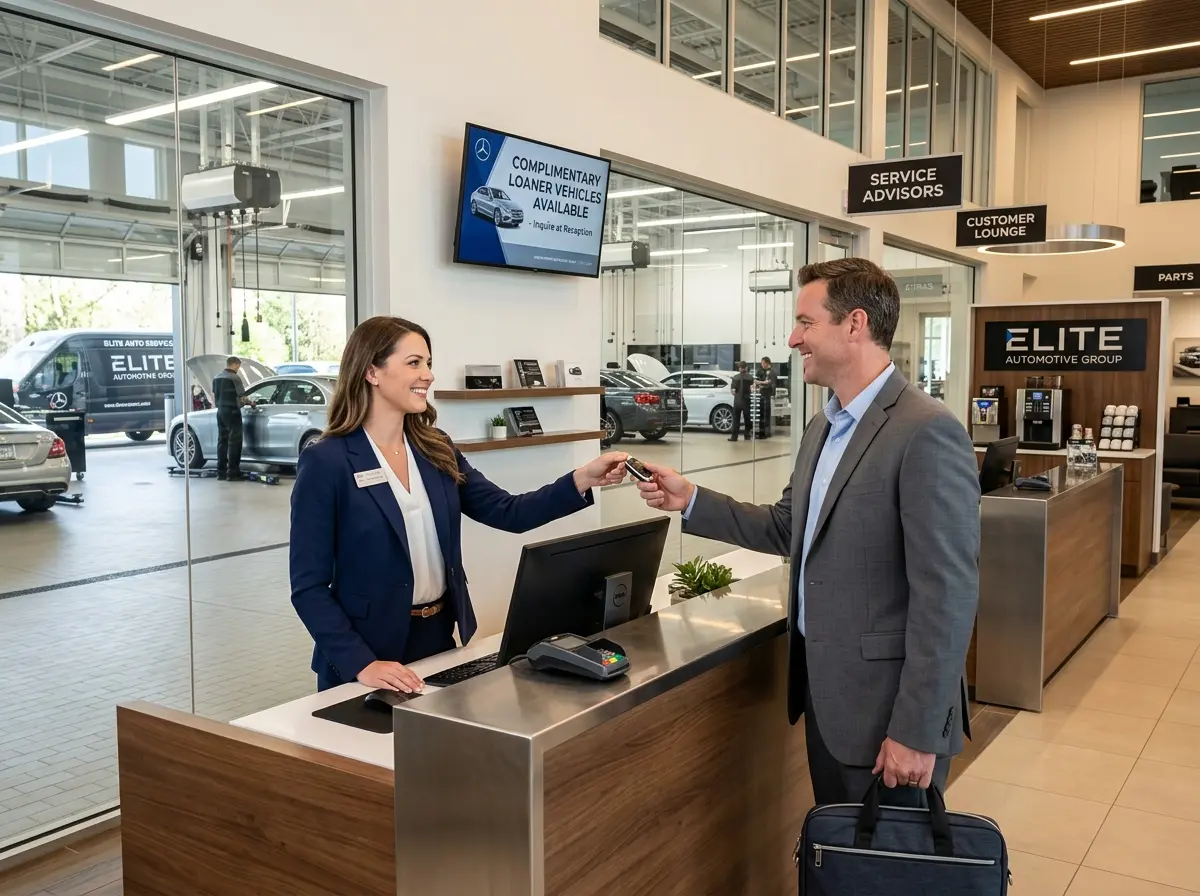
A transportation program that lives only in your employees' heads is a program that doesn't exist for most of your customers. Promote it everywhere: on your booking confirmation emails, your website's service page, your Google Business Profile, your waiting room signage, and — critically — during the appointment booking conversation itself. If a customer is calling in and your front desk doesn't mention it proactively, you're leaving the decision entirely up to chance.
Consider adding it to any digital advertising you're running, especially if you're targeting commuters or two-income households where car access is limited during the day. "We'll get you to work while we handle your car" is a genuinely compelling value proposition that most of your competitors aren't leading with.
Quick Reminder About Stella
Stella is an AI robot employee and phone receptionist built for businesses like yours — she greets customers in-store, answers phones around the clock, promotes your services and programs, and never calls in sick on a Friday. At $99/month with no upfront hardware costs, she's the kind of staff addition that pays for itself quickly when she's consistently converting callers into booked appointments instead of letting them hang up undecided.
Stop Letting Logistics Steal Your Bookings
The path forward here isn't complicated, but it does require intentionality. Start by auditing your last three months of cancellations — even informally. Ask your service advisors how often customers cite transportation as a reason for rescheduling or no-showing. If the answer is "pretty often," you have your answer.
From there, the action steps are straightforward:
- Choose your model — shuttle, loaner fleet, or a combination — based on your shop's size, location, and typical repair volume.
- Formalize the policies — eligibility, hours, agreements, insurance — so there's no ambiguity for your team or your customers.
- Train every customer-facing team member to mention the program at booking, confirmation, and check-in.
- Promote it everywhere your customers see you — website, Google, social media, email confirmations, and in-shop signage.
- Make sure your phone and in-store experience reflects it — because if the information isn't being communicated consistently, the program might as well not exist.
Your competitors are fighting for the same customers you are. The ones who win aren't always the cheapest or even the fastest — they're the ones who make the entire experience feel effortless. A customer who never has to worry about how they'll get to work while you fix their car is a customer who will keep coming back, refer their friends, and leave you a glowing five-star review that mentions how easy you made everything.
That's worth a lot more than the cost of running a shuttle route on Tuesday mornings.