Your Skin Has a Calendar. Does Your Marketing?
Here's a fun fact that most spa owners either don't know or quietly ignore: your clients' skin behaves differently depending on the season, their hormonal cycles, their stress levels, and about a dozen other biological factors that have absolutely nothing to do with your current Instagram aesthetic. And yet, many spas are out here posting "Treat Yourself Tuesday" content in the dead of winter when their clients are desperately Googling "why is my skin so dry it's literally cracking."
The good news? There's a fix, and it doesn't require a marketing degree or a full-time content team. It requires a content calendar — one that's actually aligned with the natural rhythms of skin health and treatment effectiveness. When your content speaks to what your clients are already experiencing in their bodies and on their faces, you stop feeling like a brand that's selling at them and start feeling like the expert they genuinely need. That's when bookings happen. That's when loyalty is built.
Let's break down how to build a content calendar that works with biology instead of ignoring it entirely.
Understanding the Seasonal and Cyclical Foundations of Spa Marketing
The Four Seasons Aren't Just for Weather Apps
Skin behavior shifts dramatically across the seasons, and your treatment menu and marketing should reflect that. In fall and winter, the combination of cold outdoor air and dry indoor heating strips the skin of moisture and compromises the barrier function. This is peak season for hydration-focused treatments, barrier repair, and anything involving rich, nourishing ingredients. If you're not promoting your hydrating facials and body wraps heavily from October through February, you're leaving money on the table — and your clients are leaving with flaky foreheads.
Spring and summer bring a different set of challenges: increased sun exposure, oilier skin, breakouts triggered by heat and sweat, and hyperpigmentation concerns. This is when your brightening treatments, chemical exfoliants, and SPF education content should be front and center. Clients want to look good for summer, but they also need guidance on protecting and repairing skin that's about to take a beating from the sun.
The practical move here is simple: map your core treatments to the season where they're most relevant, then build your content blocks around that alignment. You're not reinventing the wheel — you're just timing it properly.
The Skin Cycle: 28 Days of Marketing Opportunity
Here's where things get genuinely interesting (and where most spas completely drop the ball). The skin naturally renews itself approximately every 28 days. For clients who menstruate, hormonal fluctuations across the monthly cycle also significantly impact skin behavior — increased oil production and breakouts in the days before menstruation, sensitivity around ovulation, and a relative "sweet spot" of clearer, calmer skin in the follicular phase after menstruation ends.
This doesn't mean you need to get uncomfortably personal in your marketing. It means you can create content that acknowledges these patterns in a knowledgeable, empathetic way. A post that says "Noticing more breakouts or sensitivity this week? Here's why your skin does this — and what we can do about it" is going to resonate far more deeply than a generic "Book a facial!" post. You're demonstrating expertise, building trust, and giving clients a reason to reach out — all in one piece of content.
Mapping Treatments to Skin Readiness
Not all treatments are created equal for all times of year or all phases of the skin cycle. Chemical peels, for instance, are best performed in fall and winter when sun exposure is lower — and clients need to know that. Microneedling sessions should be timed with the skin cycle in mind, ideally during phases of lower sensitivity. Laser treatments and intense exfoliation don't pair well with peak summer.
When you educate your clients about why timing matters, two things happen. First, they trust you more because you clearly know what you're talking about. Second, they start planning their appointments further in advance — which is a gift to your booking calendar. Your content calendar becomes a client education engine, and that's one of the most powerful things your marketing can be.
How Smart Tools Help You Stay Consistent
Let Technology Handle the Gaps So You Can Focus on the Work
Building a content calendar is one thing. Executing it consistently while also running a spa — managing staff, performing treatments, handling bookings, and dealing with the seventeen things that will go wrong this week — is another. This is where smart operational tools become less of a luxury and more of a survival strategy.
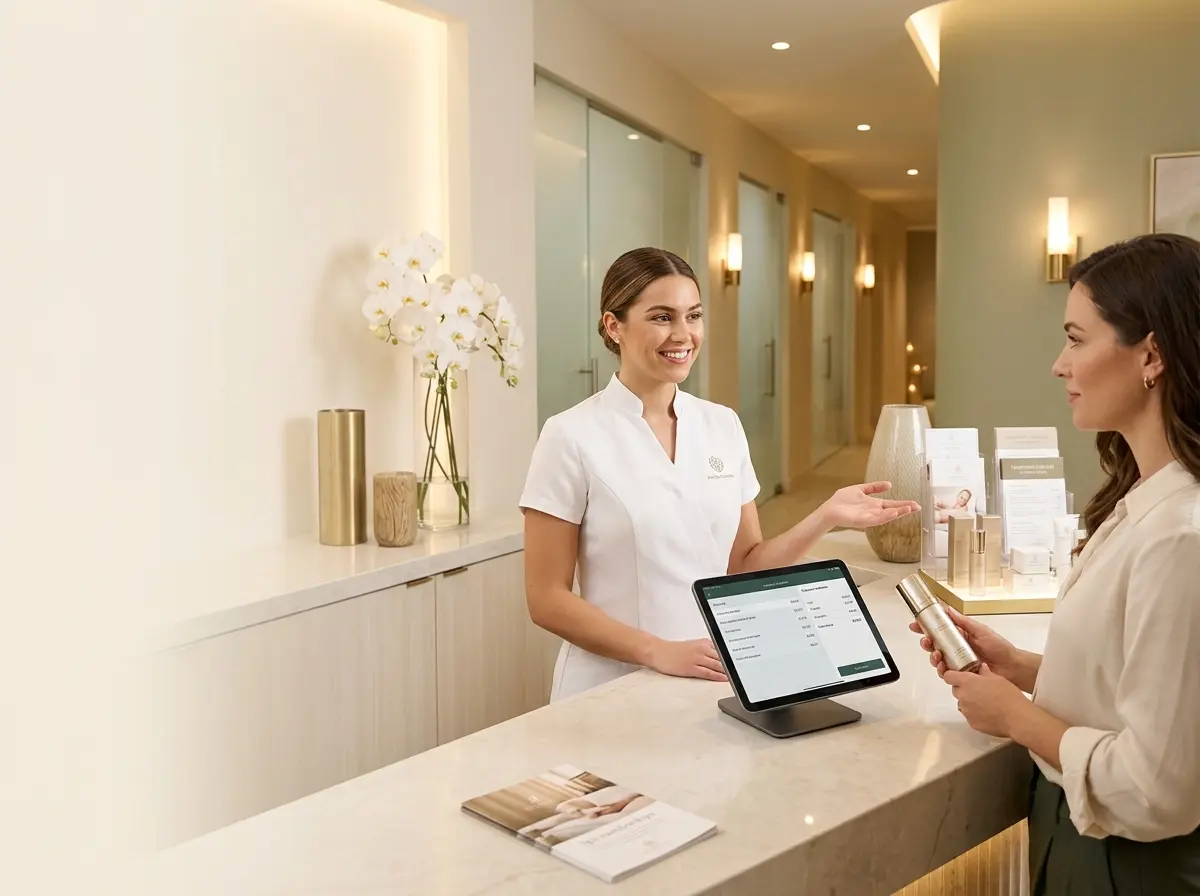
Stella, the AI robot employee and phone receptionist, is one of those tools worth knowing about. Inside your spa, she greets clients, answers their questions about services and promotions, and actively promotes your current seasonal offerings — without you needing to brief her every Monday morning. When a client walks in curious about whether now is a good time to try a chemical peel, Stella can speak to your current specials and help guide them toward a booking. On the phone side, she answers calls 24/7, so a client who just read your late-night Instagram post about fall skin prep and wants to book an appointment doesn't hit voicemail and forget about it by morning. Stella keeps the conversation going even when your team can't — and at $99/month, she's considerably less expensive than missing bookings because nobody picked up.
Building Your Content Calendar: A Practical Framework
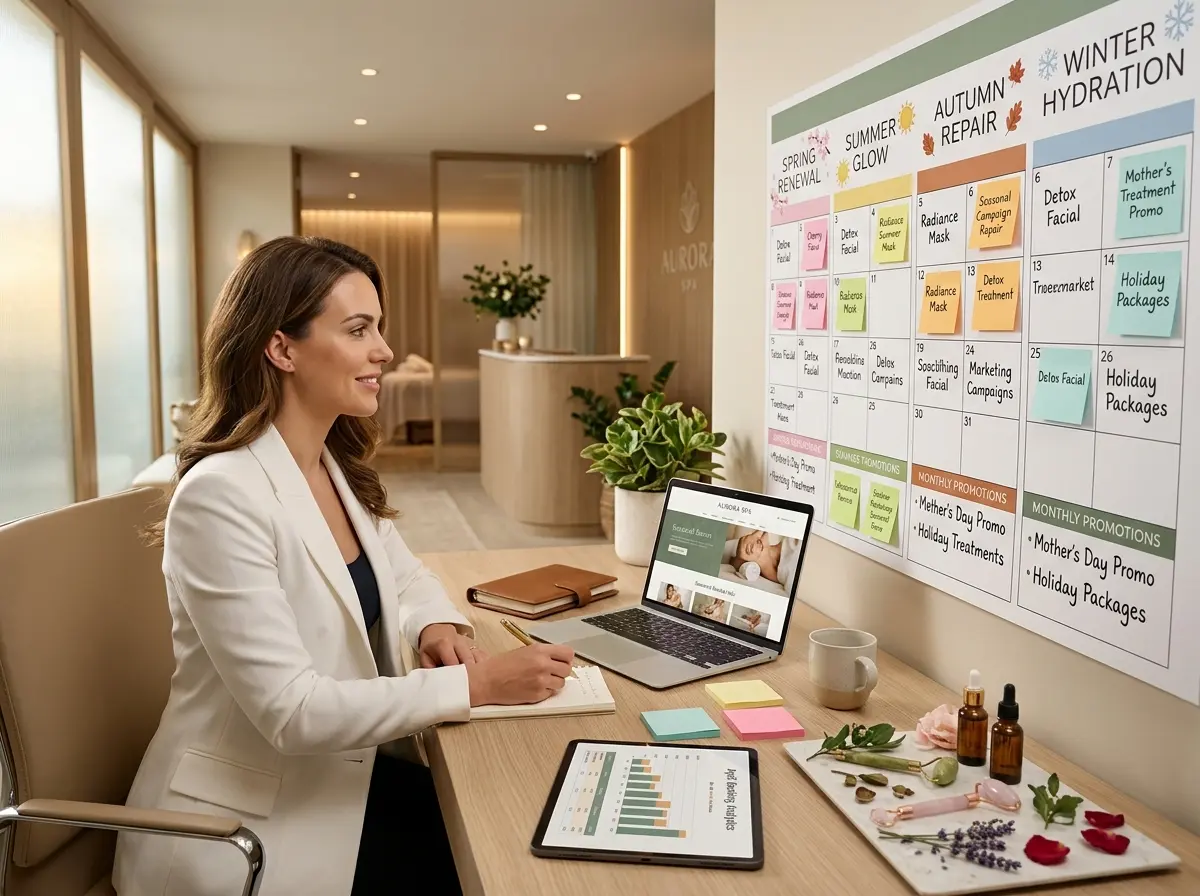
Start With a 12-Month Treatment Map
Before you write a single caption or schedule a single post, sit down and map out the year from a treatment perspective. Which services perform best in which months? Which treatments should clients ideally do in sequence? When are your slow periods, and which services could reasonably fill them if marketed correctly? This exercise usually takes a couple of hours, but it becomes the foundation everything else is built on.
Once you have your treatment map, layer in the seasonal skin concerns we discussed earlier. You'll likely find that your instincts as a spa professional already align well with what the science suggests — you just haven't translated that knowledge into a content strategy yet. Now you can.
Create Content Pillars That Rotate With Intention
A strong spa content calendar typically rotates through four or five recurring content pillars: education, promotion, client stories or results, team expertise, and seasonal tips. The key is that each pillar should flex to reflect the current season and skin cycle focus rather than existing as a generic, evergreen loop.
For example, your "education" pillar in October might focus entirely on barrier repair and why autumn is the ideal time to start a peel series. In March, that same pillar pivots to spring skin prep, sun damage prevention, and the importance of switching up your moisturizer as the weather warms. The pillar structure stays the same. The content inside it evolves. This approach keeps your feed feeling both consistent and timely — which is exactly the balance that builds engaged audiences.
Plan Campaigns Around Biological Moments, Not Just Holidays
Most spas build their promotions around Valentine's Day, Mother's Day, and the holidays. Those are fine, and you should absolutely participate in them. But the spas that truly stand out build additional campaigns around biological moments that their competitors aren't even thinking about.
Consider a "New Skin September" campaign launching right as the back-to-school buzz dies down and clients are ready to invest in themselves again — and when fall skin prep is genuinely timely. Or a "Skin Reset Week" campaign timed to the post-menstrual phase when skin is most receptive and treatment results are at their best. These campaigns feel fresh, they demonstrate expertise, and they give clients a reason to book that goes beyond a discount. They're buying into knowledge, and that's a far more compelling offer.
Quick Reminder About Stella
Stella is an AI robot employee and phone receptionist that works inside your spa as a friendly kiosk and answers your phone calls around the clock — so your seasonal promotions and campaigns get communicated to clients even when your team is hands-deep in a treatment. She's available for $99/month, requires no upfront hardware costs, and is ready to start working the moment you set her up. For a spa investing in smarter marketing, she's a natural complement to the operation.
Start With the Next 90 Days and Build From There
If a full 12-month content calendar feels overwhelming, give yourself permission to start smaller. Map out the next 90 days — one season — and build a content plan that aligns with the skin concerns, treatment opportunities, and cyclical patterns that apply to that window. Use that period to test what resonates, refine your messaging, and develop a rhythm. By the time you hit the 90-day mark, you'll have enough data and momentum to build out the rest of the year with confidence.
The broader takeaway here is straightforward: your clients' skin follows a predictable rhythm, and your marketing should meet it there. When you position your spa as the authority that understands not just what treatments exist but when and why they work, you stop competing on price and start competing on expertise. That's a much better place to be.
So pull out a calendar, map your treatments to the seasons, and start building content that your clients' skin is already primed to receive. The bookings will follow.