So You Want to Run Pre-Orders Without Losing Your Mind
Pre-orders: the beautiful, chaotic, occasionally maddening lifeblood of comic book and game stores everywhere. Done right, they give you predictable revenue, happy customers, and the smug satisfaction of knowing exactly how many copies of that highly anticipated release to stock. Done wrong, they give you a spreadsheet that haunts your dreams and a backroom full of unclaimed copies of something nobody wanted after all.
Whether you're a seasoned store owner who's been managing pre-orders since pull lists were handwritten on index cards, or you're relatively new to the game and wondering why customers keep asking you about "allocations," this guide is for you. We're going to walk through how to build a pre-order system that actually works — one that keeps customers engaged, protects your cash flow, and doesn't require you to personally track down every single person who said "yeah, put me down for one" six months ago.
Spoiler alert: a little organization and the right tools go a very long way.
Building a Pre-Order System That Actually Works
Before you can sell pre-orders effectively, you need a system. Not a "sticky notes on the monitor" system. A real one. The good news is that setting up a solid pre-order process isn't complicated — it just requires intentional structure from the start.
Define Your Pre-Order Policy (And Actually Communicate It)
The number one source of pre-order drama in retail stores is ambiguity. Customers think pre-ordering means guaranteed pickup forever. You think it means pickup within two weeks of release. Neither of you wrote it down. Chaos ensues.
Start by creating a clear, written pre-order policy that answers the following: How long do customers have to pick up their items after release? Is a deposit required? What happens if they don't show up? Is the deposit refundable? What if the product is delayed by the publisher?
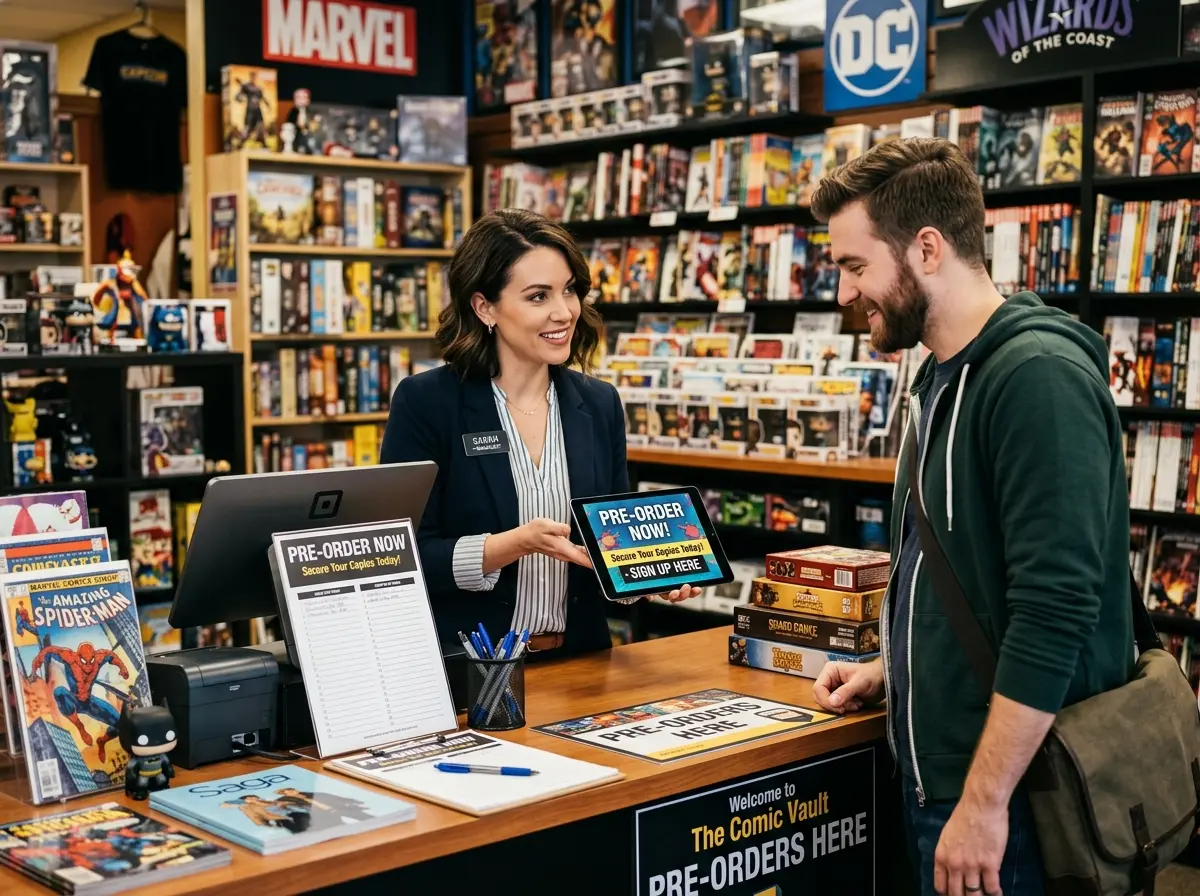
Once you have that policy, post it everywhere — at the register, on your website, in your email confirmations, and ideally on a sign near your pre-order display. When customers sign up for a pre-order, have them acknowledge the policy. This one step alone will save you hundreds of awkward conversations per year.
Use a Deposit Model to Protect Yourself
Requiring a deposit — typically 25% to 50% of the product's price — does two powerful things. First, it filters out the tire-kickers. Someone who puts money down is significantly more likely to actually show up. Second, it covers your cost if they don't. Publishers don't care that your customer changed their mind; you still owe for those units.
Industry data from the comic retail sector consistently shows that no-deposit pre-orders result in significantly higher no-show rates, sometimes exceeding 30% on popular releases. That's a lot of product sitting on the shelf with no guaranteed buyer. A modest deposit changes the psychology of the transaction — it transforms a casual interest into a real commitment.
Organize Your Pre-Orders in a Centralized System
If you're still tracking pre-orders in a spreadsheet — bless your heart — it's time to graduate. Point-of-sale systems like Comic Hub, Square for Retail, or dedicated FLGS tools offer pre-order tracking features that tie directly into your inventory. The key features you want are: customer contact info attached to each order, automated reminders when items arrive, and easy reporting so you can see what's coming down the pipeline and plan your cash accordingly.
At minimum, you need each pre-order record to include the customer's name, phone number, email, the item(s) reserved, the deposit amount paid, and the expected release date. Simple, consistent, and centralized. If any staff member needs to look up an order, they should be able to do it in under a minute.
Keeping Customers Engaged Between Order and Arrival
Here's a thing many store owners overlook: the time between when a customer pre-orders and when the product actually arrives is a marketing opportunity. A customer who pre-ordered the next big graphic novel or board game expansion is already excited — they're primed to engage. Don't waste that energy.
How Stella Can Help Manage Pre-Order Inquiries and Customer Communication
One of the most time-consuming parts of running pre-orders is answering the same questions over and over. "Has my order come in yet?" "When is that game releasing?" "Can I add something to my pull list?" These are perfectly reasonable questions that nonetheless eat into your staff's time during peak hours.
This is exactly the kind of thing Stella, the AI robot employee and phone receptionist, handles beautifully. In-store, Stella greets customers as they walk in and can answer common pre-order questions, explain your policy, and direct people to the right staff member if needed — all without pulling your team away from the register. On the phone, she answers calls 24/7, so when a customer calls Tuesday night at 9 PM wondering if their copy of the new Batman arc is ready, they get a real answer instead of voicemail. She can also collect customer information through conversational intake forms, which is handy if you want to capture new pre-order requests over the phone and route them to your team with an AI-generated summary. Fewer interruptions, more consistent customer experience.
Turning Pre-Orders Into a Revenue and Loyalty Engine
Pre-orders aren't just about managing inventory — they're one of the most underused tools for building customer loyalty and driving additional revenue in specialty retail. Here's how to make them work harder for your store.
Offer Pre-Order Incentives That Actually Motivate
Generic discounts are fine, but comic and game stores have a unique advantage: exclusives. Variant covers, promo cards, store-exclusive sleeves, early access to game nights, a signed bookplate from a local artist — these are the kinds of incentives that your customers genuinely cannot get on Amazon. Lean into that.
You don't need to offer incentives on everything, but for major releases — a marquee title, a hotly anticipated expansion, a first printing with a limited print run — a meaningful incentive can dramatically increase your pre-order numbers and lock in revenue weeks before the product arrives. It also creates buzz. Customers talk about exclusive perks, and word-of-mouth in the tabletop and comics community is exceptionally powerful.
Use Pre-Order Data to Make Smarter Buying Decisions
Every pre-order is a data point. Over time, your pre-order history tells you which genres your customers care about, which publishers your base trusts, what price points they're comfortable committing to in advance, and where you consistently over- or under-order. This is gold.
Review your pre-order data quarterly. Look for patterns: Are certain customers always pre-ordering but never picking up? Are there product categories where pre-orders consistently sell through versus others that leave you with overstock? Use this information to adjust your ordering strategy, your deposit requirements, and even which products you actively promote to which customers. A store that buys smart buys profitably — and pre-order data is one of the clearest signals you have.
Build a Pre-Order Subscriber List and Market to It
Customers who pre-order are your best customers. They're engaged, they're spending money before the product even exists, and they've demonstrated they trust you. Build a dedicated email or SMS list of your pre-order customers and treat them like the VIPs they are.
Send them early announcements before you open pre-orders to the general public. Give them a 24-hour head start on limited quantities. Include them in a loyalty tier if you have one. The goal is to make pre-ordering feel like a benefit, not just a transaction. When customers feel like insiders, they stick around — and they bring their friends.
Quick Reminder About Stella
Stella is an AI robot employee and phone receptionist designed for businesses like yours. She stands in your store engaging walk-in customers and answers your phones 24/7 with full knowledge of your products, policies, and promotions — all for $99/month with no hardware costs. If you're fielding constant pre-order questions from customers in person and over the phone, she's worth a serious look.
Start Simple, Then Scale
If your current pre-order process feels overwhelming, take a breath. You don't have to rebuild everything at once. Start with the fundamentals: write your policy, require deposits, and get your orders into a centralized system. Once that foundation is solid, layer in the marketing and loyalty strategies.
Here's a practical starting checklist:
- Write and post your pre-order policy — keep it simple, clear, and visible.
- Set a deposit requirement — even a small one makes a big difference in no-show rates.
- Centralize your pre-order tracking — use your POS or a dedicated tool, not a spreadsheet.
- Create a pre-order customer list — start segmenting your best customers now.
- Plan your next pre-order incentive — pick one upcoming release and offer something exclusive.
- Review your data — set a recurring reminder to look at pre-order trends every quarter.
Pre-orders done well are one of the few things in retail that simultaneously improve your cash flow, reduce your inventory risk, and deepen customer relationships. That's a rare triple win in this business, and it's absolutely achievable with a bit of structure and consistency. Now go get those deposits — your future self will thank you.