Introduction: The Loyalty Program Paradox
Congratulations — your restaurant has a loyalty program. You've got the app, the punch cards, or maybe a slick digital points system that took three months and a small fortune to set up. Customers are earning points, redeeming rewards, and coming back for more. Everything is working perfectly.
Except it isn't. Not really.
Here's the uncomfortable truth that most restaurant owners don't want to sit with over their morning coffee: the majority of restaurant loyalty programs are accidentally engineered to reward the customers who were already going to come back anyway. You're handing out free appetizers to your regulars while doing almost nothing to convert the first-timer who wandered in on a Tuesday and thought your chicken sandwich was pretty great — but not great enough to download yet another app.
According to research from Accenture, loyalty program members generate between 12–18% more revenue than non-members — but only when those programs are designed with intention. The keyword there is intention. Most programs are designed with optimism, which is a very different thing. This post is about closing that gap: understanding what your loyalty program is actually rewarding, and restructuring it so it drives the behaviors that genuinely grow your business.
The Behaviors Your Program Is Probably Rewarding (And Shouldn't Be)
Rewarding Frequency Over Value
The classic "buy 10, get 1 free" model feels intuitive. More visits, more rewards. Simple. But consider who actually completes those punch cards: your regulars. The person who comes in four times a week doesn't need a loyalty program to convince them to come back — they already have. You've essentially built a discount program for your most reliable customers, which means you're compressing your margins on the very transactions that were guaranteed to happen anyway.
A smarter approach ties rewards to value, not just frequency. Think about rewarding higher spend per visit, trying new menu items, or bringing in a first-time guest. These are the behaviors that actually expand your revenue footprint rather than just acknowledging the footprint you already have.
Ignoring the Lapsed Customer Entirely
Most loyalty platforms are remarkably good at celebrating active customers and remarkably indifferent to the ones drifting away. A customer who visits weekly and then suddenly goes quiet for three weeks is practically waving a red flag — but without proactive outreach, they just quietly become a former customer. Studies suggest it costs five times more to acquire a new customer than to retain an existing one, which makes lapsed customer recovery one of the highest-ROI activities a restaurant can pursue. Yet it's almost never baked into a loyalty program's core design.
Build re-engagement triggers into your program. If someone hasn't visited in 21 days, that's your cue — not to shrug, but to send a targeted offer that feels personal rather than automated. "We haven't seen you in a while, and honestly, your usual table misses you" goes a lot further than a generic 10% off coupon blasted to your entire list.
Rewarding the Transaction, Not the Relationship
Points for purchases. That's the whole model for most programs, and it's fine as far as it goes — which isn't very far. Real customer relationships are built on more than transactional exchanges. Are you rewarding customers for leaving a review? For referring a friend? For following you on social media and actually engaging? For completing a feedback survey after a disappointing visit?
These non-transactional behaviors have compounding value. A single referral from a loyal customer can bring in two or three new regulars. A glowing Google review influences dozens of future dining decisions. Yet these high-value behaviors often earn zero points in a standard loyalty setup. That's a miss worth fixing.
Using Smarter Tools to Understand What's Actually Working
The Data You're Collecting vs. The Data You're Using
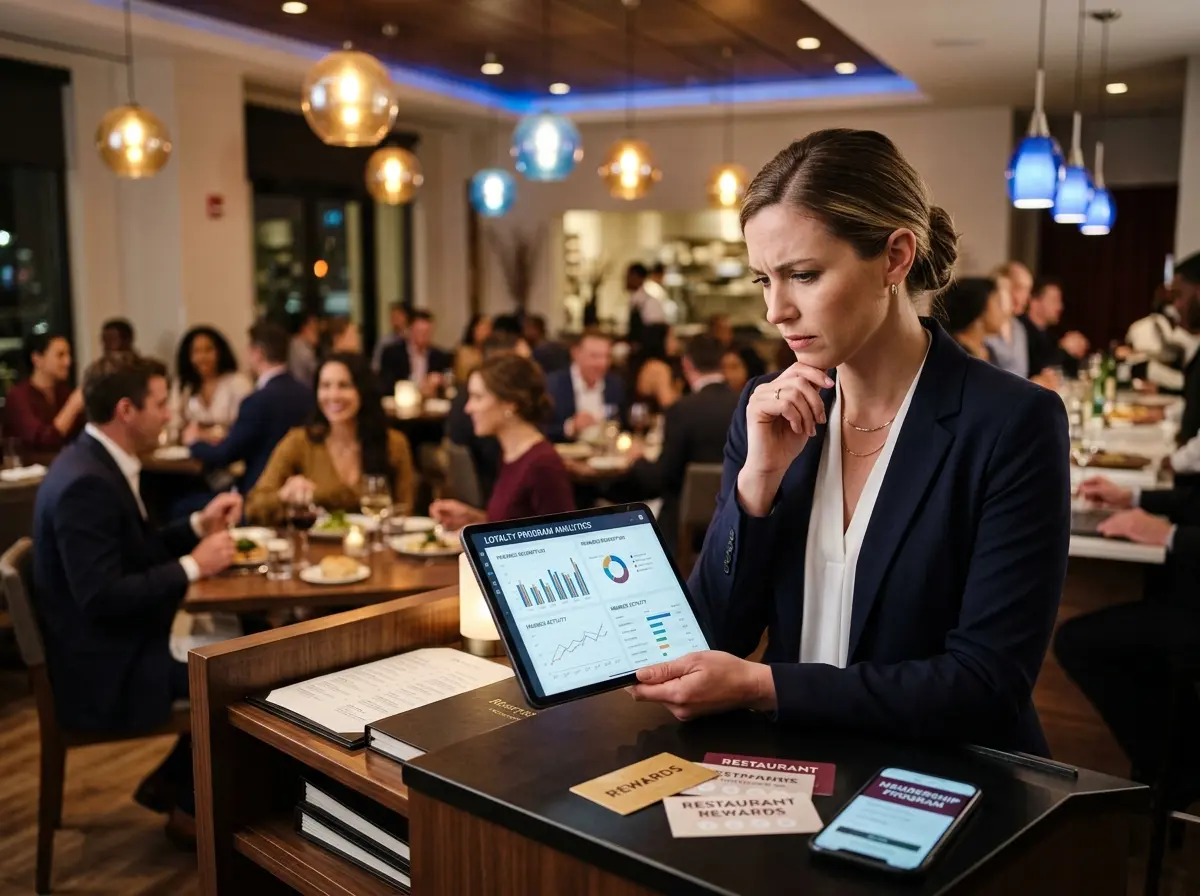
Most restaurant loyalty programs collect a reasonable amount of data — visit frequency, average spend, preferred items, redemption rates. The problem isn't the collection. It's that the data sits in a dashboard that nobody looks at until something goes obviously wrong. Running a loyalty program without regularly reviewing the behavioral data it generates is a bit like driving with your eyes closed and congratulating yourself on owning a GPS.
Carve out time monthly — genuinely scheduled, non-negotiable time — to audit your program metrics. Which rewards are being redeemed most? Which segments of customers are engaging least? Are your top spenders actually enrolled, or are they paying full price every visit while someone else claims all the perks?
How Stella Can Help You Capture and Convert
Here's where things get interesting for restaurant owners trying to close the loop between customer interaction and loyalty program engagement. Stella — the AI robot employee and phone receptionist — can proactively mention your loyalty program to every single customer who walks through the door or calls in, without fail, without forgetting, and without the awkward upsell energy that human staff sometimes bring to the table (pun mildly intended).
At the kiosk, Stella can greet guests, explain current promotions, and prompt enrollment in your rewards program as part of a natural conversation. On the phone, she handles incoming calls 24/7, answers questions about your menu and specials, and can collect customer information through conversational intake forms — feeding directly into a built-in CRM with custom fields, tags, and AI-generated customer profiles. That means you're not just hoping customers sign up; you're actively capturing them at every touchpoint and building a contact database that makes personalized re-engagement actually possible.
Redesigning Your Program Around the Right Behaviors
Define the Behaviors You Actually Want to Drive
Before you touch your points structure or your rewards catalog, sit down and get specific about what customer behaviors would most meaningfully impact your business. Is it higher average check size? More weekday visits during your slow hours? Increased uptake on your new menu category? Referrals from your existing base?
Once you've named those behaviors explicitly, reverse-engineer your rewards to incentivize them. If you want to drive Thursday lunch traffic, a double-points Tuesday promotion isn't going to help. Align the incentive directly with the behavior. It sounds obvious when written out plainly like this, which makes it all the more baffling how rarely it actually happens in practice.
Tier Your Program With Intention
Tiered loyalty programs — Bronze, Silver, Gold, or whatever you want to call them — work well when the tiers are meaningful and the progression feels achievable. They work terribly when the top tier is so difficult to reach that customers give up, or when the benefits at each tier aren't genuinely differentiated.
Consider structuring your tiers around relationship depth rather than just spend. A customer who has referred three friends, left two reviews, and visited 15 times should feel more valued than a customer who has spent the same dollar amount but done none of those things. Your program structure should reflect that nuance — and your customers should be able to feel the difference in how you treat them.
Close the Feedback Loop
One of the most underutilized loyalty tactics is the post-visit feedback reward. If a customer had a mediocre experience and you never know about it, they leave quietly and maybe don't come back. If you've built a reward into your program for completing a brief feedback form — even just bonus points — you're turning a potential silent churn into a recoverable situation. You learn what went wrong, you have the opportunity to make it right, and the customer feels heard rather than ignored. That's not just good loyalty strategy; it's good hospitality, which is supposedly the whole point.
Quick Reminder About Stella
Stella is an AI robot employee and phone receptionist available for just $99/month with no upfront hardware costs. She greets customers in-store, promotes your specials and loyalty program, and answers calls around the clock — so your team can focus on delivering the experience that actually earns loyalty in the first place. Setup is easy, and she's always ready to work, even when your staff is slammed during a Friday dinner rush.
Conclusion: Build a Program That Earns Its Keep
The goal of a loyalty program isn't to reward customers for existing — it's to shape the specific behaviors that make your restaurant more profitable, more resilient, and more genuinely connected to the people it serves. That requires honest self-assessment about what your current program actually incentivizes, a willingness to restructure it around real business objectives, and the tools to capture and act on customer data consistently.
Here's your action plan to get started:
- Audit your current program. Look at redemption data, enrollment rates by customer segment, and which behaviors are and aren't being rewarded. Be honest about what you find.
- Define your target behaviors. Write them down. Be specific. "More visits" is not specific enough. "More weekday visits between 2–5pm" is.
- Restructure your incentives to align with those behaviors — including non-transactional actions like referrals, reviews, and feedback.
- Build re-engagement automation for lapsed customers before they become former customers.
- Close the feedback loop by rewarding customers for telling you what's working and what isn't.
Your loyalty program should be working as hard as you are. If it's mostly just handing out free desserts to people who love your restaurant unconditionally already, it's time to put it to work on the customers — and the behaviors — that actually need the nudge.