When Your Phone Is Ringing Off the Hook (And So Is Everyone's Patience)
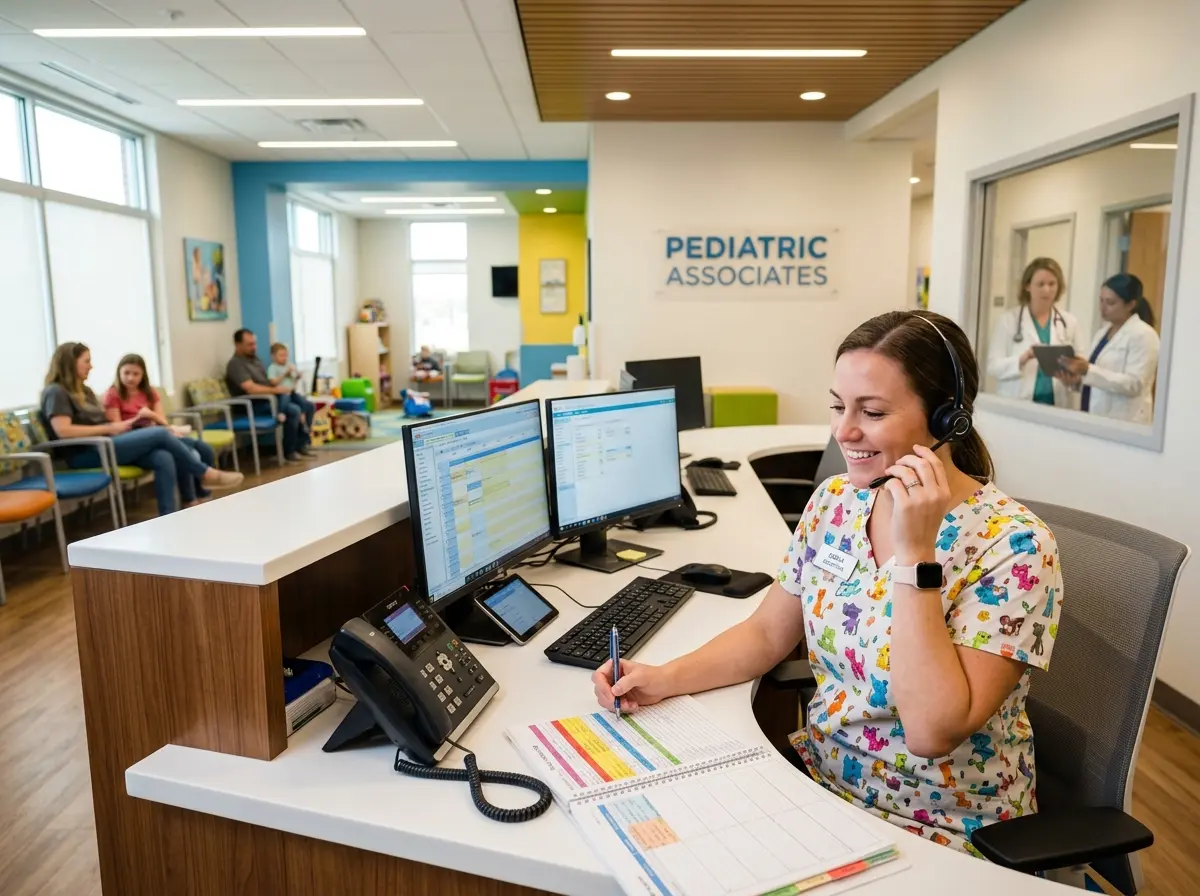
Let's paint a picture you probably know all too well: It's a Tuesday morning, your waiting room is full, your nurses are elbow-deep in sick-kid chaos, and your front desk staff is simultaneously checking in a toddler with a mystery rash, fielding a question about vaccine schedules, and trying to figure out if the child on hold actually needs to be seen today — or if Mom just needs some reassurance that, no, a low-grade fever after a flu shot is not the apocalypse.
The phone in a pediatric practice isn't just a communication tool. It's a triage instrument. Every call that comes in carries a spectrum of urgency — from genuinely critical situations requiring immediate escalation to questions that could be answered by a well-placed FAQ on your website. The problem? Your staff has to field all of them with equal energy, all day long, without losing their minds or their manners.
A well-designed phone triage system doesn't just reduce chaos — it protects your patients, your staff, and frankly, your sanity. Here's how to build one that actually works.
The Building Blocks of an Effective Phone Triage System
Define Your Call Categories Before Anything Else
Before you can route calls intelligently, you need to know what kinds of calls you actually receive. Most pediatric practices deal with a surprisingly consistent mix of call types, even if every individual call feels like a surprise. Broadly speaking, you're looking at three tiers:
- Urgent or emergent calls — symptoms that require same-day evaluation or immediate 911 guidance (difficulty breathing, severe allergic reactions, altered mental status, high fever in a newborn)
- Clinical but non-urgent calls — mild illnesses, medication questions, post-visit follow-ups, referral requests
- Administrative calls — appointment scheduling, insurance questions, records requests, school and sports forms
Once you've mapped these categories, you can start designing workflows that match each type to the right person, at the right time — instead of dropping everything onto whoever picks up the phone first. According to the American Academy of Pediatrics, after-hours calls alone account for a significant portion of clinical communication in pediatric offices, which means your triage system needs to function well beyond a 9-to-5 window.
Build a Decision Tree That Actually Gets Used
A triage protocol that lives in a binder no one opens is just expensive paper. Your decision tree needs to be practical, accessible, and realistic for the people using it under pressure. Work with your clinical staff — nurses especially — to document the questions that should be asked for each category of call. For clinical calls, lean on established resources like the Schmitt-Thompson Pediatric Telephone Protocols, which give evidence-based guidance for triaging over 200 pediatric symptoms by phone.
The key is consistency. When every staff member is asking the same foundational questions in the same order — age of child, chief complaint, symptom duration, any known allergies or medical history — you dramatically reduce the chance of a critical detail slipping through the cracks. Post laminated quick-reference cards at every phone station. Train new staff on it before they touch a phone. And revisit it annually, because your patient population and your call patterns will evolve.
Set Clear Escalation Paths and Accountability
Who owns a call once it's been categorized? This is where many practices leave a dangerous gap. The front desk triages, transfers to a nurse line, the nurse is with a patient, the call sits in a queue, and forty minutes later a concerned parent is still waiting for a callback about her eight-month-old's labored breathing. That is a problem with a capital P — clinically, legally, and reputationally.
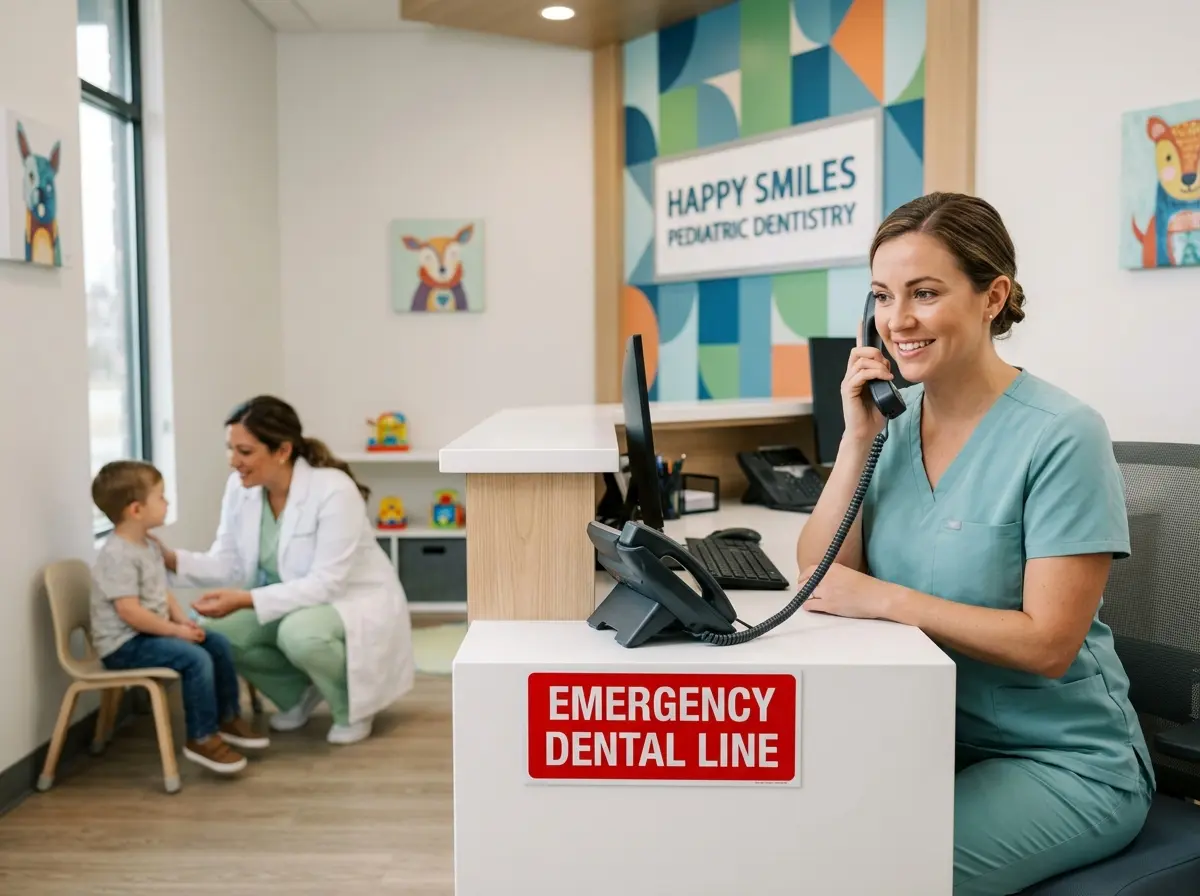
Design your escalation paths with explicit ownership. For urgent calls, there should be a designated clinical staff member available during all office hours whose first responsibility is the nurse triage line — not just whoever happens to be free. For after-hours, make sure your on-call rotation is clearly documented and that your answering service or system knows exactly when and how to reach that person. The goal is zero ambiguity about who is responsible for what, at every hour of the day.
Using Technology to Take the Pressure Off Your Front Desk
Automate the Easy Stuff So Humans Can Handle the Hard Stuff
Here's a liberating thought: not every call needs a human being. A significant percentage of the calls your front desk receives every day are administrative — appointment reminders, directions to the office, hours of operation, insurance policies, and the eternal classic, "Can you fax my child's immunization records?" These calls are not emergencies. They are, however, time-consuming, repetitive, and oddly exhausting at scale.
This is exactly where Stella, the AI robot employee and phone receptionist, earns her keep. Stella answers calls 24/7, handles routine administrative questions with consistent accuracy, and only escalates to human staff when the call genuinely warrants it — based on conditions you configure. For a pediatric practice, that means your front desk team isn't spending their mornings reciting your office hours for the fourteenth time. They're handling intake, supporting clinical flow, and keeping your waiting room moving. Stella also captures voicemails with AI-generated summaries and sends push notifications to managers, so no message gets buried. For practices dealing with high call volumes, that kind of intelligent filtering is not a luxury — it's a sanity-saver. Her built-in CRM and intake forms make it easy to collect patient information conversationally before the call even reaches your staff, keeping records cleaner and check-ins faster.
Training Your Team to Be Consistent, Compassionate, and Calm
The Script Is a Starting Point, Not a Straitjacket
Triage protocols are only as good as the people executing them. And the people executing them are doing so while simultaneously managing a busy practice, tired parents, anxious children, and their own human stress levels. Training your team on phone triage isn't just about teaching them what questions to ask — it's about helping them communicate under pressure with empathy and clarity.
Role-play scenarios during onboarding. Walk new hires through the most common call types and let them practice the scripts until the language feels natural, not robotic. The goal is for a parent calling about their feverish toddler to feel heard and guided — not processed. Tone matters enormously in pediatric care, where parents are often scared and already operating on minimal sleep. A calm, organized voice on the other end of the phone can de-escalate anxiety and set the stage for a productive clinical interaction.
Document Every Clinical Call
This is non-negotiable from both a clinical and liability standpoint. Every triage call with a clinical component — symptoms reported, advice given, escalation decisions made — needs to be documented in the patient's chart. This protects your practice if questions arise later about what was communicated and when. It also gives your providers useful context when a patient comes in for a follow-up visit.
Standardize your documentation format. Include time of call, name of staff member who triaged, symptoms described by caller, protocol used, advice given, and disposition (e.g., referred to same-day appointment, advised to go to ER, callback scheduled with nurse). Consider using a dedicated triage note template in your EHR to make this faster and more consistent across your team.
Review Call Patterns to Continuously Improve
Your phone triage system should never be set-and-forget. Build in regular reviews — monthly or quarterly — where you look at call volumes by category, peak call times, escalation rates, and any near-misses or complaints. Are certain call types overwhelming your nurse line on Monday mornings? That might be a signal to add proactive communication resources (like a well-maintained patient portal or automated after-visit summaries) that reduce call-in volume for common questions. Are after-hours calls spiking? It might be time to revisit your on-call protocols or invest in additional coverage.
Data-driven iteration is what separates a triage system that works on paper from one that actually keeps pace with your practice's growth and your patients' needs.
A Quick Reminder About Stella
Stella is an AI robot employee and phone receptionist built for businesses that want a reliable, professional presence without the overhead. She answers calls 24/7, manages intake forms, maintains a built-in CRM, and forwards calls to human staff based on your custom conditions — all for $99/month with no upfront hardware costs. For pediatric practices dealing with high call volumes and tight staffing, she's the kind of team member who never calls in sick and never puts a parent on hold to go find someone.
Build the System Once, Benefit From It Every Day
A well-designed phone triage system is one of the highest-leverage investments a pediatric practice can make. It protects patients by ensuring urgent concerns are never lost in the shuffle. It protects staff by giving them clear workflows and reducing the cognitive load of making high-stakes judgment calls without support. And it protects your practice by creating documentation, consistency, and accountability that will serve you well if you're ever questioned about the care you provided — or failed to provide.
Here's where to start this week:
- Audit your current call volume by category for one full week — just tally marks on a notepad works fine.
- Draft or adopt a triage decision tree based on Schmitt-Thompson or a similar evidence-based resource.
- Identify your escalation owners for both in-hours and after-hours coverage and document them explicitly.
- Train your front desk team with role-play scenarios before they handle clinical calls independently.
- Automate administrative calls where possible so your human staff can focus where it matters most.
Your phone system is often the first — and most frequent — touchpoint your patients' families have with your practice. Make it one that reflects the level of care you provide in the exam room. The kids counting on you deserve nothing less, and frankly, neither does your front desk.