Your Accountants Are Too Expensive to Be Answering "What Are Your Office Hours?"
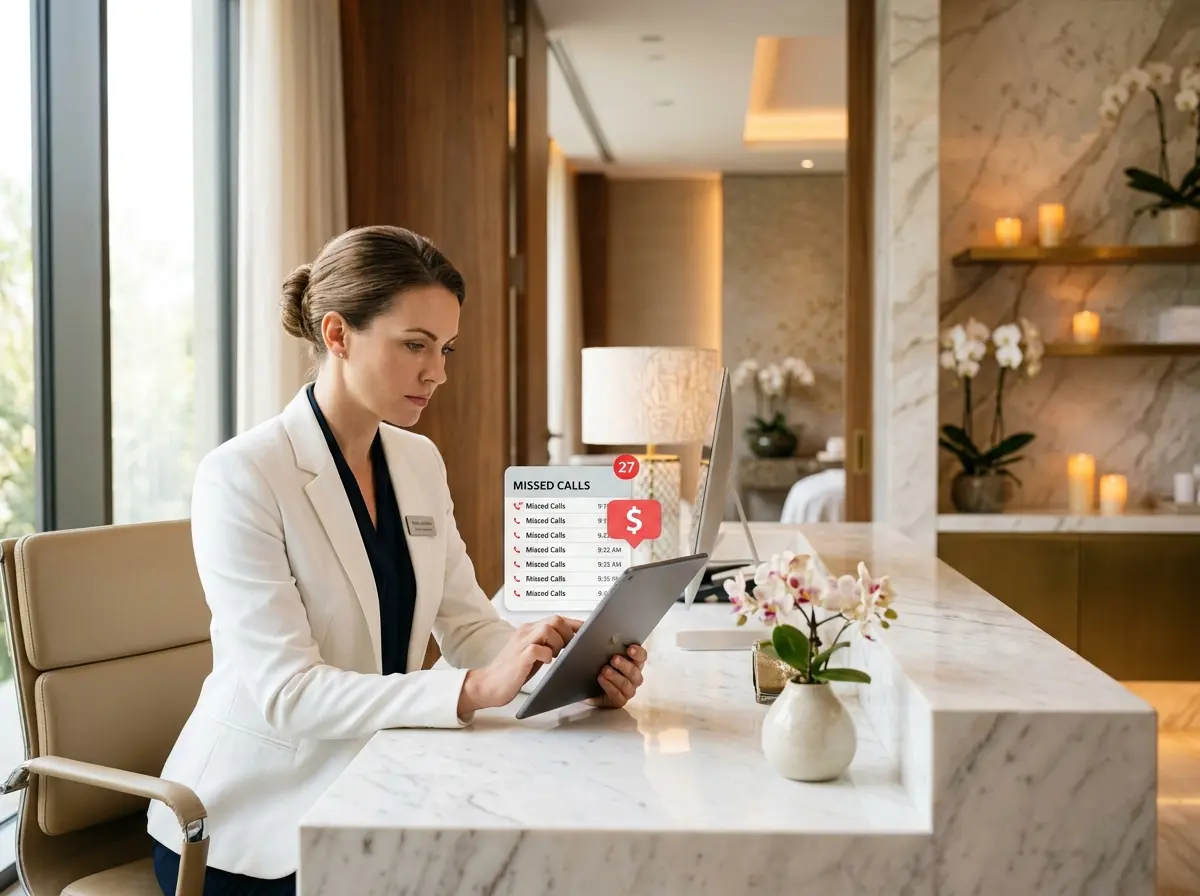
Let's paint a picture. It's tax season. Your CPAs are buried in returns, your bookkeepers are reconciling accounts, and your billing rate is ticking upward with every hour of focused work. Then the phone rings. It's a prospective client asking whether you accept new clients, what your fees look like, or — everyone's favorite — "Can you remind me when my appointment is?"
Someone has to answer. So a staff member stops what they're doing, picks up the phone, and spends four minutes on a question that could have been handled in seconds by literally anyone — or anything — else. Multiply that by twenty calls a day, and you've just burned real billable hours on questions that don't require a licensed professional. Not ideal.
The good news is that accounting firms have a remarkably clean opportunity here. A large portion of inbound client communication is routine, repetitive, and completely automatable. The firms that recognize this — and act on it — are the ones protecting their staff's time, improving client experience, and quietly widening their margins. Let's talk about how.
The Hidden Cost of Routine Client Communication
Billable Time Is Finite (and Interruptions Are Ruthless)
There's a reason productivity researchers talk about "deep work" with such reverence — it's rare, it's fragile, and it's where your most skilled staff actually earn their keep. A CPA interrupted mid-return doesn't just lose the two minutes it takes to answer a question. Research from the University of California, Irvine found that it takes an average of 23 minutes to fully regain focus after an interruption. For an accounting firm billing at $150–$300 per hour, that's not a minor inconvenience. That's a measurable revenue leak, repeated dozens of times per day.
The irony is that the interruptions aren't usually complex. They're questions about office hours, document submission deadlines, what forms clients need to bring, whether you offer payroll services, or how to access the client portal. Important questions for the client, sure — but none of them require a credentialed accountant to answer.
The Front Desk Bottleneck (Even When You Have One)
Some firms have dedicated administrative staff to handle this, which helps — until it doesn't. Front desk employees get sick, go on vacation, have bad days, or simply get overwhelmed during peak periods. And after hours? The phone either rings into a void or routes to a voicemail that won't be heard until morning.
Prospective clients who can't get a quick answer don't always wait around. They move on to the next firm on the list. For existing clients, the friction of not being able to get basic information quickly erodes the experience you've worked hard to build. A single unanswered after-hours call from a stressed client trying to figure out their document deadline isn't dramatic — but it adds up.
The Specific Questions That Drain Your Team the Most
If you were to audit your inbound calls and front desk inquiries for a week, you'd likely find the same culprits over and over. Think: appointment confirmations and rescheduling requests, questions about services and pricing tiers, document checklists for new or returning clients, explanations of the onboarding process, and basic billing or payment questions. These are the questions begging to be automated — not because they don't matter to the client, but because the answers don't change, and the time cost of repeating them manually is simply too high.
How AI Can Step In Without Stepping on Anyone's Toes
Meeting Clients Where They Are — at Any Hour
This is where tools like Stella become genuinely useful for accounting firms. Stella is an AI receptionist that answers phone calls around the clock, handling routine client questions with the full knowledge base you configure for your firm — services, hours, onboarding steps, document requirements, whatever your clients ask most. For firms with a physical office, Stella also operates as a friendly in-person kiosk, greeting walk-ins and answering questions on the spot so your staff doesn't have to stop mid-task to play host.
Beyond answering questions, Stella collects client information through conversational intake during calls or at the kiosk, and manages those contacts through a built-in CRM with custom fields, tags, and AI-generated profiles. For accounting firms handling onboarding paperwork and client intake, that's a meaningful time saver before the engagement even officially begins.
What Effective AI-Assisted Communication Actually Looks Like for Accounting Firms
Configuring Your AI Around Real Client Questions
The difference between an AI receptionist that genuinely helps and one that frustrates clients is specificity. Generic chatbot responses don't cut it. What works is an AI that's been loaded with your firm's actual information — your service tiers, your fee structures (at least at a general level), your onboarding checklist, your appointment scheduling process, and your staff escalation rules.
A well-configured AI system can tell a prospective client what types of tax returns you handle, explain your general engagement process, let them know what documents to gather before their first appointment, and even collect their contact information for a follow-up — all without a single human being involved. When the question does require a professional, the call gets transferred or flagged appropriately. The AI isn't replacing your team's judgment; it's filtering out the noise so that judgment is applied where it actually counts.
Smart Call Routing and After-Hours Coverage
One of the underappreciated benefits of AI phone handling is intelligent call routing — the ability to set conditions under which a call gets passed to a human versus handled autonomously. During business hours, calls involving new client inquiries might route to a relationship manager after a brief AI-led intake. After hours, the same call gets handled entirely by the AI, with a voicemail summary and push notification sent to the relevant manager so nothing falls through the cracks by morning.
For accounting firms that deal with anxious clients during tax season, the ability to reach someone — even an AI — at 9 PM on a Tuesday and get a real answer about document submission is genuinely reassuring. It doesn't replace the personal relationship, but it fills in the gaps that previously resulted in silence.
Practical Implementation Tips
Getting started doesn't need to be complicated. A few practical steps make the difference between a successful rollout and a frustrating one. Start by auditing your most common inbound questions over the past month — your front desk staff will know exactly what they are. Build your AI knowledge base around those specific questions first, then expand. Set clear escalation rules so your team knows exactly when they'll be looped in and why. And review interaction logs regularly in the early weeks so you can refine responses based on what clients are actually asking versus what you assumed they'd ask.
Also, don't overcomplicate the handoff. Clients don't need to know every technical detail of how the system works — they need to feel heard, get their question answered, and move on. When the AI is well-configured, that's exactly what happens.
Quick Reminder About Stella
Stella is an AI robot employee and phone receptionist built for businesses that are done losing billable time to routine interruptions. She answers calls 24/7, handles client questions, collects intake information, manages contacts through a built-in CRM, and for firms with a physical office, greets and assists walk-ins in person — all for $99/month with no upfront hardware costs. Setup is straightforward, and she's ready to work the moment you are.
Protect Your Billable Hours Like the Asset They Are
Your accountants didn't spend years earning credentials so they could explain your office hours to callers. Your firm's value lives in the analysis, the strategy, the compliance expertise, and the trusted relationships you build with clients — not in answering the same five questions on loop. Every minute spent on the latter is a minute borrowed from the former.
The firms pulling ahead right now aren't necessarily the ones with the most staff or the biggest marketing budgets. They're the ones running lean, smart operations where technology handles what technology should handle, and people handle what people do best. AI-assisted client communication isn't a futuristic concept anymore — it's a practical, affordable tool that pays for itself quickly when you do the math on recovered billable time.
Here's what you can do this week: pull your call logs and front desk notes, identify your top ten most repeated client questions, and ask yourself honestly whether a licensed professional needs to be the one answering them. If the answer is no — and it usually is — you have a clear starting point. Build from there, configure deliberately, and let your team get back to the work that actually moves your firm forward.
Your CPAs will thank you. Your clients will appreciate the faster responses. And your revenue reports will quietly start looking a little better. That's a win worth pursuing.