So You Want to Fill Your Schedule Without Hemorrhaging Your Marketing Budget
Let's be honest — physical therapy marketing budgets aren't exactly the stuff of legend. You're not Meta. You don't have a Super Bowl ad. What you do have is a clinic, a set of expertise that most people desperately need, and a room that sits empty on Tuesday evenings. That, dear PT, is a goldmine you might be leaving on the table.
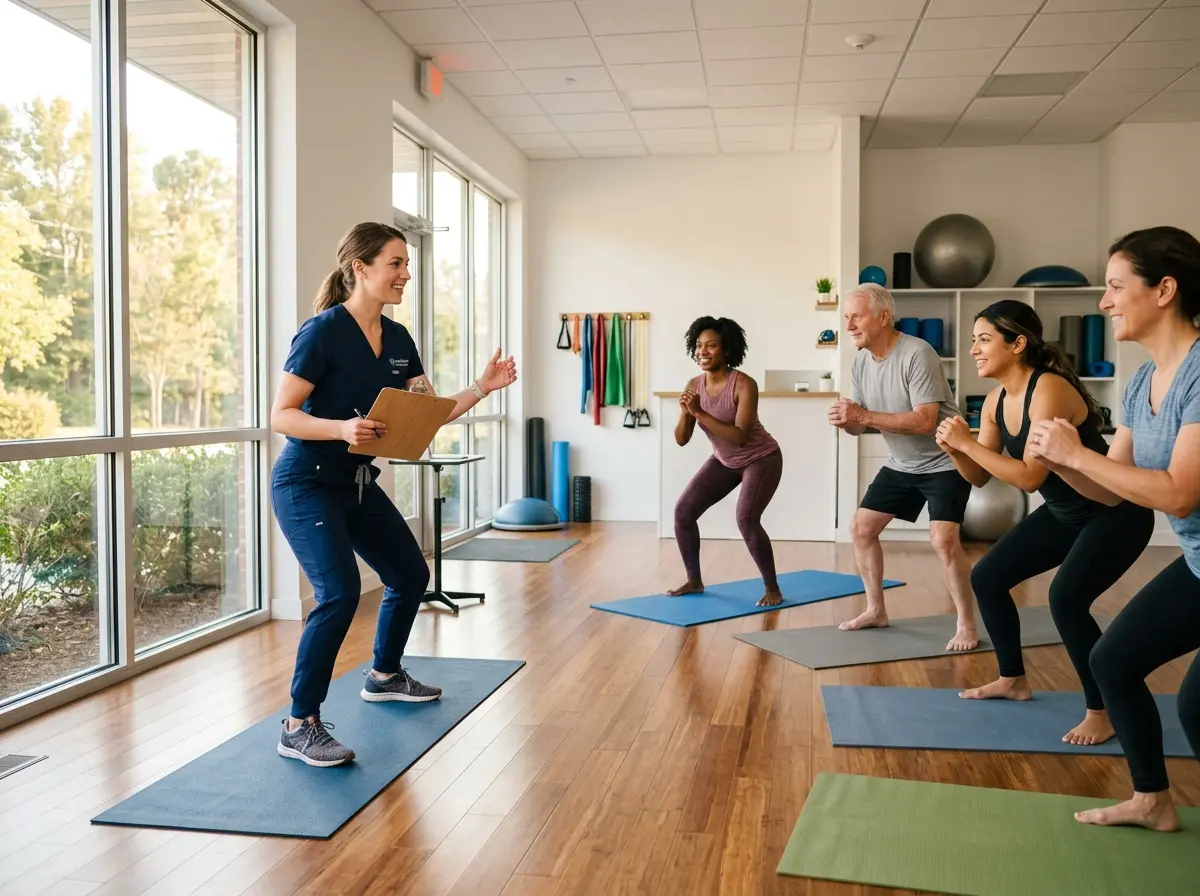
Group classes have quietly become one of the most effective — and underutilized — patient acquisition tools in the physical therapy world. Not only do they cost you almost nothing to run (you already have the space, the knowledge, and the credentials), but they put your best asset front and center: you. When prospective patients actually meet you, watch you work, and feel the value of your expertise firsthand, the conversion from curious attendee to paying patient happens almost organically.
This guide is for the PT practice owner who's tired of paying $15 per click on Google ads and getting three form submissions from people who were clearly just browsing. Let's talk about building a real, sustainable, low-cost acquisition engine through group classes.
Building Your Group Class Strategy from the Ground Up
Choosing the Right Class Format for Your Ideal Patient
Not all group classes are created equal, and the worst thing you can do is run a generic "wellness workshop" that appeals to no one in particular. The magic happens when you get specific. Think about who your most profitable and most enjoyable patients are — then design a class that speaks directly to their pain points (sometimes literally).
Popular formats that tend to convert well for PT clinics include:
- Lower back pain workshops — practically a universal draw, given that roughly 80% of adults will experience back pain at some point in their lives
- Post-surgical recovery information sessions — ideal for capturing patients pre-surgery who are already in the decision-making mindset
- Active aging or fall prevention classes — enormous demographic, deeply motivated, and often referred by physicians
- Sports performance or injury prevention clinics — great for tapping into local athletic communities, leagues, and gyms
- Postpartum recovery workshops — underserved market with genuine need and high word-of-mouth potential
The goal isn't to run a class that you find interesting (though that helps). It's to run a class that your ideal future patient is already Googling solutions for. Match the topic to the search intent, and you've already won half the battle before anyone walks through the door.
Pricing It Right — Free vs. Low-Cost
Here's where practice owners get into philosophical debates that really don't need to be philosophical. Should your group classes be free or should you charge a nominal fee?
The honest answer: a small fee — think $10 to $25 — often outperforms free. Counter-intuitive, but true. Free events attract people who treat commitment like a suggestion. A small fee filters for attendees who are genuinely motivated, shows up with intention, and are far more likely to convert into actual patients. It also subtly signals that your time and expertise have value (because they do).
That said, free works beautifully in specific contexts: community partnerships, corporate lunch-and-learns, or events where your goal is pure brand visibility rather than immediate conversion. Know your objective before you set your price, and don't be afraid to test both approaches over a few months to see what your specific market responds to.
Setting Realistic Conversion Expectations
If you run a group class of 15 people and 3 of them schedule a follow-up evaluation, that's a 20% conversion rate — and that's actually excellent. Physical therapy practices that run group classes consistently report conversion rates anywhere from 15% to 35%, depending on the topic, presenter energy, and the quality of the post-class follow-up process.
The math starts looking pretty attractive when you run the numbers. Three new patients per class, two classes per month, and an average patient lifetime value of $800 to $1,200? That's potentially $4,800 to $7,200 in monthly revenue generated from a couple of evening sessions and some folding chairs. Compare that to paid digital ads, and suddenly your Tuesday nights look very appealing.
Making the Logistics Work Without Losing Your Mind
How Stella Can Help Your Practice Run Smoother
Here's a scenario that plays out in way too many PT clinics: someone attends your group class, they're interested, they call the front desk the next morning — and the phone rings into a void because your front desk person is handling intake paperwork and can't get to it. That prospective patient, already a little unsure, takes it as a sign and doesn't call back. Opportunity: gone.
Stella, the AI robot employee and phone receptionist, exists precisely for moments like this. She answers every call — whether it's 7 AM before your staff arrives or 9 PM after they've gone home — with the same professional, informed presence. She can tell callers about your classes, your services, your hours, and your policies, and she can collect intake information directly over the phone so your staff walks in the next morning with a warm lead already documented. If your clinic has a physical location, Stella also greets walk-in visitors proactively, promoting your upcoming classes and services to anyone who steps through the door — no staff interruption required. For a practice trying to scale its acquisition efforts without scaling its overhead, that kind of coverage matters.
Converting Attendees Into Loyal Patients
The Follow-Up Is Where the Money Lives
You can run the most compelling, value-packed group class in the history of physical therapy, and it will still mean absolutely nothing if you don't have a follow-up system. This is where most clinics leave money sitting on the floor — they deliver a great experience, hand out a business card or two, and then wait for the phone to ring. Spoiler: it doesn't always ring.
The best follow-up processes are systematized, not improvised. Collect every attendee's name and email or phone number at registration — non-negotiable. Within 24 hours of the class, send a personal follow-up message that references something specific from the session. Not a generic "thanks for coming!" email, but something that demonstrates you actually paid attention. Within 48 to 72 hours, a brief phone call or text to check in and answer any lingering questions is extraordinarily effective and embarrassingly underutilized.
Studies on service-based business conversion consistently show that leads contacted within the first hour of expressing interest are 7 times more likely to convert than those contacted even an hour later. Speed and personalization are your twin conversion weapons — use both.
Building a Referral Loop Into the Class Experience
One of the most elegant things about group classes is that they're inherently social. People come with friends, neighbors, coworkers, and spouses. This is not a bug — it's a feature you should be actively engineering.
Build referral mechanics directly into the class experience. Offer a "bring a friend" discount on registration. At the end of the session, when energy and goodwill are at their peak, explicitly invite attendees to share the next class with someone they know who's dealing with similar issues. Consider a simple referral card that gives both the referrer and the new attendee a small credit toward services. Word-of-mouth is still the highest-converting acquisition channel in healthcare, and group classes create a natural moment to harness it.
Turning One Class Into a Content Engine
With a simple smartphone and a tripod, your group class becomes far more than a single evening event. Record a segment (with attendee permission), and you've got material for social media clips, a YouTube video, an email newsletter piece, and a blog post that improves your SEO. One 90-minute class, executed thoughtfully, can generate weeks of content that continues attracting new prospective patients long after everyone went home and iced their knees.
This is how small practices punch above their weight in content marketing — not by hiring a content team, but by repurposing what they're already doing exceptionally well. Document everything. Your expertise is the content.
A Quick Reminder About Stella
Stella is an AI robot employee and phone receptionist that greets in-clinic visitors, answers calls 24/7, promotes your services and classes, collects patient intake information, and keeps your CRM organized — all for $99/month with no upfront hardware costs. While your group classes are out there generating buzz and bringing in new leads, Stella makes sure none of those leads fall through the cracks when no one's available to pick up the phone.
Your Next Step Starts With a Date on the Calendar
The single biggest reason PT practice owners don't run group classes is inertia. Not budget. Not space. Not expertise. Just the inertia of a busy schedule and the vague sense that it's "a lot to organize." It isn't, once you've done it once. And the ROI — in new patients, in community visibility, in referral relationships — compounds over time in a way that paid ads simply don't.
Here's your action plan, stripped down to its essentials:
- Pick one class topic that directly addresses your most common patient complaint or your most profitable patient profile.
- Set a date four weeks out and block it on the calendar. A deadline makes everything real.
- Promote it through three channels — your email list, your social media, and a partner business or physician's office in your community.
- Build your follow-up sequence before the class happens, not after. Have the emails drafted, the call script ready, and the intake process mapped out.
- Run it, measure it, improve it, and repeat it. The second class is always better than the first.
You have the knowledge. You have the space. You have the credibility that most marketers spend years trying to manufacture. Group classes are simply the vehicle for turning all of that into consistent, low-cost patient acquisition — one folding chair at a time.