When the Phones Won't Stop Ringing (And Neither Will the Chaos)
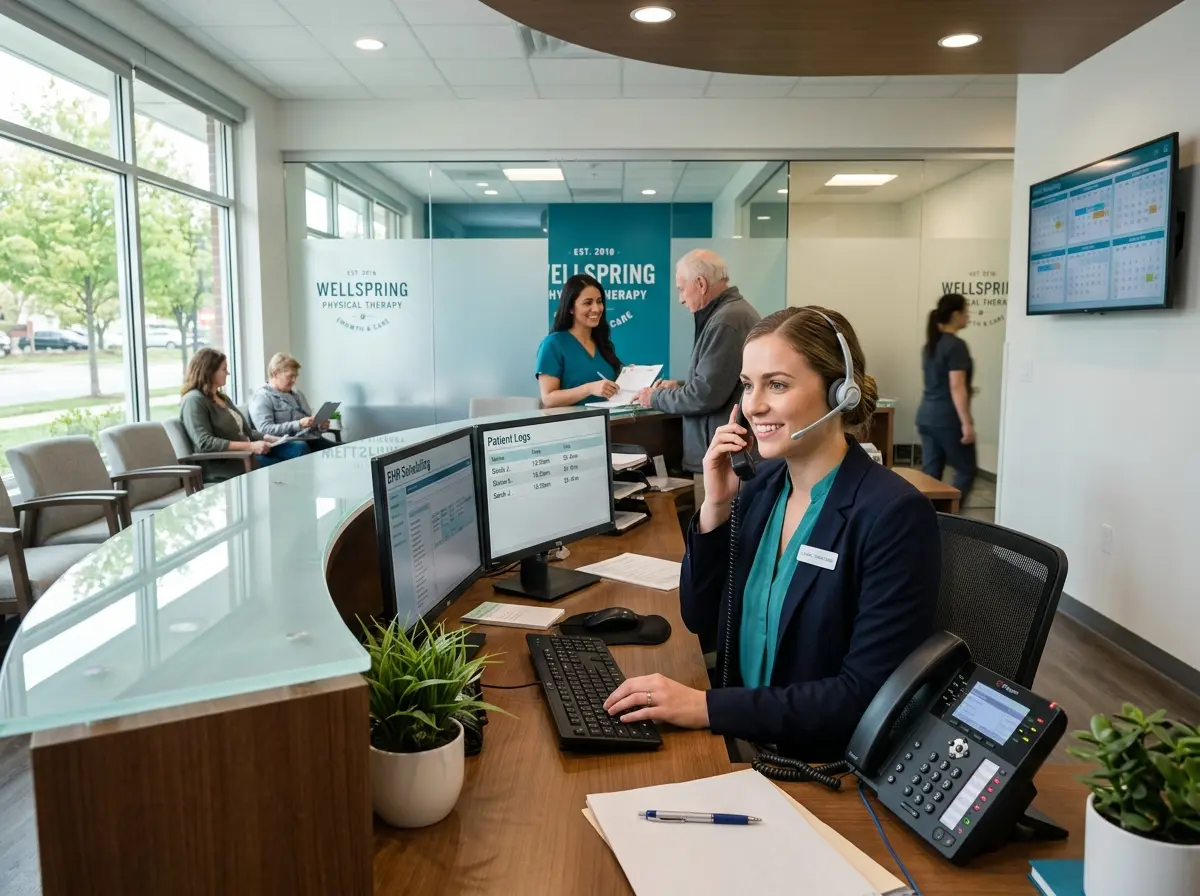
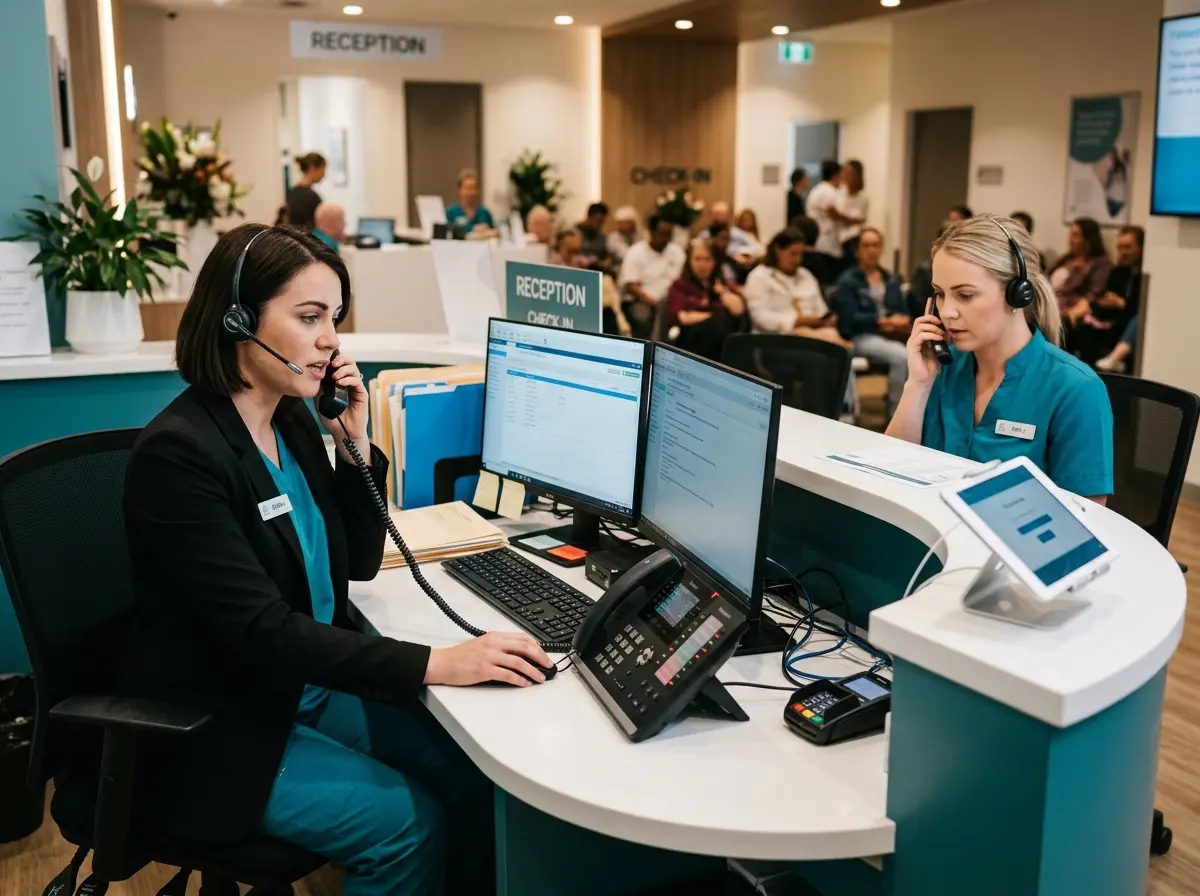
Picture this: It's a Monday morning at your medical practice. The weekend is over, patients are calling to schedule appointments, your front desk staff hasn't finished their coffee yet, and the waiting room is already filling up. The phone rings. And rings. And rings again — this time from the same patient who called three minutes ago and got a busy signal. Meanwhile, your receptionist is simultaneously checking in a patient, answering insurance questions, and trying to locate a chart that seemingly vanished into thin air.
Sound familiar? Welcome to the front desk bottleneck — one of the most common, most frustrating, and most solvable operational challenges in healthcare today. Peak call volume isn't just an inconvenience. It costs you patients, revenue, and your staff's sanity. Studies show that nearly 67% of patients who can't reach a medical office by phone will simply call a competitor rather than try again. That's not a scheduling inconvenience — that's a revenue leak dressed up as a phone problem.
The good news? You don't have to hire three more receptionists, install a confusing phone tree that makes patients want to throw their phones out the window, or just accept the chaos as part of doing business. There are smart, practical strategies to manage peak call volume — and when you combine them with the right technology, your front desk can go from overwhelmed to impressively efficient.
Understanding Why Peak Call Volume Happens (and When)
The Predictable Patterns You're Probably Ignoring
Here's the thing about peak call volume: it's not actually that unpredictable. Most medical practices experience highly consistent call surges that follow the same patterns week after week. Monday mornings are notoriously brutal — patients who put off calling over the weekend flood the lines all at once. Similarly, the first hour after your practice opens and the half-hour before it closes tend to be disproportionately busy. The day after a holiday? Pure pandemonium.
If you haven't already pulled your call data to identify exactly when your peak windows occur, that's your first homework assignment. Most modern phone systems and practice management software can generate call volume reports. Review at least 90 days of data to identify your true peak hours, days, and seasonal trends. You may be surprised how consistent and predictable the patterns really are — which means they're entirely manageable with the right preparation.
The Real Cost of Missed and Mishandled Calls
Let's talk numbers, because this is where practice owners often underestimate the problem. A single missed new patient call represents not just one appointment, but potentially years of ongoing care — and referrals to friends and family. Depending on your specialty, a new patient relationship can be worth anywhere from $1,500 to well over $10,000 in lifetime revenue. Now multiply that by the number of calls that go unanswered or get abandoned during your peak hours each week. It adds up fast.
Beyond new patients, mishandled calls from existing patients erode trust. Patients who feel ignored or frustrated by long hold times are statistically more likely to leave negative online reviews — which, in an era where 77% of patients use online reviews to select a provider, can directly impact your ability to attract new business. The front desk bottleneck isn't just an internal workflow problem. It has a very public face.
Why Simply "Hiring More Staff" Isn't the Answer
The instinctive response to call volume problems is to throw more bodies at the front desk. And while adequate staffing is certainly important, it's rarely a complete solution. Front desk staff handle a complex mix of responsibilities — patient check-in, insurance verification, co-pay collection, appointment scheduling, patient inquiries, and yes, answering the phone — all simultaneously. Adding headcount helps, but it doesn't eliminate the fundamental challenge of managing multiple high-priority tasks at once during surge periods. It also comes with significant overhead: recruitment costs, training time, benefits, and the ever-present reality of employee turnover in healthcare administration.
Smart Technology Solutions That Actually Work
Let AI Handle the High-Volume, Routine Calls
A significant portion of incoming calls at most medical practices are routine: appointment scheduling, hours of operation, directions, prescription refill requests, insurance questions, and appointment confirmations. These are important calls, but they don't always require a human being to handle them — especially during peak volume windows when your staff is stretched thin.
This is exactly where Stella — an AI robot employee and phone receptionist — steps in. Stella answers calls 24/7 with consistent, professional, and knowledgeable responses about your practice's services, hours, policies, and more. She can handle routine inquiries entirely on her own, collect patient information through conversational intake forms during the call, and forward only the calls that genuinely require human attention — based on conditions you configure. For medical practices, that means your front desk staff can focus on the patient in front of them instead of juggling three phone lines at once. Stella also takes voicemails with AI-generated summaries and sends push notifications to managers, so nothing falls through the cracks — even at 10 PM on a Sunday. Her built-in CRM with custom fields, tags, and AI-generated patient profiles means you're not just handling calls better; you're building richer patient records at the same time.
Operational Strategies to Reduce Peak Pressure
Redistribute Call Volume Through Proactive Communication
One of the most underused strategies in medical practice management is proactive outreach that preempts inbound calls. When patients receive automated appointment reminders via text or email that already include all the information they need — confirmation details, directions, what to bring, and what to expect — they have no reason to call and ask those questions. Similarly, post-appointment follow-up messages that proactively address next steps, prescription information, or follow-up scheduling can dramatically reduce the number of reactive inbound calls your team receives.
The goal is to answer the question before the patient has to ask it. This isn't just good customer service — it's a deliberate call volume management strategy. Practices that implement proactive communication programs consistently report meaningful reductions in routine inbound call volume, freeing staff to focus on higher-complexity interactions that genuinely require human judgment and empathy.
Redesign Your Staffing Model Around Your Data
Once you know exactly when your peak call windows occur, you can staff strategically rather than uniformly. This might mean staggering shift start times so that you have maximum coverage during your 8:00–10:00 AM surge, rather than having everyone arrive at the same time and then scramble. It might mean designating one staff member as a dedicated phone handler during peak windows — shielded from walk-in check-ins during that period — while others manage the front desk physically.
Cross-training is equally important. If only one or two people on your team are confident handling phone inquiries, your entire call management capability is dependent on those individuals being present and available. Broader cross-training creates resilience, and it empowers staff to flex into phone coverage roles when volume spikes unexpectedly.
Implement a Clear Call Escalation Protocol
Not all calls are created equal. A patient calling to ask about parking is very different from a patient describing chest pain. Without a clear escalation protocol, even well-intentioned staff can waste time on low-priority calls while high-priority situations wait. Define and document your call triage categories explicitly: what gets handled by AI or voicemail, what gets handled immediately by front desk staff, and what gets escalated directly to clinical staff or management. Post it, train on it, and revisit it regularly.
A good escalation protocol also helps reduce decision fatigue for your front desk team. When staff know exactly what to do in any given scenario, they can move faster and with more confidence — which directly improves how calls are handled during high-pressure peak periods.
Quick Reminder About Stella
Stella is an AI robot employee who works as both an in-store kiosk receptionist and a 24/7 phone receptionist — available for just $99/month with no upfront hardware costs. She's designed to give businesses of all sizes a professional, always-on presence that handles routine interactions, collects customer data, and supports your human staff without replacing the warmth they bring. If your front desk is feeling the pressure, Stella is worth a very close look.
Time to Stop Losing Patients to a Busy Signal
The front desk bottleneck is a real problem, but it's not an unsolvable one. The practices that handle peak call volume best aren't necessarily the ones with the largest staffs or the biggest budgets — they're the ones that have taken the time to understand their call patterns, invest in smart technology, and build operational protocols that scale with demand.
Here's your action plan:
- Pull your call data and identify your true peak windows — at minimum, look at the last 90 days.
- Audit your call content — what percentage of calls are routine and could be handled by AI or self-service tools?
- Review your staffing model against your peak hours and identify any misalignments.
- Implement proactive patient communication to reduce unnecessary inbound call volume.
- Document a clear call escalation protocol and train your entire team on it.
- Explore AI phone receptionist solutions like Stella to cover the gaps your human staff simply can't fill — especially after hours and during surge periods.
Your patients deserve to have their calls answered promptly and professionally. Your staff deserves to work in an environment that doesn't feel like controlled chaos every Monday morning. And your practice deserves the revenue that comes with not letting calls ring into the void. The tools and strategies exist — now it's just a matter of putting them to work.