Introduction: Why a Handshake Isn't Enough Anymore
You've built a landscaping business on hard work, good equipment, and the kind of customer relationships that actually last. You show up, you do great work, and most of the time, things go smoothly. But then there's that client — the one who swore they said "trim the hedges lightly," not "take off six inches," or the one who's shocked — shocked — that fertilization treatments cost extra. Suddenly, your handshake agreement feels about as sturdy as a freshly seeded lawn in a drought.
Here's the uncomfortable truth: without a solid service agreement, you're not just leaving money on the table — you're leaving yourself exposed to disputes, non-payment, scope creep, and the kind of misunderstandings that can damage relationships you've spent years building. A well-crafted service agreement protects you, yes, but it also protects your clients by setting clear expectations from day one. Think of it as the mulch layer of your business operations: not the most glamorous part, but absolutely essential for long-term health.
This guide walks you through exactly what to include in a landscaping service agreement, how to communicate it without scaring clients off, and how to make the whole process more efficient so you can spend less time on paperwork and more time doing what you actually love — making things green and beautiful.
The Essential Components of a Landscaping Service Agreement
Scope of Work: Say Exactly What You Mean
This is the beating heart of your service agreement, and vagueness here is your worst enemy. A scope of work section should describe every service you're providing in precise, unambiguous language. Don't write "lawn care" when you mean "mowing, edging, and blowing debris from hard surfaces on a weekly basis, April through October." The difference between those two descriptions could easily be a $500 misunderstanding by August.
Be explicit about what is not included as well. If fertilization, pest control, irrigation maintenance, or seasonal cleanups are separate add-on services, say so clearly. Clients aren't trying to take advantage of you (well, most of them aren't) — they simply don't know what they don't know. By spelling out inclusions and exclusions, you're doing both parties a favor and establishing yourself as the kind of professional who has their act together.
Pro tip: Include a section for "Additional Services" with a clear process for requesting and pricing add-ons. This opens the door for upselling naturally and professionally, rather than having awkward conversations mid-job about why trimming the rose bushes costs extra.
Payment Terms: Because "I'll Pay You Later" Is Not a Business Model
Your agreement should spell out payment schedules, accepted methods, invoice timing, and late fees with zero ambiguity. According to a survey by QuickBooks, 64% of small business owners have outstanding invoices that are more than 30 days overdue. Don't let your landscaping business become a statistic.
At minimum, your payment terms section should cover the total contract value or pricing structure (hourly, flat rate, or recurring), invoice frequency, due dates, accepted payment methods, and a clearly stated late fee policy. A common approach is a 1.5% monthly interest charge on overdue balances, but whatever you choose, make sure it's legal in your state and clearly disclosed upfront. Clients rarely push back on late fees when they've already agreed to them in writing — it's the surprise that causes friction, not the policy.
Termination and Cancellation Policies: Planning for the Awkward Goodbye
Not every client relationship is forever, and that's okay. What's not okay is having no plan for how things end. Your agreement should specify notice requirements for cancellation (30 days is standard), any early termination fees for long-term contracts, how you'll handle work already completed but not yet invoiced, and what happens if you need to cancel or reschedule due to weather, equipment failure, or other circumstances.
This section also protects clients. When they know the terms for ending a service relationship, they feel safer entering one. Counterintuitively, a clear exit policy often makes it easier to sign new clients — they don't feel trapped, so they're more willing to commit.
Communicating Your Agreement Without Losing the Client
Tone and Timing Matter More Than You Think
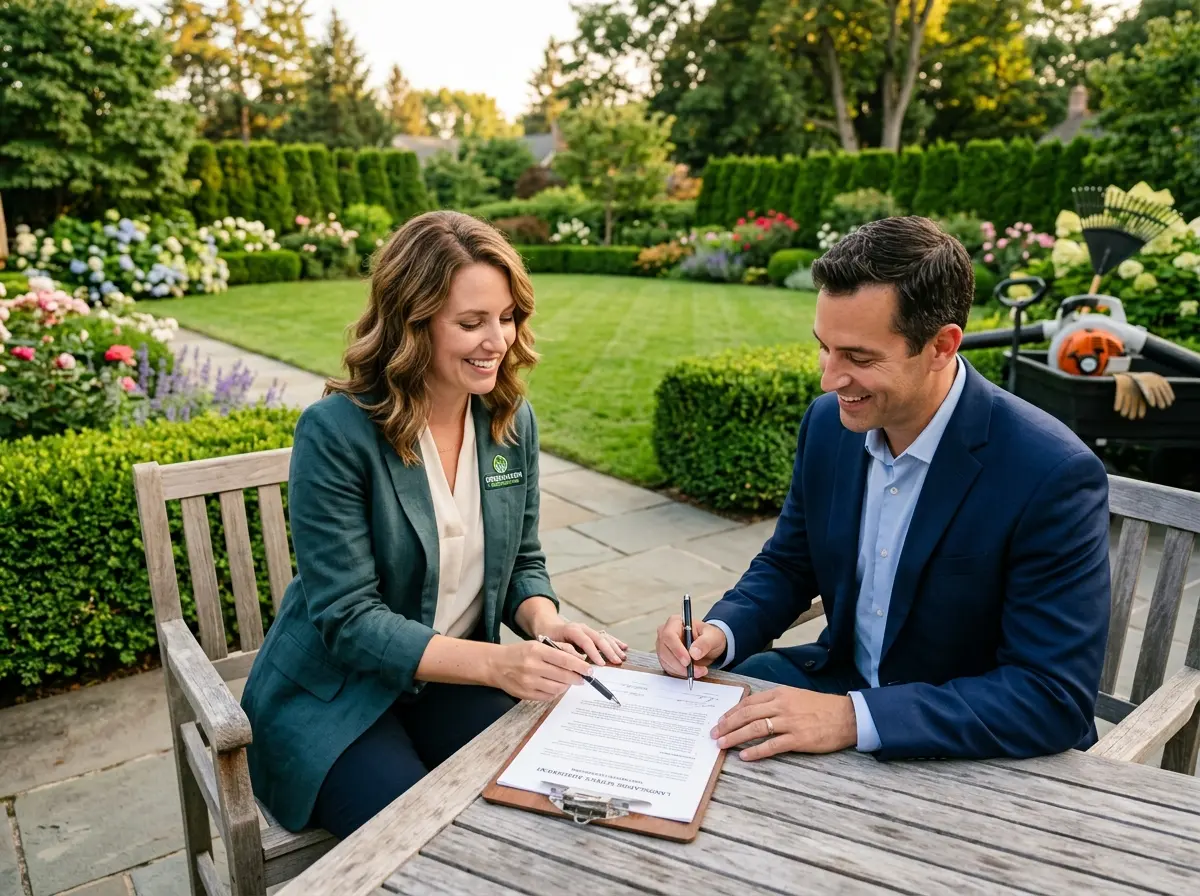
A service agreement is only useful if clients actually read and sign it — and that means how and when you present it matters enormously. Dropping a dense, legalistic document on someone right after they've enthusiastically agreed to hire you is a great way to make them second-guess that decision. Instead, present your agreement as a natural part of your professional process. Frame it as something you do for every client to make sure everyone's on the same page — because that's exactly what it is.
Walk new clients through the key points verbally before asking for a signature. Highlight the scope of work, payment schedule, and cancellation terms. Keep it conversational. "We've found this keeps things smooth for both sides, and our clients really appreciate knowing exactly what to expect." That's not a sales pitch — it's just the truth, and it positions your agreement as a benefit rather than a burden.
How Stella Fits Into Your Client Intake Process
Here's where running a modern landscaping business gets interesting. Stella is an AI robot employee and phone receptionist that can handle your incoming calls around the clock — which means when a potential client calls at 8 PM on a Tuesday to ask about your lawn maintenance packages, someone actually answers. Stella can walk callers through your service offerings, collect their contact information through conversational intake forms, and log everything directly into her built-in CRM — complete with AI-generated customer profiles and custom fields — so that by the time you follow up with a quote and service agreement, you already have the lead fully documented and ready to go. It's the kind of seamless first impression that makes people feel like they're working with a company that has its act together — because you do.
Protecting Yourself Against the Unexpected
Liability Clauses and Insurance Disclosures
Landscaping work comes with real physical risk — to your crew, to the client's property, and occasionally to neighboring properties. Your service agreement should include a liability limitation clause that caps your exposure in the event of accidental damage, and it should require that clients acknowledge you carry general liability insurance (and possibly workers' compensation if you have employees). Include your insurance carrier information or offer to provide a certificate of insurance upon request — this builds trust and demonstrates professionalism.
Also consider adding a clause about pre-existing conditions. If a client's lawn has underlying irrigation problems, grading issues, or diseased turf that you didn't cause, you don't want to be held responsible when those issues surface. Document property conditions with photos during your initial walkthrough and reference that documentation in your agreement.
Weather and Force Majeure: Mother Nature Is Not on Your Payroll
Landscaping is one of the most weather-dependent industries on the planet, yet many service agreements fail to address this reality at all. Include a force majeure or weather delay clause that explains how you'll handle rescheduling due to rain, extreme heat, frost, or other conditions outside your control. Specify whether missed visits are rescheduled, skipped, or credited — and stick to whatever policy you establish.
Clients who understand your weather policy in advance are far more patient when delays happen. Clients who find out about your policy during a dispute are rarely pleased about it. Write it in the agreement, mention it during your intake conversation, and you'll save yourself dozens of awkward phone calls every season.
Dispute Resolution: Keeping It Civil
If a disagreement does arise, how will it be resolved? Many small business owners overlook this section entirely, but it can save you significant time and money if things go sideways. Consider including a clause requiring good-faith negotiation before any formal dispute process, followed by mediation if negotiation fails. Specifying mediation instead of litigation keeps costs down for both parties and often resolves issues faster. Include the governing state law and jurisdiction so there's no ambiguity about where and how any formal proceedings would take place.
You don't need to write this section like you're expecting a lawsuit — you're not. But having the framework in place signals professionalism and protects you if you ever need it.
Quick Reminder About Stella
Stella is an AI robot employee and phone receptionist available for just $99/month with no upfront hardware costs. She answers calls 24/7, promotes your services, collects client information, and manages contacts through a built-in CRM — giving your landscaping business the kind of professional, always-on presence that makes a great first impression long before a service agreement ever gets signed. Whether a potential client is calling to ask about seasonal cleanups or a current client has a question about their next scheduled visit, Stella handles it professionally so you don't have to stop mid-job to answer your phone.
Conclusion: Stop Winging It and Start Protecting What You've Built
A great landscaping service agreement isn't about distrust — it's about professionalism. It tells your clients that you've thought things through, that you respect their time and investment, and that you run a business worth doing business with. More importantly, it protects your revenue, your reputation, and your sanity when things don't go exactly as planned (and in this industry, they won't always).
Here are your actionable next steps to get started:
- Draft or revise your scope of work language so it's specific, plain-language, and covers both inclusions and exclusions clearly.
- Establish firm payment terms with late fees, and make sure they're disclosed upfront in writing — not after an invoice goes ignored.
- Add weather, liability, and dispute resolution clauses if you don't have them already. Consider having a local attorney review your agreement once to make sure it holds up in your state.
- Build your agreement into your intake process so it's presented as a standard step, not an afterthought.
- Consider how you're handling new client inquiries — if calls are going to voicemail after hours, you may be losing leads before you ever get the chance to send them an agreement at all.
Running a landscaping business is hard enough without avoidable disputes and unclear expectations making things harder. Build the agreement, explain it well, and get it signed — every time, without exception. Your future self (and your accounts receivable) will thank you.